
Navdurga: Nine Goddesses of Navratri and Their Significance
Navdurga refers to the nine goddesses of Navratri. Learn their significance and shop Navratri essentials at The Desi Food for delivery to 80+ countries.
Latest Articles
 Wellness
What Is Avipattikar Churna? Ingredients, Traditional Uses and Safety
Oct 8, 2026
 Staples
Organic Honey vs Regular Honey: What the Label Covers and What It Doesn't
Oct 8, 2026
 Beauty
8 Best Natural Shampoos for Men to Buy Online in the USA, UK and Beyond
Oct 8, 2026
 Wellness
Best Ayurvedic Herbs for Sleep: 8 Herbs and the Forms They Come In
Sep 30, 2026
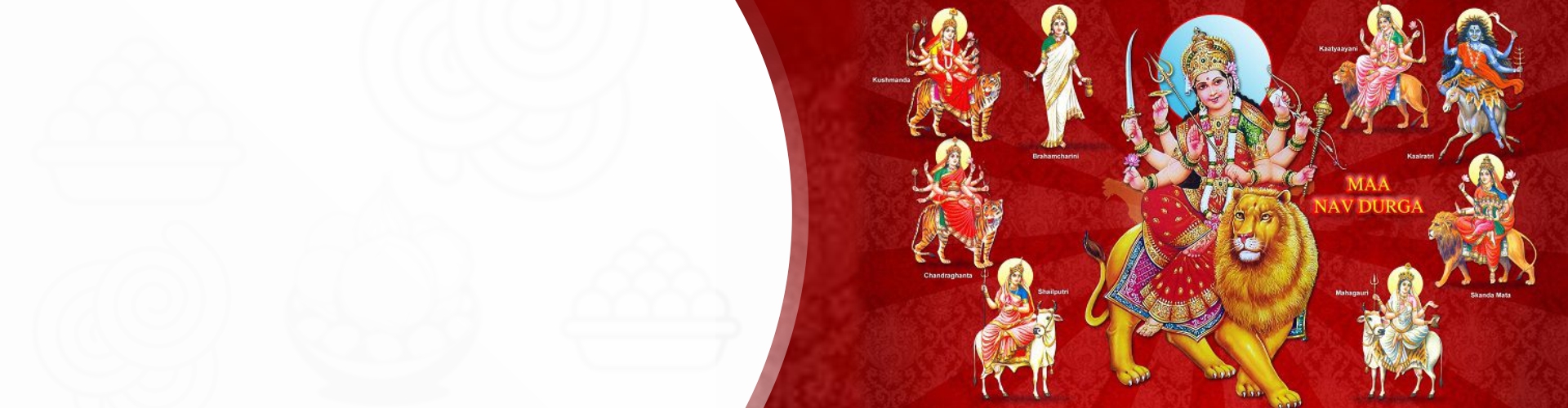
Navratri is a festival of worshipping Navdurga, the nine forms of Maa Durga. This festival is one of the most joyous festivals of the year, and people in India start their preparations well in advance. The houses are cleaned, the puja space is set up for ghatastapana, and delicious food is prepared to offer to the divine form. Children and adults take an active part in the preparations, and women observe a fast for nine days.
Each day of Navratri is dedicated to a different form of Durga, and the 10th day, which is the final day, is Dusshera or Vijaydashami, and it marks the victory of good over evil. In this blog, let’s learn about the 9 goddess of Navratri, the 9 colours of Navratri, and how people celebrate these special days.
Who is Goddess Durga?
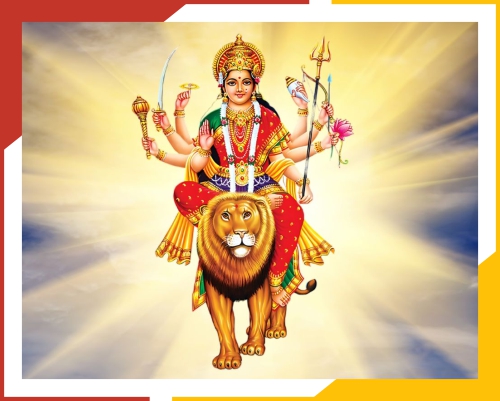
Maa Durga is the epitome of bravery and compassion and is known as the Mother of the Universe. She is the protector of the devotees as well as the destroyer of evil. She is usually shown with numerous arms with weapons in each. She is majestically sitting upon a lion. She restores peace and harmony in the universe by putting an end to the evil entities. Worshipping Goddess Durga bestows peace, strength, and wisdom, and helps you walk on the path of righteousness.
Navdurga: The Nine Goddesses of Navratri
Every day of Navratri honors one of the nine unique forms of Durga. In India, people follow the Navratri Puja Vidhi (method of worship) to worship these goddesses. Let’s meet the 9 goddesses of Navratri one by one.
1st Day of Navratri – Goddess Shailaputri
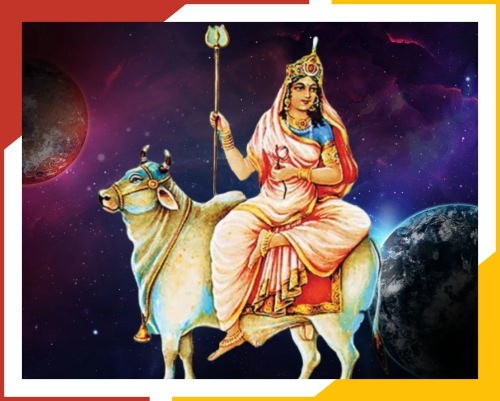
The first form of Goddess Durga is Shailaputri and is worshipped on the first day of Navratri. Seated on a bull with a trishul in one hand and a lotus in the other, she is an incarnation of Goddess Sati and was born to Himavat, the king of the mountains. Her name, Shailaputri, is formed by combining the words Shaila, meaning mountain, and Putri, is daughter. So, Shailaputri literally means the ‘Daughter of the Mountain.’
2nd Day of Navratri – Goddess Brahmacharini
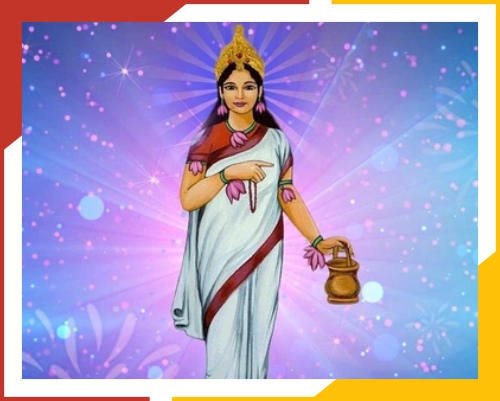
Devi Brahmacharini is worshipped on the second day. This deity of knowledge and wisdom is depicted with a rosary and a water pot in each of her hands, and she teaches us the importance of self-discipline, devotion, and living a simple life
3rd Day of Navratri – Goddess Chandraghanta
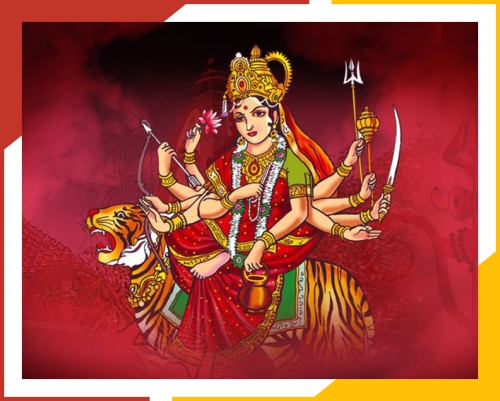
Maa Durga’s third form is Chandraghanta, and this Goddess gets her name because of the half-moon shaped like a bell (ghanta) on her forehead. Devi Chandraghanta is the epitome of courage and is depicted with 10 arms holding weapons such as a sword, a mace, a trident, a bow, and some arrows. Riding on a tiger, Chandraghanta shields her devotees from negativity and negative energies.
4th Day of Navratri – Goddess Kushmanda
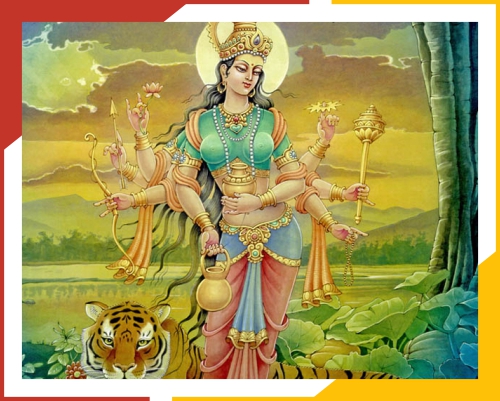
On the 4th day of Navratri, people pray to Devi Kushmanda. As per the Puranas, this form of Durga created the universe. She blesses her devotees with good health, wealth, and positivity. Her form is shown as a Goddess seated on a lion and has eight hands holding a jar of nectar, a lotus, a trident, a mace, a kamandala, a bow, and an arrow.
5th Day of Navratri – Goddess Skandamata
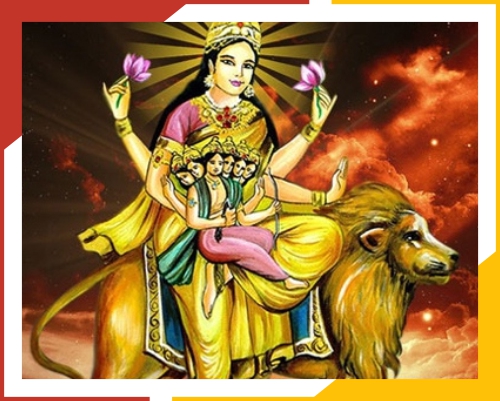
Puja is performed to Goddess Skandamata on the 5th day of Navratri. Her name means “Mother of Skanda,” and she is seated on a lion. This form of Durga represents motherly love and care.
6th Day of Navratri – Goddess Katyayani
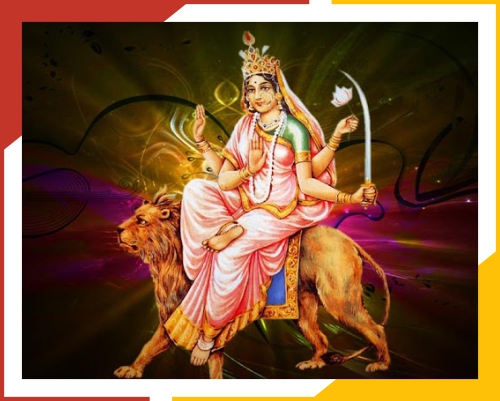
Katyayani is the giver of courage and protection. The 6th day of Navratri is dedicated to this fierce warrior goddess who destroyed the demon Mahishasura. According to Hindu mythology, saint Katyayana carried out a severe penance and asked Maa Durga a boon to be born as his daughter, hence the name Katyayani. Maa Katyayani has eighteen arms holding various weapons given to her by the Gods.
7th Day of Navratri – Goddess Kaalratri
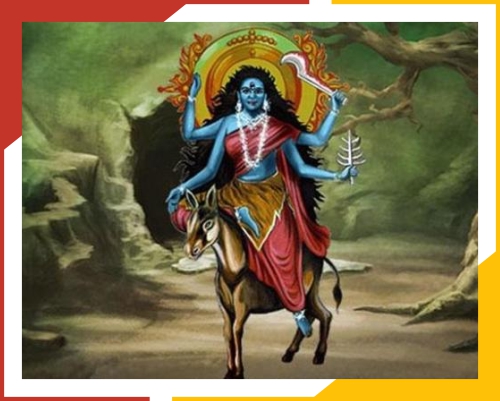
Kaalratri is the 7th form of Durga and is the most powerful and scary-looking deity. She sits on a donkey and has four arms, with two weaponed and two in the blessing mudra. Though the goddess looks fierce, she is very kind to her devotees. She is regarded as the remover of fear and negativity from our lives.
8th Day of Navratri – Goddess Mahagauri
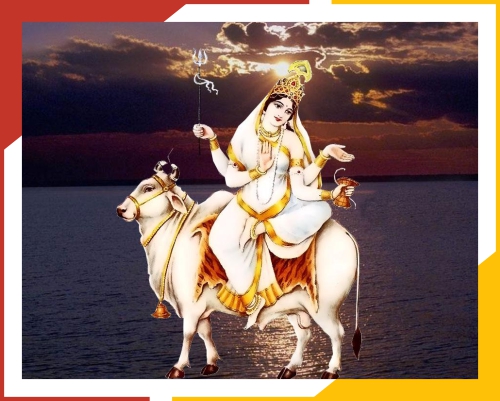
Seated on a bull, Maa Mahagauri is the 8th form and is known for her beauty and fairness. The goddess also holds a trishul and a damaru in two of her hands, while the other two arms are in Varada mudra and abhaya mudra, blessing her devotees with calmness and forgiveness.
9th Day of Navratri – Goddess Siddhidatri
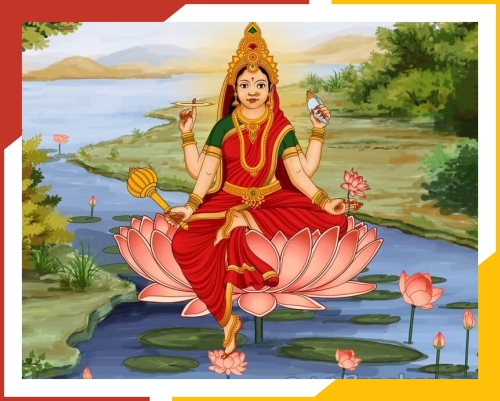
Devotees worship Goddess Siddhidatri on the last and final day of Navratri. This Navdurga form is the provider of siddhis, wisdom, and success. She is shown sitting on a lotus holding a conch (shank), mace (gadha), disc (chakra), and a lotus in each of her arms.
9 Colours of Navratri and Their Meaning
Every form of Navdurga worshipped during Navaratri is represented by a color, and they carry a special meaning. Devotees wear the respective color of the day and perform puja. Let’s see what the colors for Navratri are:

Grey - This color symbolises balance and new beginnings
Green - It is a color of prosperity and growth
Red - This depicts courage and love
Yellow - It represents happiness and positivity
Pink - This color symbolizes harmony and affection
White - White denotes purity and peace
Royal Blue - It is a symbol of strength and wisdom
Orange - Orange signifies energy and joy
Peacock Green - Freshness and uniqueness
Wearing traditional attire as per the colors of the day makes the festive environment vibrant and cheerful. Today, many households and even places of work follow the color codes and add grace to the Navratri festival.
How do People Celebrate Navratri?
In India, every region has its own way of celebrating Navratri.

In North India, burning huge effigies of Ravana, Meghnath, and Kumbhakaran is the main part of the festival. Also, Ram Leela is performed to recall the victory of Lord Rama over the demon king Ravana.
In South India, houses are adorned with the figurines of mythological forms, and children visit their neighbourhood to watch the display of dolls. Mysore Dasara is most famous for the grand processions and the lighting of the Mysore palace.
Garba and Dandiya are the main events of Navratri in Gujarat and in West Bengal. Idols of Goddess Durga are worshipped, and on the final day, the idols are taken out for processions and immersed in water.
At home, the main doors are decorated with mango leaves, toran, and a puja is performed by offering flowers and sweets. People also invite young girls for kanya puja, offer food, and give Navratri gifts for kanya.
Celebrate Navratri with Devotion and Essentials
Navratri festivities may differ, but the zeal remains the same. Not just in India, people abroad also celebrate this festival enthusiastically. However, finding Navaratri essentials like puja items, kanya puja gifts, and vrat recipe ingredients in foreign countries may be challenging, but not with The Desi Food anymore.
Our website, The Desi Food, delivers to more than 80 countries worldwide, be it the USA, UK, or Australia. So, wherever you are, you can now celebrate Navratri and worship Navdurga in the same way as you did at your home in India.
FAQs about Navdurga Forms
Who are Nava Durgas?
They are the 9 incarnations of Goddess Durga, and every incarnation represents qualities such as courage, wisdom, kindness, and devotion.
Why do we worship Navdurga in the Navratri?
Navdurgas are worshiped to celebrate the triumph of good over evil and request their blessings to become strong, peaceful, and secure.
Is Kali an avatar of Durga?
Yes. Goddess Kali is a fierce form of Durga, and she adopted this form to slay great demons and save the universe.
When is Navratri starting in 2025?
Sharad Navratri will start on 22nd September (Monday) and will conclude on 1st October (Wednesday). The 10th day, known as Dussehra/Vijayadashami, is on the 2nd of October.
You May Also Like
View all Articles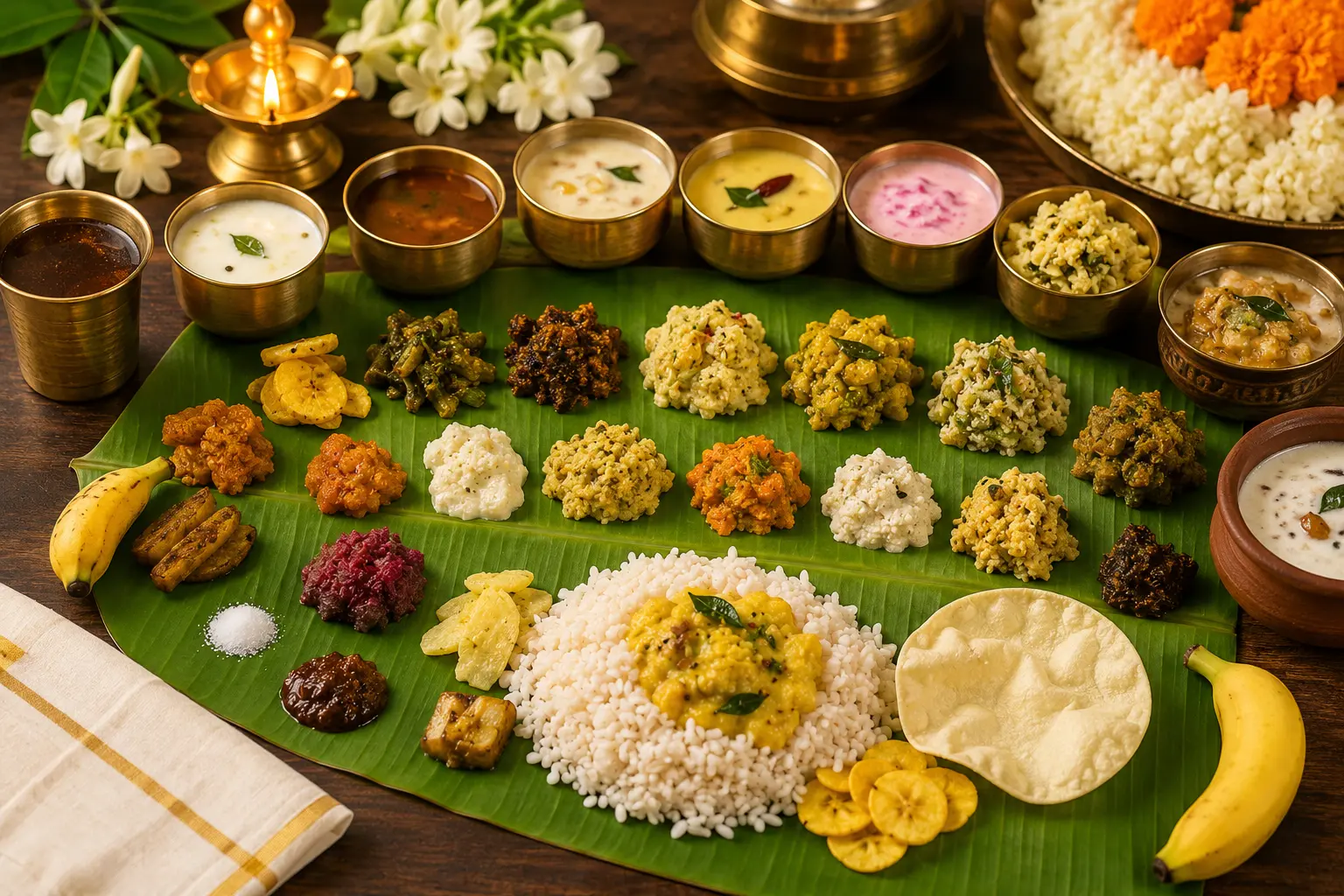 Festival Special
Onam Sadhya Explained: The 26-Dish Kerala Feast and What Each Dish Means
By thedesifoodAug 23, 2026 Festival Special
What Is Onam? Meaning, Story and Kerala's Harvest Festival
By thedesifoodAug 23, 2026 Festival Special
11 Most Popular Diwali Snacks, Namkeen and Farsan
By thedesifoodAug 13, 2026