
Giloy Benefits and Uses: What Guduchi Is and the Forms It Comes In
Giloy Benefits and Uses: What Guduchi Is and the Forms It Comes In
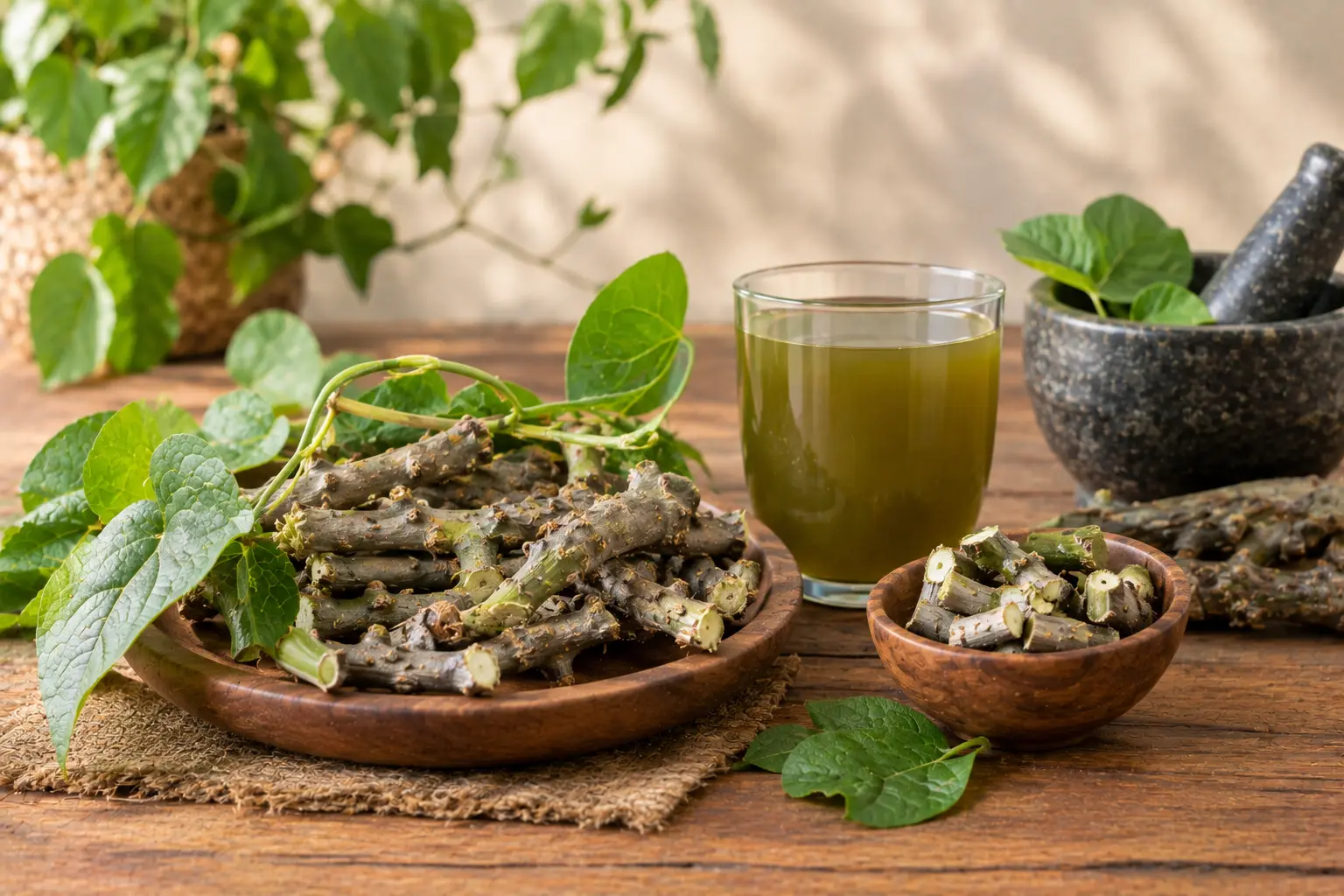
Giloy, guduchi, gulvel and amrita are four names for one plant, Tinospora cordifolia. Packs use them interchangeably, and some packs carry two or three of the names at once.
This guide covers what the plant is, the forms it is sold in, how Ayurveda uses it, and what the safety record says.
Giloy is not a treatment for any illness. There is a section below on liver injury reports, and it is the part to read before you buy.
What giloy is
Giloy is a climbing shrub native to India and South Asia. It grows up other trees rather than standing on its own.
The stem is the part used. It is cut, dried and then either ground, broken into coarse pieces, pressed into tablets, or juiced.
The names come from different languages. Giloy is the Hindi name. Guduchi is the Sanskrit name. Gulvel is the Marathi name. Amrita is another Sanskrit name, and it means nectar. They all mean the same plant, so a pack labelled with two or three of them is still one herb.
The forms guduchi is sold in
Form | What it is |
|---|---|
Powder, or churna | Dried stem, ground fine |
Kwath | Dried stem in coarse pieces, for simmering |
Ghanvati and tablets | Concentrated stem extract, pressed into tablets |
Juice | Liquid pressed or extracted from the stem |
Blends | Guduchi with other herbs, as tablets or juice |
Churna is the Ayurvedic word for a powder, and it is the same preparation used for many other herbs. Our what is triphala guide covers another one.
Giloy powder, or churna
This is the dried stem ground into a powder. It is the plainest form, and the label should name one plant and nothing else.
Powder is usually stirred into warm water. The stem is bitter, so most people mix it rather than take it dry.
Giloy powder
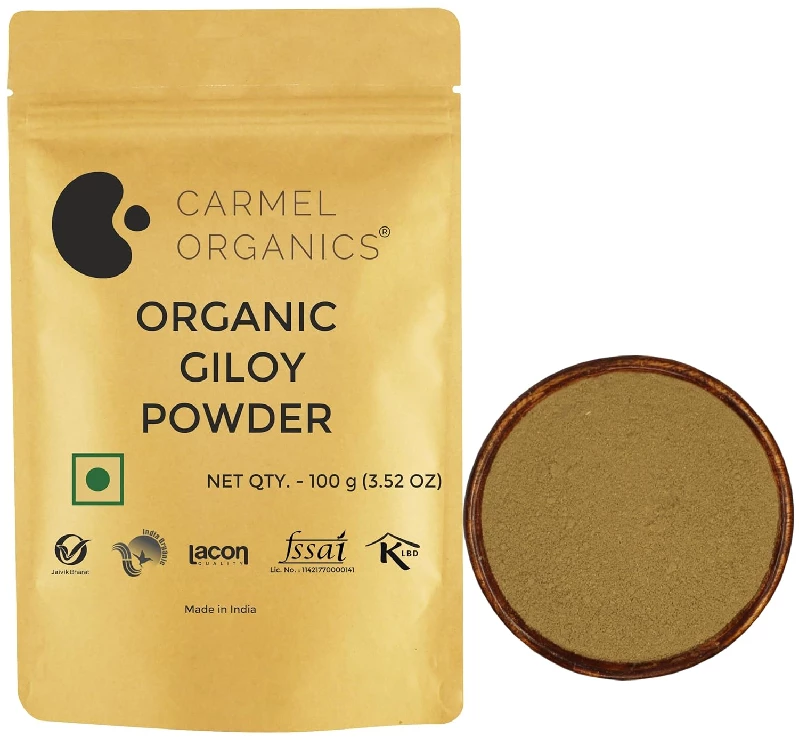
Brand page: Carmel Organics.
Giloy kwath
Kwath is a decoction. The stem is sold in coarse pieces rather than as a fine powder, and it is simmered in water and then strained.
It is the slowest form to prepare and the closest to the classical method.
Giloy kwath
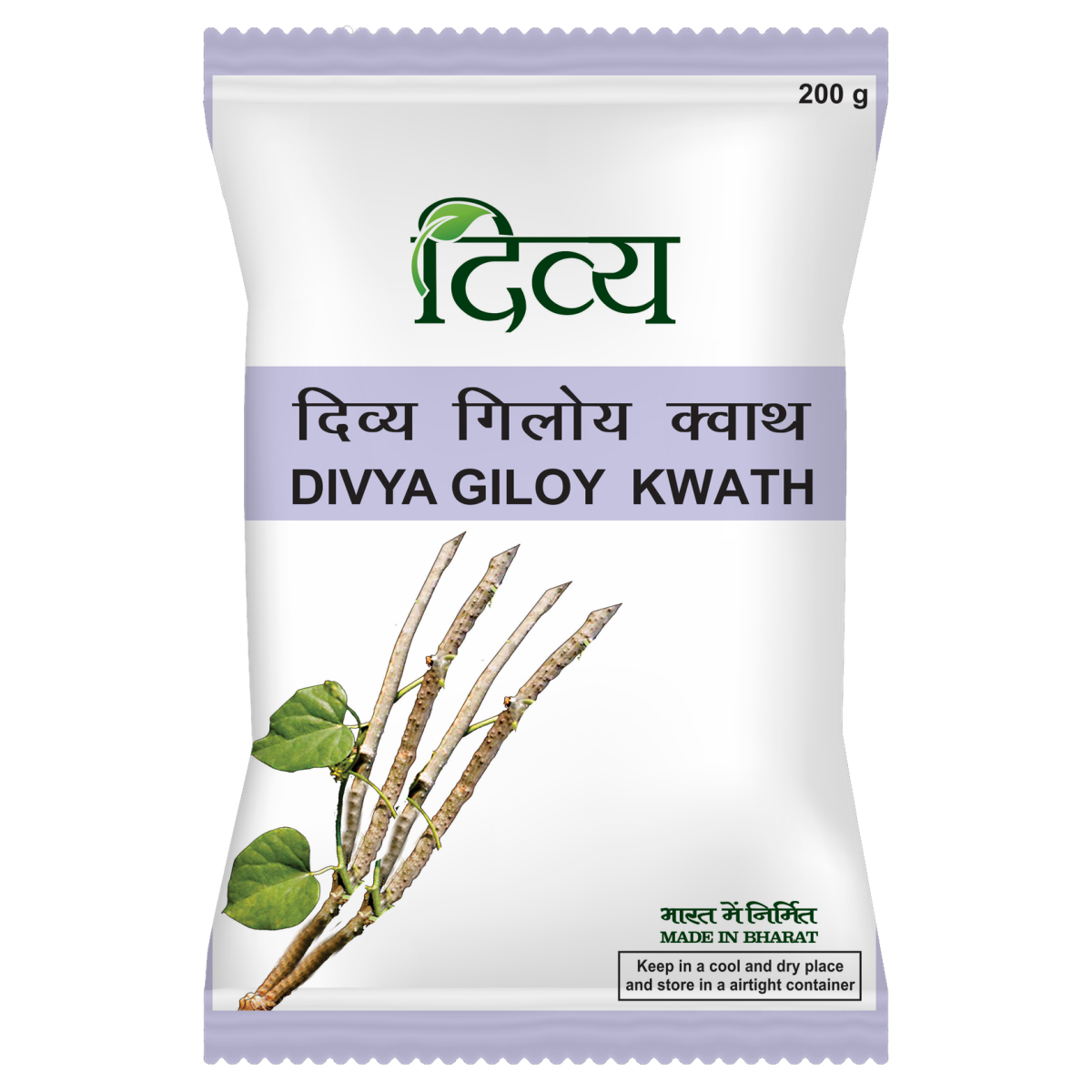
Brand page: Patanjali.
Giloy ghanvati and tablets
Ghan means a concentrated extract, and vati means a tablet. A ghanvati is an extract pressed into tablet form.
Tablets are the most common format sold abroad, because there is nothing to measure or simmer. The trade-off is that you cannot see the herb, so the label is the only thing telling you what is inside.
Giloy tablets

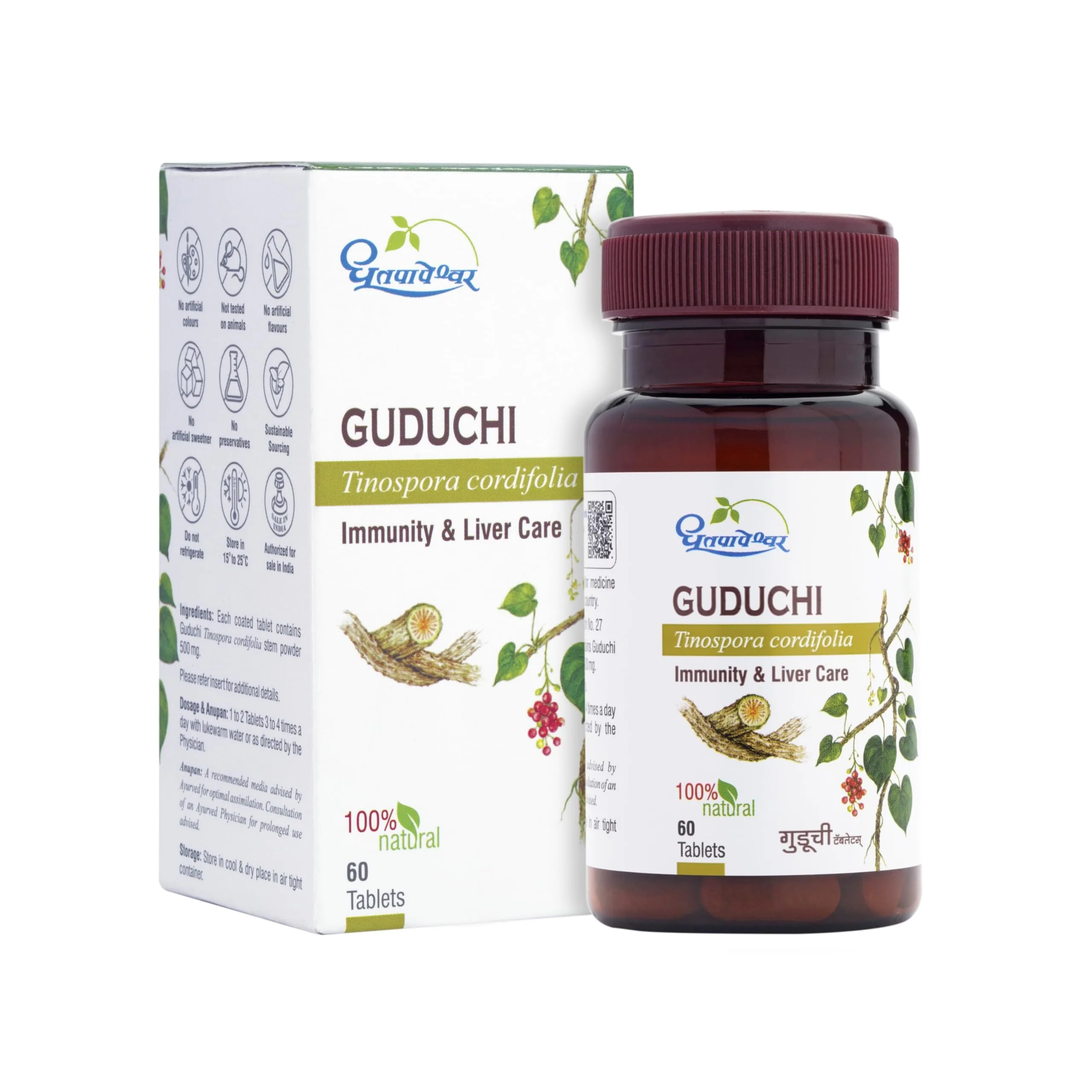
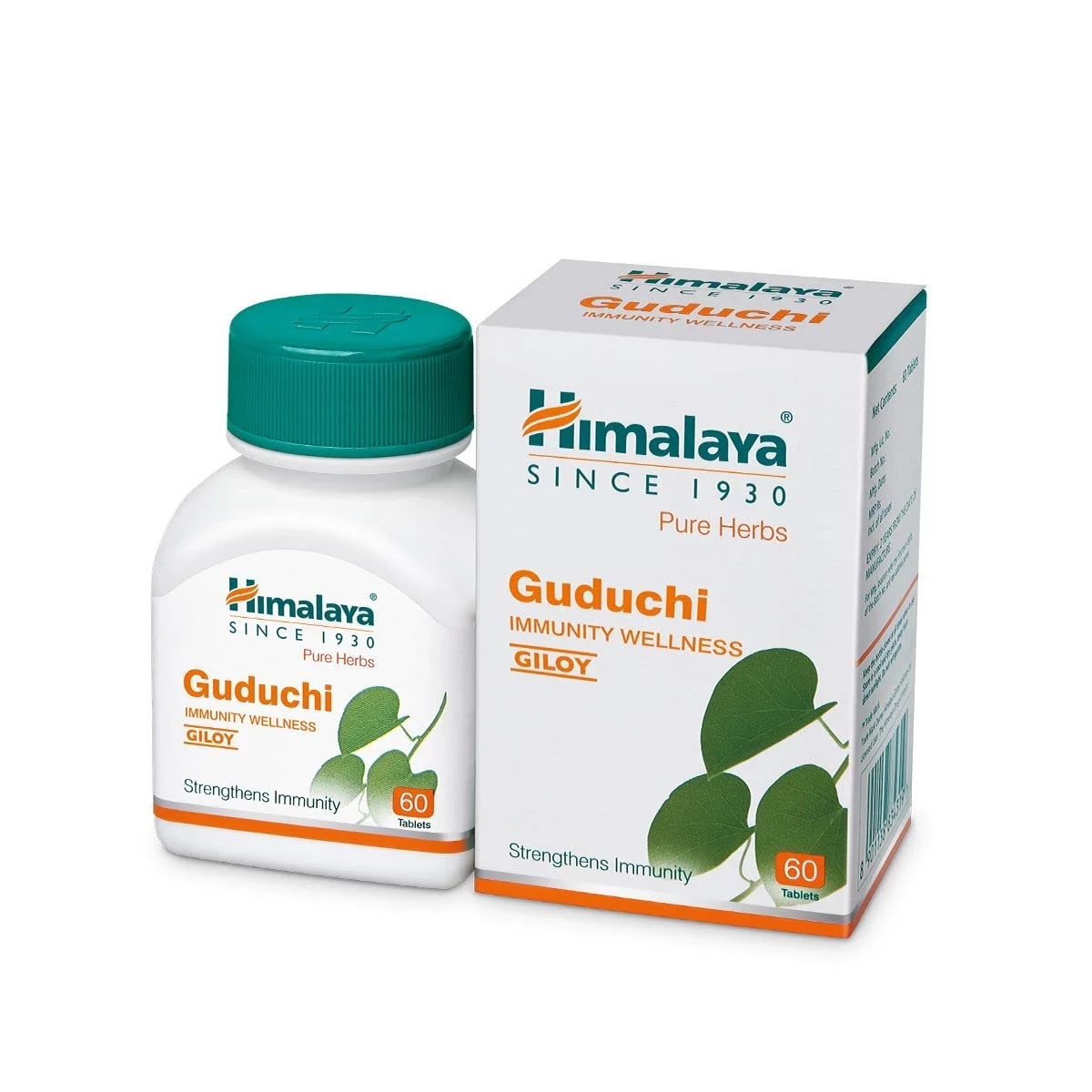
Brand pages: Dhootapapeshwar, Himalaya.
Giloy juice
Juice is a liquid form, sold in bottles. Most giloy juices on the market are blends rather than giloy alone, and most contain preservatives, so the ingredient list is worth reading.
Giloy juice
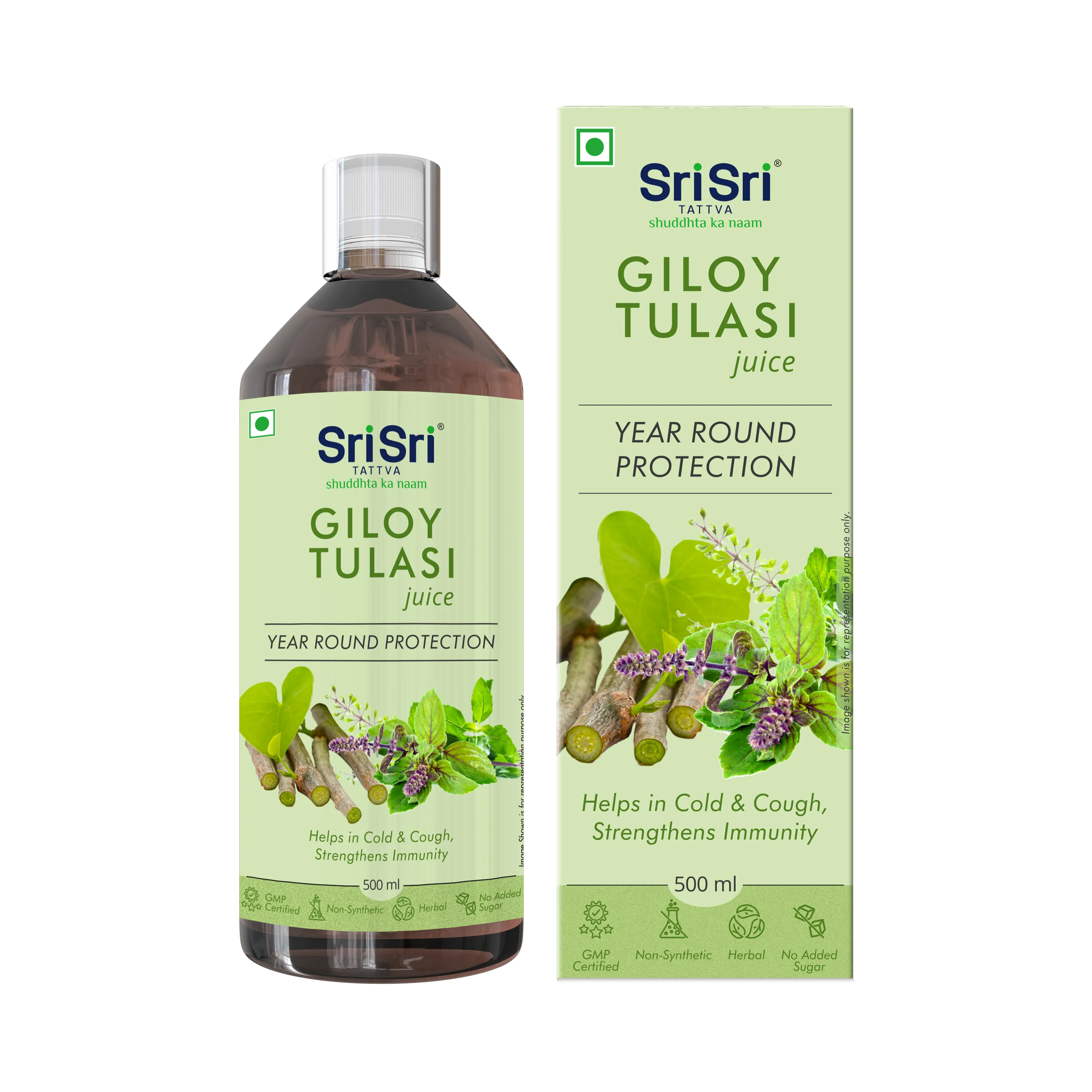
Brand page: Sri Sri Tattva.
Multi-herb blends
Guduchi is often combined with other herbs in one tablet or one bottle. Blends make it harder to know what you reacted to if something disagrees with you, so read the full list.
Blends with guduchi
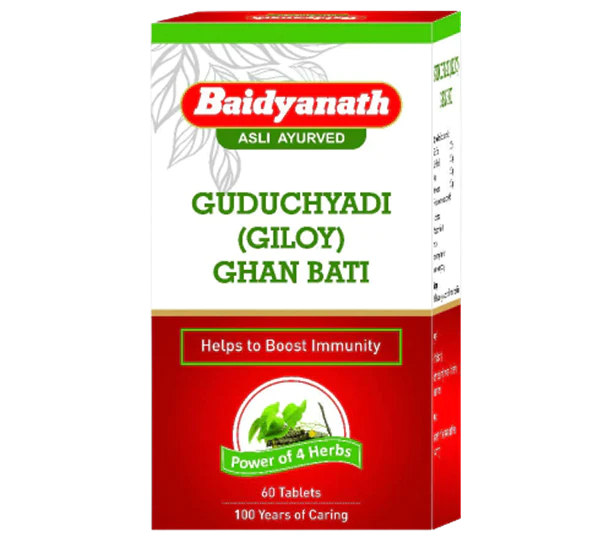
Brand page: Baidyanath.
How guduchi is used in Ayurveda
In Ayurvedic texts guduchi is grouped as a rasayana, which is a class of herbs and preparations taken over long periods. One of its names, amrita, means nectar, which gives an idea of how the tradition regards it.
It also appears as an ingredient inside classical formulations rather than on its own. Giloy is one of the herbs in kaishore guggul, and guduchi is listed among the herbs in many chyawanprash recipes.
Long traditional use is not the same as evidence. The next section covers what the record does and does not show.
What the research and safety record show
There is no US National Center for Complementary and Integrative Health page for giloy, and no benefit finding is cited in this guide.
The safety record is a different matter, and it is well documented.
LiverTox, a database run by the US National Institutes of Health, lists Tinospora as a well-established cause of clinically apparent liver injury. That is its highest likelihood category. The entry records more than 50 cases of acute liver injury since 2017, and it was last updated in June 2025.
There was a question about which plant was involved. Tinospora crispa, a related species, was already known for liver injury, and the early reports involving giloy were put down to crispa being sold as cordifolia. LiverTox says chemical and DNA analysis has since linked Tinospora cordifolia itself to occasional acute liver injury.
What that means when you are deciding whether to buy:
Speak to a doctor first if you have a liver condition, or if you take medicines that affect the liver.
Speak to a doctor first if you are pregnant, breastfeeding, or taking any prescription medicine.
Stop and get medical advice if you notice yellow skin or eyes, dark urine, unusual tiredness, or pain on the right side under your ribs.
In the USA, the FDA does not approve dietary supplements before they are sold. Makers are responsible for the safety and labelling of their own products, and the FDA acts once a product is on the market. Rules in the UK, Canada, Australia and the Middle East differ, so check where you live.
What to check on the label
The botanical name. Look for Tinospora cordifolia printed somewhere on the pack.
The part used. Giloy products are made from the stem. If a label does not say, it is worth asking.
One herb or several. A pack can carry giloy, guduchi and gulvel on the front and still be one plant. A pack that lists other herbs by name is a blend.
Extract or whole herb. Tablets are usually an extract, and powders are usually the whole dried stem.
The rest of the list. Juices carry preservatives, and tablets carry binders and coatings.
Before you buy
Ingredient details on this page come from each maker's own listing, so read the pack when it arrives. TheDesiFood ships these herbs, with doorstep delivery worldwide, including the USA, UK, Middle East, Australia and Canada, and the full Ayurveda collection holds more of them.
This guide is for general information only and is not medical advice.