How to Choose the Right Massage Oil for Your Baby
Choosing a baby massage oil? Learn which oils may suit infant skin, what ingredients to check, how to massage safely, and what to avoid.

Latest Articles
 Wellness
What Is Avipattikar Churna? Ingredients, Traditional Uses and Safety
Oct 8, 2026
 Staples
Organic Honey vs Regular Honey: What the Label Covers and What It Doesn't
Oct 8, 2026
 Beauty
8 Best Natural Shampoos for Men to Buy Online in the USA, UK and Beyond
Oct 8, 2026
 Wellness
Best Ayurvedic Herbs for Sleep: 8 Herbs and the Forms They Come In
Sep 30, 2026
Baby massage can be a simple way to spend quiet, one-on-one time with your little one. An oil can make the movements smoother and reduce friction on the skin, but choosing one isn't as simple as picking the first bottle labelled "baby oil."
But when you're choosing something for a newborn or a young baby, it is worth looking beyond the label. Baby skin is still developing, and different oils can affect it in different ways.
Research has looked at several oils used on infant skin, including sunflower, coconut, almond, olive, and other plant oils. The findings vary, so no single oil is the best choice for every baby. Research has found potential benefits from several topical oils but also reported mixed findings in some studies.
So, which oil should you choose? And what should you look for if you're buying one for a newborn? We’ll walk you through the different oils used for baby massage, what to check on the label, how to massage your little one safely, and a few options you can shop for if you decide to try one.
Is Massage Good for Babies?
Infant massage has been studied for several outcomes, including weight gain, pain relief, jaundice, and other aspects of infant well-being. You don't need a special technique or a long routine. Sometimes, it can be as simple as gently rubbing your baby's legs or back while talking to them and watching how they respond.
Research has looked at infant massage for several outcomes, including pain relief, jaundice, and weight gain. A study found indications of benefits across some of the outcomes studied, although they also noted that the findings should be interpreted with caution and that more research is needed.
Above all, there is the simple parent-baby interaction to consider. Massage gives you a chance to slow down, notice your baby's cues, and spend some uninterrupted time together. It can be especially lovely when your baby is calm and alert and seems happy to be touched.
The oil itself isn't what makes a massage meaningful. Its main practical purpose is to help your hands move comfortably over the skin without unnecessary friction.
The NHS also notes that massage can help babies relax and sleep and recommends that parents check that any oil or lotion they use is suitable for babies.
Which Oil Is Best for Massaging Infants?
There isn't one oil that works best for every baby. Different oils have been studied in newborn and infant skincare, and their effects can vary depending on the baby's age, skin condition, the oil itself, and how it is used.
Here are some of the more commonly used options for baby massage.
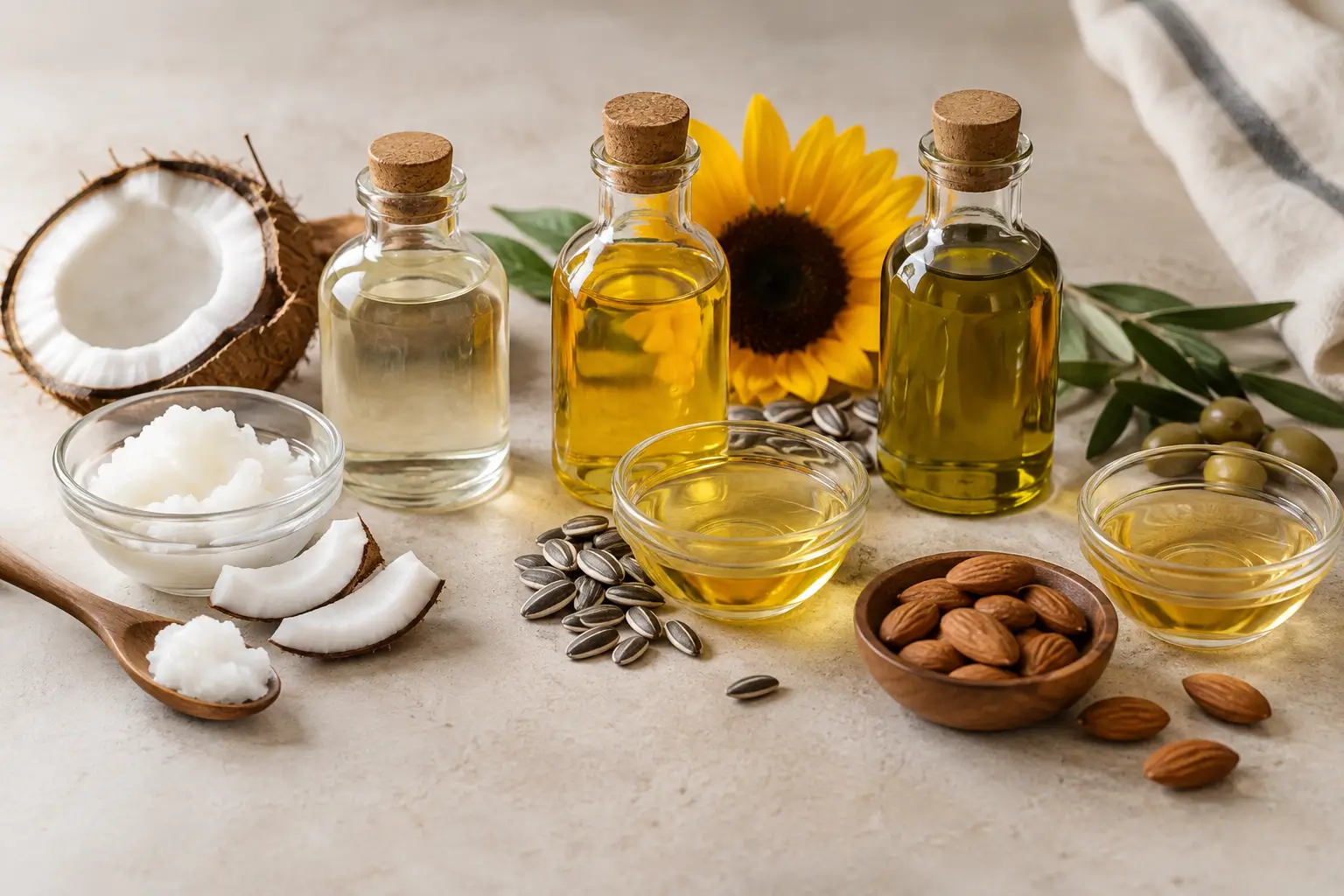
Coconut Oil
Coconut oil is a familiar choice for baby massage, particularly in Indian households where oil massage has long been part of traditional baby-care routines.
It has also been studied in preterm infants. Research has found that topical coconut oil may help with skin conditions and reduce water loss. Some studies also reported other potential benefits, although the overall quality of evidence ranged from low to moderate.
For a healthy full-term baby, that research does not automatically mean coconut oil is the right choice. If you want to use it, look for a simple formulation without unnecessary fragrance or added essential oils, and check that the product is intended for your baby's age.
Sunflower Oil
Sunflower oil is another option that has been studied in newborn skincare. It is also recommended in some infant-care guidance.
A systematic review found that sunflower oil was among the oils most frequently studied in neonatal skincare, with several studies reporting improvements in skin condition or barrier function. At the same time, not every study reached the same conclusion, which is why researchers have called for better-quality evidence.
Cambridge University Hospitals recommends a cold-pressed one, such as sunflower oil, for massage in its neonatal-unit guidance, provided the baby has reached their due date or is older. It also recommends avoiding perfumes and essential oils because they can irritate the skin or cause overstimulation.
Olive Oil
Olive oil is often associated with natural skincare, so it may seem like an obvious choice for baby massage. But newborn skin deserves a little more caution than the word "natural" might suggest.
A randomized trial involving 115 healthy full-term newborns compared olive oil, sunflower oil, and no oil. Both oil groups had better skin hydration, but both also showed less improvement in the structure of the skin's lipid barrier than the no-oil group. The researchers therefore advised caution when recommending oils for neonatal skin.
This doesn't mean that every baby will react badly to olive oil. It simply means that there is a reason not to assume that every plant oil is automatically better for newborn skin.
Almond Oil and Other Plant Oils
Almond oil is another familiar ingredient in massage oils and traditional skincare. If you're considering it for a baby, pay attention to the formulation rather than choosing it simply because it is plant-based.
You can find almond oil in everything from standalone body oils to blended skincare products. The ingredient itself has a long history of use in skin and massage products, but that doesn't mean every almond-oil product is formulated for babies.
The same applies to other botanical oils. A product containing several plant ingredients isn't necessarily a better option than a simpler one. For a baby, the age guidance, complete ingredient list, and formulation are more useful things to look at.
What Should You Look for in a Baby Massage Oil?
When you're at a shelf of baby oils, it can be tempting to trust the words on the front of each bottle. "Natural," "herbal," "organic," and "gentle" all sound reassuring, but they don't tell you everything you need to know.
A few simple checks can make the choice easier.
1. Look for a simple ingredient list
You don't need a product with just one ingredient, but you should understand what's in the bottle.
Look for a clear ingredient list and check whether the product is actually intended for babies. If a product contains several herbs, fragrances, or essential oils, take a moment to understand what you're applying.
2. Think about fragrance
Babies don't need their massage oil to smell strongly.
Fragrance can be unnecessary, particularly if your baby's skin is sensitive. A mild or unscented product can also make it easier to notice if your baby's skin reacts to something in the formulation.
3. Check the age recommendation
A product made for an older baby isn't automatically suitable for a newborn.
This is particularly important during the first few weeks of life, when your baby's skin is still adapting to the outside environment. Some official guidance also recommends waiting until a baby is at least one month old before using lotions or oils, so check the advice that applies to your baby's age and circumstances.
If your baby was born prematurely, ask your healthcare team before introducing a new massage oil.
4. Consider your baby's skin
Your baby's skin is the best guide to whether a product is working for them.
If you notice redness, itching, bumps, dryness, or any other change after using an oil, stop and see how the skin responds. Don't keep using a product simply because it was recommended by someone else or has been used successfully by another baby.
If your baby already has eczema, a rash, broken skin, or another skin condition, speak with your pediatrician before introducing a new product.
5. Look for clear product information
A good baby-care product should tell you its ingredients, how to use it, and the intended age.
Be a little more careful with products that make a long list of health promises, such as improving immunity, digestion, growth, or sleep. A massage oil can be part of a soothing care routine, but that doesn't mean every claim made on the bottle has been clinically established.
Is Baby Oil Good for Massage?
It can be, as long as the particular product is made for babies and is suitable for your baby's skin.
The tricky part is that "baby oil" can mean very different things depending on the product. Some are designed specifically for massage, while others are mainly intended to moisturize the skin after bathing.
So instead of assuming that every baby oil is interchangeable, turn the bottle around and look at the ingredients and directions.
If you're buying something specifically for massage, choose a product that clearly says it is suitable for babies and follow the age and usage instructions provided by the manufacturer.
And remember, you don't actually need oil to massage your baby. If your baby is comfortable with gentle touch without it, that's perfectly fine too.
Can You Use Natural or Organic Oil for a Newborn?
A plant oil can be natural and still not be the right choice for a newborn's developing skin. Studies have shown that different oils can affect the skin barrier differently, which is why researchers have not found a simple answer that applies to every baby.
"Organic" tells you something about how an ingredient is produced or sourced. It doesn't automatically tell you whether the finished product is appropriate for a newborn.
Before choosing one, check:
The complete ingredient list
The recommended age
Whether it contains fragrance or essential oils
The manufacturer's directions
Whether it is intended for massage or general skincare
Whether your baby has sensitive, dry, or irritated skin
If you're unsure, there is nothing wrong with keeping things simple and asking your baby's pediatrician which type of product would be appropriate.
What About Ayurvedic Oil for Baby Massage?
For many Indian families, oil massage is more than just a skincare routine. It can be something parents remember from their childhood and want to continue with their baby.
Ayurvedic baby oils often combine plant oils with herbs and other traditional ingredients. The formulations can vary considerably, so the word "Ayurvedic" by itself doesn't tell you whether a particular product will suit your baby's skin.
If you're considering one, turn the bottle around and check the full ingredient list. Look at the recommended age, how the product is meant to be used, and whether it contains fragrance or essential oils.
You can also see how different ayurvedic body oils are formulated for adult skincare and body massage. Just keep in mind that a product designed for adults isn't automatically suitable for a baby.
Again, if your baby has particularly sensitive skin, eczema, or an existing rash, it's better to ask your pediatrician before introducing a product with several botanical ingredients.
How to Massage Your Baby With Oil
Once you've found a product you're comfortable with, the massage itself can be very simple.
You don't need to follow a complicated routine. The most important thing is that your baby is comfortable and that you're paying attention to their cues.
1. Choose a comfortable time
Pick a moment when your baby is calm and alert.
You may find that after a bath works well, or perhaps before bedtime when your baby is already winding down. Avoid starting when your baby is famished, overtired, or immediately after a feed.
Give yourself enough time that you don't feel rushed either. Your baby can usually sense when you're tense or hurried, and there is no need to turn massage into another task on a busy day.
2. Start with a small amount
Pour a little oil into your hands and rub your palms together first.
This helps spread the oil evenly and means you aren't placing a cold blob of oil directly onto your baby's skin.
You don't need much. Just enough to let your hands glide comfortably without making the skin excessively slippery.
3. Use slow, gentle movements
Use your palms and fingertips to make gentle strokes across your baby's arms, legs, tummy, or back.
There is no need to press firmly. Slow, light movements are enough.
Talk to your baby while you massage them if they enjoy hearing your voice. You can also make eye contact and pause between areas. These little moments are part of what makes massage feel like time together rather than a skincare routine.
4. Keep sensitive areas out of it
Keep oil away from your baby's eyes, mouth, and nose.
Avoid putting it on broken or irritated skin. If the umbilical cord area has not healed, follow your healthcare professional's advice on what to apply there.
5. Let your baby decide when to stop
This is probably the most important part.
If your baby starts fussing, crying, pulling away, or otherwise seems uncomfortable, stop. Some babies love massage immediately. Others need time to get used to it, and some simply don't enjoy it every time.
That's okay.
There is no need to finish a particular sequence just because you started it. Try again another day when your baby is more settled.
6. Put the bottle away safely
Once you're finished, wipe away any excess oil if necessary and dress your baby comfortably.
Keep the bottle somewhere your baby cannot reach. If you notice any redness or irritation after the massage, stop using the product and seek medical advice if the reaction persists or concerns you.
Is Baby Massage Oil Safe for Newborns?
There isn't one simple yes-or-no answer because safety depends on the product, the baby's age, their skin, and how the oil is being used.
If you go by evidence, research on topical oils in newborns is encouraging in some areas but not completely consistent. Trials found potential benefits from several oils, but three studies reported equivocal, negative, or mixed findings. The authors concluded that more high-quality research is still needed.
The Indian Academy of Pediatrics guidelines recommend oil massage for newborns and mention sunflower, coconut, and mineral oils as preferred options over olive and mustard oil because of their effects on skin-barrier function. At the same time, very young or medically vulnerable babies need more individual care. Premature babies, babies with eczema, or babies with damaged or irritated skin may need different advice.
If your baby falls into any of these categories, check with your healthcare professional before introducing a new oil.
For a healthy baby who is old enough for massage, keep the approach simple. Choose an age-appropriate product, use it gently, and watch how your baby's skin responds.
Baby Massage Oils You Can Shop
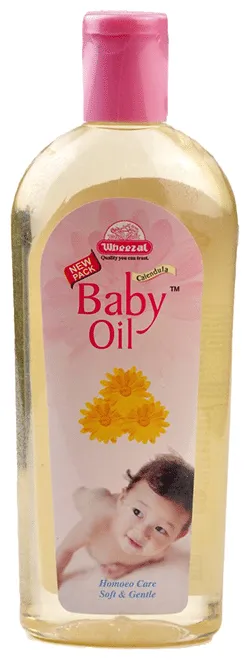
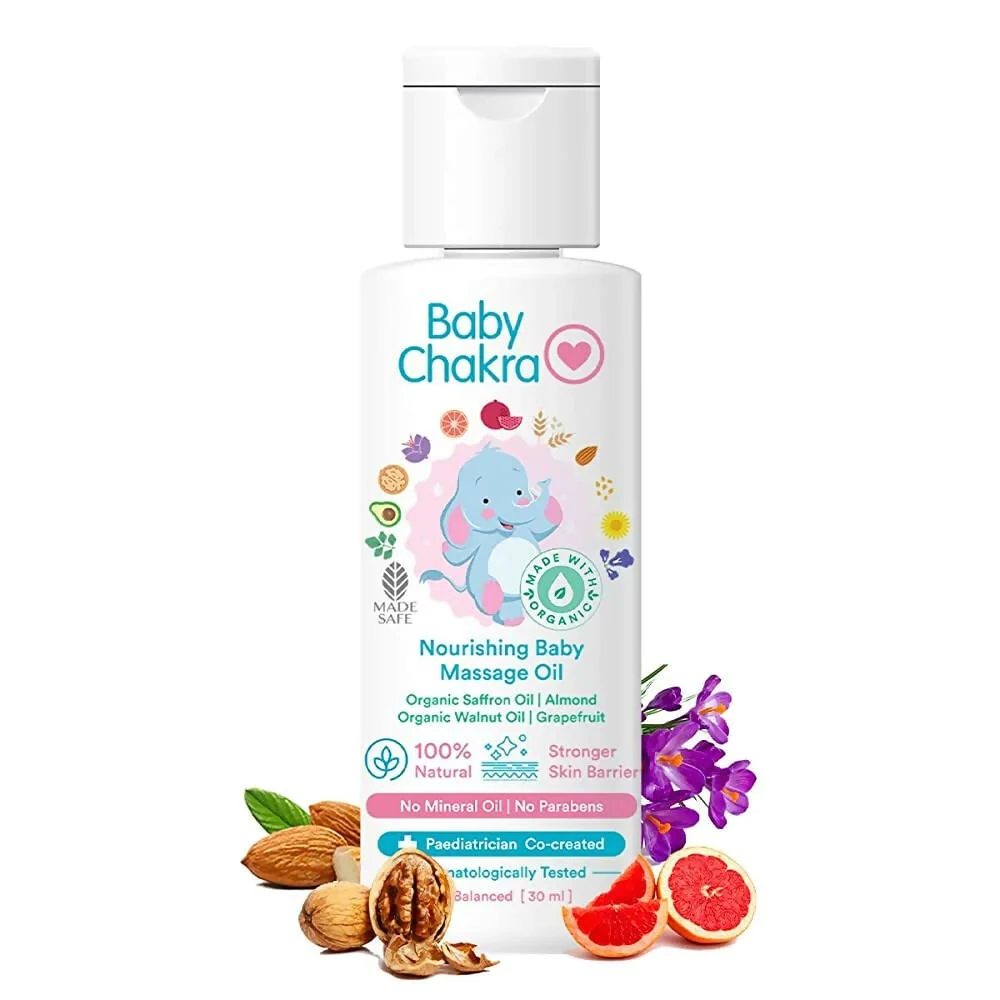
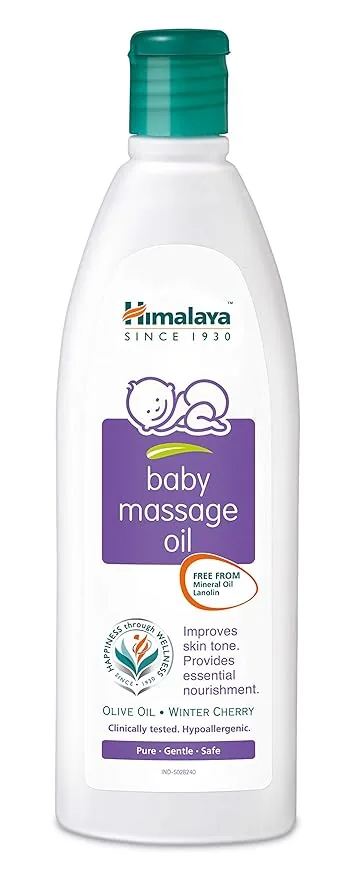
If you'd like to try one, you can browse the baby massage oils we've selected and compare the ingredients and product details before choosing one for your little one.
Before picking one, check the label and make sure the product is appropriate for your baby's age and intended use.