All About Hair Serums: Benefits, How to Use It & How to Choose One
Learn how hair serums work, their benefits, how to apply them, and what to look for when choosing a serum for thinning or weak hair.

Latest Articles
 Wellness
Yogaraj Guggulu: A Complete Guide
Nov 17, 2026
 Beauty
Nalpamaradi vs Kumkumadi Thailam: How These Two Kerala Face Oils Differ
Nov 11, 2026
 Wellness
What Is Avipattikar Churna? Ingredients, Traditional Uses and Safety
Oct 8, 2026
 Staples
Organic Honey vs Regular Honey: What the Label Covers and What It Doesn't
Oct 8, 2026
A hair serum can mean very different things depending on what you're trying to fix. One serum might be designed to go directly onto the scalp and target thinning or hair fall. Another might be made for the lengths and ends, where it smooths frizz, adds shine, and makes dry or damaged hair easier to manage. Then there are formulas that sit somewhere in between, combining scalp-focused ingredients with conditioning agents.
That distinction matters if you're searching for the right hair serum. A serum that makes dry ends feel softer isn't necessarily designed to encourage hair growth, and a scalp serum for thinning hair won't necessarily repair split ends.
So instead of simply giving you a list of products and calling one the winner, we'll break down what different hair serums actually do, which ingredients are worth looking for, what the research says about hair-growth claims, and how to choose a serum for dry, damaged, thinning, or generally difficult-to-manage hair.
What Does a Hair Serum Actually Do?
The word "serum" describes a product format more than a single type of treatment.
Depending on its formulation, a hair serum can be used to:
Smooth frizz and flyaways
Add shine
Reduce the rough feeling of dry hair
Make hair easier to detangle and style
Reduce the appearance of damage and split ends
Condition the lengths and ends
Deliver active ingredients to the scalp
Support a routine for people experiencing hair thinning
The first five functions are primarily cosmetic hair care. They improve how the existing hair looks and feels.
A scalp serum marketed for hair growth is different. It is intended to be applied to the scalp and may contain ingredients such as Redensyl, peptides, caffeine, rosemary extract, or other cosmetic actives.
And then there is a third category of medicated treatments for hair loss.
Topical minoxidil is different from a conventional cosmetic hair serum. It is a drug used for androgenetic alopecia, and clinical evidence supports its ability to promote hair growth in men and women with this type of hair loss.
The AAD explains that hair loss can have many causes, including hereditary hair loss, illness, medications, hairstyles, and other conditions. This is useful because it prevents the article from implying that a serum is a universal solution.
Understanding that distinction will make it much easier to choose the right product.
Benefits of Hair Growth Serum
A hair growth serum can be a useful addition to a regular scalp and hair-care routine. Depending on its ingredients, it may help:
Support a healthy scalp: Ingredients designed for scalp care can help maintain a clean, balanced scalp environment.
Nourish the hair and scalp: Many serums contain botanical extracts, oils, vitamins, or other conditioning ingredients that help care for the scalp and hair.
Reduce the appearance of dryness: Hydrating ingredients can help keep the scalp and hair from feeling dry or tight.
Improve the look of hair: Conditioning ingredients can make hair feel smoother, softer, and more manageable.
Support healthier-looking hair over time: Consistent scalp care can be part of a broader hair-care routine, especially when combined with gentle hair practices.
Hair Serum for Hair Growth vs Hair Serum for Dry Hair
Before buying anything, ask one question: Am I trying to treat my scalp or improve the hair I already have?
Your concern | What to look for |
Hair thinning | Scalp-focused hair-growth serum or evidence-based hair-loss treatment. |
Excessive hair shedding | Identify the cause first, then choose an appropriate treatment. |
Dry hair | Conditioning and smoothing ingredients |
Dry, damaged hair | Lightweight oils, silicones, conditioning agents, or other smoothing ingredients |
Frizz | Smoothing serum designed for the lengths |
Split ends | A serum that coats and smooths the existing hair, while trimming remains the only way to remove split ends. |
Lack of shine | Smoothing and conditioning ingredients |
Weak or breakage-prone hair | A combination of gentle hair care and conditioning products |
This is why there isn't one best product for everyone. The right formula depends on what you want the product to do.
What Is the Best Hair Serum for Hair Growth?
If your primary concern is thinning or hair loss, don't judge a serum by how impressive its ingredient list looks.
Look at the evidence behind the active ingredients and, more importantly, consider why you're losing hair in the first place.
Hair loss can have many causes, including hereditary pattern hair loss, nutritional deficiencies, hormonal changes, certain illnesses, medications, scalp conditions, and physical or chemical damage.
The American Academy of Dermatology recommends getting the cause of hair loss diagnosed because treatment depends on the underlying condition. For hereditary hair loss, minoxidil is one established treatment option.
What about cosmetic hair-growth serums?
There is growing interest in ingredients such as:
Redensyl
Procapil
Capixyl
Anagain
Baicapil
Caffeine
Rosemary
Peptides
Plant extracts
A 2025 review of topical alternatives for hair loss examined several of these ingredients and noted that the evidence is much more limited and variable than the evidence for established hair-loss treatments.
That doesn't mean every cosmetic hair-growth serum is useless. It means the claims should be kept in perspective.
A serum can be a useful part of a scalp-care routine without being equivalent to a clinically established hair-loss treatment.
Hair Growth Serum That Actually Works: What Should You Expect?
If a product promises dramatically faster growth, instant regrowth, or a completely restored hairline within a few weeks, be cautious.
Hair grows through a biological cycle, and genuine changes in density take time.
For androgenetic alopecia, topical minoxidil has substantially stronger clinical evidence than most cosmetic hair-growth ingredients. A systematic review of topical minoxidil found evidence of improved hair growth in androgenetic alopecia, while the American Academy of Dermatology notes that results generally take months rather than weeks.
So when you're looking for a hair growth serum that actually works for you, ask:
Is it a cosmetic product or a medication?
What active ingredients does it contain?
Is there human clinical research on those ingredients?
Is the research on the finished product or just an individual ingredient?
What type of hair loss is it intended to address?
Does the product make claims that go beyond the evidence?
Those questions will tell you more than a long list of "before and after" claims.
Which one is the Best Hair Serum for Dry Hair?
If your main problem is dry hair, you don't necessarily need a hair-growth serum.
Dryness usually affects the hair shaft, not the follicle. The right serum can coat the strands, reduce friction, smooth the cuticle, and make the hair feel softer and look shinier.
Look for formulations containing ingredients such as:
Lightweight plant oils
Silicones
Conditioning agents
Fatty ingredients
Smoothing polymers
Vitamin E and other conditioning ingredients
The best serum for dry hair is usually the one that gives you enough slip and moisture without making your hair heavy or greasy.
How to use a serum on dry hair
Start with a small amount.
Rub it between your palms and apply it mainly to the mid-lengths and ends. Avoid putting a heavy amount directly on the scalp unless the product is specifically formulated for scalp use.
If your hair is very fine, you may need only a drop or two.
If your hair is thick, curly, coarse, or particularly dry, you may need slightly more.
The goal is to smooth the hair, not coat it until it feels oily.
What’s the Best Hair Serum for Dry and Damaged Hair?
Dry and damaged hair needs a slightly different approach.
Damage can result from repeated heat styling, bleaching, coloring, chemical treatments, UV exposure, friction, and aggressive brushing. Once the hair fiber has been significantly damaged, a serum cannot permanently restore it to its original state.
What a good serum can do is improve the feel and appearance of the existing hair.
It can help:
Reduce the appearance of frizz
Make rough hair feel smoother
Improve shine
Reduce friction during combing
Make the ends look more polished
Temporarily improve the appearance of split ends
If your hair is severely damaged, combine the serum with gentler washing, conditioning, reduced heat exposure, and regular trimming.
Is a Cosmetic Serum Enough?
It is important to distinguish regrowth from hair care.
If you have gradually thinning hair at the crown or widening of the part, a cosmetic serum may not address the underlying cause.
Topical minoxidil is an established treatment for androgenetic alopecia, and current reviews continue to support its role in promoting hair growth.
The American Academy of Dermatology also notes that minoxidil can help early hair loss, but it takes time to work, and continued use is needed to maintain its benefits.
If your hair loss is sudden, patchy, accompanied by scalp symptoms, or significantly more than usual, it's better to see a dermatologist rather than trying several cosmetic serums one after another.
Ingredients You May See in Hair-Growth Serums
Hair-growth serums can contain everything from botanical extracts to cosmetic blends designed to support the scalp and hair follicles. Some ingredients have been studied for their potential role in reducing hair shedding or supporting hair density, while others are mainly used for scalp conditioning and hair care.
Here are some of the ingredients you are most likely to come across and what they are generally used for.
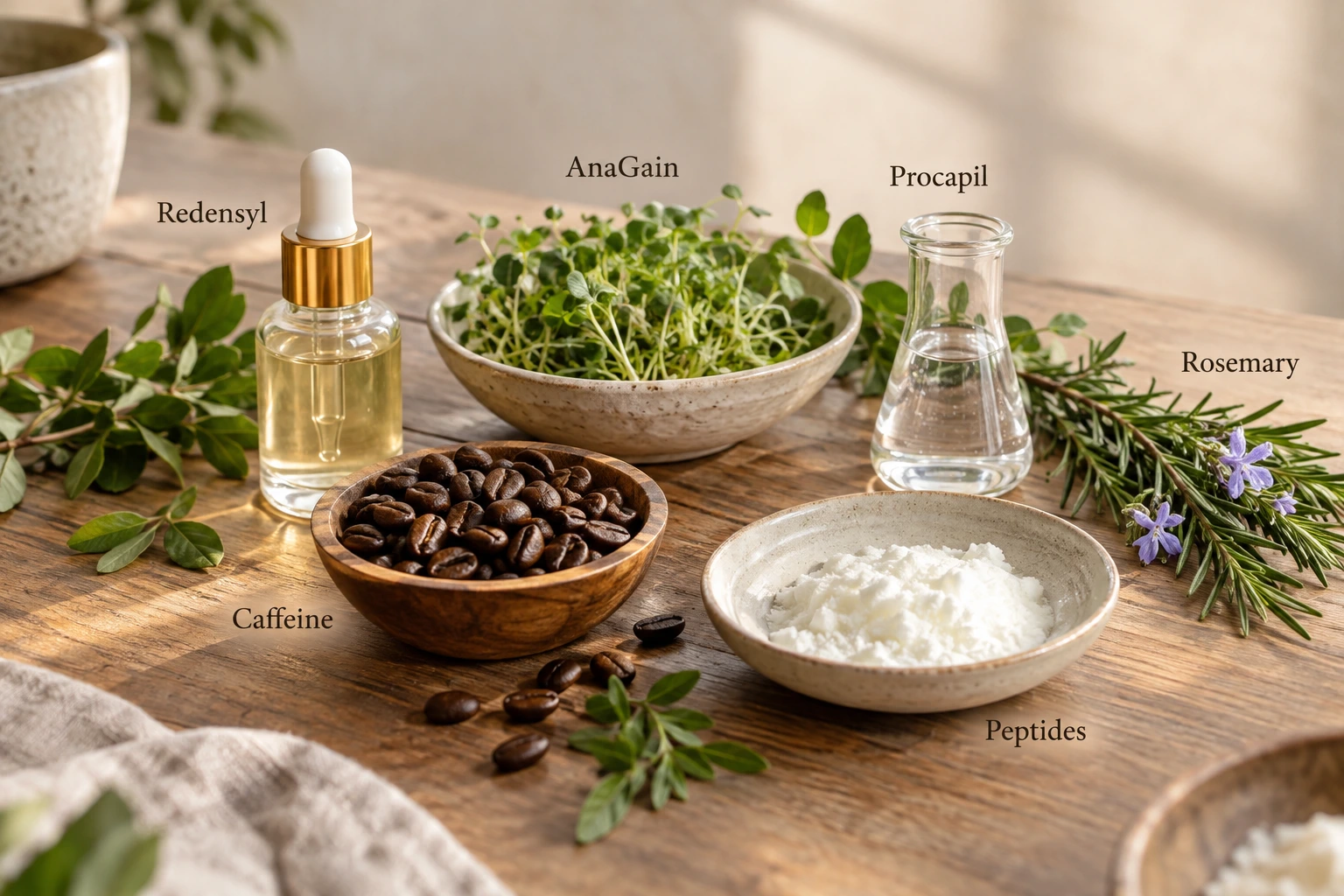
Redensyl
Redensyl is a branded cosmetic ingredient made from a blend of plant-derived compounds.
It is commonly used in hair serums marketed for hair fall, hair density, and fuller-looking hair.
It is designed to support the cells around the hair follicle and is often described as an ingredient that may help keep follicles in the active growth phase.
Research on Redensyl has shown some promising results, particularly in cosmetic formulations designed to improve hair density. However, much of the available research involves specific formulations or combinations of ingredients, so the results should not automatically be applied to every serum containing Redensyl.
Procapil
Procapil is another cosmetic blend you may see in hair-growth serums.
It combines several ingredients and is commonly marketed for helping strengthen the connection between the hair follicle and scalp while supporting hair anchoring.
It is generally used in products aimed at reducing hair fall and improving the appearance of thinning hair.
Some research has looked at Procapil-containing formulations, including products that combine Procapil with caffeine, and has reported improvements in hair-loss measures. Still, the results depend on the particular formulation and how it was studied.
AnaGain
AnaGain is a pea-sprout-derived cosmetic ingredient used in products designed to support the hair-growth cycle.
It is marketed around helping hair follicles stay in the growth phase for longer, which may help improve the appearance of hair density over time.
You will usually find it in serums and other leave-on scalp products rather than conventional hair conditioners or shampoos.
Research has looked at AnaGain as one of several newer cosmetic ingredients for hair loss, although the amount of clinical research available is still relatively small.
Rosemary
Rosemary is one of the better-known botanical ingredients used in hair and scalp products.
Rosemary oil is commonly used in serums and scalp oils that are marketed for hair growth and reduced hair shedding.
One clinical trial compared rosemary oil with 2% minoxidil in people with androgenetic alopecia and found that both groups had an increase in hair count after six months. That is encouraging, but it was a relatively small study, and results from rosemary oil cannot be assumed to apply to every rosemary-containing serum.
Caffeine
Caffeine is a popular ingredient in scalp serums because of its potential effects on the hair follicle.
Research suggests that topical caffeine may interact with pathways involved in follicle activity and may help support the growth phase of hair.
It has also been studied in human clinical trials, and a 2025 review found that topical caffeine products showed promising results across the studies available. However, the quality of those studies varied, and researchers noted that better-designed trials using clearly defined caffeine formulations are still needed.
Peptides
Peptides are increasingly common in hair serums and scalp treatments.
They are short chains of amino acids that can be included in cosmetic formulas to support the condition and appearance of hair and scalp.
In hair products, different peptides may be used for different purposes, including supporting hair strength, improving the feel of the hair, or targeting pathways involved in the hair-growth cycle.
Research into peptide-based approaches to hair loss is growing, but the effects can vary significantly depending on the specific peptide and formulation.
A note before choosing a hair-growth serum
A serum containing one of these ingredients does not necessarily work the same way as another product containing the same ingredient. The concentration, formulation, combination of ingredients, and the cause of hair loss can all matter.
If you have persistent or sudden hair loss, or a scalp condition such as eczema, psoriasis, irritation, or unexplained itching, it is worth speaking with a dermatologist or other healthcare professional before choosing a hair-growth treatment. Hair loss can have many different causes, and the right approach depends on what is causing it.
Some Hair Serums You Can Consider
Rather than ranking these products from "best" to "worst," it makes more sense to compare them based on their formulation and intended use. We have a few products picked out for you in case you want to try or compare.
WishCare Hair Growth Serum Concentrate
WishCare's Hair Growth Serum Concentrate contains ingredients including caffeine, rice water, plant keratin, and biotin. The product is designed as a scalp-focused hair-growth serum.
This type of formulation may make sense if your primary concern is scalp care and hair thinning rather than simply smoothing dry ends.

Minimalist Hair Growth Serum
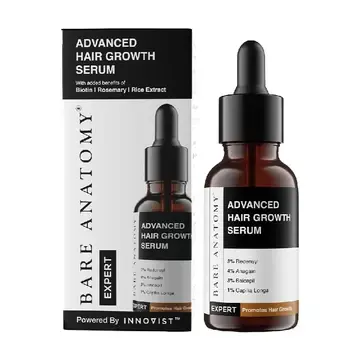
Minimalist's Hair Growth Serum is positioned for hair thinning and contains a blend of cosmetic hair-growth actives. The product is intended for application to the scalp and is marketed for regular use.
If you're comparing hair-growth products, look at the complete ingredient list and application instructions rather than choosing based only on the concentration or number of actives advertised.
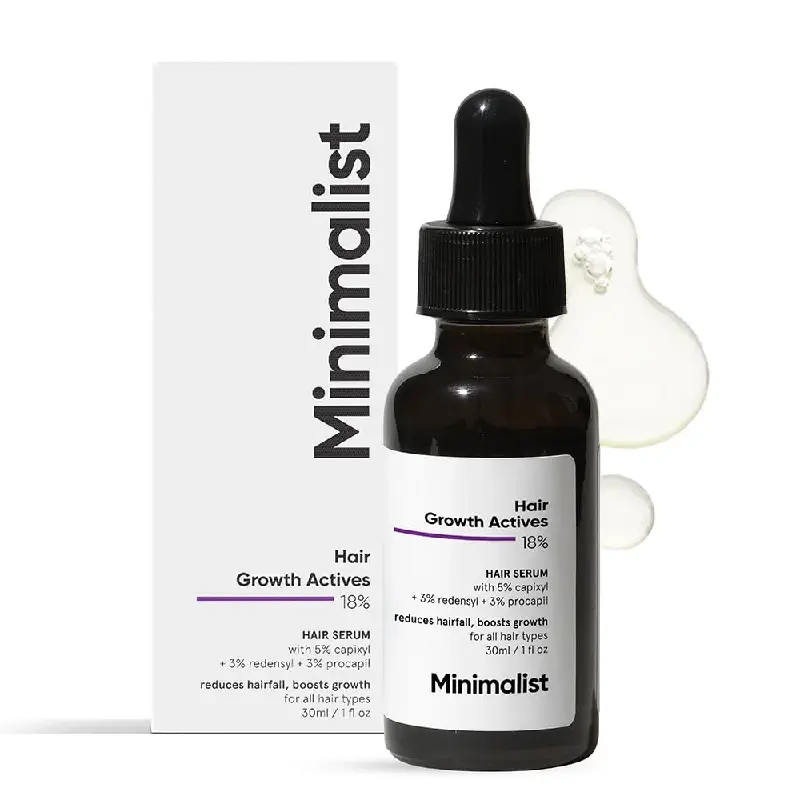
Bare Anatomy Advanced Hair Growth Serum
Bare Anatomy Advanced Hair Growth Serum combines ingredients including Redensyl, Anagain, rosemary, rice water, Baicapil, Capilia longa and biotin. It is positioned around hair thinning, density, and scalp care.
This is another option for someone specifically looking for a scalp-focused serum rather than a conventional shine serum.
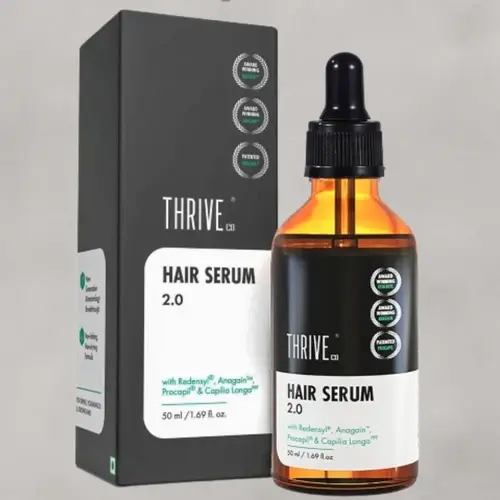
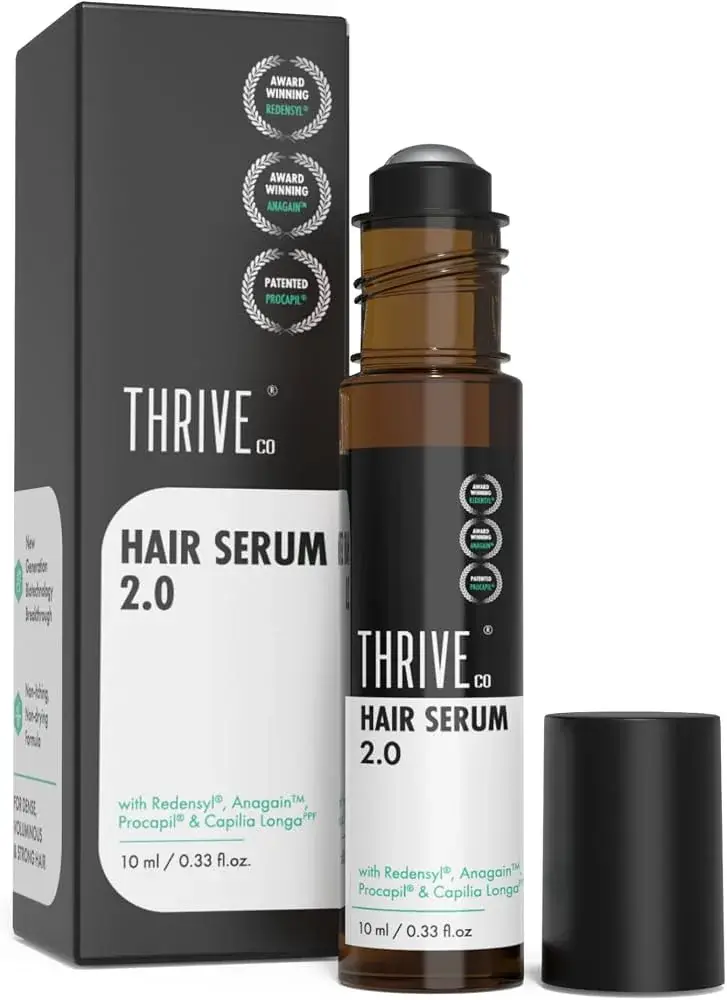
ThriveCo Hair Growth Serum 2.0
ThriveCo's formula features Redensyl, Anagain, and Procapil and is intended for application directly to the scalp. The product recommends nightly use.
Its ingredient profile makes it more relevant to someone searching for a hair growth serum than someone simply looking for a serum to tame dry ends.
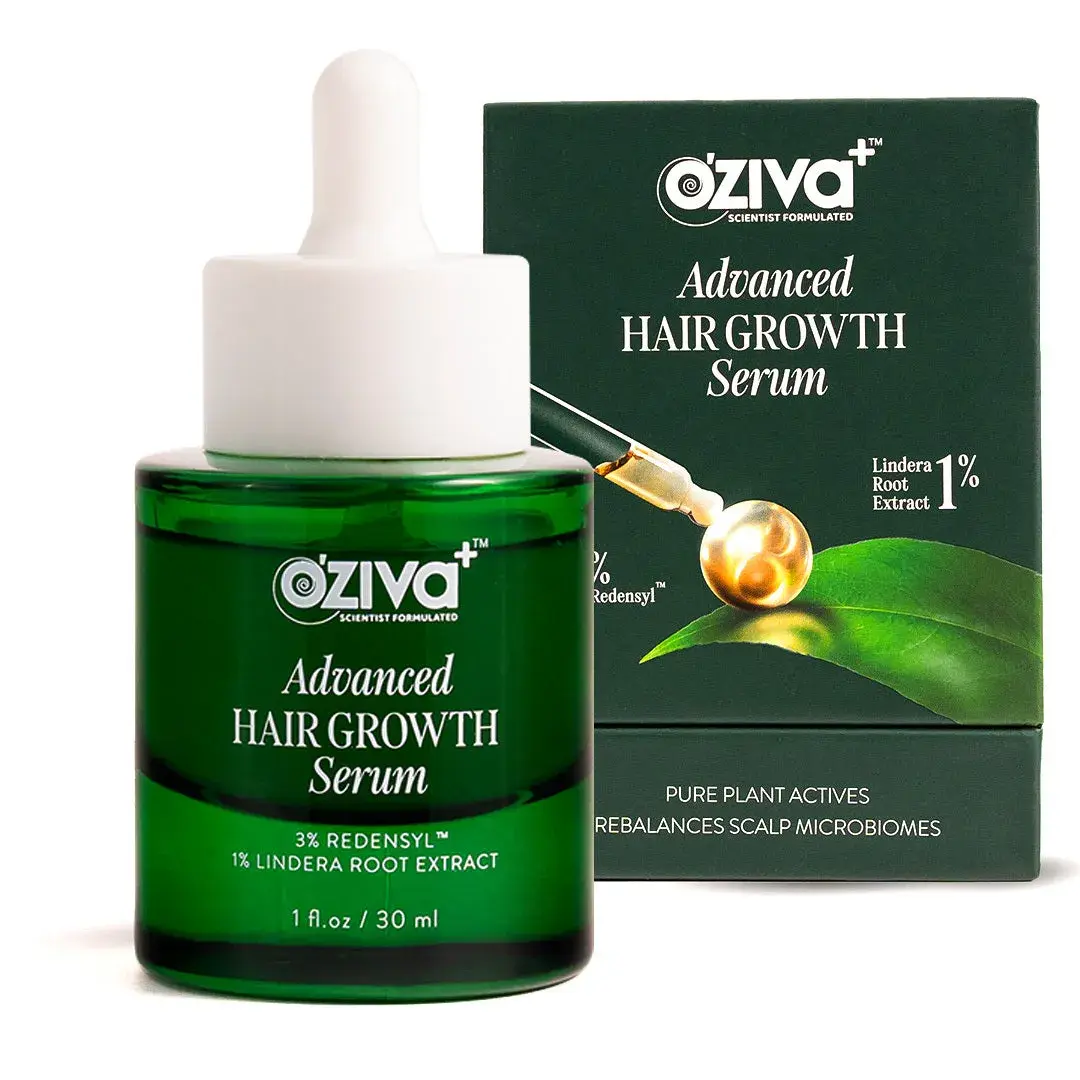
Oziva Advanced Hair Growth Serum
Oziva's Advanced Hair Growth Serum combines Redensyl with Lindera Root and Basil Root extracts. The product is positioned around hair fall, scalp care, and hair density.
Again, these product claims should be distinguished from the broader clinical evidence on hair loss treatments.
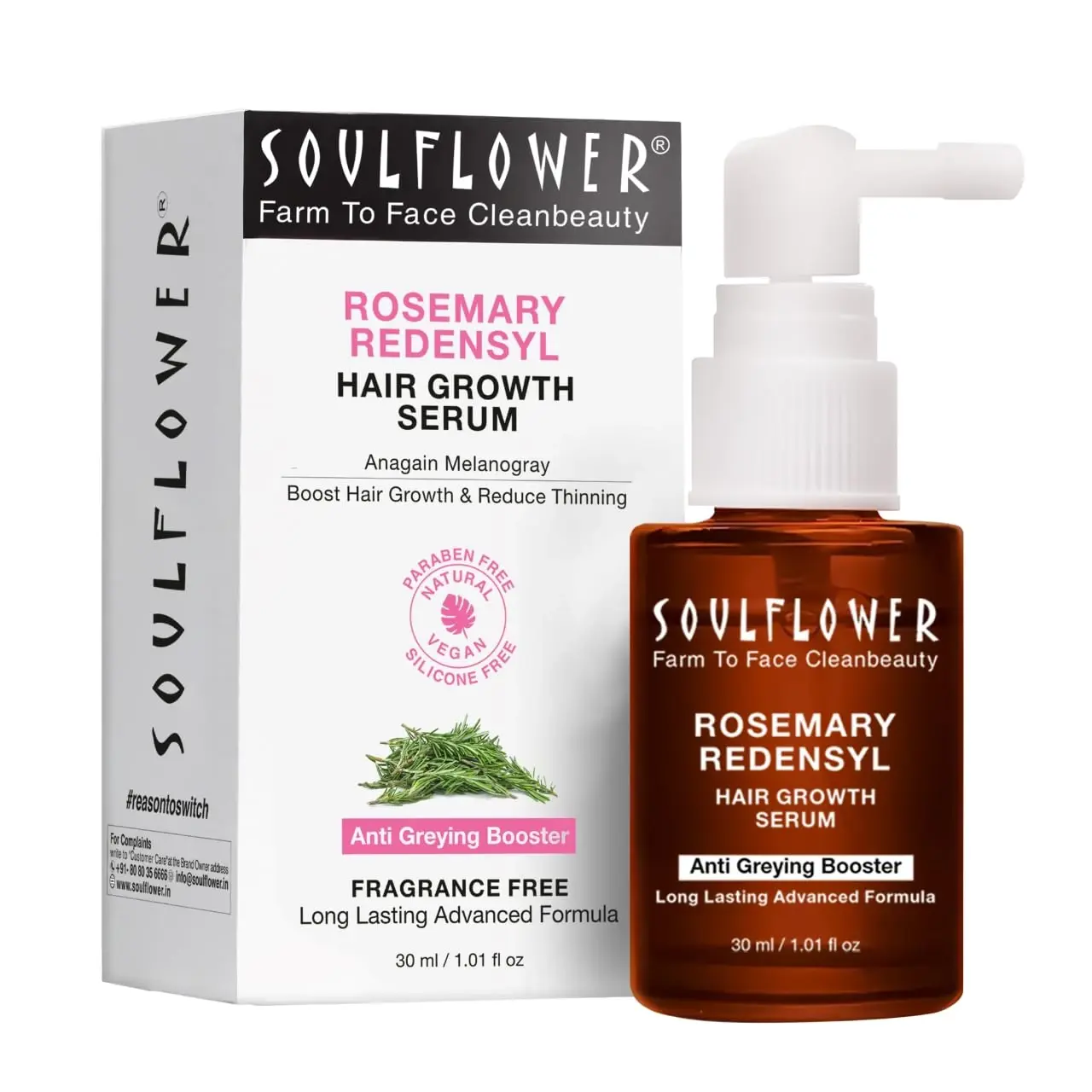
Soulflower Rosemary Redensyl Hair Growth Serum
This serum combines rosemary and Redensyl and is marketed for hair thinning and scalp care. It is another option if you're specifically looking for a botanical-focused hair-growth formula.
The important thing is to compare the formulas according to your concern rather than assuming that one ingredient makes one serum universally better.
What Should You Actually Look For?
Online ratings can tell you whether customers like the texture, fragrance, packaging, or ease of use.
They cannot establish that a serum regrows hair.
When comparing a top-rated hair serum, look at both the customer experience and the formulation.
For a scalp serum
Check:
Active ingredients
Directions for scalp application
Evidence behind the ingredients
Whether it needs to be rinsed
Whether it is suitable for your scalp
Whether the brand provides a complete ingredient list
For a dry-hair serum
Check:
Conditioning ingredients
Texture
Whether it leaves buildup
Whether it works with your hair type
Whether it offers heat protection if that is specifically claimed
A serum with thousands of positive reviews may be excellent for controlling frizz without being a hair-regrowth treatment.
How to Use Hair Growth Serum
Using a hair serum is usually simple. Follow the product's label first, especially if it contains active ingredients.
Start with a clean scalp: Apply the serum to a clean, dry or slightly damp scalp, depending on the product instructions.
Part your hair: Divide your hair into a few sections so the serum can reach the scalp rather than sitting only on the hair.
Apply the serum: Use the recommended amount and apply it directly to the scalp, focusing on areas where you want to concentrate the product.
Massage gently: Use your fingertips to massage the serum into the scalp without scratching or rubbing aggressively.
Leave it on: If it is a leave-in serum, allow it to absorb rather than washing it off immediately.
Use consistently: Follow the frequency given on the product label. Regular use matters more than applying a large amount at once.
Tip: Avoid applying more serum than recommended. More product does not necessarily mean better results, and gentle application is better for the scalp and hair. The AAD also recommends being gentle with thinning or fragile hair and avoiding practices that cause unnecessary pulling or damage.
Application depends on the type of serum.
For a scalp-focused hair-growth serum
Read the product directions first.
Apply the recommended amount directly to the scalp.
Part your hair into sections if needed.
Massage gently with your fingertips.
Leave it on for the time specified by the manufacturer.
Wash your hands after application.
Use it consistently rather than applying a large amount occasionally.
Some products recommend daily or nightly application, while others have different instructions.
For a serum for dry or damaged hair
Start with a small amount.
Spread it between your palms.
Apply from the mid-lengths toward the ends.
Avoid applying too much near the roots.
Add a little more only if your hair still feels dry.
With a conventional hair serum, more product does not necessarily mean better results.
Can Hair Serum Stop Hair Fall?
That depends on why you're experiencing hair fall and what the serum contains.
A cosmetic serum may help reduce breakage, which can make it appear as though you are losing less hair.
A scalp serum containing cosmetic actives may support scalp care, but evidence for many of these ingredients remains limited.
Medical treatments such as topical minoxidil have considerably stronger evidence for androgenetic alopecia.
So if you're seeing significant or persistent shedding, don't assume that any serum labelled "anti-hair fall" is treating the cause.
How to Choose a Good Hair Serum
Instead of looking for a single good hair serum, match the product to your concern.
If your hair is dry
Choose a smoothing and conditioning serum designed for the lengths.
If your hair is damaged
Look for conditioning ingredients that reduce friction and improve the feel and appearance of the hair.
If your scalp is dry
Choose a lightweight scalp product that is actually formulated for scalp application.
If your hair is thinning
Look for a scalp-focused product, but consider getting the cause of the hair loss assessed first.
If you want regrowth
Don't limit your search to cosmetic serums. Evidence-based hair-loss treatments may be more appropriate depending on the diagnosis.
What to Avoid When Buying a Hair Serum
Be cautious about products that:
Promise dramatic regrowth within a few days
Claim to cure every type of hair loss
Use "100% natural" as proof that the product is effective
Rely entirely on before-and-after photos
Don't disclose their complete ingredient list
Claim an ingredient is clinically proven without explaining what was actually studied
"Natural" and "clinically proven" are not interchangeable terms.
A plant extract can have interesting research behind it without the finished serum being clinically proven to treat hair loss.
The Right Serum Depends on What Your Hair Actually Needs
If you're dealing with dry or damaged hair, a conditioning serum can make a noticeable difference to how your hair feels and looks. If you're concerned about thinning or hair loss, a scalp-focused serum may be one part of your routine, but it is worth understanding the cause before relying on a cosmetic product.
And if you're looking for genuine hair regrowth, pay attention to the evidence behind the treatment rather than the number of claims printed on the bottle.


