Aloe Vera Gel for Skin and Hair: Benefits, Uses and How to Apply It
Aloe vera gel has a place in simple skin and hair care. Learn how to use it, what it may help with, and what to look for when choosing a gel.
Latest Articles
 Wellness
What Is Avipattikar Churna? Ingredients, Traditional Uses and Safety
Oct 8, 2026
 Staples
Organic Honey vs Regular Honey: What the Label Covers and What It Doesn't
Oct 8, 2026
 Beauty
8 Best Natural Shampoos for Men to Buy Online in the USA, UK and Beyond
Oct 8, 2026
 Wellness
Best Ayurvedic Herbs for Sleep: 8 Herbs and the Forms They Come In
Sep 30, 2026
If you grew up in an Indian household, there’s a good chance aloe vera was never just a plant sitting in a pot. The thick green leaves were kept around for those little everyday skin and hair emergencies, sometimes a bit of sun exposure, dry skin, or simply a scalp that needed some extra care.
There’s a reason aloe vera gel has stuck around for so long. The clear gel inside the leaf feels cooling and lightweight on the skin, and it’s easy to work into a simple skincare or haircare routine.
But there’s a difference between what aloe vera gel can reasonably do and what gets promised on beauty labels.
So, is aloe vera gel good for your skin and hair? How should you use it? Does pure aloe vera gel work better than an organic or natural one? And what should you actually look for when buying a gel?
Here’s a guide to aloe vera gel, including its uses for skin and hair, how to apply it, what the research says, and how to choose a product.
What Is Aloe Vera Gel?
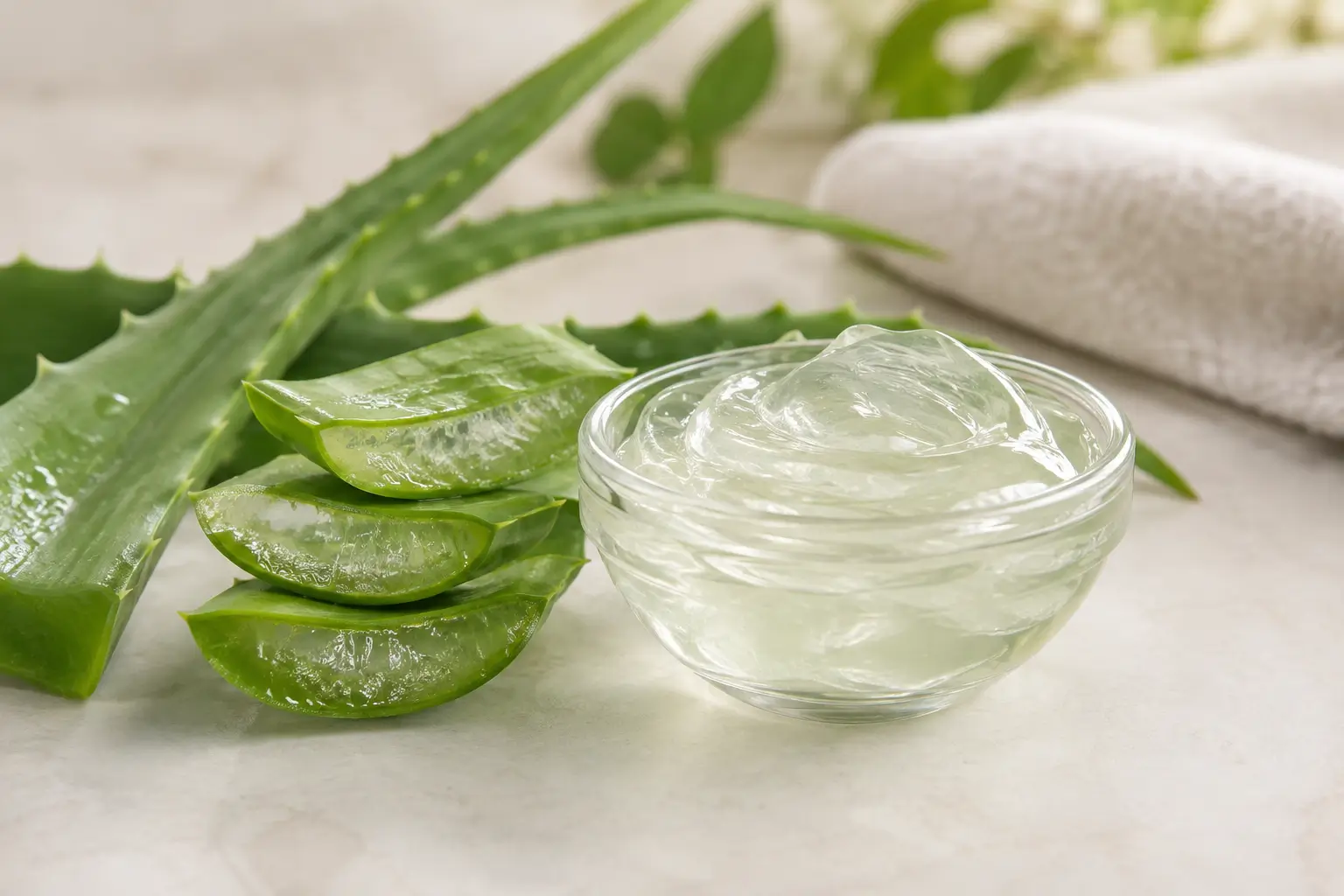
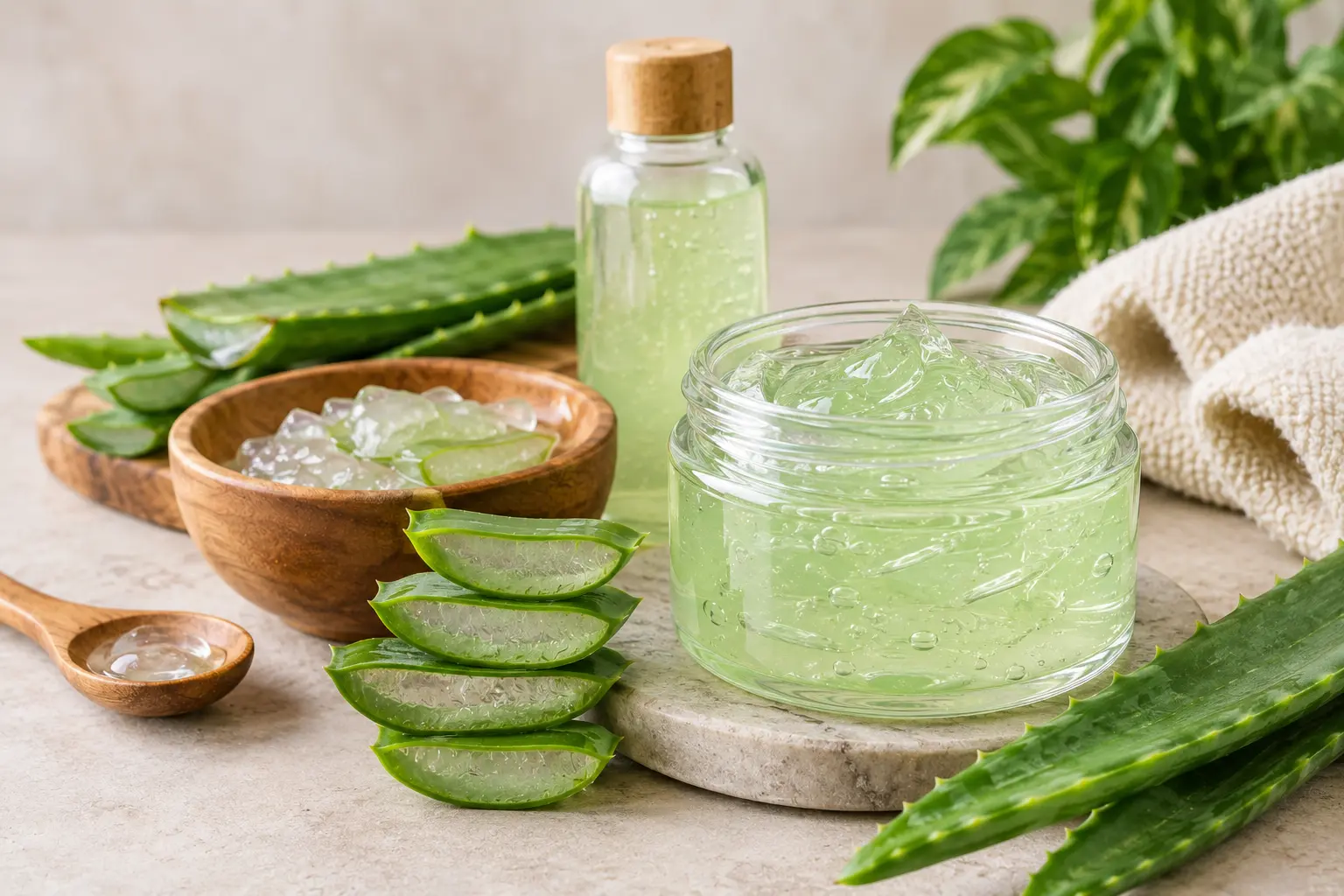
Aloe vera gel is the clear, gel-like substance found inside the aloe vera leaf. The leaf also contains a yellow substance called aloe latex, which comes from a different part of the plant.
That distinction is important.
Aloe vera gel and aloe vera juice are also very different products, with gel generally used topically and juice intended as an oral product, and products intended for topical use should not be treated as though they are interchangeable.
Aloe gel is most commonly applied directly to the skin. Research has looked at its use for several skin concerns, including burns and acne, although the amount and quality of evidence vary depending on the use.
Is Aloe Vera Gel Good for Your Skin?
Aloe vera gel can be a useful addition to a simple skincare routine, particularly when you're looking for something lightweight and soothing.
There is some clinical evidence for topical aloe gel in specific situations. For example, research suggests it may help with the healing of some burns, while smaller studies have looked at its use alongside other treatments for acne and certain skin conditions.
That doesn't mean aloe vera gel is a cure-all for every skin problem.
Its most practical role is as a lightweight, soothing topical gel that can be used on intact skin when your skin tolerates it.
Aloe Vera Gel for Dry Skin
Aloe vera gel has a high water content and feels light when applied to the skin. That makes it appealing if you don't enjoy thick creams or oils.
If your skin is very dry, though, aloe gel may not be enough on its own. You can apply it first and follow with a moisturizer to help reduce moisture loss.
Aloe Vera Gel for Oily Skin
If you have oily skin, you may prefer a lightweight gel over a heavier cream.
Aloe vera itself doesn't automatically make a product suitable for acne-prone or oily skin, though. The full ingredient list matters. A gel with added fragrance, oils, or other ingredients may behave differently from a simple aloe formulation.
If you're trying a new skincare product, patch testing is a sensible first step. The American Academy of Dermatology recommends testing new skincare products on a small area before adding them to your routine.
Aloe Vera Gel After Sun Exposure
This is one of the more familiar uses for aloe vera gel.
Aloe-based lotion or gel can feel soothing on sunburned skin, and the Mayo Clinic recommends aloe vera lotion or gel as one option for soothing sunburn.
Just remember that aloe vera doesn't replace sun protection. If you've been in the sun, cooling the skin and protecting it from further exposure still matter.
What does the research say? Aloe vera has been studied more extensively for burns than for many of its other popular skincare uses. A 2024 systematic review and meta-analysis of randomized controlled trials found that topical aloe vera was associated with faster healing of second-degree burns, with an average difference of 3.76 days compared with other topical treatments. The evidence does not mean aloe vera should replace appropriate burn care, but it suggests that topical aloe vera may have a role in supporting the healing of certain burns. |
Aloe Vera Gel for Irritated Skin
The cooling texture of aloe gel can make it feel comfortable on mildly irritated skin.
But "natural" doesn't automatically mean irritation-free. NCCIH notes that topical aloe is generally well tolerated, but some people have experienced burning, itching, rash, or eczema after using it.
If a product stings or causes a reaction, wash it off and stop using it.
How to Use Aloe Vera Gel on Your Skin
You don't need an elaborate routine.
For everyday hydration
Cleanse your face as usual.
Apply a small amount of aloe vera gel to clean, slightly damp skin.
Let it absorb.
Follow with your regular moisturizer if your skin needs more hydration.
Apply sunscreen during the day.
For sun-exposed skin
Cool the skin first, then apply a thin layer of aloe vera gel or an aloe-based lotion. Avoid applying products containing alcohol if the skin is already irritated, as they may sting.
The American Academy of Dermatology (AAD) specifically recommends a moisturizer containing aloe vera or soy to help soothe sunburned skin, alongside getting out of the sun and using cooling measures.
Before using it on your face
Do a patch test, particularly if you have sensitive skin or are trying a new formulation. The American Academy of Dermatology recommends applying a new skincare product to a small test area before using it more widely.
Is Aloe Vera Gel Good for Your Hair?
Aloe vera gel is also commonly used on the scalp and hair, especially as a lightweight pre-wash treatment.
It can make the scalp and hair feel conditioned because of its gel-like texture, but the evidence for aloe vera as a treatment for hair growth or hair loss is limited.
So if you're using aloe vera for your hair, think of it primarily as a conditioning or scalp-care ingredient rather than a proven hair-growth treatment.
Aloe Vera Gel for Hair: How to Use It
As a pre-shampoo scalp treatment
Apply a small amount of aloe vera gel to your scalp and massage gently.
Leave it on for around 20 to 30 minutes, then wash your hair as usual.
This can be a simple way to see how your scalp responds without leaving the gel on for an extended period.
As a hair-conditioning step
You can apply a small amount of the gel to the lengths of your hair, leave it for a short period, and rinse it out.
If your hair is particularly dry or coarse, aloe gel alone may not provide enough conditioning. You may prefer using it alongside your regular conditioner or hair mask.
Can Aloe Vera Gel Stop Hair Fall?
This is where it's worth separating traditional use from established evidence.
Aloe vera is often promoted online for hair growth and hair fall, but there isn't strong enough clinical evidence to say that applying aloe vera gel will stop hair loss or make hair grow faster.
If you're experiencing persistent or significant hair loss, it's better to look for the underlying cause rather than relying on aloe vera alone.
Pure vs. Natural vs. Organic Aloe Vera Gel
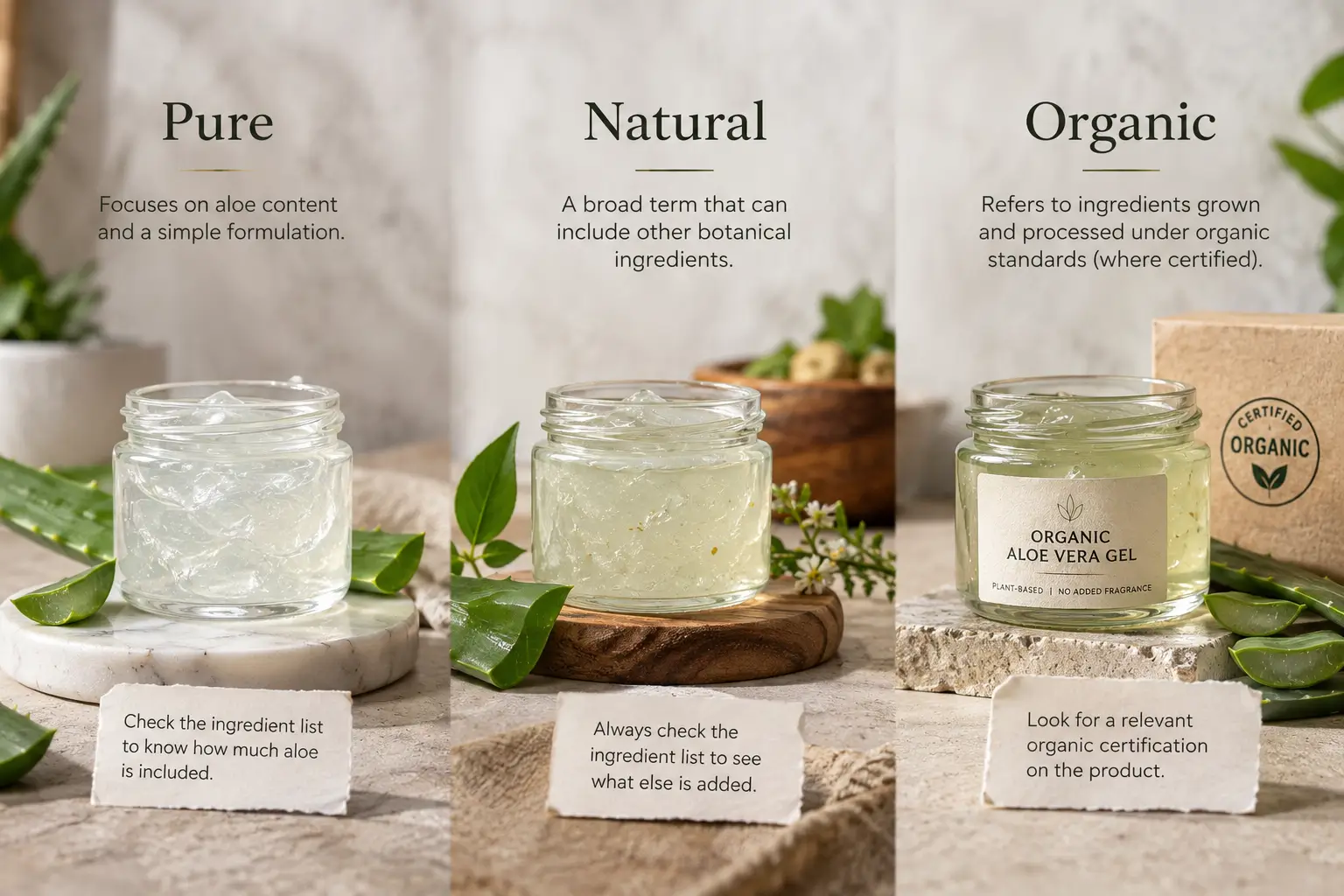
You'll see all three terms on aloe vera products, but they don't necessarily mean the same thing.
What is pure aloe vera gel?
"Pure" generally suggests that aloe vera is the main ingredient or that the product contains a high proportion of aloe. But the word alone doesn't tell you exactly how much aloe is present.
Check the ingredient list rather than relying only on the front of the package.
What is natural aloe vera gel?
"Natural" is a broad term. A product can contain aloe vera along with other ingredients and still be marketed as natural.
If you're looking for a simple formulation, read the full ingredient list.
What is organic aloe vera gel?
"Organic" generally refers to how the agricultural ingredients were grown and processed under an applicable organic standard.
It doesn't automatically mean that the finished gel is 100% aloe vera, fragrance-free, or suitable for every skin type.
In other words, organic, natural, and pure aren't interchangeable labels.
How to Choose an Aloe Vera Gel
Instead of choosing a product based only on the words "natural" or "organic," look at the formulation.
Here are a few things worth checking:
Ingredient list: See what comes alongside aloe vera.
Fragrance: Fragrance can irritate some people's skin, particularly if they are sensitive.
Alcohol: Some formulations contain alcohol, which may be uncomfortable on irritated or sunburned skin.
Added oils: These may change how the product feels, particularly if you have oily skin.
Intended use: A product formulated for topical skincare isn't necessarily meant to be consumed.
Packaging and storage: Follow the manufacturer's storage instructions, particularly for products with fewer preservatives.
So, Which Aloe Vera Gel Should You Actually Choose?
With so many products labelled pure, natural, or organic, checking the ingredient list is a good place to start.
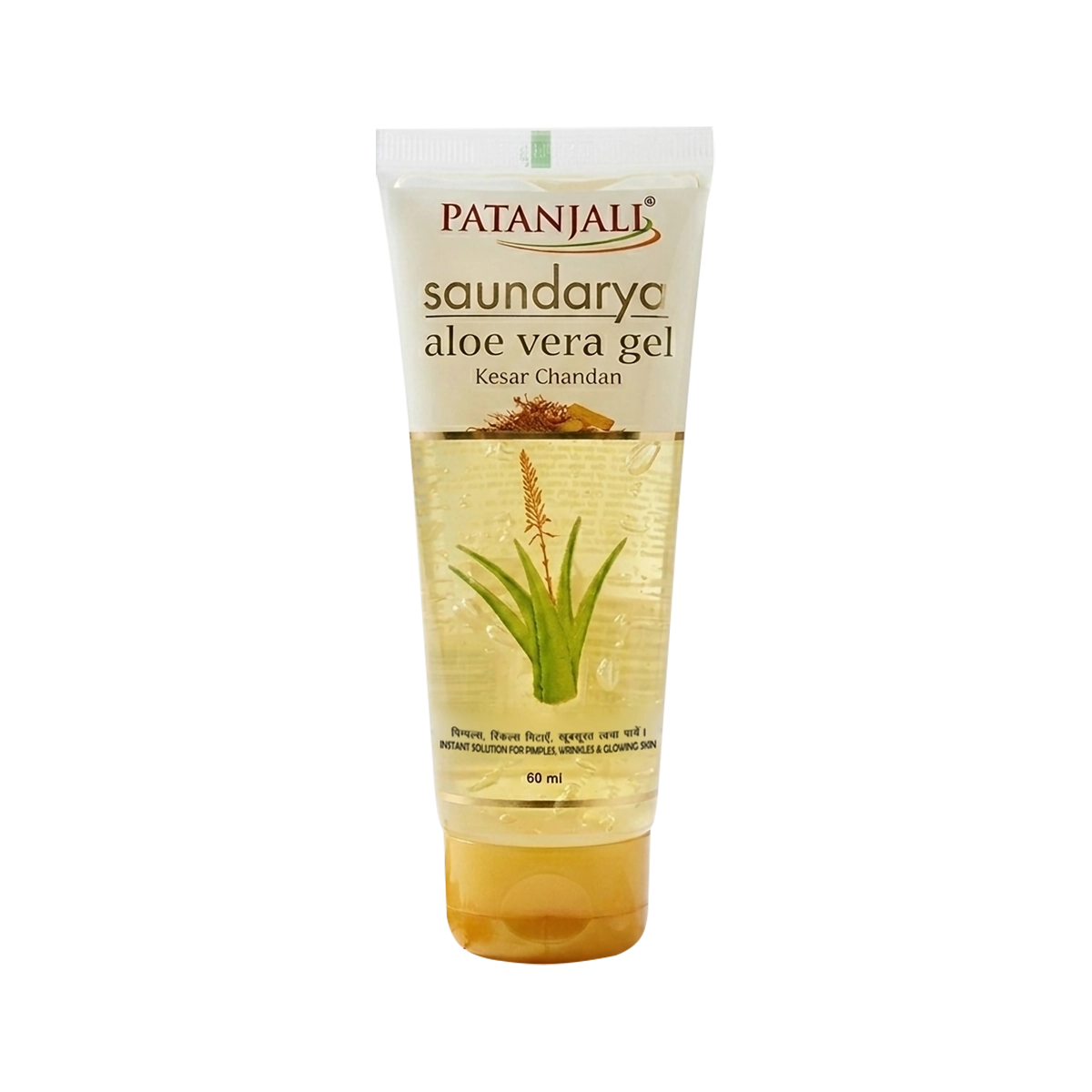
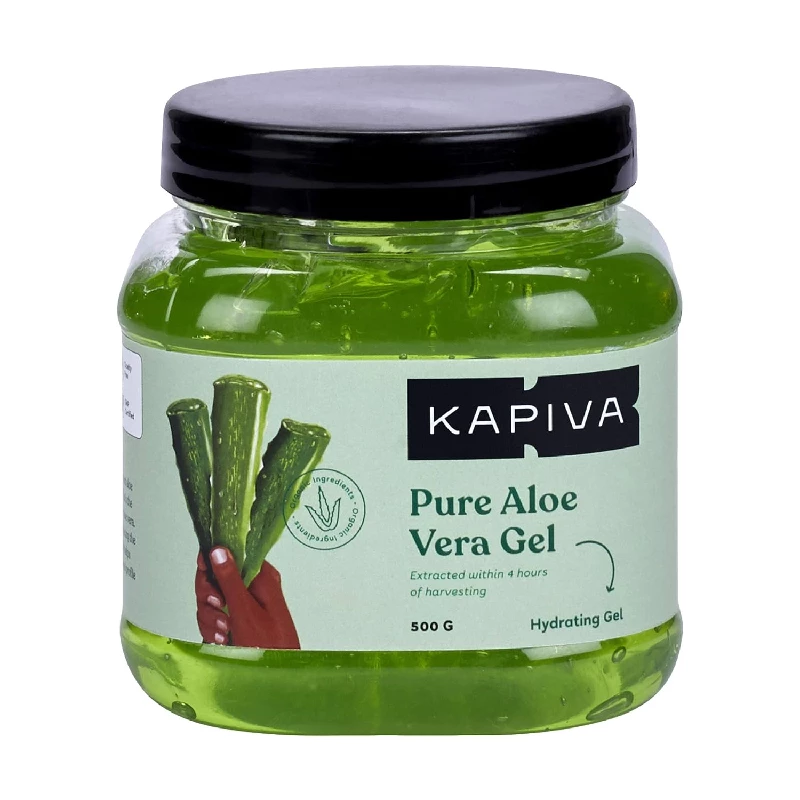
If you’d rather use a ready-made gel than extract it from a fresh leaf, browse through the list of the best aloe vera gels at The Desi Food and choose a convenient option to keep on hand for your skin and hair care routine.



-1.webp)




Can You Use Aloe Vera Gel Every Day?
If your skin tolerates it, aloe vera gel can be part of a regular skincare routine.
But there's no need to use it simply because aloe vera is considered natural. Your routine should depend on what your skin actually needs.
If your skin feels comfortable with the product and you're using a formulation intended for regular topical use, you can incorporate it into your routine as directed.
If you develop itching, burning, redness, or a rash, stop using it. Topical aloe is generally well tolerated, but reactions can occur.
What About Fresh Aloe Vera Gel From the Plant?
Fresh aloe vera straight from the plant sounds like the most natural option, but that doesn't automatically make it the best option for your skin.
Aloe leaves contain more than just the clear inner gel. The leaf also contains aloe latex, which comes from the outer part of the leaf. Commercial topical products are formulated and processed differently from freshly cut leaves.
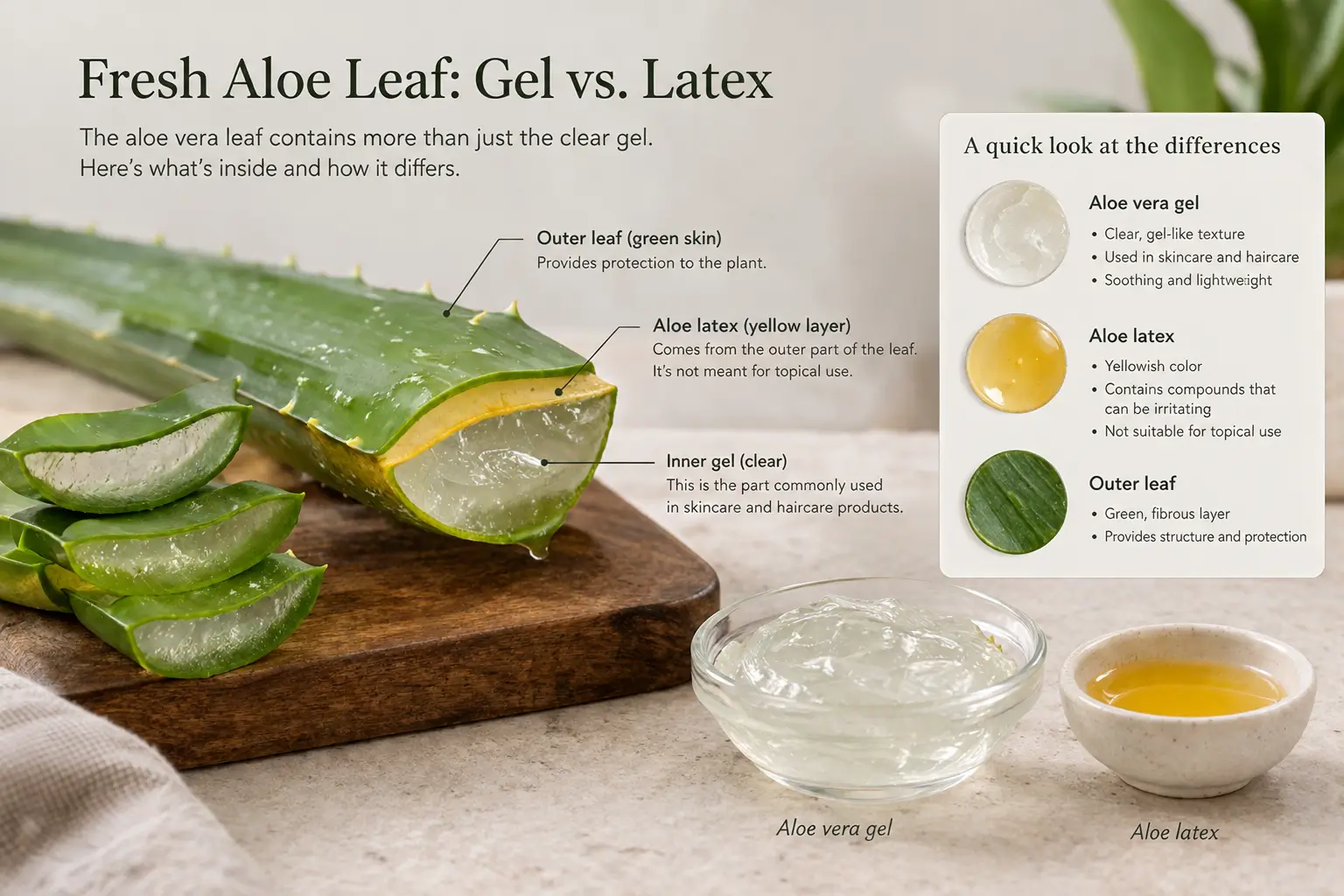
If you're using fresh aloe, be particularly careful about what part of the leaf you're applying and avoid getting latex mixed into the gel.
For convenience and consistency, a properly formulated topical aloe vera gel can be easier to incorporate into a regular routine.
Aloe Vera Gel: What It Can and Can't Do
Aloe vera has been used on skin for a long time, but that doesn't mean every claim attached to it is supported by research.
What you may hear | What the evidence suggests |
Aloe vera soothes sunburn | Aloe-based gel or lotion can provide soothing relief for sunburned skin. |
Aloe vera helps burns heal | Some research suggests topical aloe may speed healing of certain burns. |
Aloe vera cures acne | Evidence is limited, and some research involves aloe used alongside other acne treatments. |
Aloe vera grows hair | There isn't strong evidence that topical aloe vera promotes hair growth. |
Aloe vera stops hair fall | There isn't enough evidence to make this claim. |
Aloe vera removes dark spots | More evidence is needed to establish aloe gel as a reliable treatment for pigmentation. |
Aloe vera works for everyone | No. Some people experience irritation or allergic reactions. |
Who Should Be Careful With Aloe Vera Gel?
Most people tolerate topical aloe vera, but it's still possible to react to it.
Be particularly cautious if you have very sensitive skin or a history of reactions to skincare products. Patch testing a new product can help identify irritation before you apply it more widely.
Also remember that aloe vera gel is different from products intended to be taken by mouth. Aloe latex and whole-leaf preparations can have different safety concerns, so don't assume a topical skincare product is safe to consume.
The Bottom Line
Aloe vera gel doesn't need to be a miracle ingredient to have a place in your routine.
Its lightweight texture and soothing feel make it a practical option for simple skin and scalp care, and there is some evidence for specific topical uses, particularly around burns. But claims about eliminating acne, fading pigmentation, stopping hair fall, or growing hair go beyond what the current evidence can confidently support.
If you're buying pure, natural, or organic aloe vera gel, spend less time looking at the words on the front of the bottle and more time checking the ingredients on the back.
That's usually where you'll find out what you're actually putting on your skin.