
Shatavari Benefits for Women: Traditional Uses and What Studies Show
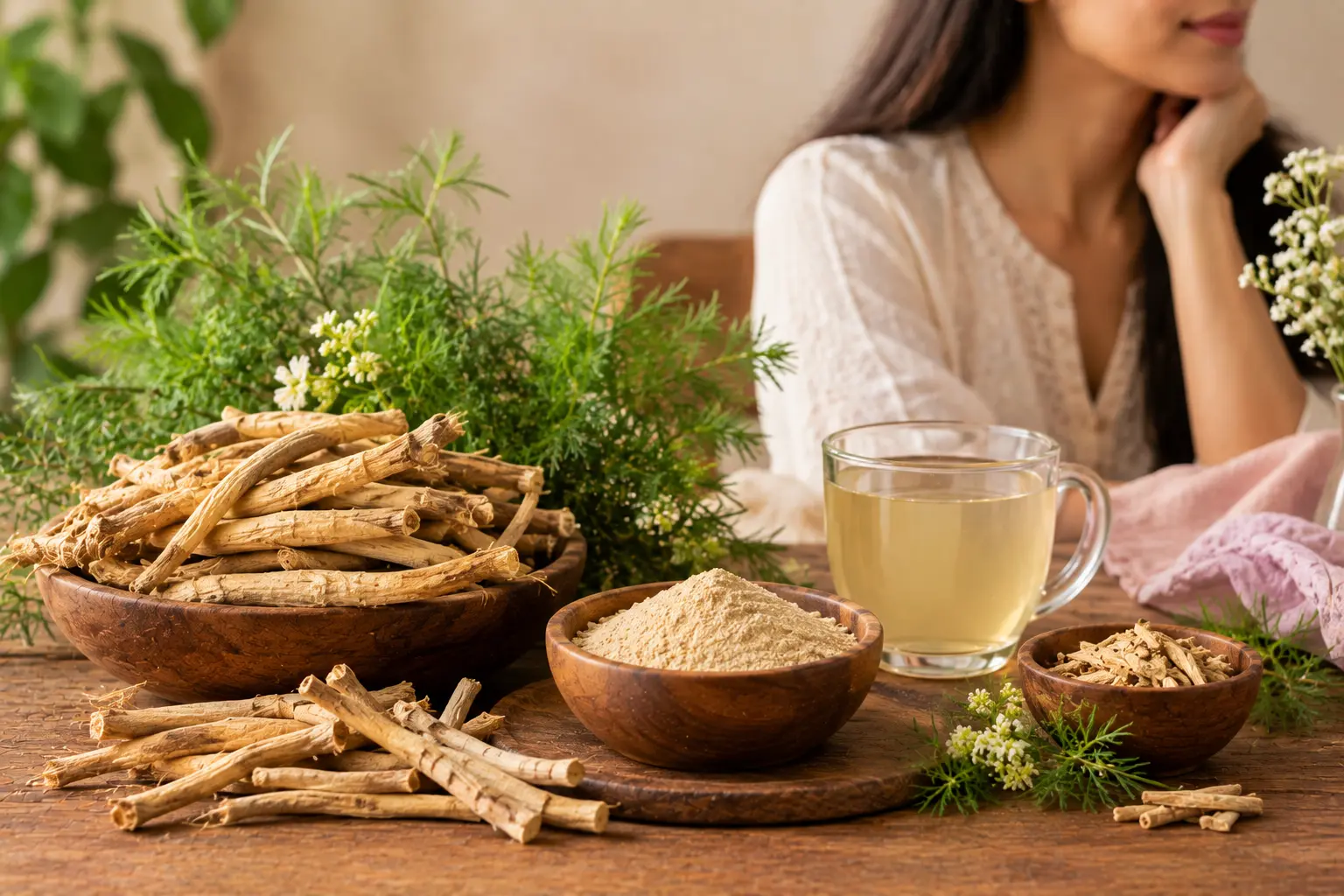
Shatavari Benefits for Women: Traditional Uses and What Studies Show
Shatavari is a root used in Ayurveda, mostly in products made for women. You will find it as a fine powder, as sweet granules for stirring into milk, and as tablets and capsules.
This guide explains what shatavari is and how it has been used. It also sets out what human studies have measured, what they have not shown, and how makers say to take each form.
Shatavari is sold as a dietary supplement. If you are thinking of taking it, speak to your doctor first, especially if you are pregnant, breastfeeding or take any medicine.
What is shatavari?
Shatavari is the root of Asparagus racemosus, a plant in the asparagus family. The roots are dried, then sold whole, ground into powder or made into extracts.
It is related to the asparagus you cook, but it is a different plant. The NIH's LactMed entry for Asparagus racemosus makes this point, noting that the food plant is Asparagus officinalis.
LactMed lists the compounds in the root as including steroidal saponins called shatavarins, along with mucilage, flavonoids and polyphenols. It groups these saponins as phytoestrogens, which are plant compounds with a structure similar to estrogen.
A compound having that structure does not tell you what it does in your body. The sections below cover what human trials have measured.
How shatavari is used in Ayurveda for women
One long-standing traditional use of shatavari is after childbirth. The LactMed entry for Asparagus racemosus notes that it has a long history of use in India as a galactagogue, a substance taken to increase breast milk supply. It adds that shatavari is listed for this use in the official Ayurvedic pharmacopoeia.
Makers also sell shatavari for women in the years around menopause, and some blend it with ashwagandha.
Most of the makers we stock say to take it with milk. That is why so many shatavari products come as granules or powder, made to be stirred into a glass of warm milk.
Shatavari also turns up inside other classical preparations. Some of the jars in our guide to the best chyawanprash brands list it among their herbs.
Shatavari and hormones: what studies have measured
The human trials of shatavari we found are small and short.
A randomised trial of shatavari root extract for menopausal symptoms, published in 2025, followed 135 women aged 45 to 65 for eight weeks. One group took a shatavari root extract, one took shatavari with ashwagandha, and one took a placebo. Its main measure was a symptom questionnaire the women filled in themselves.
The trial also tested hormone levels in the blood: estradiol, FSH, LH and testosterone. After eight weeks, there were no significant differences between the groups in any of them. The authors wrote that the changes they reported were not driven by major hormonal shifts.
A few points put this trial in context:
It lasted eight weeks, so it tells you nothing about longer use.
It tested one standardised extract, supplied by the company that makes it. Powders, granules and tablets sold under other brand names were not tested.
The authors say larger and longer studies are needed to confirm their findings.
A smaller trial of shatavari supplementation in postmenopausal women gave 20 women either shatavari or a placebo for six weeks. It found no change in markers of bone turnover, which the researchers measured because bone loss is linked to the drop in estrogen after menopause.
You will often see shatavari described as balancing hormones. In the menopause trial above, measured hormone levels did not change.
Shatavari and breastfeeding: what NIH says
The NIH keeps a summary of the research on shatavari and breastfeeding in its LactMed entry for Asparagus racemosus.
LactMed describes the results of clinical studies on shatavari and milk supply as mixed. Some of those studies tested it as part of a herbal mix rather than on its own.
One randomised trial it summarises gave women a shatavari mixture or a placebo for four weeks. It found no difference between the groups in prolactin levels, infant weight gain or the number of top-up feeds.
LactMed also states that the safety of shatavari during breastfeeding has not been rigorously studied, although small studies found no side effects in mothers or their babies.
It adds that herbs taken to raise milk supply should never replace a check of the things that affect milk production, such as feeding technique. If you are worried about your supply, speak to a lactation consultant or your doctor first.
What the evidence does not show
The studies in this guide leave several questions open:
Hormone levels. The menopause trial measured four hormones and found no difference from placebo.
Fertility, PCOS and periods. None of the trials described here tested these.
Long-term use. None of the trials described here ran longer than eight weeks.
Other products. LactMed notes that test results on one supplement may not apply to other products.
No shatavari product is approved to treat any condition. The NIH Office of Dietary Supplements explains in dietary supplements: what you need to know that supplements do not need FDA approval before they are sold.
What forms does shatavari come in?
Shatavari is sold in four main forms. The details below are as each maker gives them.
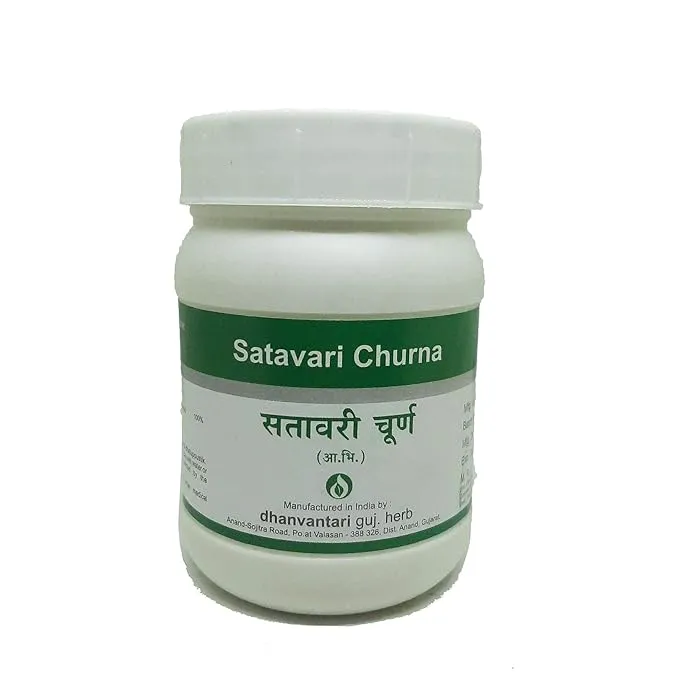
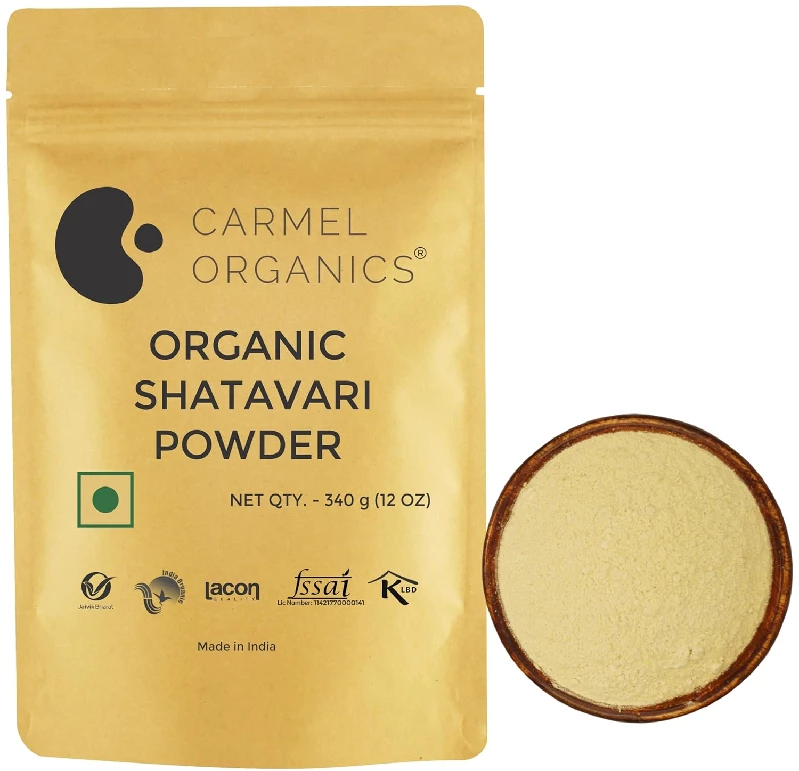
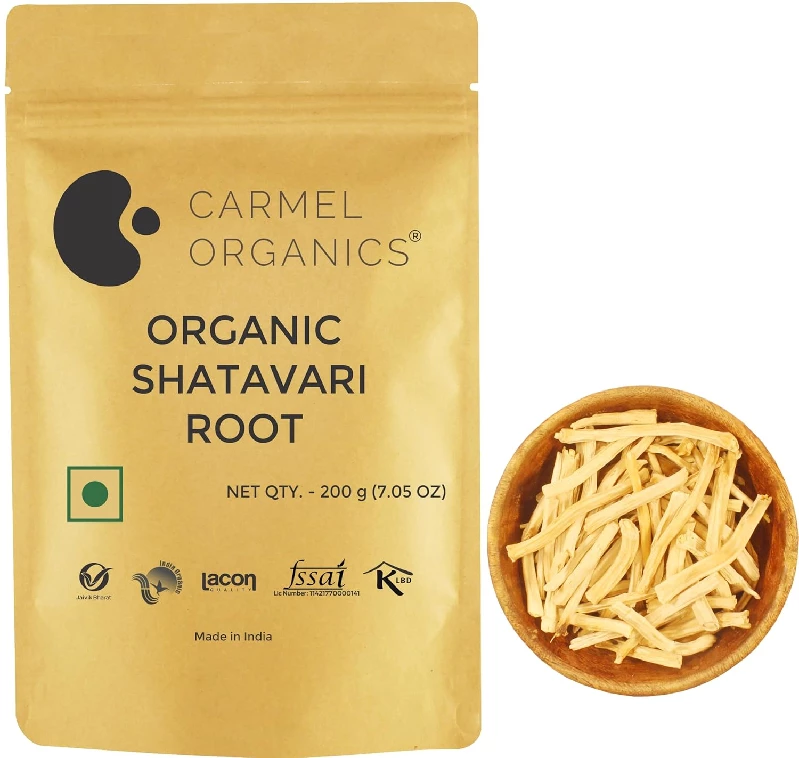
Powder and whole root. This is plain dried root, either ground fine or left in pieces for you to prepare yourself. Dhanvantari lists pure shatavari as the only ingredient in its Shatavari Churna. Carmel Organics sells a root powder it describes as organic, and the whole dried root.
Granules (kalpa). Shatavari is mixed with sugar and cardamom into small granules, made to be stirred into milk.
Baidyanath lists shatavari, sugar and ilaichi (cardamom) in its Shatavari Granules.
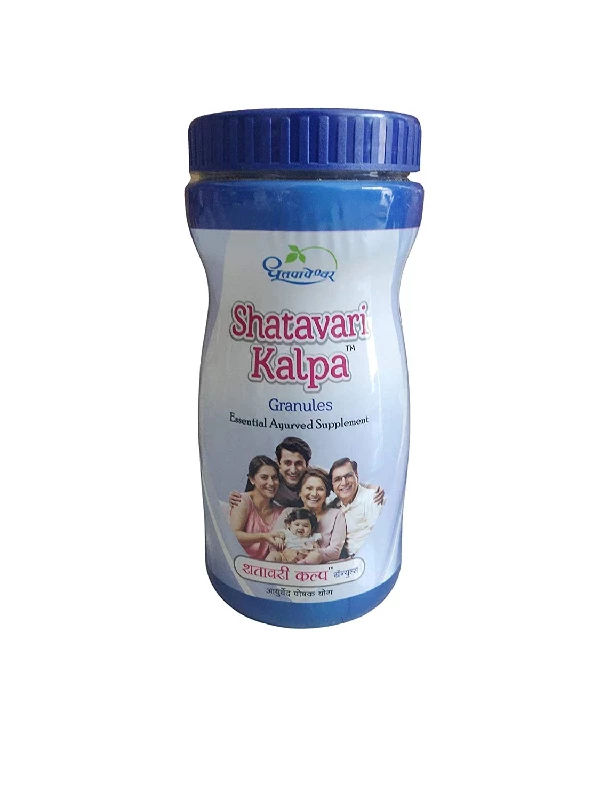
Dhootapapeshwar lists shatavari, ela (cardamom) and sharkara (sugar) in its Shatavari Kalpa, made in natural elaichi and chocolate flavours.
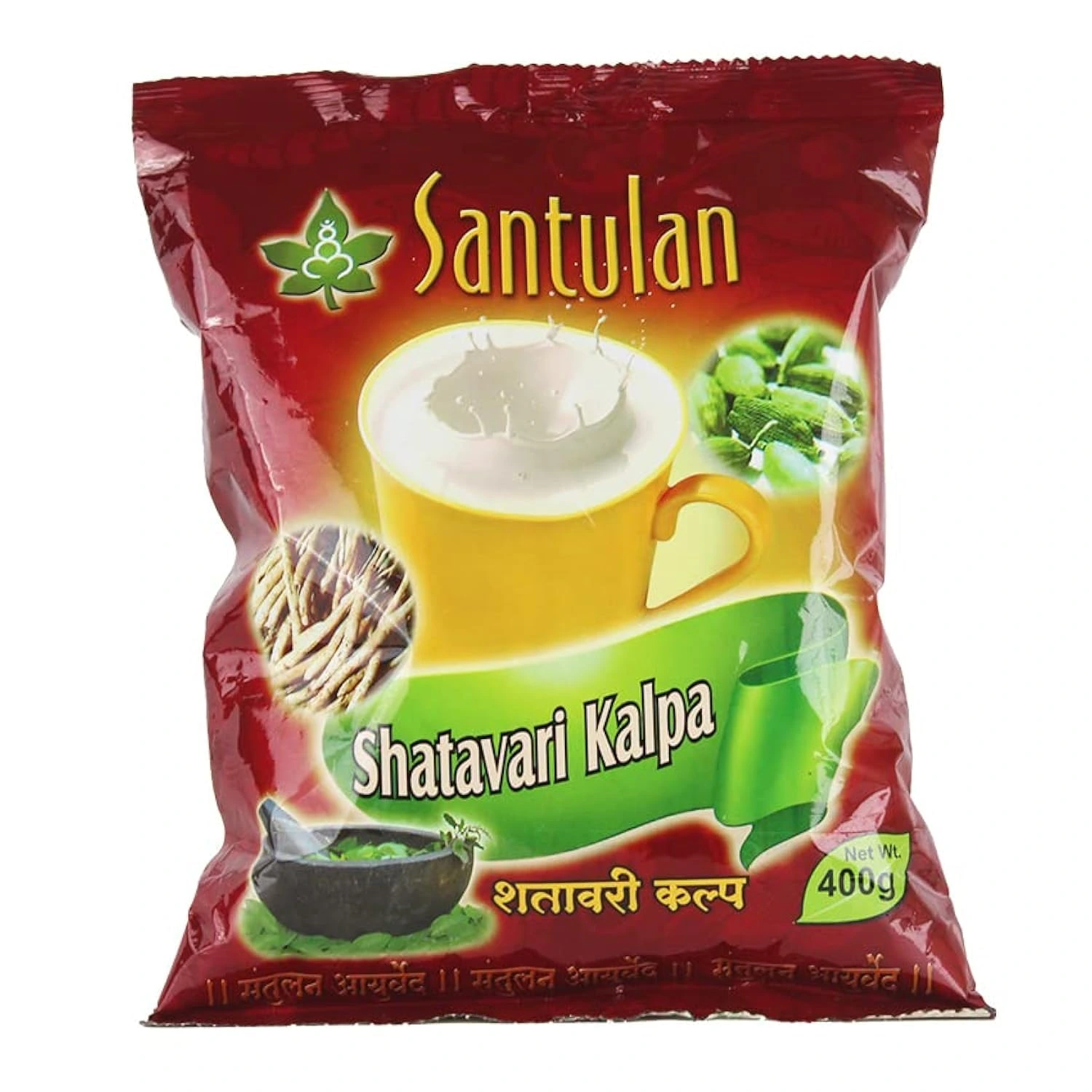
Santulan Ayurveda adds ashwagandha, cinnamon and dry ginger to the shatavari, cardamom and sugar in its Shatavari Kalpa.
Sugar is a listed ingredient in all three, so check the label if you watch how much sugar you eat.
 Shatavari Granules, 200 g-1.webp)
Tablets and capsules. These give a set amount per piece.
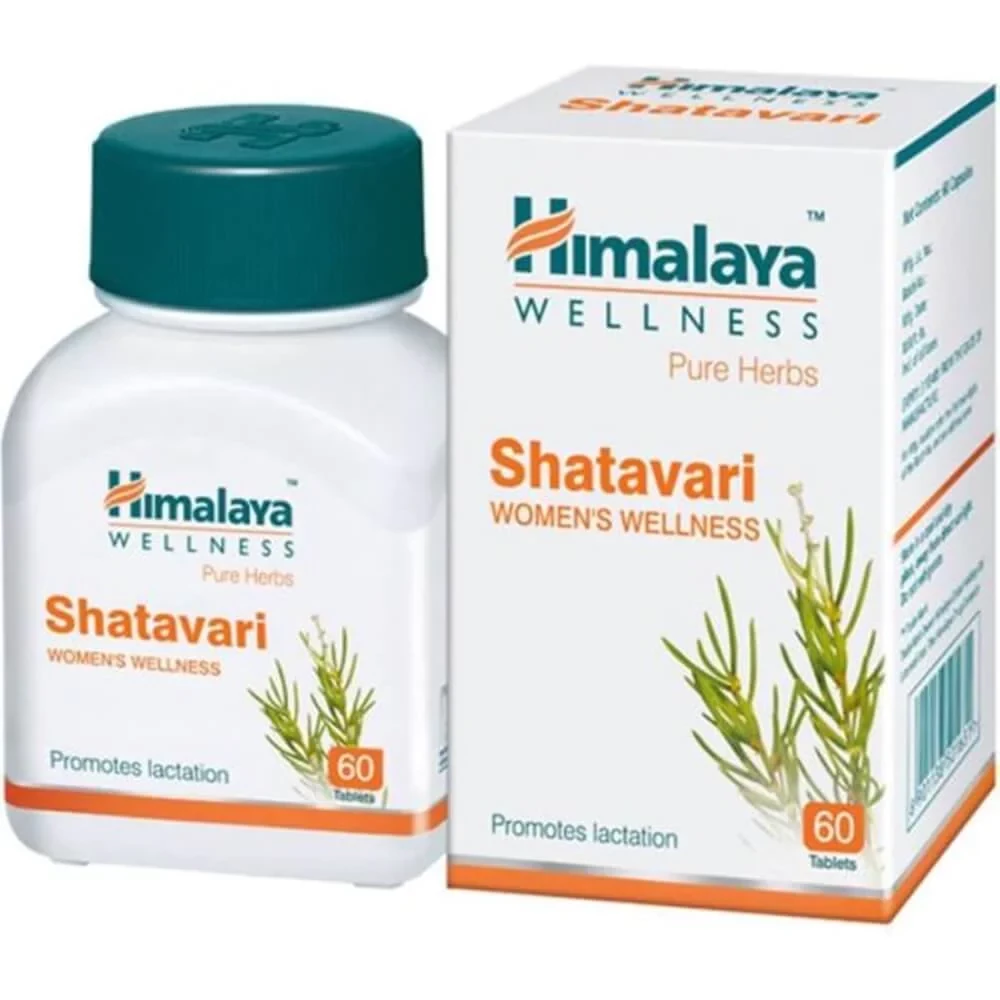
Himalaya lists shatavari root extract as the ingredient in its Shatavari tablets.
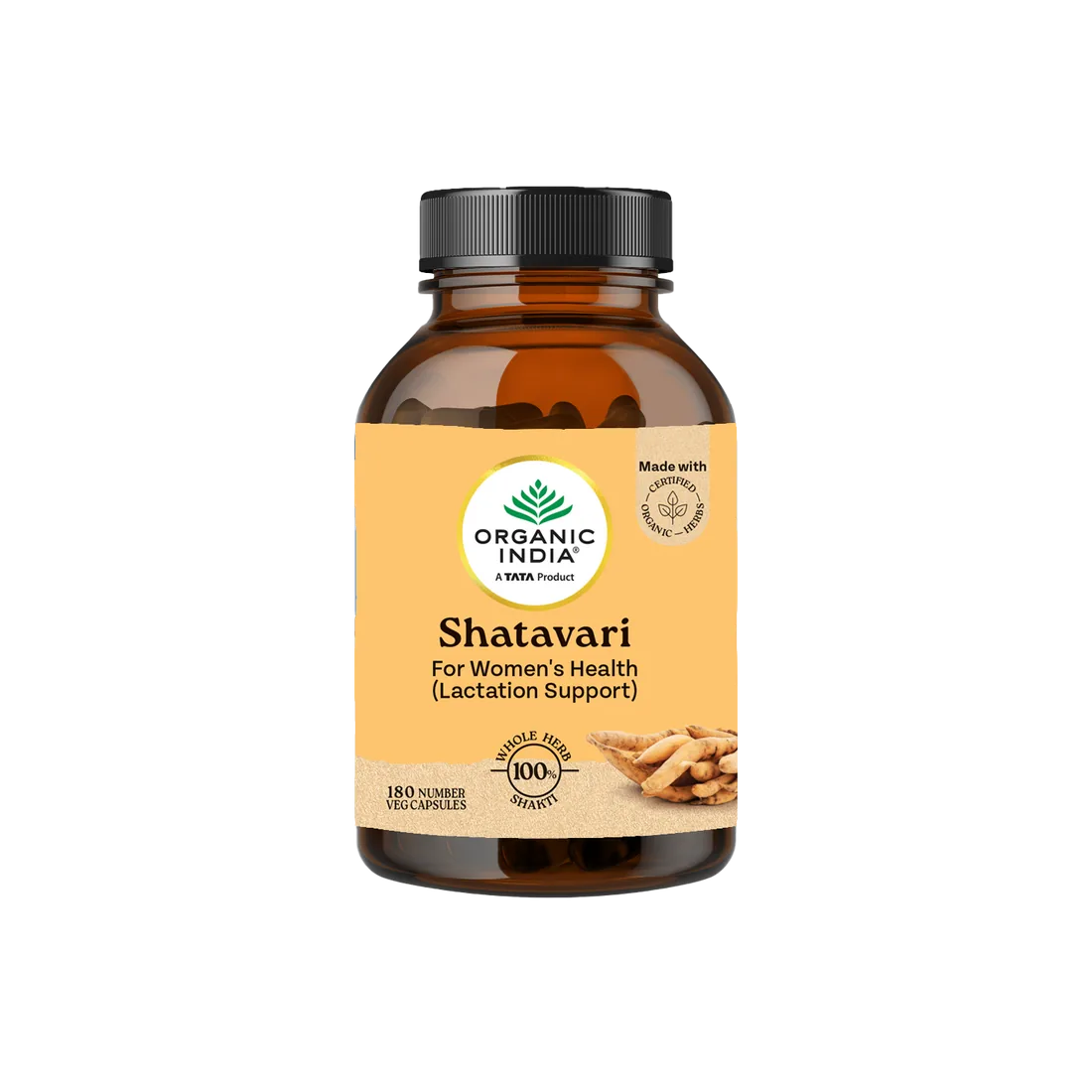
Organic India lists certified organic shatavari root in its Shatavari Capsules.
An extract and a plain root powder are not the same thing, even at the same weight. Compare labels by what is inside, not by milligrams alone.
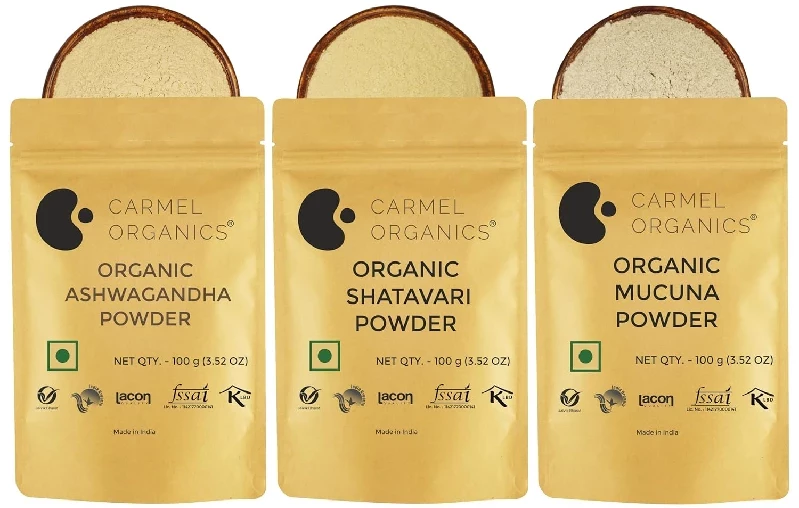
Blends with ashwagandha. Shatavari is often sold alongside ashwagandha. Carmel Organics sells a set of separate ashwagandha, shatavari and mucuna powders, and the Santulan Ayurveda kalpa above mixes ashwagandha into the granules. If you are looking at ashwagandha products too, our guide to the best ashwagandha supplements covers the forms it comes in.
How to take shatavari
Directions differ by form and brand, so the label on your pack comes first. These are the directions makers give for the products above:
Product | Maker's directions |
Himalaya Shatavari tablets | 1 tablet twice a day, after meals |
Organic India Shatavari Capsules | 1 or 2 capsules twice a day with water or warm milk, after meals |
Baidyanath Shatavari Granules | 1 to 2 teaspoons twice a day with milk, or as advised by a physician |
Dhootapapeshwar Shatavari Kalpa | 1 to 2 teaspoons twice a day with milk, or as directed by an Ayurvedic doctor |
Santulan Ayurveda Shatavari Kalpa | 1 to 2 teaspoons stirred into a cup of warm milk, twice a day |
Dhanvantari Shatavari Churna | 1 teaspoon twice a day with water or milk |
A few general points:
Start with the lowest amount your label gives.
Avoid taking several shatavari products at once. The NIH Office of Dietary Supplements notes in dietary supplements: what you need to know that side effects are more likely when you take many different supplements.
Tell your doctor and pharmacist you are taking it. The same NIH page advises telling your health care providers about any supplement you take.
Who should speak to a doctor first
Talk to your doctor before taking shatavari if any of these apply to you:
You are pregnant. The NIH fact sheet dietary supplements: what you need to know advises caution with supplements beyond a standard prenatal one, and notes that many have not been well tested in pregnancy.
You are breastfeeding. As above, the LactMed entry for Asparagus racemosus states that shatavari's safety during breastfeeding has not been rigorously studied.
You take prescription medicine. The NIH page notes that supplements can interact with some medicines.
You have surgery coming up. The same page says some supplements can change your response to anaesthesia.
You have had breast or cervical cancer. The menopause trial above did not include women with that history, so it tells you nothing about shatavari for them.
You want to use it in place of treatment. The NIH page says to get your doctor's approval before taking supplements in place of prescribed medicines.
Where to buy shatavari
TheDesiFood stocks shatavari powders, granules, tablets and capsules from brands including Himalaya, Organic India, Baidyanath, Dhootapapeshwar, Santulan Ayurveda, Dhanvantari and Carmel Organics. We offer doorstep delivery worldwide, including the USA, UK, Middle East, Australia and Canada.
Product details on each listing come from the manufacturer. You can browse the wider range in our Ayurveda collection.