Patanjali Herbal Juices: Benefits, Types, and How to Choose
See what Patanjali herbal juices contain, how their ingredients are studied, and how to compare different formulations before choosing one for your routine.

Latest Articles
 Wellness
What Is Avipattikar Churna? Ingredients, Traditional Uses and Safety
Oct 8, 2026
 Staples
Organic Honey vs Regular Honey: What the Label Covers and What It Doesn't
Oct 8, 2026
 Beauty
8 Best Natural Shampoos for Men to Buy Online in the USA, UK and Beyond
Oct 8, 2026
 Wellness
Best Ayurvedic Herbs for Sleep: 8 Herbs and the Forms They Come In
Sep 30, 2026
Amla, aloe vera, karela, lauki, giloy, and arjun have all been part of traditional Indian wellness practices in different ways. Patanjali blends several of these ingredients into ready-to-drink juices, either on their own or combined with other herbal ingredients.
That gives you quite a few options, but it can also make choosing one a little confusing. Amla juice is not the same as aloe vera juice, and a combination such as Karela Amla has a different ingredient profile from plain amla juice.
So, what are the benefits of Patanjali herbal juices, what does research actually say about some of these ingredients, and which Patanjali juice might fit what you're looking for?
We'll look at the commonly used ingredients, the different products available, how to choose between them, and a few things worth knowing before adding one to your routine.
Understanding Patanjali Herbal Juices
Patanjali herbal juices are ready-to-drink preparations made from ingredients such as amla, aloe vera, karela, lauki, giloy, and arjun. Some contain a single main ingredient, while others combine two or more, such as Karela (bitter gourd) and Aloe Vera with Wheatgrass and Amla.
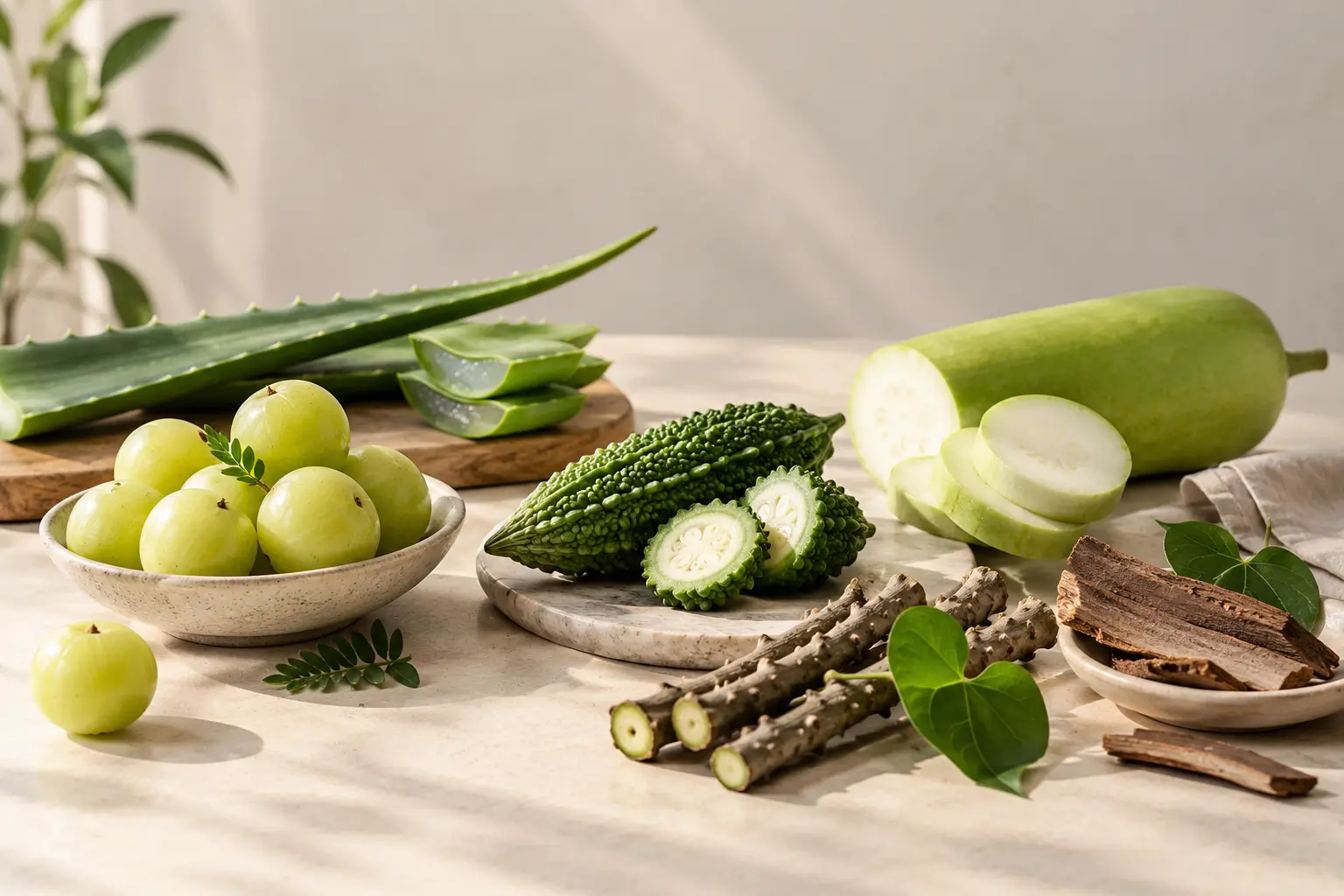
The difference between them comes down to what's in the bottle. An amla (Indian gooseberry) juice offers a straightforward way to consume the fruit, while a combination juice brings together the characteristics of several ingredients. That means the right product depends less on finding a universally "best" herbal juice and more on understanding the ingredients and choosing a formulation that makes sense for you.
It's also worth keeping the claims around herbal juices in perspective. Some ingredients have been studied in human research, while others are used mainly based on traditional Ayurvedic practices. Research on an individual ingredient also doesn't automatically prove that a particular commercial juice will produce the same result. So, throughout this article, we'll look at the potential benefits, what research says, and what each Patanjali formulation contains.
Benefits of Patanjali Herbal Juices
So, what can you actually expect from these herbal juices?
A lot of that comes down to what's in the bottle. Amla, aloe vera, karela, lauki, giloy, arjun, and wheatgrass all have their own nutritional, traditional, and research backgrounds, and several studies have looked at the potential benefits of these individual ingredients.
For example, research on amla has explored areas such as antioxidant activity, cholesterol, blood sugar, and inflammation, while other herbs have been studied for different uses.
It's worth keeping one thing in mind as you read through the benefits below. Research on an ingredient doesn't automatically mean that a particular commercial juice has been proven to deliver the same results. These juices are also not medicines and shouldn't be used as an alternative to treatment for a specific disease or health condition.
If you have an existing health concern, take medication, or simply aren't sure whether a particular herbal juice is right for you, it's always a good idea to check with your doctor or another qualified healthcare professional first.
Now, let's look at what the individual ingredients in Patanjali's herbal juices are generally known for and what research has found so far.
1. Amla Provides Vitamin C and Antioxidant Compounds
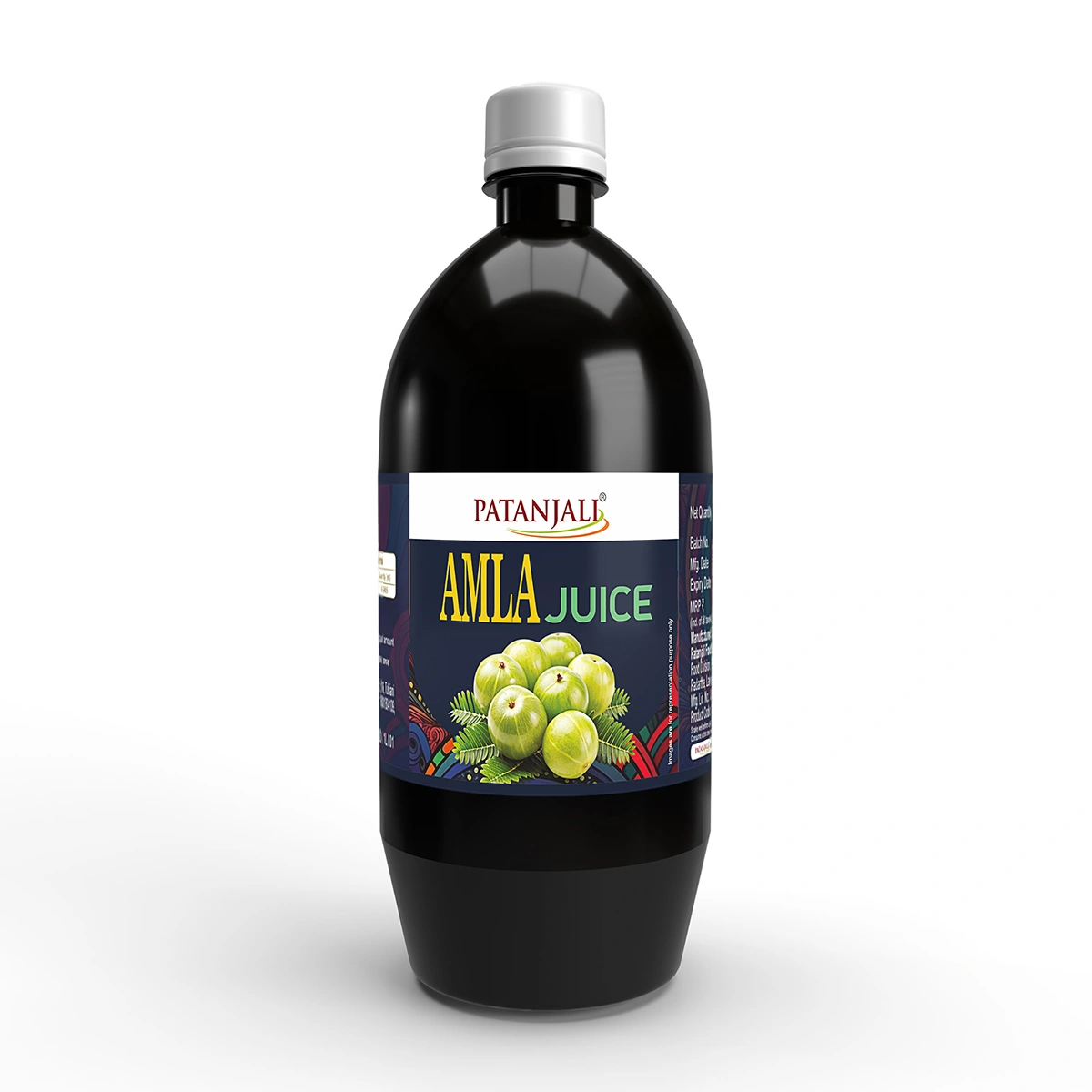
Amla, also known as Indian gooseberry, is one of the most common ingredients across Patanjali's juice range. It is used on its own in Patanjali Amla Juice and is also combined with ingredients such as aloe vera, karela, lauki, giloy, and arjun.
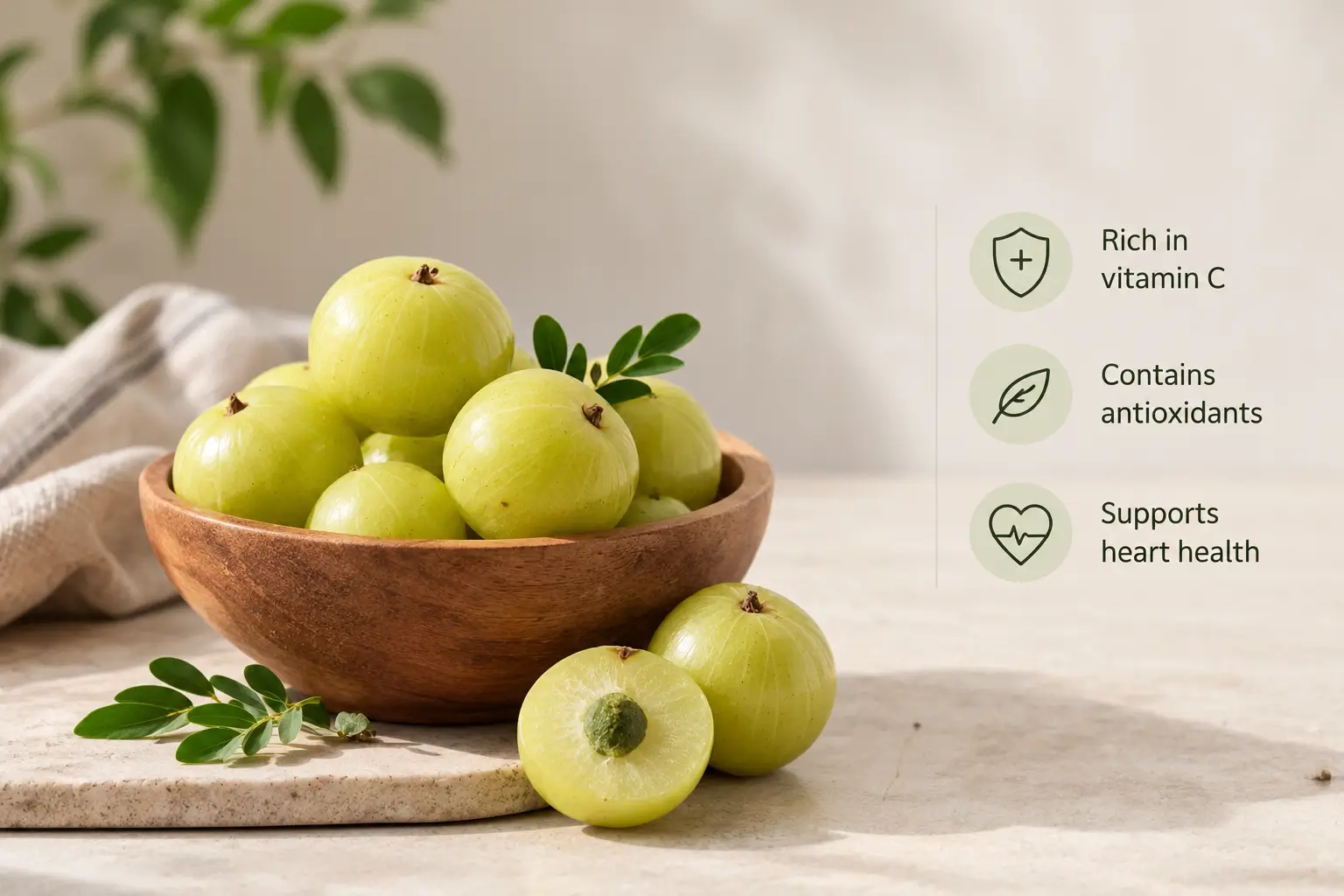
Amla is naturally rich in vitamin C and contains several plant compounds, including polyphenols, that contribute to its antioxidant properties. It has also attracted considerable research interest because of its possible effects on metabolic health.
A study found that amla supplementation was associated with improvements in several markers, including LDL cholesterol, total cholesterol, triglycerides, fasting blood glucose, and C-reactive protein. The researchers also noted that the studies were relatively small and lasted between three and 12 weeks, so further research is needed.
In practical terms, amla is an interesting ingredient if you're looking for a juice that provides vitamin C along with naturally occurring plant compounds.
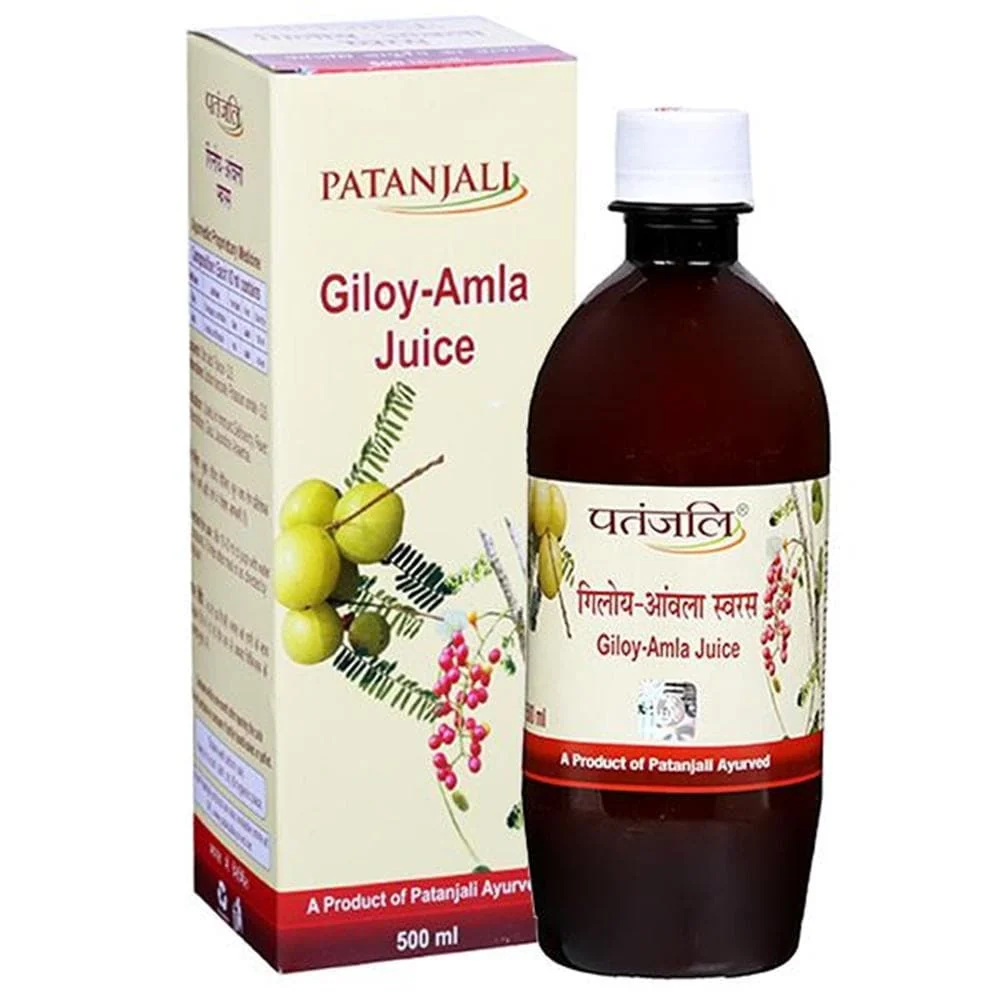
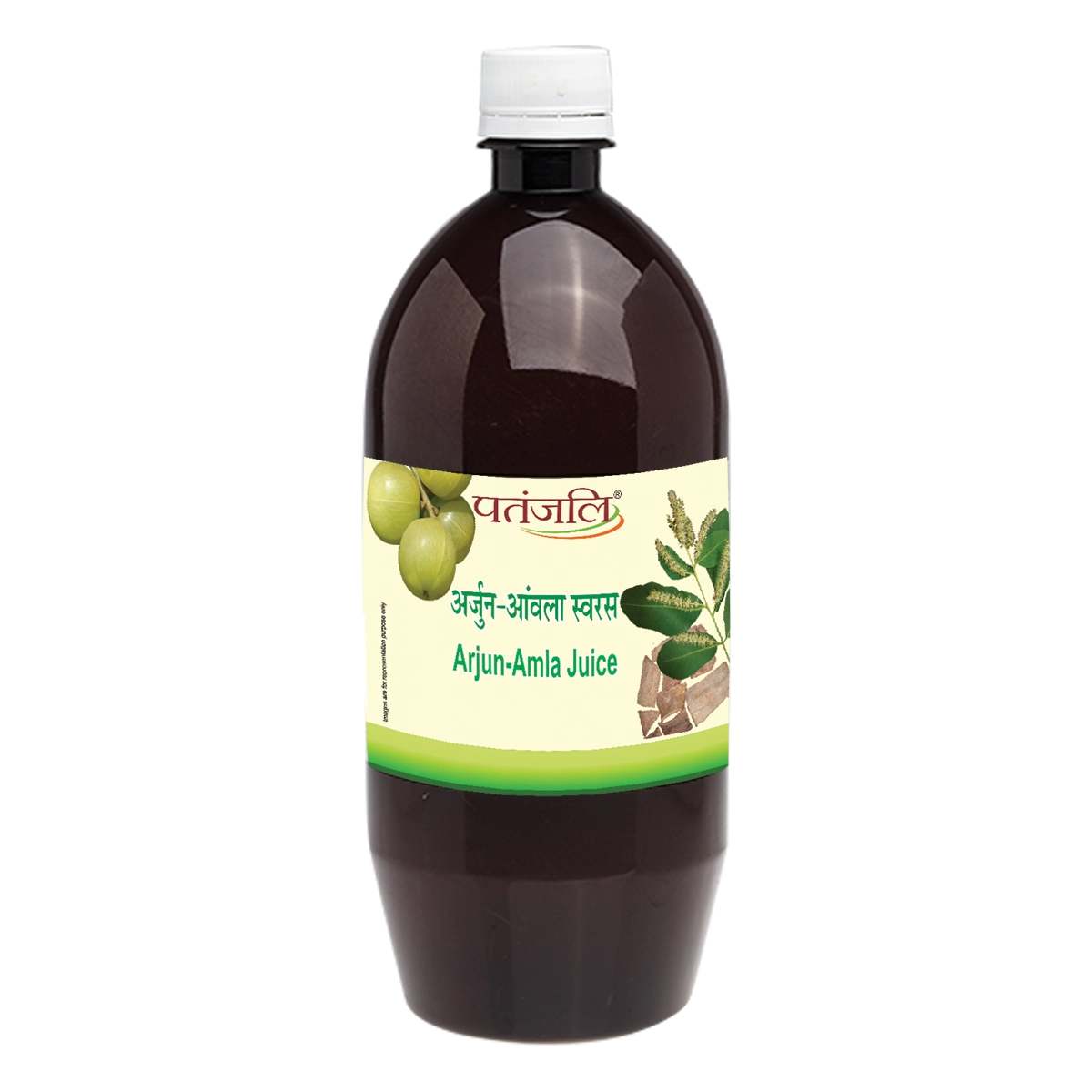
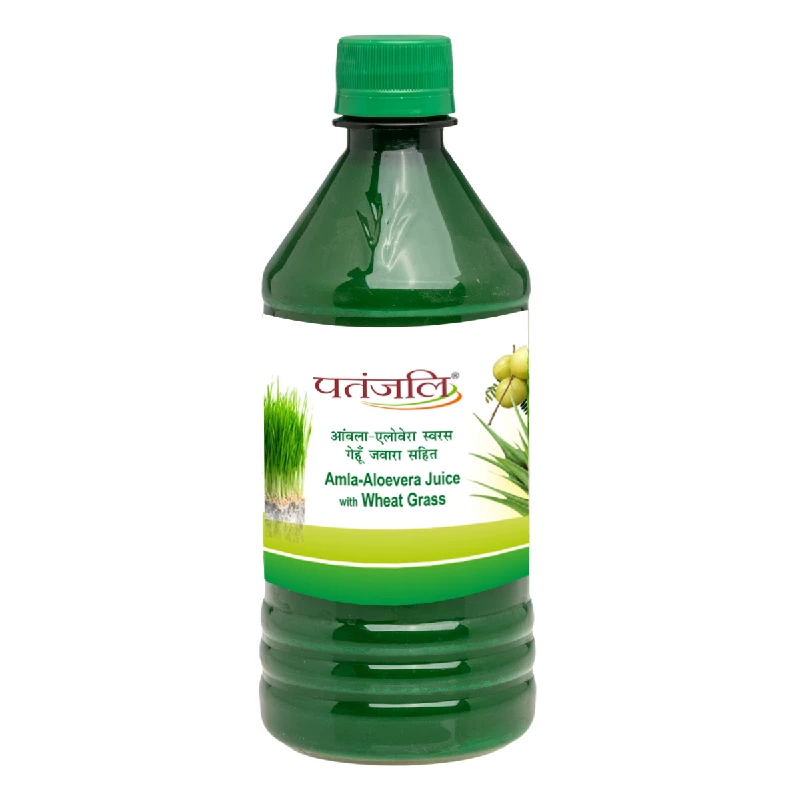
Found in: Patanjali Amla Juice, Karela Amla Juice, Lauki Amla Juice, Giloy Amla Juice, Arjun-Amla Juice, and Amla-Aloe Vera with Wheatgrass.
Shop here:
2. Aloe Vera Is Known for Its Soothing Properties
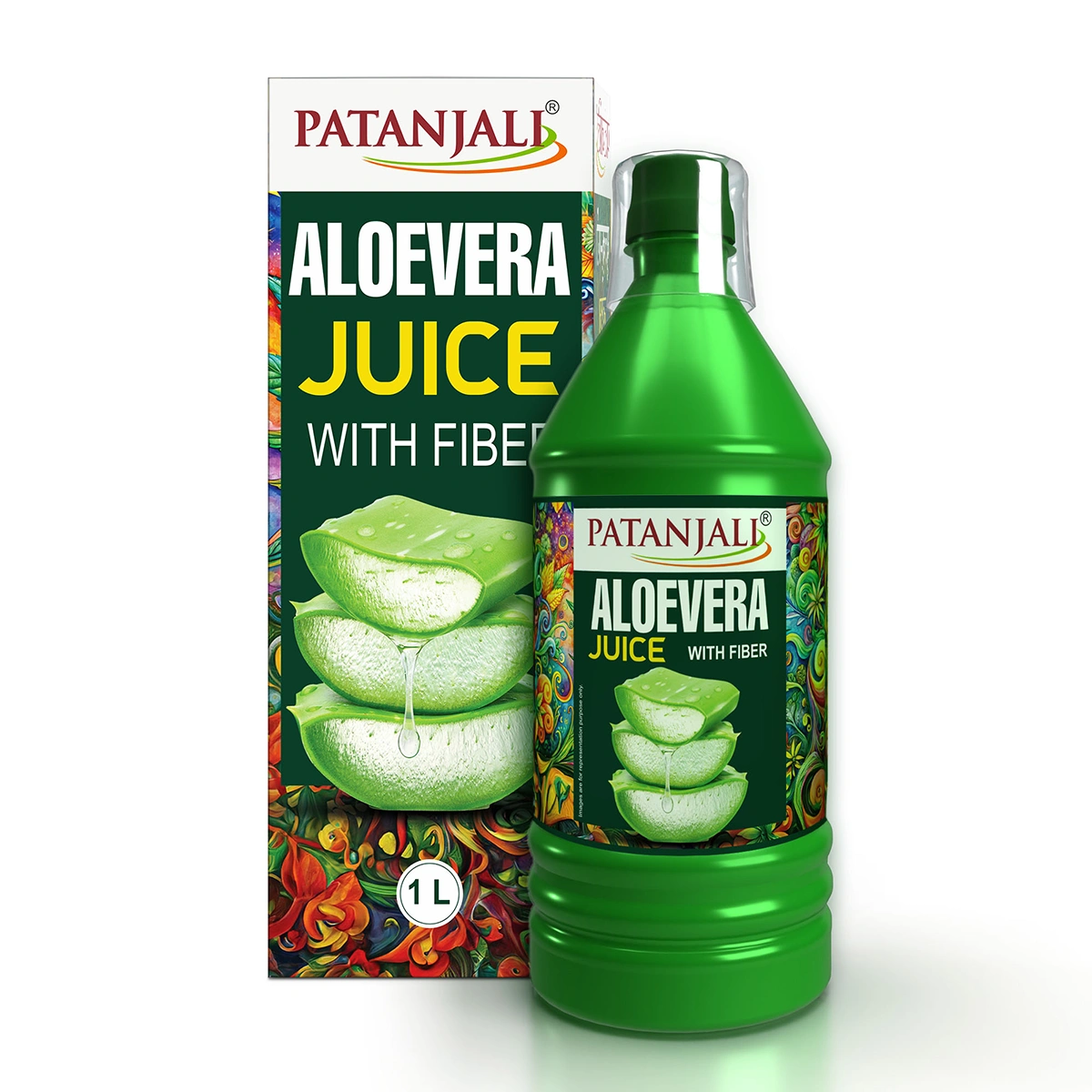
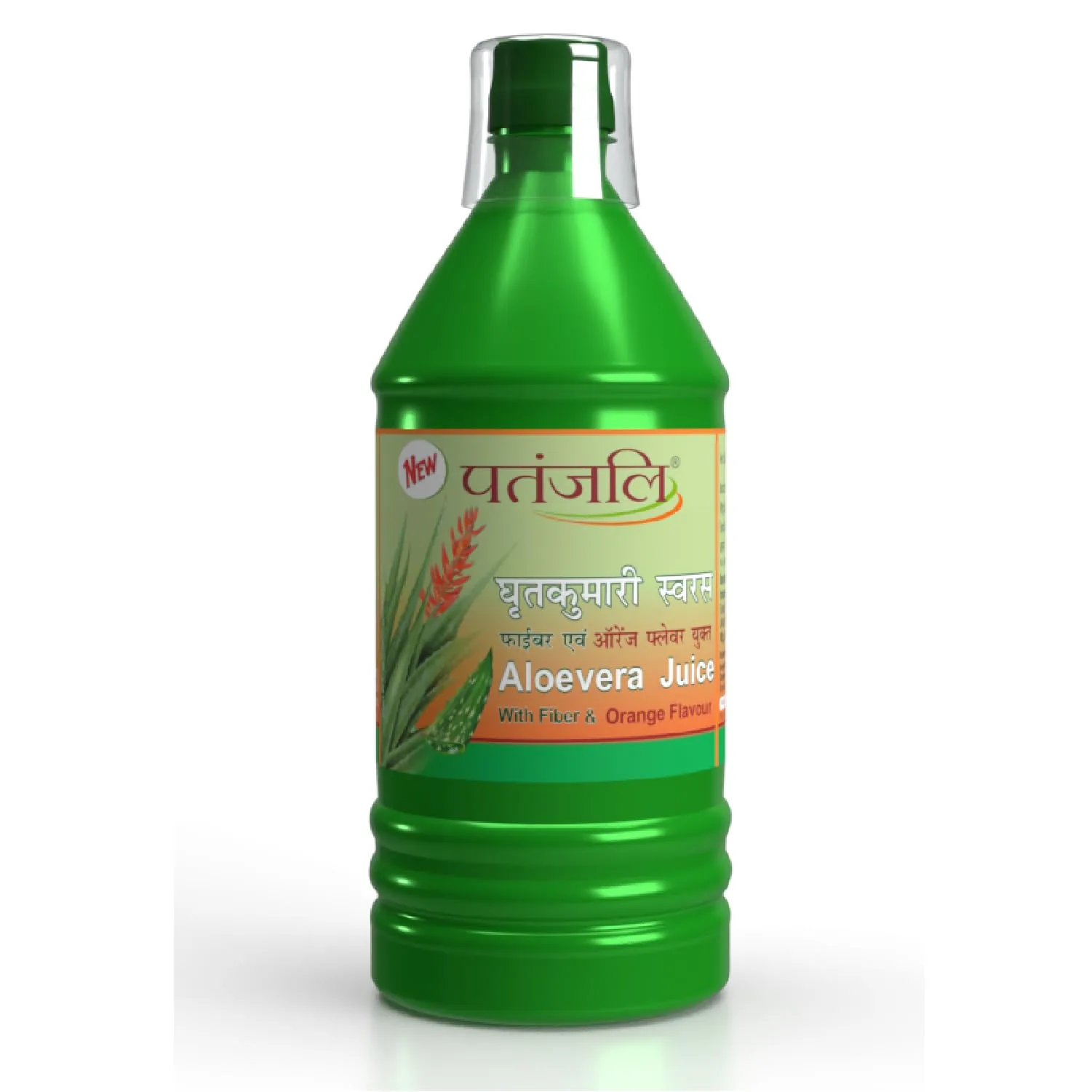
Aloe vera is perhaps best known for its use on the skin, but it is also consumed as a juice. Patanjali offers Aloe Vera Juice with Fiber, an orange-flavored version, and an Amla-Aloe Vera with Wheatgrass formulation.
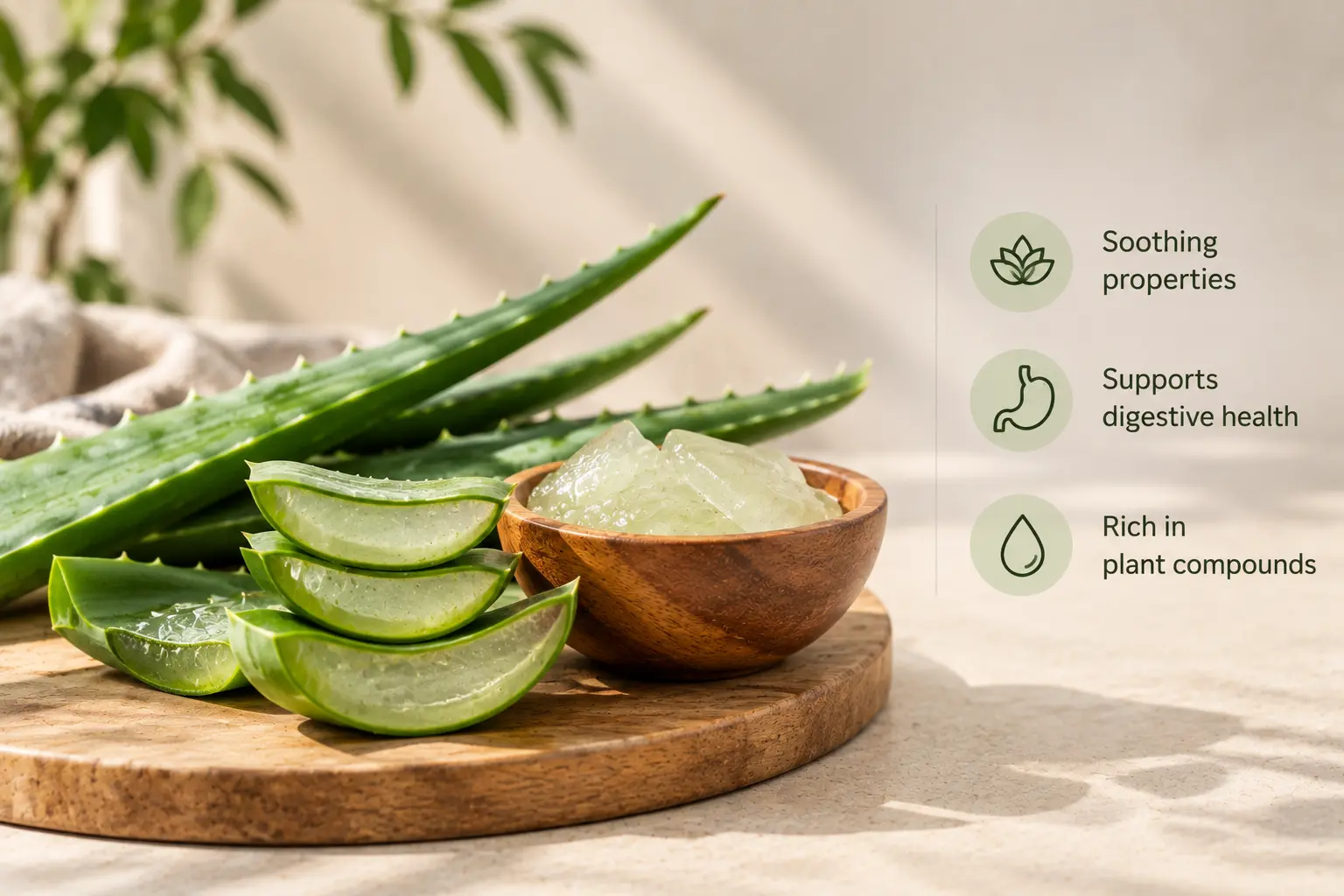
Aloe vera contains several plant compounds, and different parts of the leaf can have very different properties. Research on oral aloe has looked at areas including blood glucose and other health outcomes, although the amount and quality of evidence vary depending on the preparation being studied.
The National Center for Complementary and Integrative Health notes that research on oral aloe is still limited for many of the uses commonly promoted for it. It also points out that aloe gel, aloe latex, and whole-leaf preparations are not interchangeable.
For that reason, when choosing an aloe vera juice, it is useful to look at the actual formulation, whether it contains fiber or other ingredients, and the directions provided by the manufacturer.
Found in: Patanjali Aloe Vera Juice with Fiber, Aloe Vera Juice with Fiber and Orange Flavor, and Amla-Aloe Vera with Wheatgrass.
Shop here:
3. Karela Is Traditionally Used for Metabolic Health
Karela, or bitter gourd, is a familiar vegetable in Indian cooking and has also been used traditionally in Ayurveda and other systems of traditional medicine.
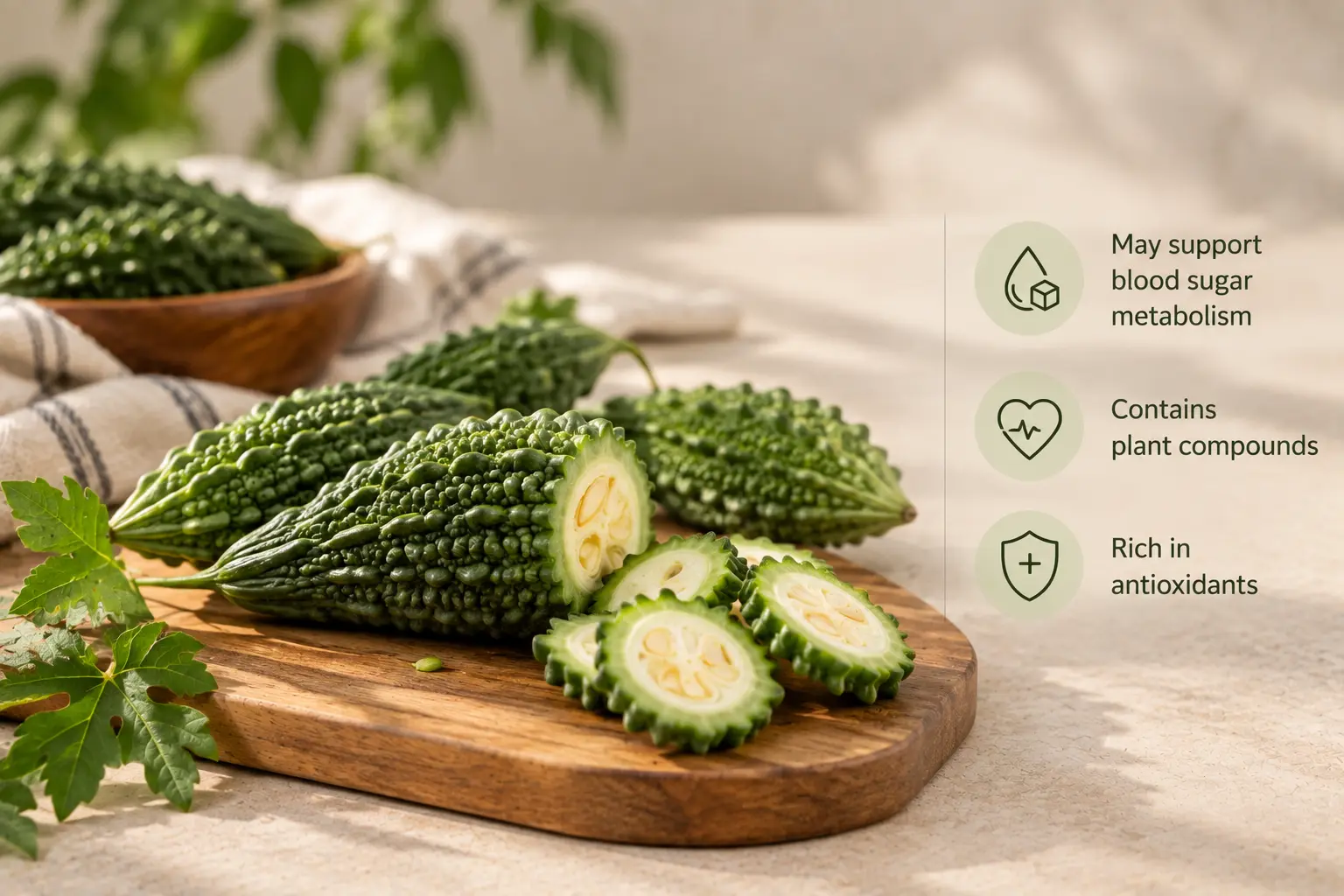
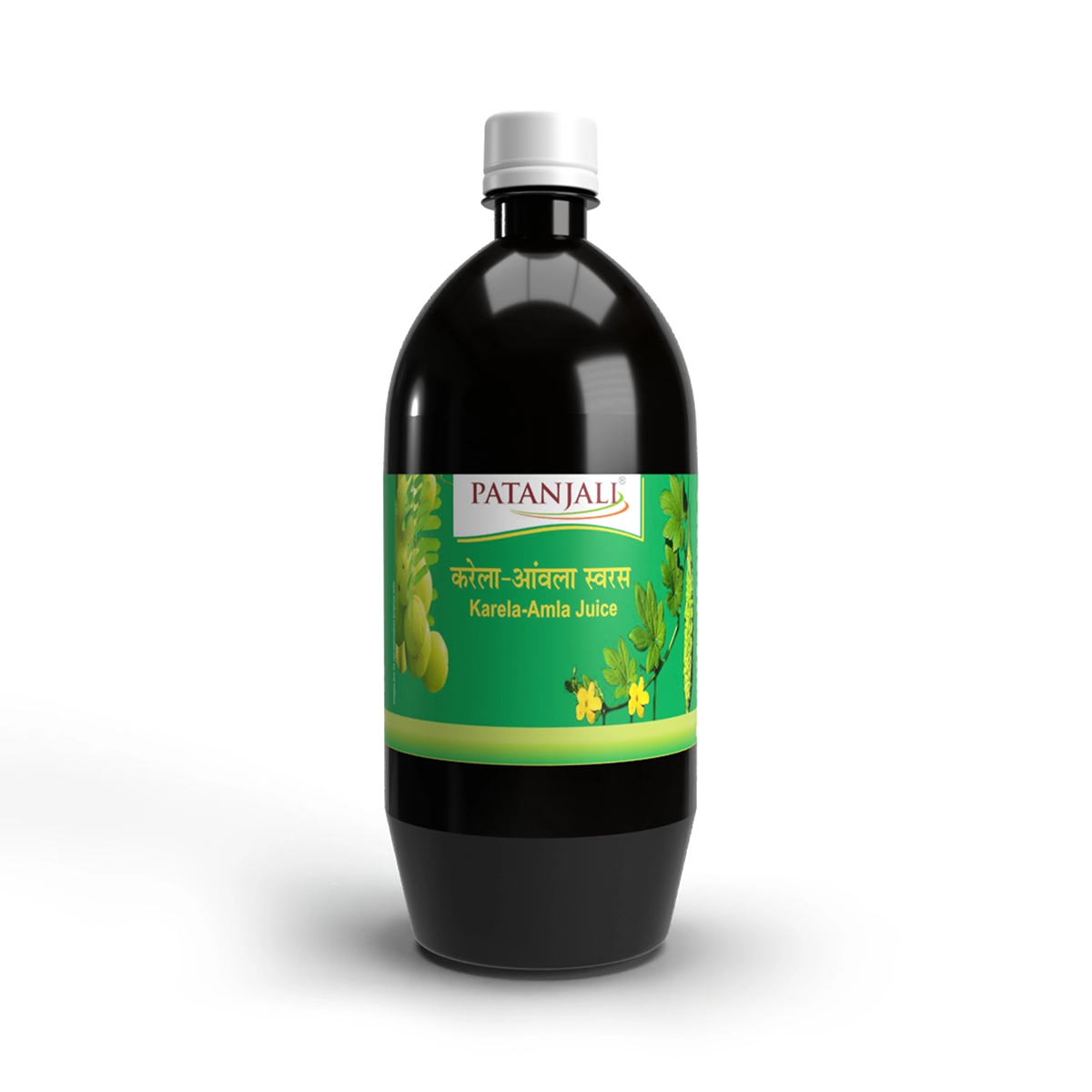
Patanjali combines karela with amla in its Karela Amla Juice. Bitter gourd contains several bioactive compounds that have made it a subject of research, particularly around blood glucose and metabolic health.
The research so far has been mixed. A systematic review of randomized clinical trials looked at bitter melon and several metabolic markers, including fasting blood glucose, HbA1c, cholesterol, and triglycerides. The researchers found that the available clinical evidence was not strong enough to determine a clear metabolic effect, and they highlighted the short duration and limited power of the available studies.
That said, karela remains a familiar ingredient for people who are interested in traditional Indian food and herbal preparations, and Patanjali pairs it with amla in one of its juice formulations.
Found in: Patanjali Karela Amla Juice.
Shop here:
4. Lauki and Amla Make a Different Combination
Lauki, also called bottle gourd, is a common Indian vegetable with a high water content and a mild nutritional profile. It is also used in traditional Indian cooking in everything from curries and dals to soups and juices.
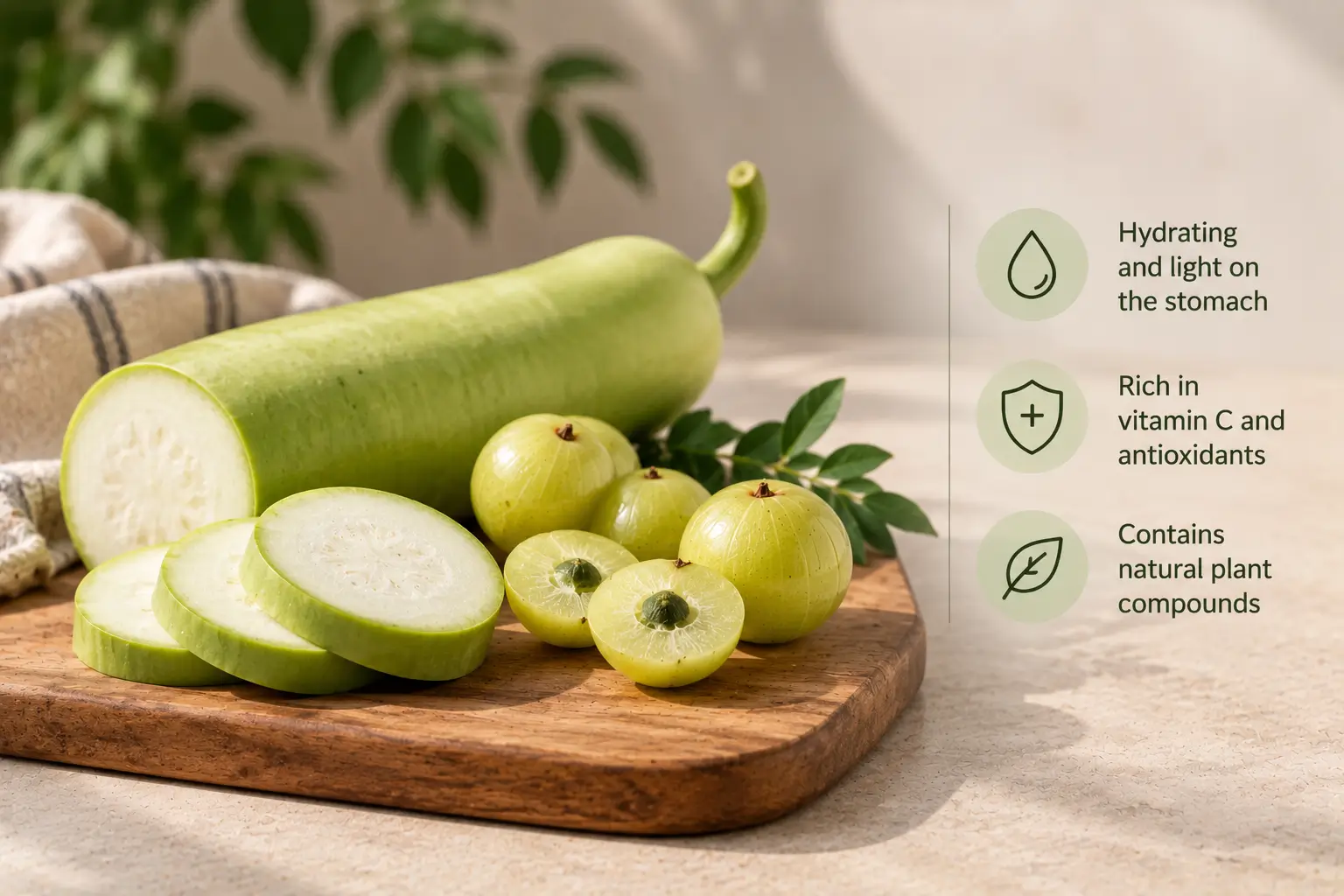
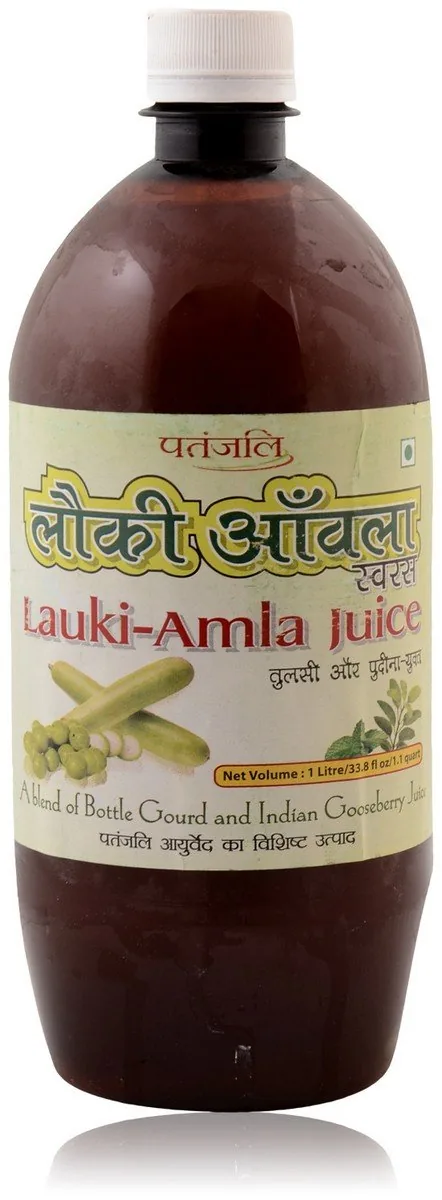
Patanjali combines lauki with amla in its Lauki Amla Juice, giving it a different ingredient profile from the company's karela-based formulation.
If you're searching for "Patanjali ash gourd juice," it's worth checking the product name carefully. The Patanjali product is called Lauki Amla Juice, and "lauki" refers to bottle gourd, not ash gourd.
One small safety point is worth knowing here. Fresh bottle gourd juice can be unsafe if the gourd tastes unusually bitter because bitter varieties can contain cucurbitacins. So if you're using a lauki-based juice, follow the product directions and don't assume that drinking more will mean greater benefits.
Found in: Patanjali Lauki Amla Juice.
Shop here:
5. Giloy and Amla Bring Two Traditional Ingredients Together
Giloy, also known as Tinospora cordifolia, is a familiar herb in Ayurveda and has been used traditionally in a variety of preparations.
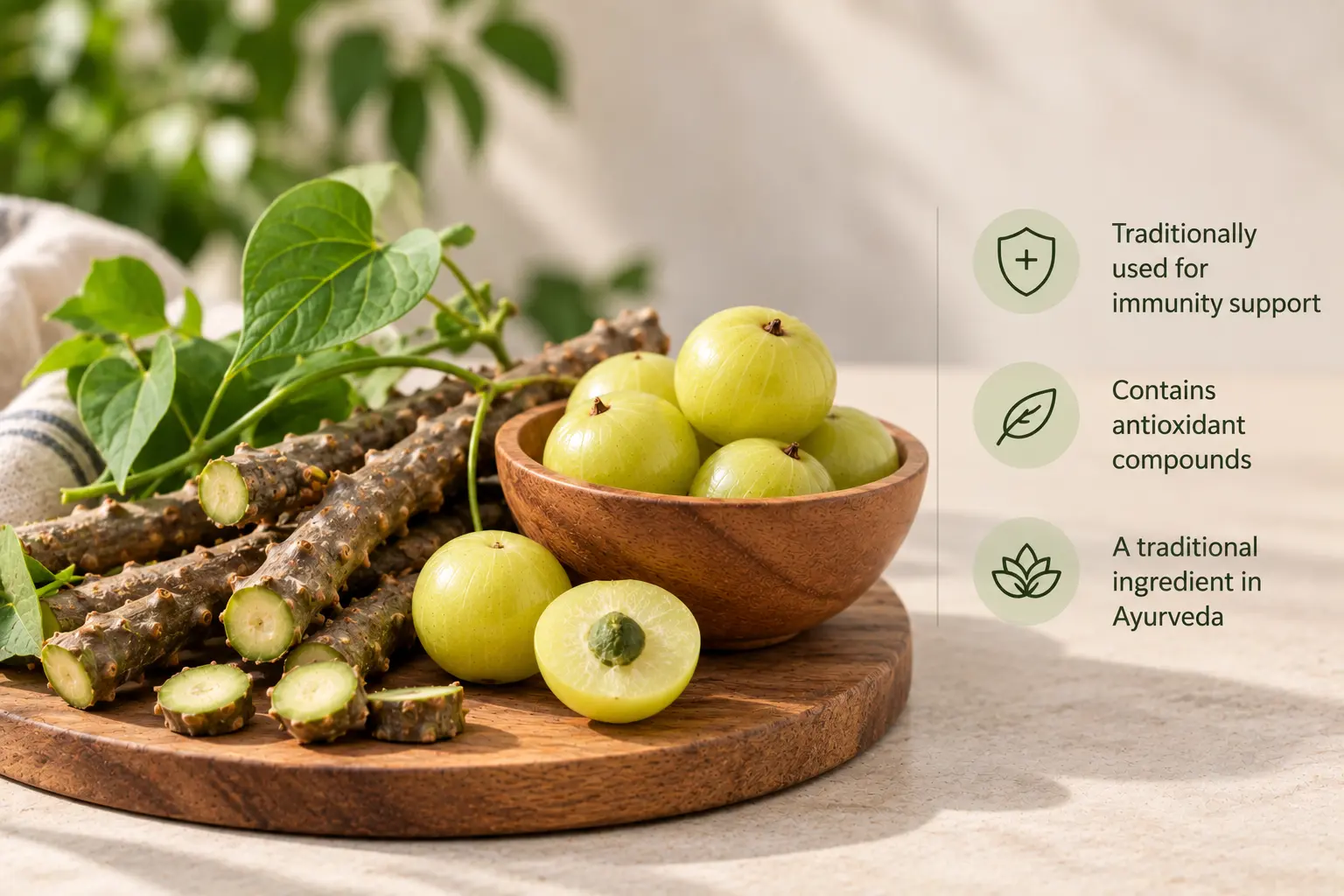
Researchers have studied giloy for properties including antioxidant, anti-inflammatory, and immunomodulatory activity. Much of the research, however, comes from laboratory and animal studies, with less clinical evidence available in humans.
Patanjali offers both Giloy Juice and Giloy Amla Juice. The latter combines giloy with amla, so you're getting two ingredients that are commonly used in traditional Indian herbal preparations in one formulation.
Giloy is also one of the ingredients where it's particularly important to pay attention to the specific product and your health circumstances. Published reports have linked some Tinospora cordifolia preparations with liver injury, so anyone with an existing liver condition or who takes regular medication should discuss its use with a healthcare professional.
Found in: Patanjali Giloy Juice and Giloy Amla Juice.
Shop here:

6. Arjun and Amla Combine Two Traditional Ingredients
Arjun, usually referring to the bark of Terminalia arjuna, has a long history of use in Ayurvedic preparations, particularly those associated with heart health.
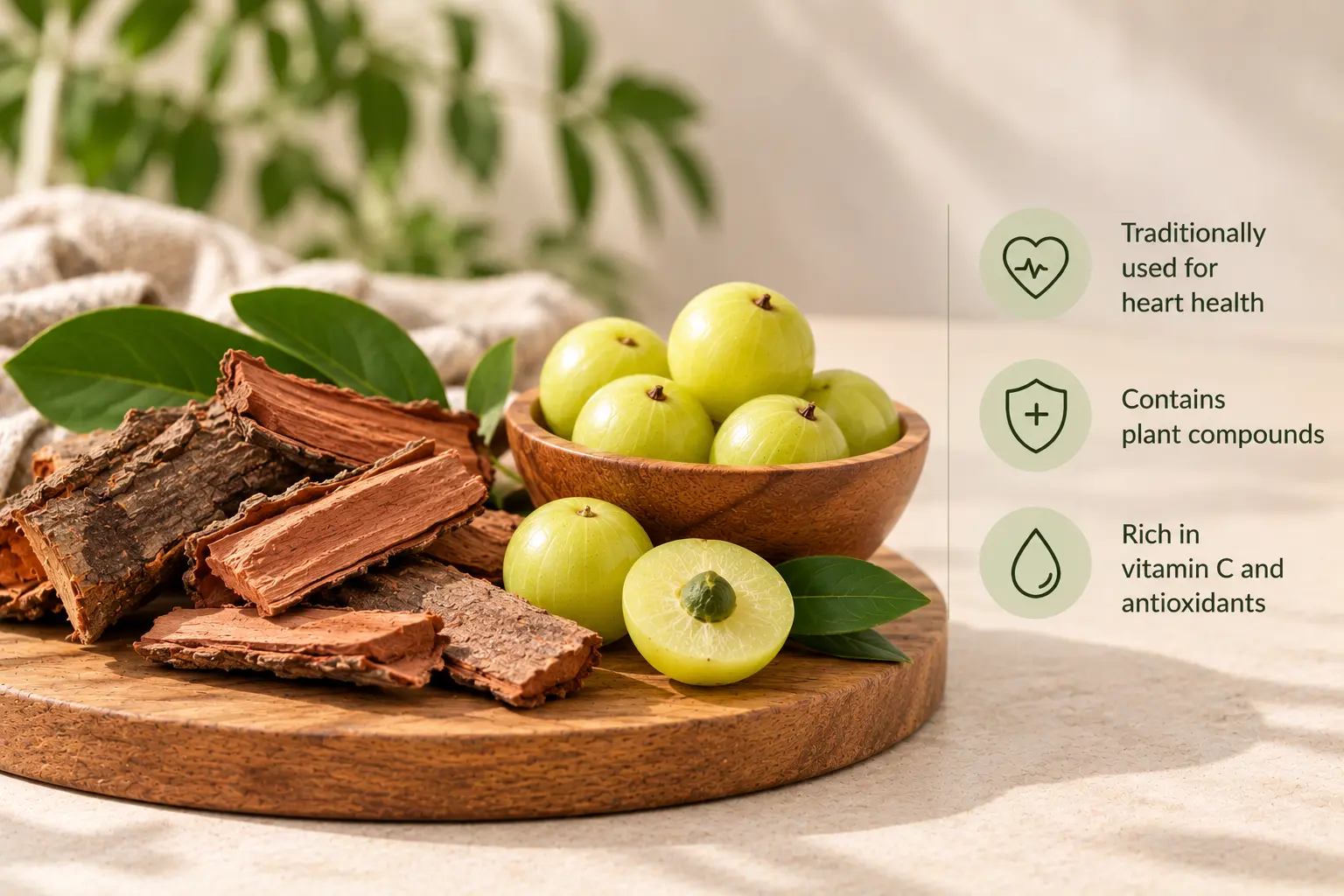
The bark contains several naturally occurring plant compounds, and researchers have studied arjun for its potential cardiovascular effects. A systematic review of clinical studies found some promising findings but also pointed out the necessity of better-quality research before firm conclusions can be drawn.
Patanjali combines arjun with amla in its Arjun-Amla Juice. That gives the formulation two familiar ingredients, with amla contributing vitamin C and plant compounds and arjun bringing its own traditional and research background.
Found in: Patanjali Arjun-Amla Juice.
Shop here:
7. Wheatgrass Adds Another Plant-Based Ingredient
Wheatgrass is the young grass of the wheat plant and contains chlorophyll, vitamins, minerals, and various plant compounds.
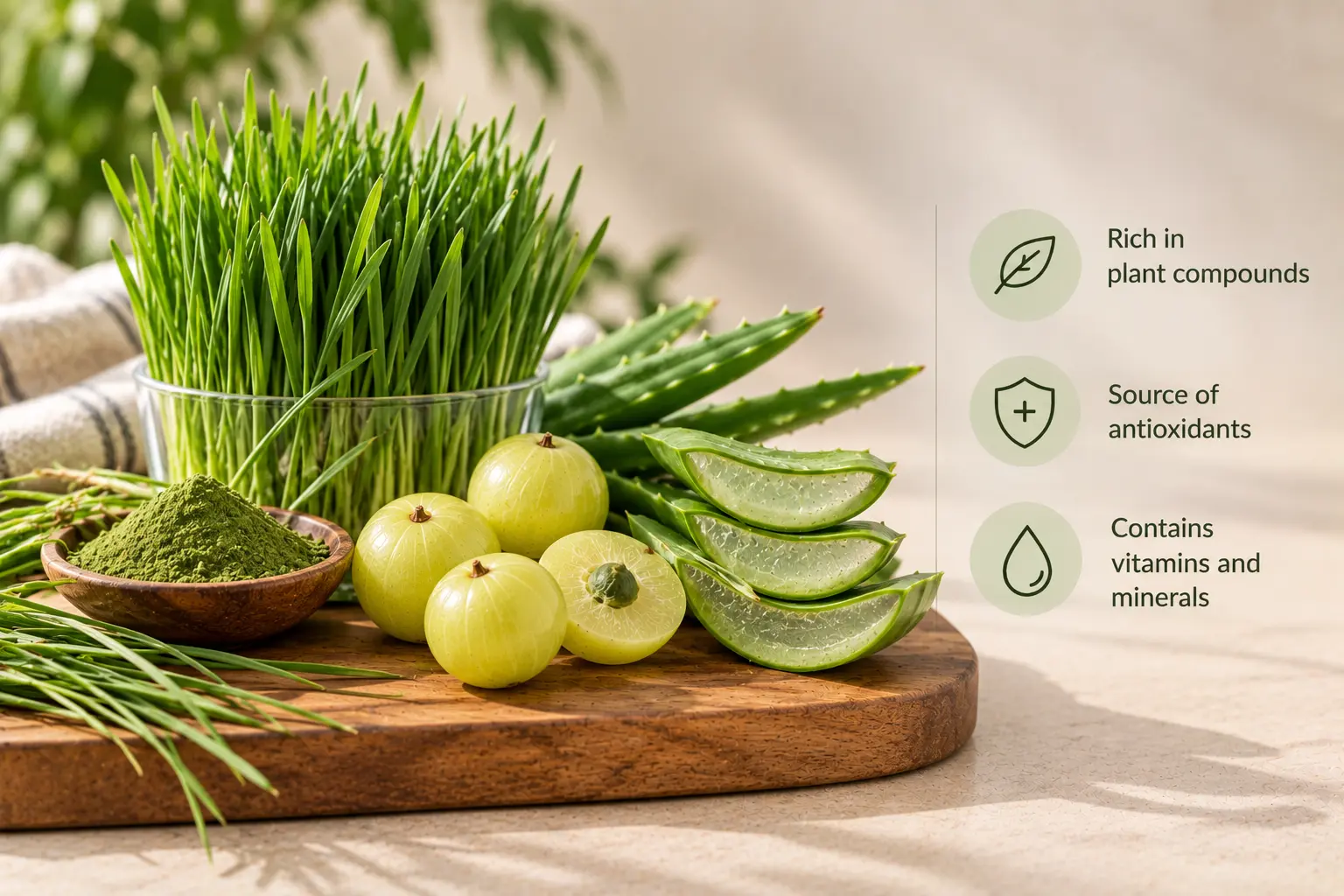
It has been studied for antioxidant activity and for its possible role in several areas of health, although much of the available research is still limited.
Patanjali combines wheatgrass with amla and aloe vera in its Amla-Aloe Vera with Wheatgrass Juice. So, instead of focusing on one main ingredient, this formulation brings together three different plant ingredients in one juice.
Found in: Patanjali Amla-Aloe Vera with Wheatgrass Juice.
Shop here:
What These Ingredients Tell You About the Patanjali Range
Once you look at the ingredients rather than just the product names, the differences between the juices become much easier to understand. Amla is the common thread across several formulations, while aloe vera, karela, lauki, giloy, arjun, and wheatgrass give each combination its own character.
If you're choosing one, start with the ingredients you're actually interested in and then check the full formulation and serving instructions on the bottle. That gives you a much clearer idea of what you're choosing than simply picking a juice because it sounds like it has a particular health benefit.
Patanjali Herbal Juices: Which Products Are Available?
Here’s a closer look. Patanjali's current juice range includes several individual and combination formulations.
Patanjali juice | Main ingredients | What makes it different? |
Patanjali Amla Juice | Amla | Single-ingredient amla juice |
Patanjali Aloe Vera Juice with Fiber | Aloe vera | Aloe-based formulation |
Patanjali Aloe Vera Juice with Fiber and Orange Flavor | Aloe vera | Aloe-based juice with orange flavor |
Patanjali Amla-Aloe Vera with Wheatgrass | Amla, aloe vera, wheatgrass | Multi-ingredient formulation |
Patanjali Karela Amla Juice | Karela, Amla | Bitter gourd and Amla combination |
Patanjali Lauki Amla Juice | Lauki, Amla | Bottle gourd and Amla combination |
Patanjali Giloy Amla Juice | Giloy, Amla | Giloy and Amla combination |
Patanjali Arjun-Amla Juice | Arjun, Amla | Arjun and Amla combination |
Patanjali Giloy Juice | Giloy | Single-herb juice |
The exact formulation and serving instructions can vary, so check the product label before use.
How to Choose a Patanjali Herbal Juice
Instead of asking which Patanjali juice is universally "best," start with the ingredient or type of formulation you're actually interested in.
If You Want a Simple Amla Juice
Patanjali Amla Juice is the straightforward option. It contains Indian gooseberry as its main ingredient and is described by Patanjali as a source of vitamin C.
If You Want an Aloe Vera Juice
Patanjali has Aloe Vera Juice with Fiber, including an orange-flavored version. If you're considering oral aloe, check the formulation carefully and speak with a healthcare professional if you take medication or have an existing health condition.
If You Want Amla With Another Ingredient
You have several choices, including those paired with bitter gourd, bottle gourd, giloy, arjun, and wheatgrass for a broader multi-ingredient formulation
How to Take Patanjali Herbal Juices
There isn't one serving size that applies to every Patanjali herbal juice.
For example, Patanjali currently directs consumers to take 15 to 25 ml of its Amla Juice twice a day with an equal amount of water, or as directed by a physician. The same general 15 to 25 ml twice-daily direction applies to its Karela Amla and Lauki Amla products.
That doesn't mean you should use the same amount for every juice.
Check the label of the specific product you buy and follow its directions. If your doctor has given you different instructions, follow those instead.
Can You Drink Patanjali Herbal Juices Every Day?
Whether you should drink a particular herbal juice every day depends on the product, its ingredients, the amount you're taking, and your individual health circumstances.
A product being plant-based or traditionally used does not automatically make it appropriate for everyone. This is particularly important if you are taking medicines or using a juice for a specific health condition.
Aloe vera is a good example. NCCIH notes that oral aloe products can differ depending on whether they contain gel, latex, or whole-leaf preparations. Oral aloe latex can cause abdominal pain, cramps, and diarrhea, and aloe may interact with certain medicines.
So rather than making "daily use" the goal, look at the specific product and why you want to take it.
What to Check Before Buying a Patanjali Herbal Juice
A few minutes with the label can tell you more than the front of the bottle.
Check the Ingredients
Look at exactly what is in the formulation. A product called "Amla Juice" may have a much simpler ingredient list than a combination product containing several extracts, flavors, or preservatives.
Check the Serving Instructions
Patanjali provides product-specific directions. Follow the instructions for the juice you've purchased rather than applying the serving size from another product.
Check Storage Instructions
Some products need to be refrigerated or consumed within a specified period after opening. Patanjali's Lauki Amla Juice, for example, instructs consumers to store it in a cool, dry place, keep it away from direct sunlight, and consume it within one month after opening.
Consider Why You Want to Take It
If you're simply looking to add amla or another plant ingredient to your diet, that's different from taking a juice because you believe it will treat a medical condition.
If you are trying to manage a health condition, use prescribed medication or have been advised to follow a specific diet, talk to your healthcare professional before adding an herbal juice.
Are Patanjali Herbal Juices Safe?
Safety depends on the individual product and the person taking it.
Read the label carefully and pay attention to the ingredients, serving size, storage instructions, and warnings. If you're taking medication, have a chronic health condition, are pregnant or breastfeeding, or want to use an herbal juice to manage a medical problem, speak with a healthcare professional first.
Aloe vera deserves particular caution because different oral preparations can contain different parts of the plant. NCCIH advises that oral aloe may interact with medicines and notes specific safety concerns with aloe latex and some whole-leaf preparations.
Also remember that research on an ingredient does not necessarily mean the same effect has been demonstrated for a particular commercial juice. The preparation, dose, and study population all matter.
So, Here’s What the Evidence Actually Tells Us
It's easy to find long lists of benefits attached to herbal juices online. A more useful way to look at them is to separate traditional use, product claims, and clinical evidence.
Amla is a good example. There is promising human research around amla supplementation and several metabolic markers, but the studies are generally small and use specific preparations and doses.
Aloe has also been studied orally, but NCCIH says evidence is limited for many promoted uses and emphasizes that different aloe preparations have different safety profiles.
So, if you're looking to understand the benefits of Patanjali herbal juices, think of the evidence as ingredient-specific rather than assuming that every claim attached to a herbal juice has been clinically established.