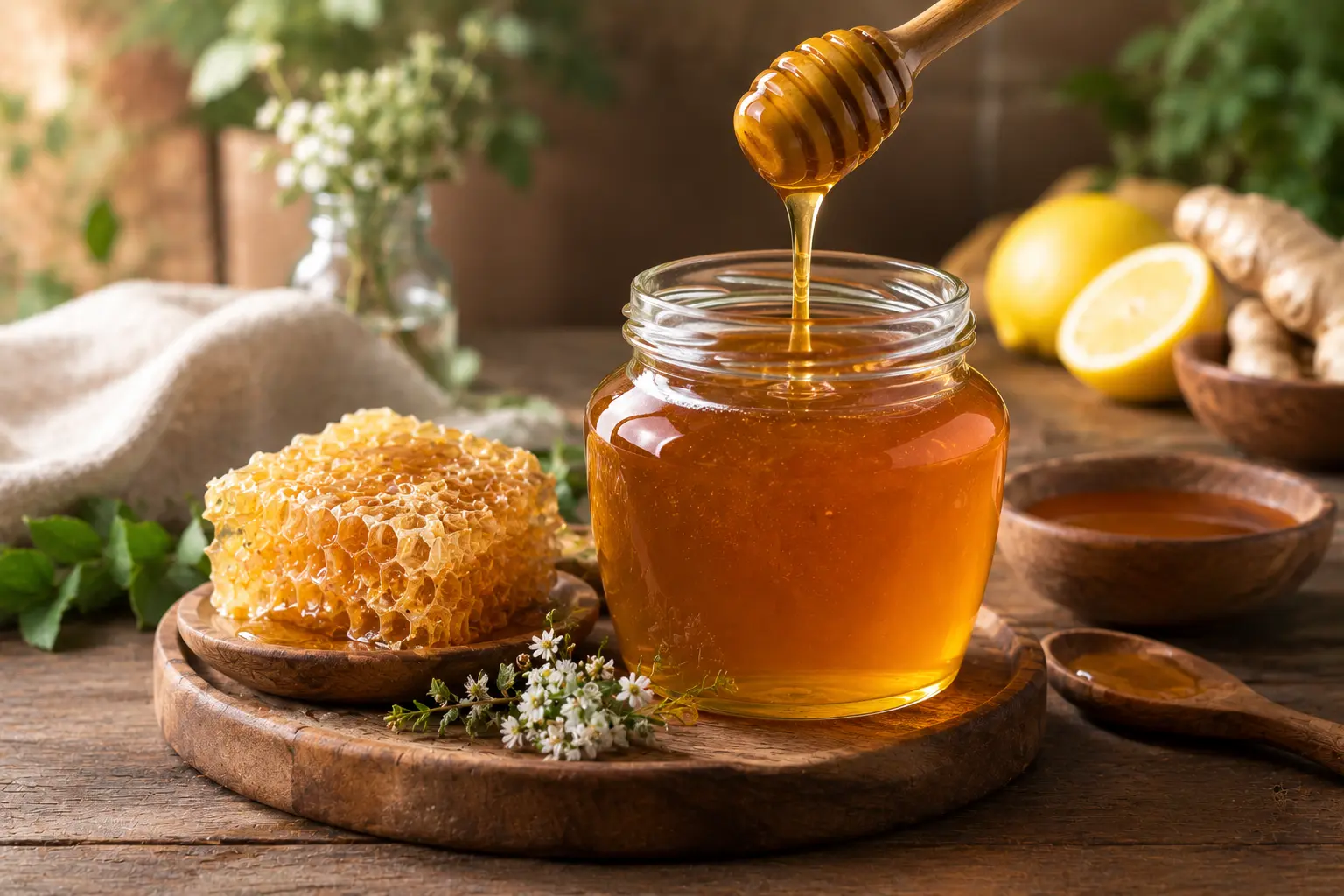
Organic Raw Honey Benefits: What The Label Means and What Honey Adds
Raw, pure and organic mean different things on a honey jar. Here is what each term covers in the US, what honey adds to your food, and how to pick a jar.
Latest Articles
 Wellness
What Is Avipattikar Churna? Ingredients, Traditional Uses and Safety
Oct 8, 2026
 Staples
Organic Honey vs Regular Honey: What the Label Covers and What It Doesn't
Oct 8, 2026
 Beauty
8 Best Natural Shampoos for Men to Buy Online in the USA, UK and Beyond
Oct 8, 2026
 Wellness
Best Ayurvedic Herbs for Sleep: 8 Herbs and the Forms They Come In
Sep 30, 2026
There is a jar of honey in most Indian kitchens. It lives at the back of the shelf, turns cloudy and grainy near the bottom by winter, and comes out for chai, for warm water in the morning, and for a spoon straight from the jar when nobody is looking.
Then you move to a new country and walk into a store, and there are twenty jars instead of one. One says raw. One says pure. One says organic. One says all three. The prices are very different and nothing on the front of the jar tells you why.
So what are the benefits of organic raw honey? And is the jar with all three words on it the better buy?
The words are doing less work than they look like they are doing. Here is what each one covers, and what honey adds to your food.
Quick Answer: What Are The Benefits Of Organic Raw Honey?
Honey brings flavour that changes with the flowers the bees fed on, sweetness in small amounts, and a place in a lot of home cooking. Raw honey keeps its pollen and is not pasteurised, so it often tastes more of its floral source than heavily processed honey does.
The part that surprises people is the label. In the United States, "organic" on honey is a certified term, but the rules behind it were not written for bees. "Raw" and "pure" are not defined by the FDA at all.
That does not make honey a bad buy. It means the words on the front are a starting point, not an answer. The label tells you less than the source and the processing do.
What Does "Raw" Mean On A Honey Jar?
Raw honey is honey that has not been pasteurised and has not been pushed through a fine filter. It is strained to take out wax and bits of the hive, and then bottled.
The pollen stays in. So do the small particles that make raw honey look slightly cloudy rather than glass clear.
There is no federal rule behind the word. The FDA has never set a standard of identity for honey, which means no agency checks the word "raw" before a jar reaches a shelf. The working industry meaning is honey that was not heated much above hive temperature and was not micro filtered.
Two jars marked raw can therefore have been handled quite differently. One may have been strained cold and bottled. Another may have been warmed to make it easier to pour.
What Does "Organic" Mean On Honey?
This is where it gets interesting, and where most honey guides skip ahead.
USDA Organic is a real certification with real enforcement behind it. But the National Organic Program has no standards written specifically for beekeeping. Honey operations are certified under the organic livestock regulations, which were written for animals like cows and poultry.
Bees are not cows. A cow stays where you put it. A honey bee forages over a wide area around the hive, so certifying its honey means controlling the land it flies over, not just the land the hive sits on.
The National Organic Standards Board recognised this and sent the USDA a full set of apiculture standards in October 2010. Those standards were never turned into a rule. They are still sitting on the docket.
Two things follow from that.
First, very few beekeepers in the US can meet the forage requirement, because there are not many stretches of untreated land large enough. Certified organic honey sold in the US is mostly imported.
Second, "organic" on a honey jar tells you about the land and the hive management, if the certification is genuine. It does not tell you whether the honey is raw, and it does not tell you how the honey tastes. If you are weighing up two jars, see our side-by-side guide to organic honey vs regular honey.
What Does "Pure" Mean?
The FDA's 2018 guidance says that a product labelled honey should be honey and nothing else. If a sweetener like sugar or corn syrup has been added, the product should be sold as a blend and the ingredients listed. That guidance is not binding, and "pure" itself is not a defined term.
So "pure honey" mostly means the maker is telling you there is nothing else in the jar. Useful. Not a quality grade.
Raw vs Pure vs Organic vs Unfiltered
Term | What it suggests | Defined in the US? | What it tells you |
|---|---|---|---|
Raw | Not heated, not fine filtered | No | Processing style, as the maker describes it |
Pure | Only honey in the jar | Not as a standalone term | Nothing has been added |
Organic | Certified hive and forage practice | Yes, but under livestock rules | Land and hive management |
Unfiltered | Pollen and fine particles left in | No | How finely it was strained |
The two terms on a honey label that carry legal weight in the US are USDA Organic and the country of origin. Everything else is the maker describing their own product.
So What Are The Benefits Of Honey Itself?
Set the label aside. Here is what honey brings to a kitchen.
The flavour changes with the flowers
This is the part nutrition tables cannot show you. Honey from mustard flowers tastes nothing like honey from litchi blossom, and forest honey from mixed wild flora tastes different again.
Darker honeys tend to be stronger and more savoury. Lighter ones tend to be softer and more floral.
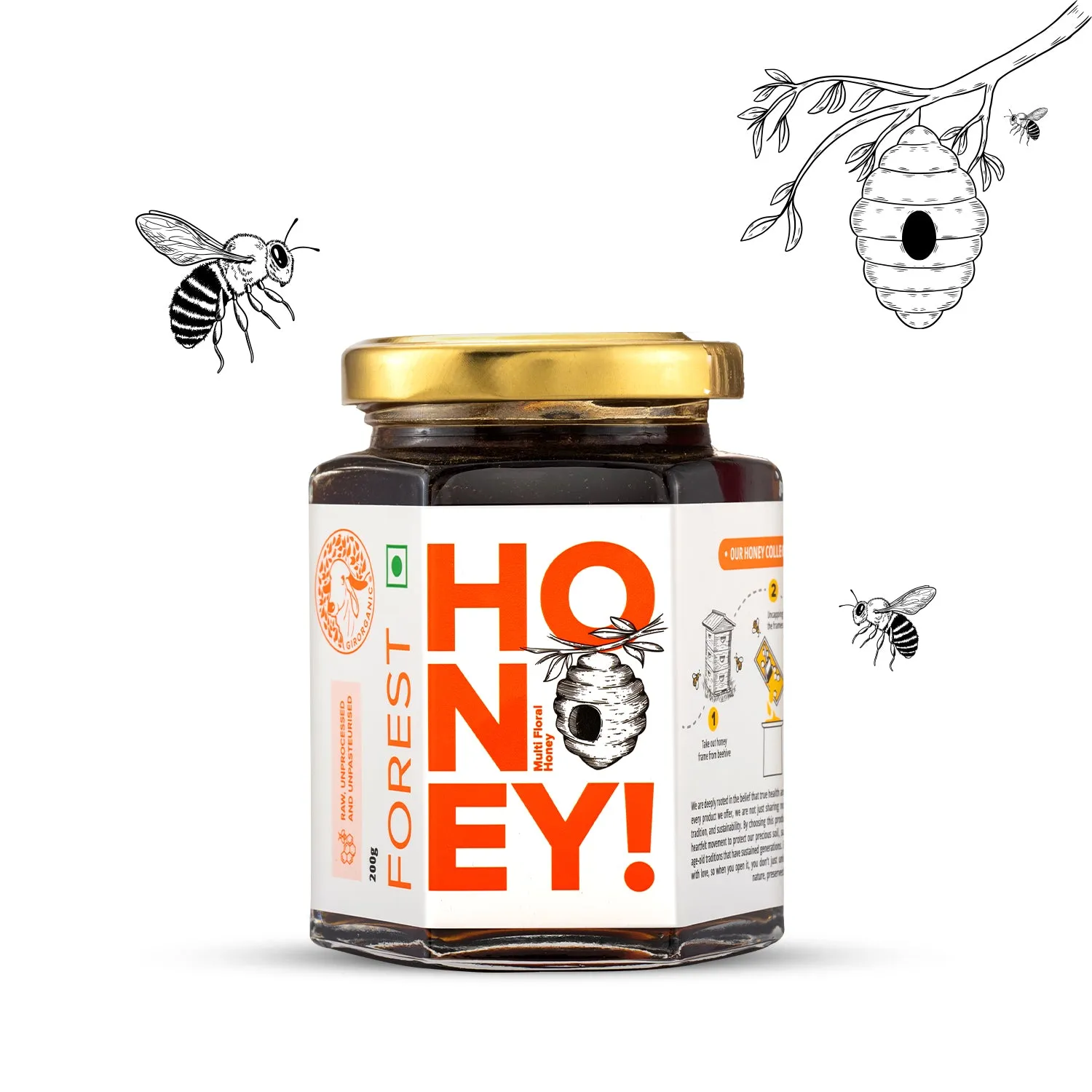
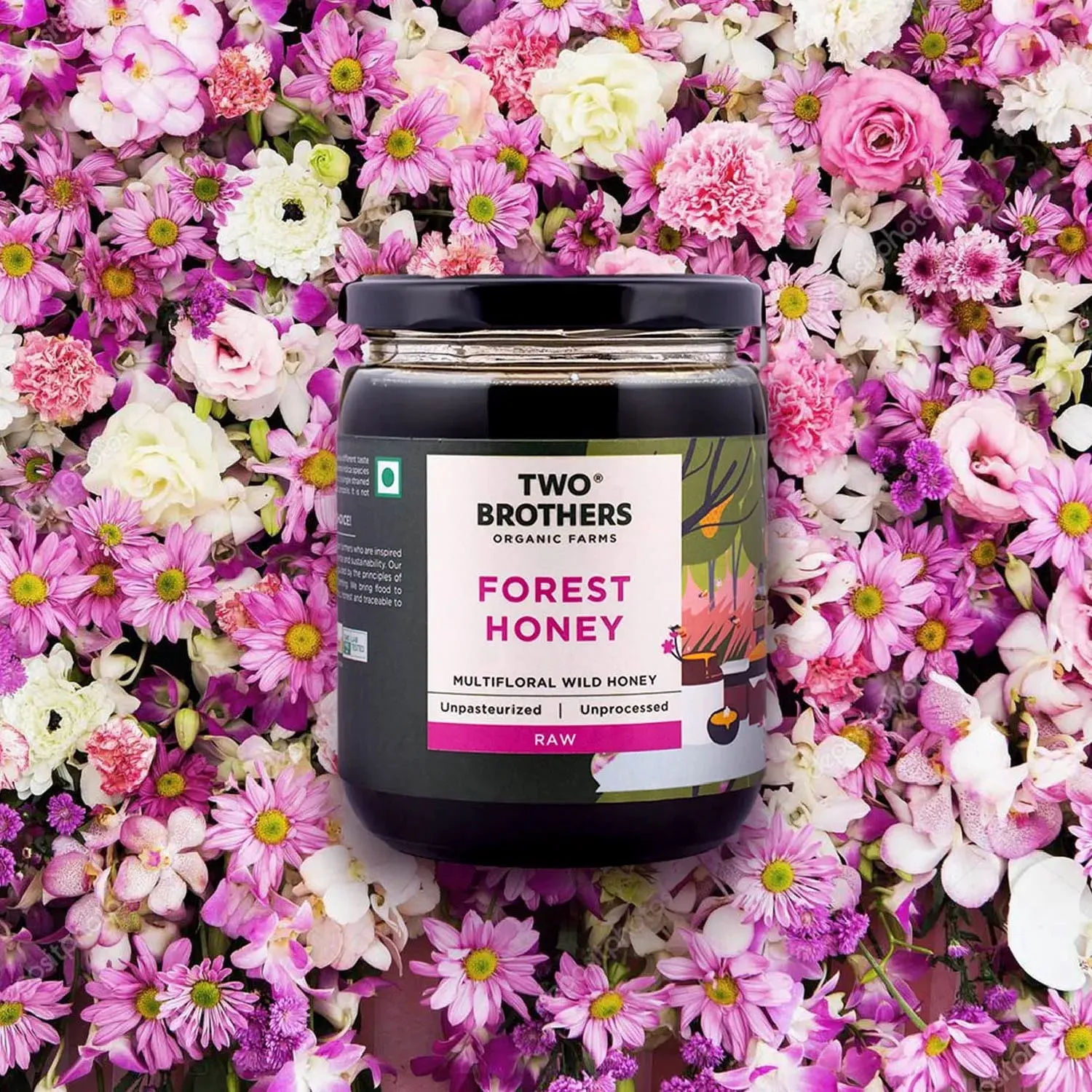
If you have only eaten one kind of honey, you have eaten one flavour out of dozens. Forest honey from Gir Organic and multi floral honey from ORGANIC INDIA are two easy places to start comparing, going by how each maker describes its source.
A little does a lot
Honey is sweeter by taste than plain sugar for the same amount, and it carries its own flavour along with the sweetness. A small spoon changes a cup of tea, a bowl of curd, or a slice of toast.
That makes it useful when you want something to taste of more than sugar.
It is still a sugar
Worth saying plainly, because a lot of writing about honey dances around it. Honey is a sugar. It counts as an added sugar in your day the same way any other sweetener does.
Treating it as a food you enjoy in small amounts is closer to how it has always been used than treating it as a health product.
Naturally occurring compounds
Honey contains small amounts of naturally occurring compounds that come from the nectar and the pollen. How much, and which ones, varies a lot by floral source and by how the honey was handled.
Raw honey keeps more of what came out of the hive than honey that has been heated and finely filtered. That is a difference in processing. It is not a promise about what the honey does in your body.
A long history in Indian kitchens
Honey turns up across Indian cooking and household routine, from sweets to morning drinks to festival food. Much of how people use it today makes sense once you know that history.
Best Way To Eat Honey
There is no single right way. There are ways that suit its flavour better than others.
Best uses of honey
Stirred into warm, not boiling, water or milk
Drizzled over curd or yoghurt
On toast, paratha, or hot buttered bread
Over fresh fruit, especially apple, pear, and banana
In salad dressings, with lemon and mustard
Brushed on roasted vegetables or paneer near the end of cooking
Straight off the spoon
Best combinations with honey
Honey sits well next to things that push back against sweetness.
Curd and yoghurt. The sourness balances it.
Nuts. Walnuts and almonds in particular.
Cheese. A hard salty cheese with honey is a good plate on its own.
Lemon and ginger. Sharpness cuts the sweetness.
Cinnamon and cardamom. Warm spices suit darker honeys.
Chilli. Hot honey on pizza or fried chicken works for the same reason.
Sesame. Til and honey is an old pairing for a reason.
A note on heat
Honey is easier to taste when it is warm rather than hot. Stir it into tea after the tea has come off the boil rather than into a rolling pot.
This is about flavour. Strong heat flattens the aroma that made you buy a particular honey in the first place.
Who Should Not Eat Honey
Babies under 12 months should not be given honey in any form. That includes honey cooked or baked into food, honey stirred into water or formula, and honey on a pacifier. The CDC is clear on this, and the rule applies to all honey, raw or not.
Once a child is over a year old, the usual guidance no longer applies.
How To Choose A Jar Of Honey
Four things are worth checking, in this order.
1. Country of origin
This has to be on the label and it tells you something real. Honey from a named region is easier to trace than honey with no origin given.
2. Floral source
If the jar names the flower or the forest, the maker is telling you what it should taste like. If it says nothing, expect a blended, milder honey.
3. The ingredient panel
Honey should be the only thing listed. If there is a second sweetener, you are buying a blend, and the label should say so.
4. Processing
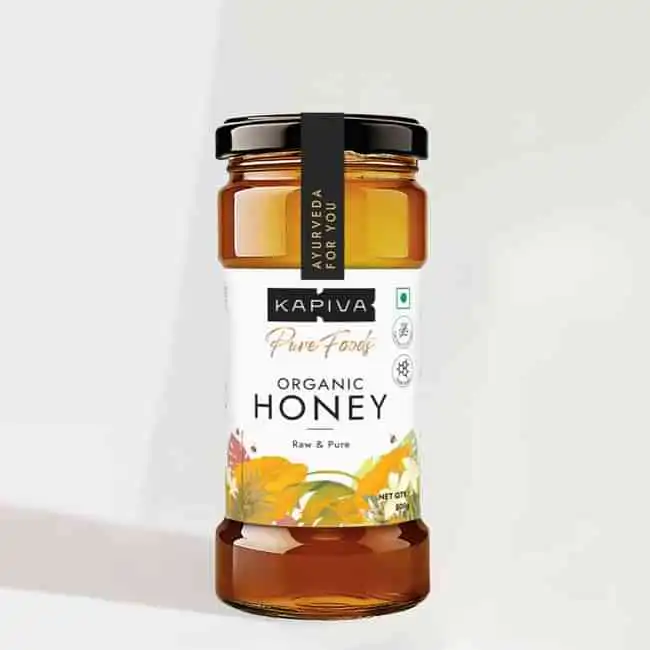
If you want the flavour of the original nectar, look for raw or unfiltered and for a maker who describes how they handled it. Isha Life Raw Himalayan Honey and Kapiva Organic Honey are both described as raw by their makers.
Why Honey Crystallises
Almost every honey turns solid or grainy eventually. Some do it within weeks.
That is a normal physical change. It is not spoilage and it is not a sign the honey was fake. Honeys with more glucose crystallise faster, so it varies by floral source.
To loosen it, stand the jar in warm water and stir. Skip the microwave and skip boiling water, since strong heat changes the aroma.
Store honey with the lid tight, away from heat and direct light.
Honey From India, Delivered To Your Door
If you grew up with a particular jar in the kitchen, no local substitute tastes quite like it. That is the reason most people go looking for Indian honey once they have moved.
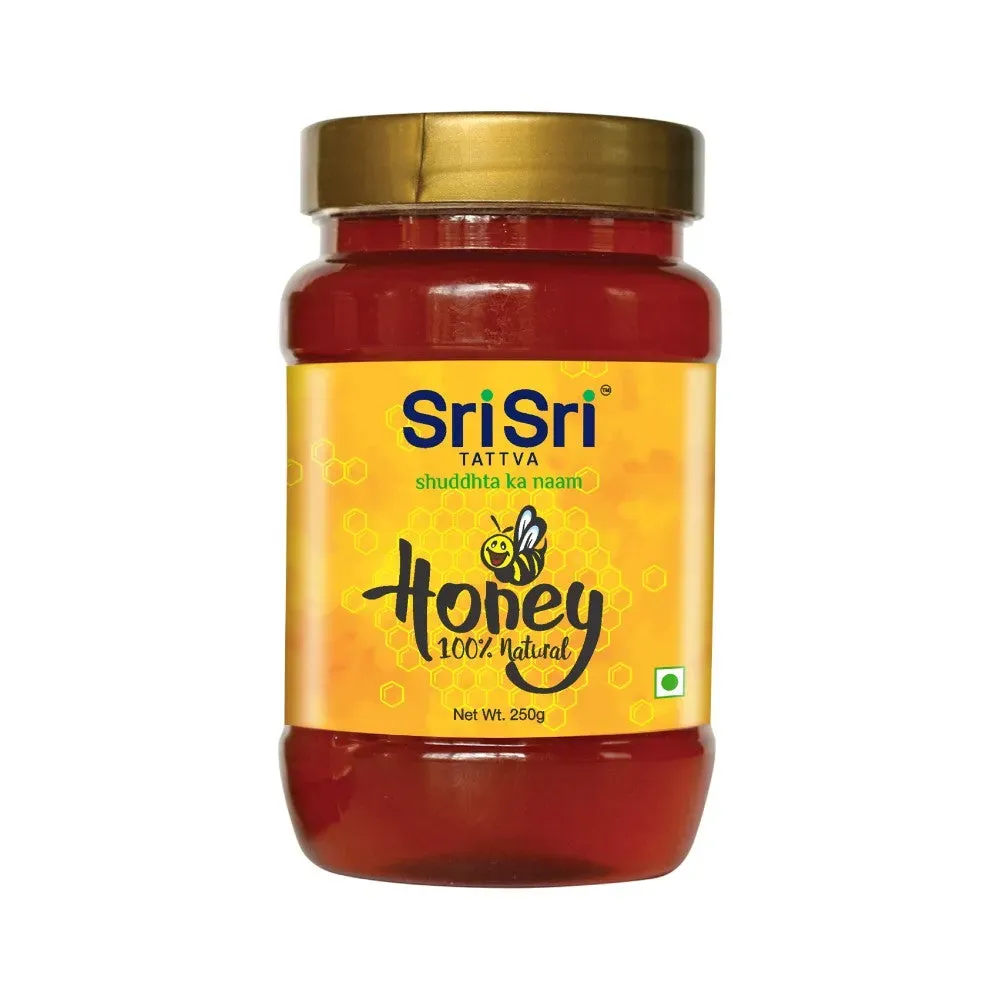
TheDesiFood stocks honey from Indian brands including ORGANIC INDIA, Kapiva, Isha Life, Organic Tattva and Gir Organic, in multi floral, forest and raw varieties. Product descriptions, certifications and processing details come from each manufacturer, so read the label on the jar you are buying.
We ship to the USA, the UK, Canada, Australia, the Middle East and many more countries, with doorstep delivery worldwide and no extra customs duties to pay on arrival.
It is also a good thing to send. A jar of honey from home travels well and keeps for a long time. Forest and multi floral honeys sit under Wellness and Food on the site, depending on the brand.
, 250 g-1.webp)