
12 Best Tea for a Sore Throat and How to Brew Each One
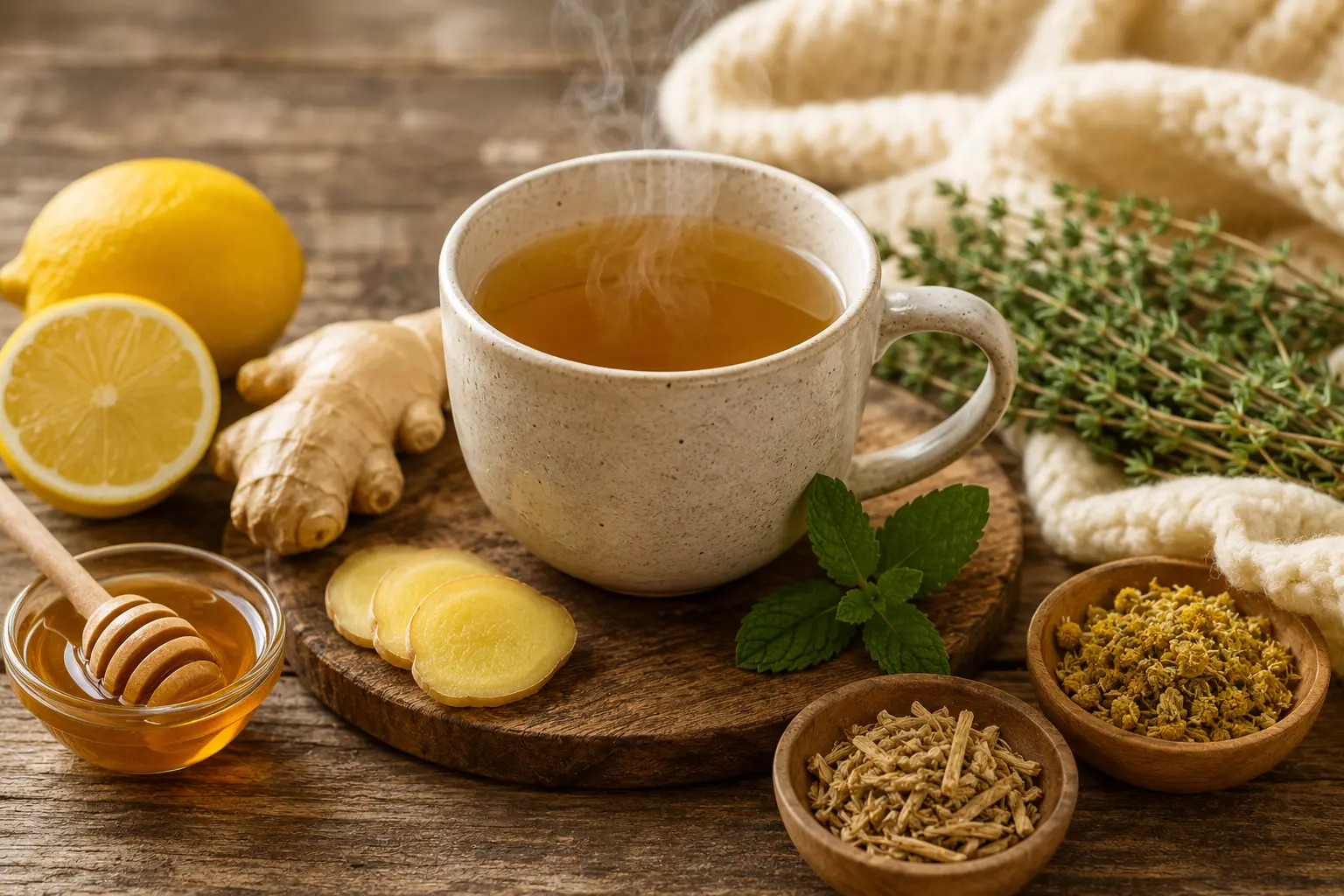
12 Best Tea for a Sore Throat and How to Brew Each One
When your throat hurts, you want something warm to sip. Choosing what goes in the cup is the easy part.
Getting anything out of it is the bit that catches people. Drop a piece of licorice root in a mug of hot water, leave it five minutes, and you get faintly sweet water. Do the same with a spoon of mint leaves and you get a proper cup of mint tea. Same mug, same five minutes, two very different results, because a hard dry root and a soft leaf behave differently in water.
So this list is grouped by how you brew each one rather than ranked one to twelve. The first five want a pan and ten minutes on a low flame. The next five want a cup and a kettle. The last two are here for different reasons.
One thing first. No tea treats an infection. If your throat has been sore for more than a few days, or you have a fever, or swallowing or breathing is difficult, see a doctor. Everything below is a warm drink, not a treatment.
Simmer or steep: the difference in one minute
Steeping is what you do with leaves and flowers. Pour water just off the boil over them, cover the cup, wait five to ten minutes. The soft plant material gives up what it has quickly.
Simmering, or making a decoction, is what roots, bark and hard spices need. Put them in water in a pan, bring it to a boil, then hold it at a low bubble for ten to twenty minutes. Dense material needs both time and sustained heat, which a mug of cooling water cannot give it.
Teabags sidestep this. The material inside is already cut small, so a bag of a root blend will give you more in five minutes than a whole root would. If you are working with whole or powdered roots and spices, use a pan.
Roots, bark and hard spices. Simmer these.
-1.webp)
-1.webp)
-1.webp)
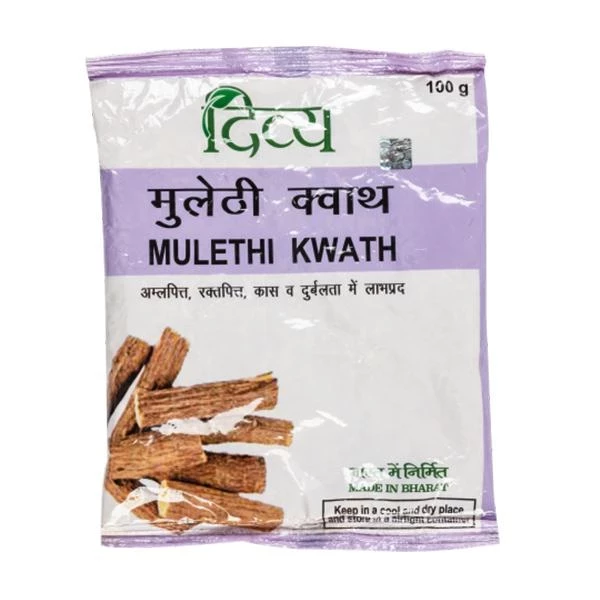
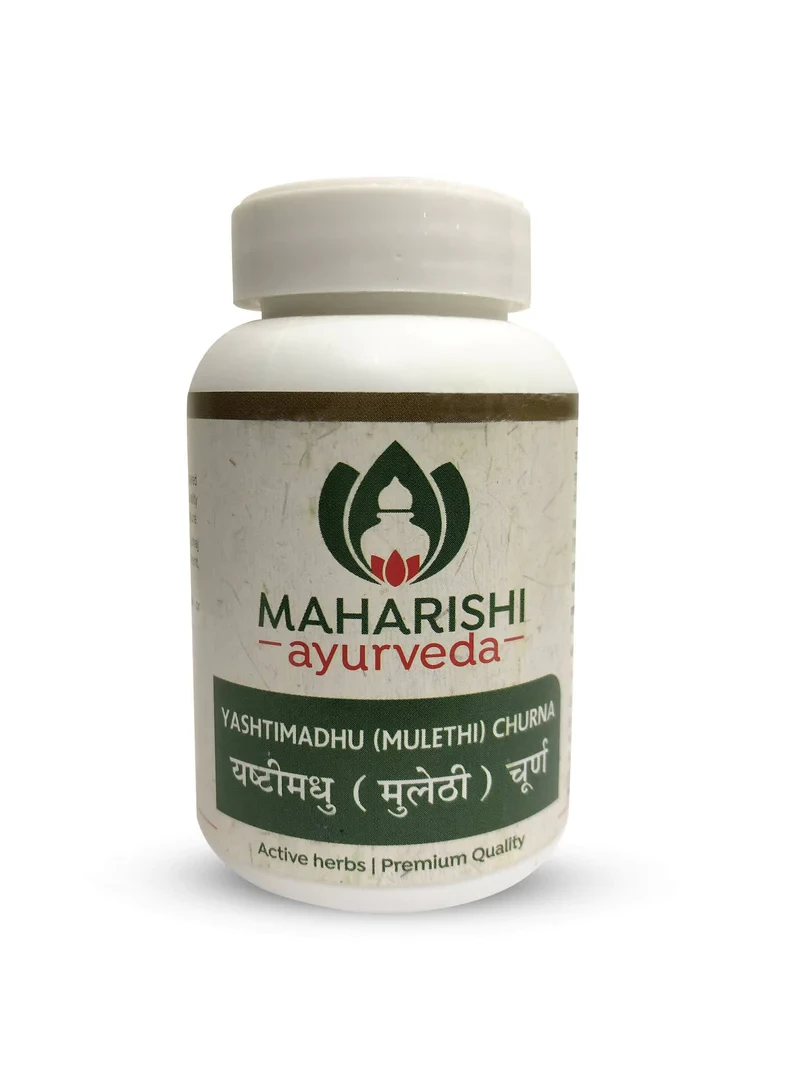
1. Mulethi, also called licorice root
If you read around this subject at all, licorice root comes up more than anything else. It is the ingredient in most shop-bought throat blends, and it is the one people name first.
Mulethi is the same plant. Glycyrrhiza glabra, called mulethi or yashtimadhu, is a long-standing herb in Ayurveda, and it is sold as dried root sticks, as a coarse powder, and inside ready-made blends. It tastes distinctly sweet, with a woody, slightly earthy edge. The sweetness is natural and strong enough that most people do not add anything else.
It is a root, so it wants simmering. A rounded teaspoon of the powder in two cups of water, brought to a boil then held at a low bubble for ten to fifteen minutes, then strained. Whole sticks take longer.
Read the licorice section further down before you make this a daily habit. It is the one ingredient here that comes with real cautions.
Brew as: decoction | Caffeine: none | Taste: sweet, woody | Caution: see the licorice section below
2. Ginger
The other name that comes up everywhere, and the easiest to find. Fresh root, dried root, powder, or in a bag.
Ginger is sharp and warming, and it builds. A thin slice gives you a mild cup. Six thick slices gives you something that catches at the back of the throat, which some people want and some very much do not. Start with less than you think.
Fresh ginger is a root and behaves like one. Slice it thin, or grate it, and simmer for ten minutes or so. Grating exposes more surface, so grated ginger gives you a stronger cup in less time than slices.
It pairs with almost everything on this list. Ginger and lemon, ginger and honey, ginger and tulsi, ginger and turmeric.
Brew as: decoction | Caffeine: none | Taste: sharp, warming, builds fast
3. Turmeric
Turmeric is a rhizome, related to ginger, and it behaves the same way in a pan. Earthy, slightly bitter, and it stains everything it touches, including a light-coloured mug if you leave it sitting.
On its own it is not a pleasant drink for most people. It is nearly always combined, most often with ginger and black pepper. Simmer for ten to fifteen minutes.
If you are using powder rather than fresh root, half a teaspoon in two cups is plenty. More does not improve it.
Brew as: decoction | Caffeine: none | Taste: earthy, slightly bitter, stains
4. Cinnamon, clove and black pepper
Three separate spices, grouped together because they are almost never used alone in a hot drink and because they are all hard, dense material that needs the same treatment.
Cinnamon is sweet and woody. Clove is intense, almost numbing on the tongue, and two or three is the limit for a pot unless you like it very strong. Black pepper is sharp and adds heat rather than flavour.
All three need simmering, and all three want restraint. A small piece of cinnamon bark, two cloves and three or four peppercorns is enough for two cups. This trio is the backbone of most kadha recipes, which is the next section.
Brew as: decoction | Caffeine: none | Taste: warm and sweet from cinnamon, sharp from clove and pepper
5. Ajwain, also called carom seed
The least known ingredient on this list outside of an Indian kitchen, and worth knowing about.
Ajwain is a small seed with a strong, sharp smell somewhere between thyme and oregano. That is not a coincidence, since it shares a compound with thyme. The flavour is much bigger than the seed suggests, and a quarter teaspoon is enough for two cups.
It is a hard seed, so it goes in the pan. Crush the seeds lightly first, which makes a real difference to how much comes out of them. Simmer for ten minutes.
It appears in kadha recipes and in ready-made kadha blends, usually alongside the group above.
Brew as: decoction | Caffeine: none | Taste: sharp and herby, close to thyme
Leaves, flowers and tea leaves. Steep these. Most of these come in bag form, and the flavoured and blended tea collection is where the tulsi, chamomile, peppermint and masala chai blends sit.
-1.webp)
 -1.webp)
-1.webp)
-1.webp)
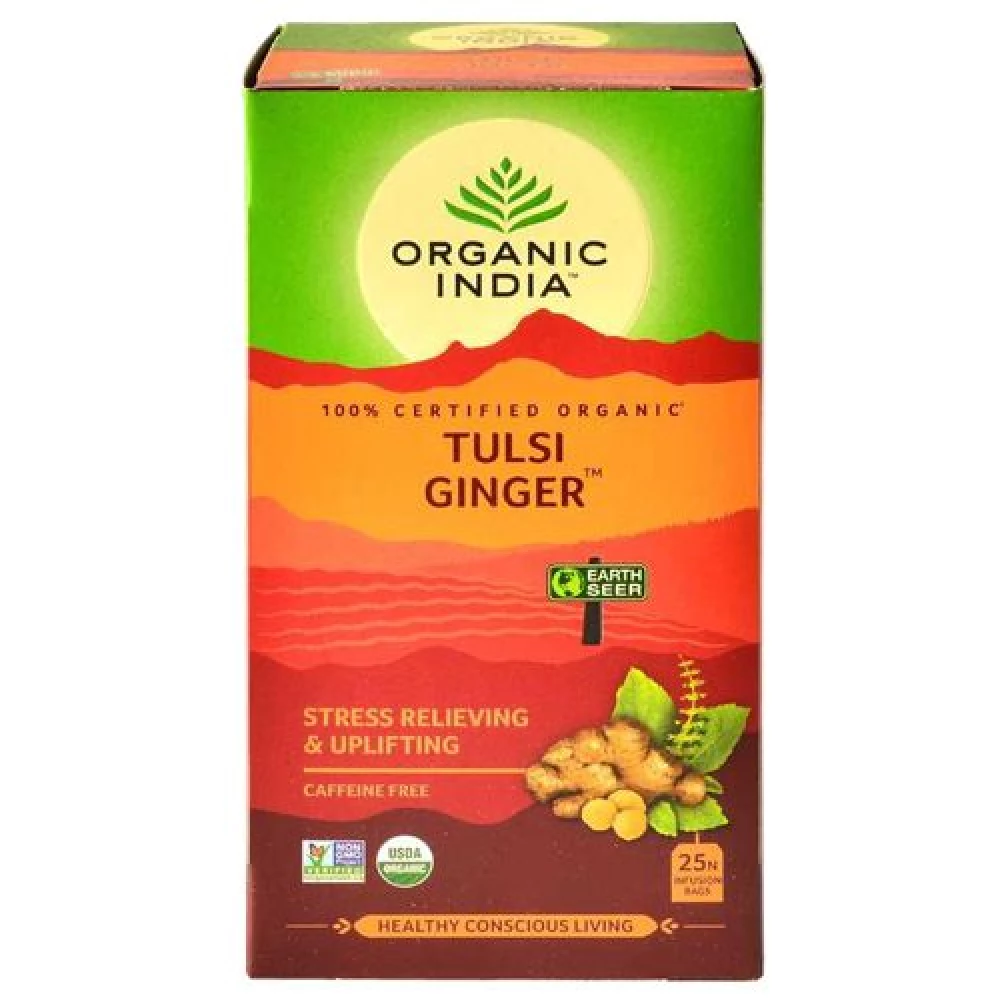

6. Tulsi, also called holy basil
Tulsi is a leaf, so it steeps. Pour water just off the boil, cover, five to seven minutes.
The taste is not what people expect from something called basil. It is peppery and slightly clove-like, more savoury than the sweet basil used in cooking. Some people take to it straight away, others need a few cups.
It is the base of most herbal tea blends here, which is why it turns up in almost every product on this page paired with something else. If you want to try it on its own before committing to a blend, plain tulsi is the place to start.
Covering the cup while it steeps matters more than people think. The aromatic compounds leave with the steam, so an uncovered cup is a weaker cup.
Brew as: infusion | Caffeine: none | Taste: peppery, slightly clove-like
7. Peppermint
Cooling, clean, and the most immediately recognisable taste here. Mint leaves are soft and give up their oils fast, so a long steep does nothing except make it bitter. Five minutes, covered, is enough.
Fresh mint works as well as dried, and you need a decent handful of fresh leaves to match a teaspoon of dried.
Worth knowing: the cooling sensation is a nerve response to menthol, not an actual temperature change. It is the same reason mint gum feels cold. Some people find that pleasant on a raw throat and some find it makes things feel worse, so it is very much personal.
Brew as: infusion | Caffeine: none | Taste: cooling, clean
8. Chamomile
The flower most associated with a quiet evening drink. It is mild, faintly apple-like, and much lighter than anything in group 1.
Chamomile flowers are delicate, so five minutes covered is plenty. Longer pulls out a hay-like bitterness that does not improve it.
It is caffeine free, which is why it is the usual choice for late in the day. Worth noting if you are in the ragweed and daisy family of allergies, since chamomile belongs to that family too.
Brew as: infusion | Caffeine: none | Taste: mild, faintly like apple
9. Green tea
Green tea gets recommended constantly in this context, and there is one thing about it worth flagging that usually gets skipped: it contains caffeine.
That may not matter at eleven in the morning. It matters a great deal at nine at night when you are unwell and trying to sleep. If you want green tea in the evening, look for a decaffeinated one, or pick something from group 1 instead.
Brewing green tea is also less forgiving than the rest of this list. Water at a full rolling boil scorches the leaves and turns the cup bitter. Let the kettle sit for a minute or two after boiling, then steep for two to three minutes. Not five.
Brew as: infusion, cooler water | Caffeine: yes | Taste: grassy, turns bitter if overbrewed
10. Black tea and masala chai
Black tea has more caffeine than green, so the same evening caveat applies, only more so.
What black tea does have going for it is that most people already like it and will actually drink it. A cup you enjoy and finish is more use than a herbal blend you abandon half full on the counter.
Masala chai brings this list full circle, because a proper chai already contains most of group 1. Ginger, cardamom, cinnamon, clove and black pepper, simmered in water and milk. That simmering is the point. Chai is made in a pan for exactly the reason set out at the top of this page.
Steep black tea for three to five minutes. Longer makes it astringent and drying, which is the opposite of what you want.
Brew as: infusion, or simmered for chai | Caffeine: yes | Taste: malty, drying if overbrewed
More black teas and chai blends sit in the leaf and dust tea collection.
Not teas, but always part of the answer.
11. Honey and lemon
Not a tea, but it goes in the cup often enough to belong on the list, and there are two practical points worth making.
Let the water cool before the honey goes in. Honey stirred into water straight off the boil loses much of its aroma and its raw character. Wait until the cup is warm rather than hot, then stir it in.
Never give honey to a child under one year old. This is not a preference, it is a firm rule about infant botulism, and it appears as a warning on honey labels for good reason. Above one year it is fine.
Lemon goes in after the cup has cooled a little too, for the same sort of reason. A squeeze at the end, not a slice boiled in the pan.
Brew as: stirred in at the end | Caffeine: none | Caution: not for children under one year
12. Slippery elm and marshmallow root
These two turn up on almost every list of throat teas, usually near the top, and they are the two most people never actually buy.
Both are bark or root, and both work by mucilage, a substance that turns thick and gel-like in water. That is why they are in commercial throat blends. Being roots and bark, they need simmering rather than steeping, and slippery elm in particular thickens noticeably as it sits.
They are included here for completeness rather than because they are easy to get hold of. Neither is a common grocery item, and we do not stock them. If you want them, a herbalist or a specialist supplier is the place to look. If you would rather work with what is easier to find, mulethi at the top of this list is in most throat blends for related reasons.
Brew as: decoction | Caffeine: none | Note: not stocked here, listed for completeness
Kadha: the decoction that already does this
Everything in group 1 is a kadha. That is what the word describes, a decoction of spices and herbs simmered in water and strained.
There is no single recipe. It changes household to household, which is part of the point. A common version looks roughly like this:
Bring two cups of water to a boil. Add a piece of crushed ginger, three or four peppercorns, two cloves, a small piece of cinnamon and a quarter teaspoon of lightly crushed ajwain. Turn the heat down and keep it at a low bubble for ten to fifteen minutes, until it has reduced by about a third. Strain into a cup. Let it cool a little, then add honey if you want it.
Tulsi leaves and a pinch of turmeric are common additions. So is lemongrass. The spices are strong, so keep the quantities modest until you know how you like it.
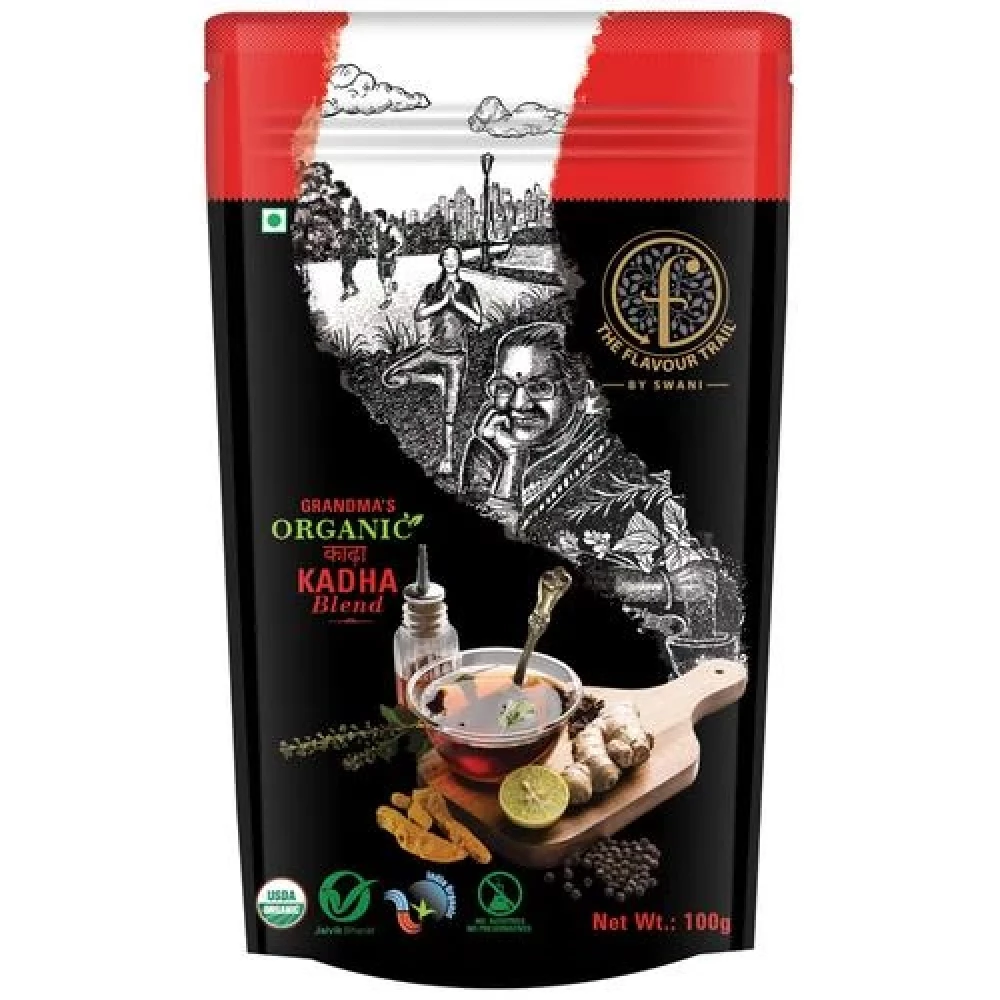
If simmering a pan is more than you want to do when you feel rough, ready-made kadha blends exist in both powder and bag form.
Ready-made kadha blends
 -1.webp)
 -1.webp)
-1.webp)
What is actually in a shop-bought throat tea
Pick up a box of throat tea and the ingredient list is usually some combination of the same things: licorice root, slippery elm, marshmallow root, sometimes cinnamon or fennel.
Read that list against this page and it maps almost exactly onto group 1 and entry 12. Roots and bark, all of them. Which is worth knowing for two reasons.
First, it explains why those blends come as finely cut material in a bag. Cut small enough, a root will give up more in a five minute steep than a whole piece ever would. The manufacturer has done the work that a pan would otherwise do.
Second, it means the ingredient at the centre of most of those boxes is the same plant sold as mulethi. If you already have mulethi in the cupboard, you have the main component.
Comparison table
Ingredient | Group | Brew as | Caffeine | Taste |
|---|---|---|---|---|
Mulethi (licorice) | Roots and spices | Simmer 10 to 15 min | None | Sweet, woody |
Ginger | Roots and spices | Simmer 10 min | None | Sharp, warming |
Turmeric | Roots and spices | Simmer 10 to 15 min | None | Earthy, bitter |
Cinnamon, clove, pepper | Roots and spices | Simmer 10 to 15 min | None | Warm and sharp |
Ajwain | Roots and spices | Simmer 10 min, crush first | None | Sharp, herby |
Tulsi | Leaves and flowers | Steep 5 to 7 min, covered | None | Peppery |
Peppermint | Leaves and flowers | Steep 5 min, covered | None | Cooling |
Chamomile | Leaves and flowers | Steep 5 min, covered | None | Mild, apple-like |
Green tea | Leaves and flowers | Steep 2 to 3 min, cooler water | Yes | Grassy |
Black tea and chai | Leaves and flowers | Steep 3 to 5 min, or simmer for chai | Yes | Malty |
Honey and lemon | Added at the end | Stir in once cooled | None | Sweet, sharp |
Slippery elm, marshmallow | Roots and bark | Simmer | None | Bland, thickens |
Brewing times are a starting point. Follow the directions on any packaged product you buy, since those come from the maker and take priority over anything here.
Mulethi and licorice: read this before making it a daily habit
Licorice is the one ingredient on this list that needs a proper caution, and it deserves more than a line.
The compound that makes licorice taste sweet is glycyrrhizin. In some people, taken in quantity over a stretch of time, it can affect potassium levels and blood pressure. This is well documented and it is why licorice appears in interaction warnings.
What that means in practice:
Treat it as a short-term drink, over days rather than as an everyday habit for weeks on end.
If you have high blood pressure, or take medication for it, ask your doctor first. The same goes for heart or kidney conditions, and for diuretics.
If you are pregnant or breastfeeding, ask your doctor. Licorice is one of the herbs most commonly flagged for caution in pregnancy.
Stay within the amount on the pack. More is not better with this one.
Deglycyrrhizinated licorice, sold as DGL, has the compound removed. That is a different product from the root, and if you have been told to avoid licorice it is worth knowing the distinction.
None of this makes mulethi something to avoid. It makes it something to use with attention, the way you would with anything strong.
When tea is not the answer
Say this plainly. A warm drink is a comfort. It is not a treatment, and a sore throat can have causes that need proper medical care.
See a doctor if:
Your throat has hurt for more than about a week, or it is getting worse rather than better
You have a high fever
Swallowing is difficult or very painful
Breathing is difficult, or your voice has changed markedly
The pain is on one side only and severe
You see white patches or spots at the back of the throat
You have a rash alongside the sore throat
You have a weakened immune system or a long-term health condition
Strep throat is bacterial, needs a test to identify, and needs antibiotics. No tea on this page will touch it, and delaying treatment matters.
Speak to a doctor before drinking any of these regularly if you are pregnant or breastfeeding, if you take regular medication, or if you are buying for a young child.
Get Tea Products Delivered To Your Doorstep
Everything here that we stock ships to the USA, UK, Canada, Australia, the UAE and 80+ other countries. Our tea collection holds the full range, black, green, herbal and blended, rather than throat teas specifically. The kadha blends and Ayurvedic preparations sit in the wellness collection.