
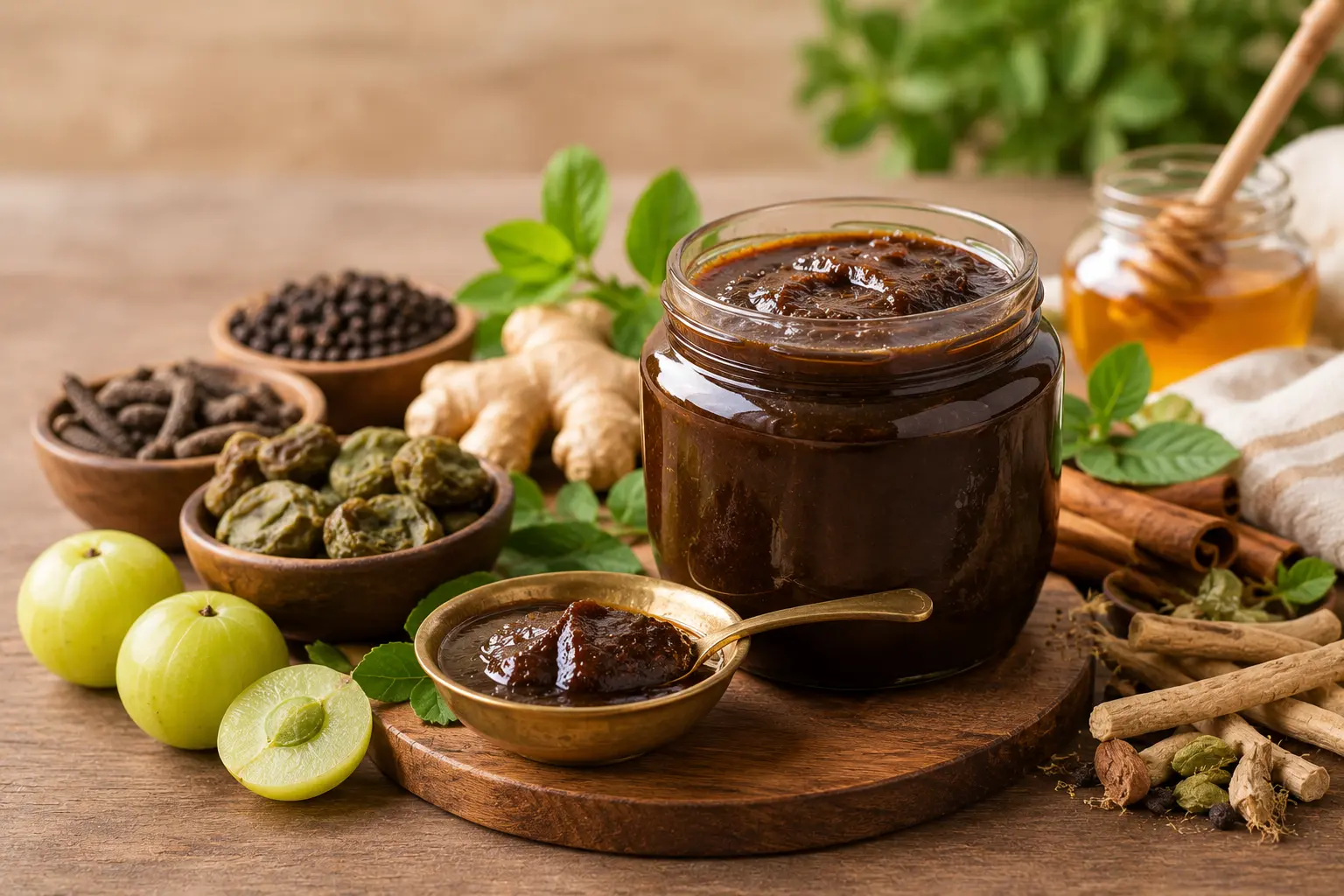
10 Best Chyawanprash Brands to Buy Online
10 Best Chyawanprash Brands to Buy Online
Buying chyawanprash used to be simple. There was one brand in the shop and you bought it.
Now there are dozens. Some are sweetened with sugar, some with jaggery, some with nothing at all. Some list thirty herbs, some list fifty two. Prices run from the cost of a jar of jam to the cost of a good bottle of olive oil, and the labels do not always make it obvious why.
This guide compares ten chyawanprash jars we ship, grouped by the kind of jar they are. All the ingredient lists, herb counts, and serving directions below come from each manufacturer.
How to Compare Chyawanprash Before You Buy
Four things separate one jar from another. Everything else is packaging.
The sweetener. Classic recipes use white sugar. Some use jaggery. Some use misri, which is crystallised unrefined sugar. A few use no added sugar at all. This changes the taste more than anything else on the label, and it changes the calorie count. Jaggery and honey are still sugars, so a jar that says "no added sugar" while listing jaggery is not sugar free.
How much amla is actually in it. Amla is the base of every chyawanprash. Some brands publish the percentage on the label, most do not. Where a brand does publish it, that is useful information.
The herb count. Brands list anywhere from thirty eight to fifty two herbs. A longer list is not automatically better, but it does tell you the maker is following a fuller classical formula rather than a shortened one.
Pack size. This matters more than people expect. A jar lasts about two months for one person taking two teaspoons a day, and about two weeks for a family of four. Buying a small jar first is sensible if you have not tried that brand's taste before.
One more practical point for anyone ordering from abroad: chyawanprash is heavy. A one kilogram jar is a kilogram of shipping weight. If you are ordering for the first time, a smaller size is a cheaper way to find out whether you like the taste.
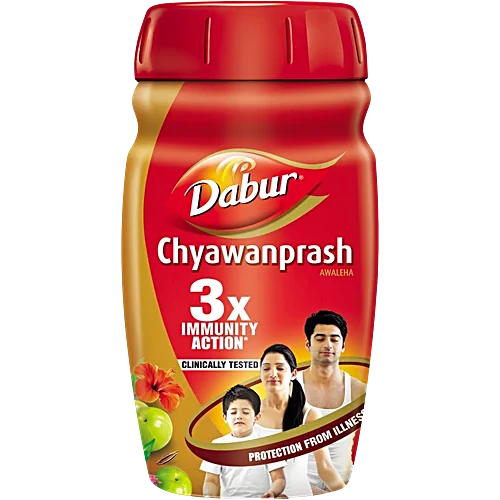
1. Dabur Chyawanprash
Pack sizes: 250 g, 500 g, 950 g, 1.5 kg Herbs listed: 41 Sweetener: Sugar
This is the jar most people picture when they hear the word chyawanprash. Dabur has been making it for over a century and it is the version most widely available outside India.
The maker lists forty one herbs built on an amla base, including brahmi, pippali, yashtimadhu, gokshura, and bilva. The taste is on the milder, sweeter end, which is the main reason it tends to be the easiest one to get children to eat.
Dabur's serving directions are two teaspoons daily for adults and one teaspoon for children over three, taken straight or stirred into warm milk or water.
The four pack sizes are the widest range of any brand here, and the 250 gram jar is a sensible way to try it before committing to a larger one.
Best suited to: families buying their first jar, and anyone who wants the familiar taste they grew up with.
2. Baidyanath Kolkata Chyawanprash Special
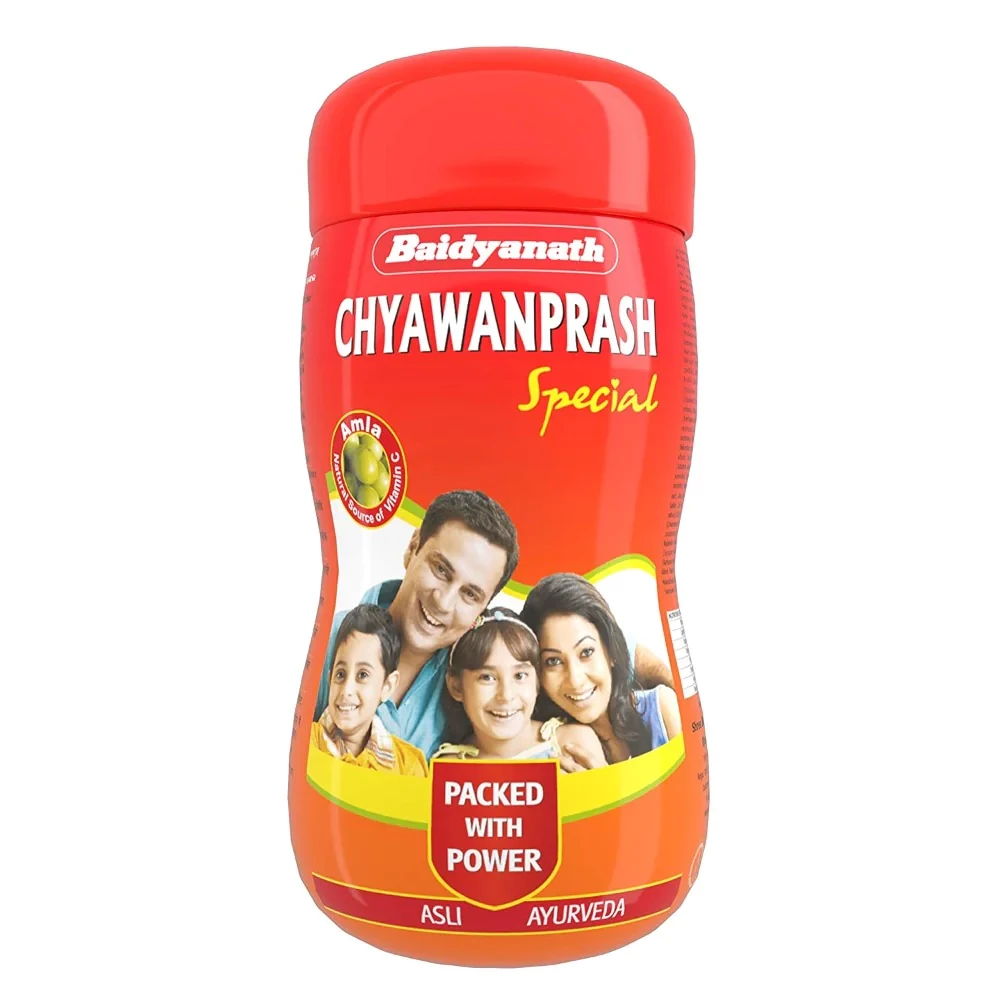
Pack sizes: 500 g, 1 kg Herbs listed: 52 Sweetener: Sugar
This is the longest herb list of the ten. Baidyanath lists fifty two herbs, including pipal, giloy, chhoti elaichi, safed chandan, and ashwagandha, on an amla base.
Baidyanath has been making Ayurvedic preparations for more than a hundred years, and this is their fuller classical formulation rather than a simplified one. The maker states it is produced in a GMP certified facility.
Serving directions from the maker are one to two tablespoons twice daily. That is a larger serving than most other brands on this list recommend, so a jar goes faster than the pack size suggests. Worth factoring in if you are comparing cost.
The pack currently ships with haldi drops included, according to the maker.
Best suited to: anyone who wants a fuller classical herb list without moving into premium pricing.
3. Patanjali Chyawanprash
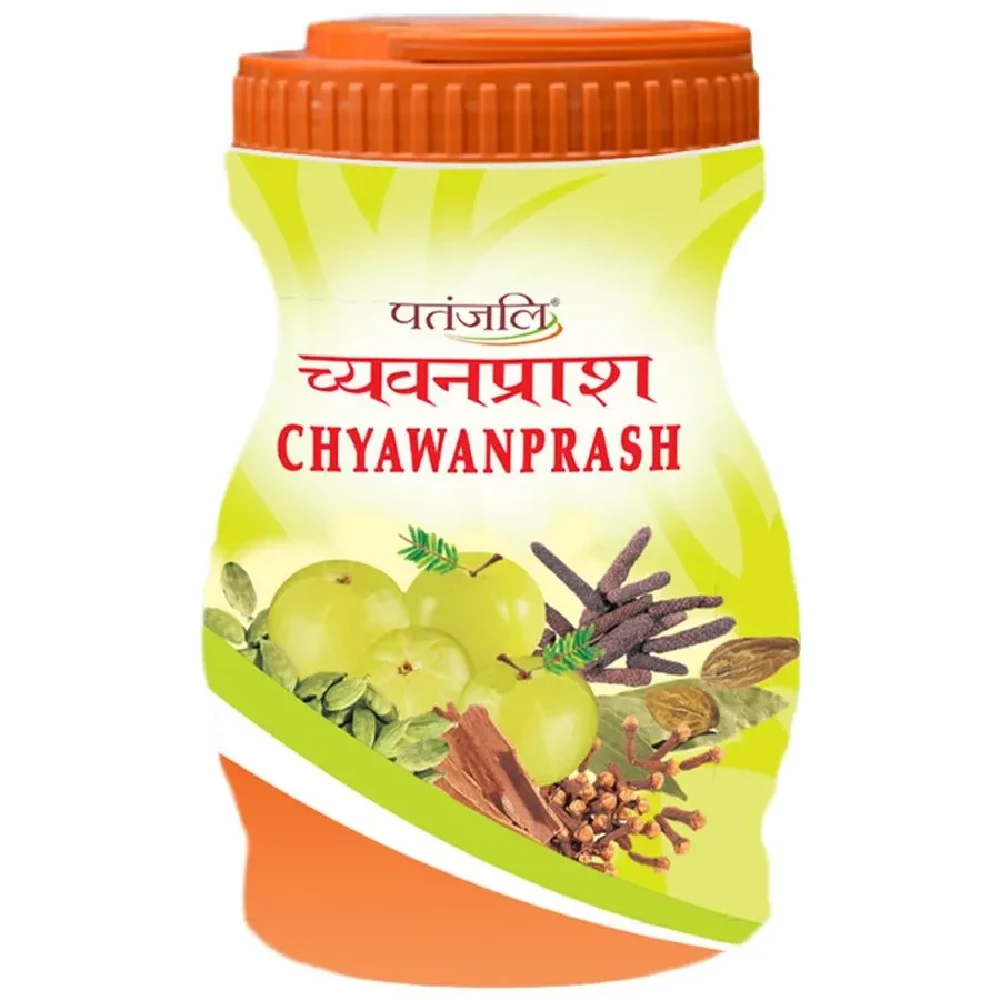
Pack sizes: 500 g, 1 kg jar Herbs listed: Dashamoola based formula, roughly 20 named ingredients Sweetener: Sugar
Patanjali's formula is built around dashamoola, the group of ten roots used across classical Ayurveda, together with amla pishti and ghee.
The named ingredient list includes khareti, mugdhparni, pipali choti, kakda shringi, bhumi amla, draksha, jivanti, harad, giloy, and vidarikand. The result is noticeably more herbal and less sweet than Dabur, which people either prefer strongly or do not.
The maker's serving directions are one to two teaspoons for adults and one teaspoon for children above six years, taken with lukewarm milk morning and evening. Note that the age guidance here is six and above, which is higher than most other brands on this list.
Only two pack sizes, and no small trial jar, so this is one to buy if you already know you like the taste.
Best suited to: people who find mainstream chyawanprash too sweet and want more herb character.
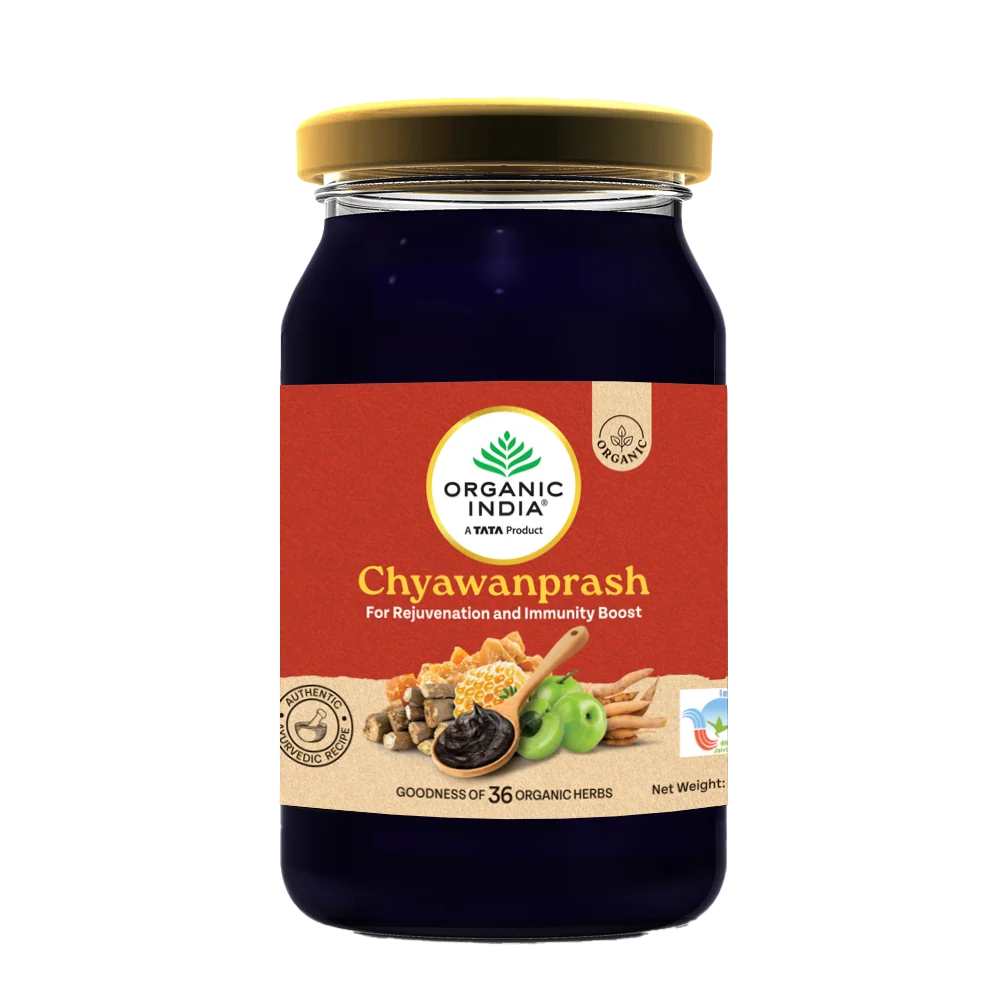
4. Organic India Organic Chyawanprash
Pack sizes: 500 g Herbs listed: 38 Sweetener: Jaggery, with honey and ghee in the base
Organic India builds this on amalaki with thirty eight herbs, including ashwagandha, giloy, shatavari, gokshura, punarnava, and vasa. The full botanical list is published on the product page, which is more transparency than most brands offer.
The sweetener is jaggery rather than white sugar. That gives it an earthier, less sharply sweet taste. The base also includes sesame oil, ghee, and honey, so it is not a vegan product.
The maker's serving directions are two to three teaspoons for adults and one to two teaspoons for children, twice daily.
One thing to know: this is sold in one size only, and it is the most expensive jar per gram in this guide. There is no small size to try first.
Best suited to: buyers who want organic sourcing and a published, complete ingredient list.
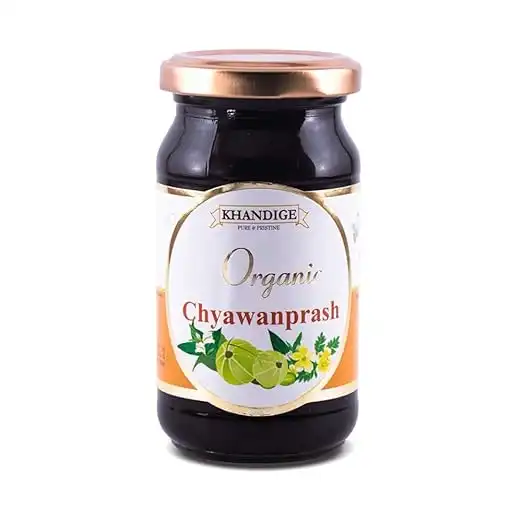
5. Khandige Organic Chyawanprash
Pack sizes: 250 g, 500 g Herbs listed: Over 40 Sweetener: Not specified on the label
Khandige follows the classical formula closely. The named herb list runs to bilva, agnimantha, syonaka, gambhari, patali, bala, salaparni, prsniparni, mudgaparni, masaparni, pippali, brhati, kantakari, draksa, jivanti, musta, and punarnava, among others. Those names are the classical Sanskrit ones rather than the marketing ones, which usually signals a maker working from the texts.
Serving directions are one to two teaspoons daily, taken directly or with warm milk.
The 250 gram size makes this one of the more affordable ways to try an organic jar, rather than committing to a large one at organic pricing.
Best suited to: anyone who wants a classical organic formula and a small jar to start with.
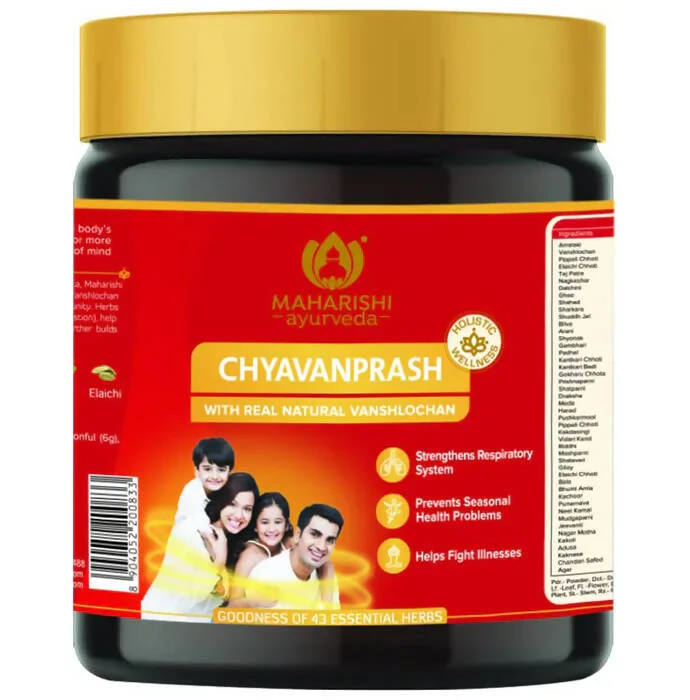
6. Maharishi Ayurveda Chyavanprash
Pack sizes: 500 g Herbs listed: 43 Sweetener: Not specified on the label
Maharishi Ayurveda states this is prepared according to the Charak Samhita, the classical text where the original chyawanprash recipe is recorded. Forty three herbs, including vanshlochan, amla, tejpatra, dalchini, pippali, bilva, and elaichi.
The maker's serving directions are one to two tablespoons, which they specify as five to ten grams, taken with lukewarm water or milk.
The label carries a note to use under medical supervision, which is standard on classical Ayurvedic preparations but worth reading before you buy for a household with children or older relatives.
Sold in one size only.
Best suited to: buyers who want a formulation stated to follow the classical text.
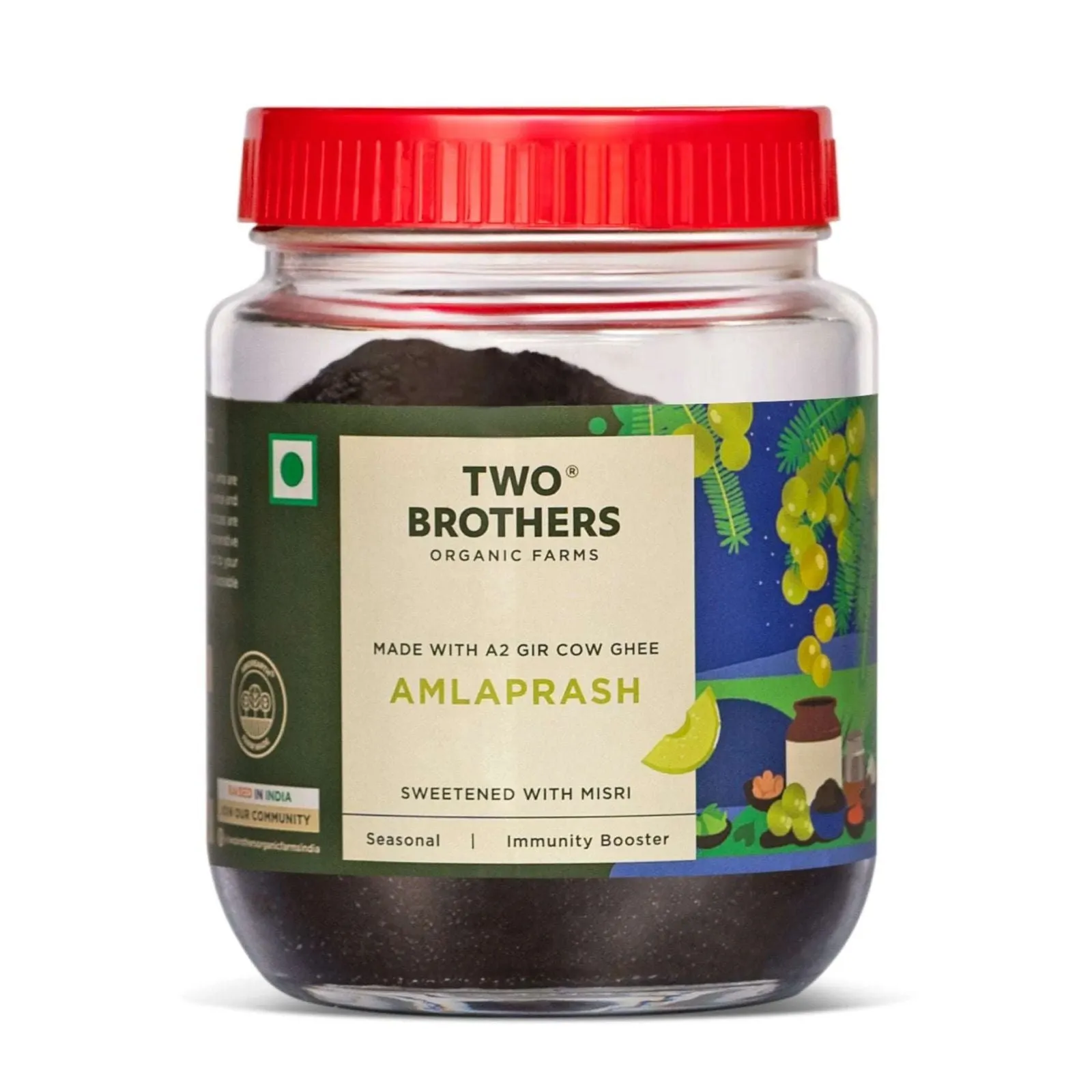
7. Two Brothers Amlaprash (Limited Edition Chyawanprash)
Pack sizes: 300 g, 500 g, 1000 g Herbs listed: Over 40 Sweetener: Misri
This is the only jar in the guide that publishes its exact composition. Amla makes up 52.63 percent, misri 33.34 percent, cultured Gir cow ghee 2.53 percent, and sesame oil 2.45 percent, with over forty herbs making up the rest.
That transparency is genuinely useful. It lets you see that just over half the jar is amla and a third is sweetener, which is roughly the classical ratio. Most brands do not publish this, so you cannot check.
The sweetener is misri rather than white sugar, and the fat is cultured Gir cow ghee rather than standard ghee. Both are why this sits at premium pricing.
Serving directions are one to two teaspoons daily. The maker notes it does not need refrigeration if finished within two to three months, which is a shorter window than mass produced jars, and a sign of a smaller batch preparation.
Best suited to: buyers who want to see exactly what is in the jar and are willing to pay for better ingredients.
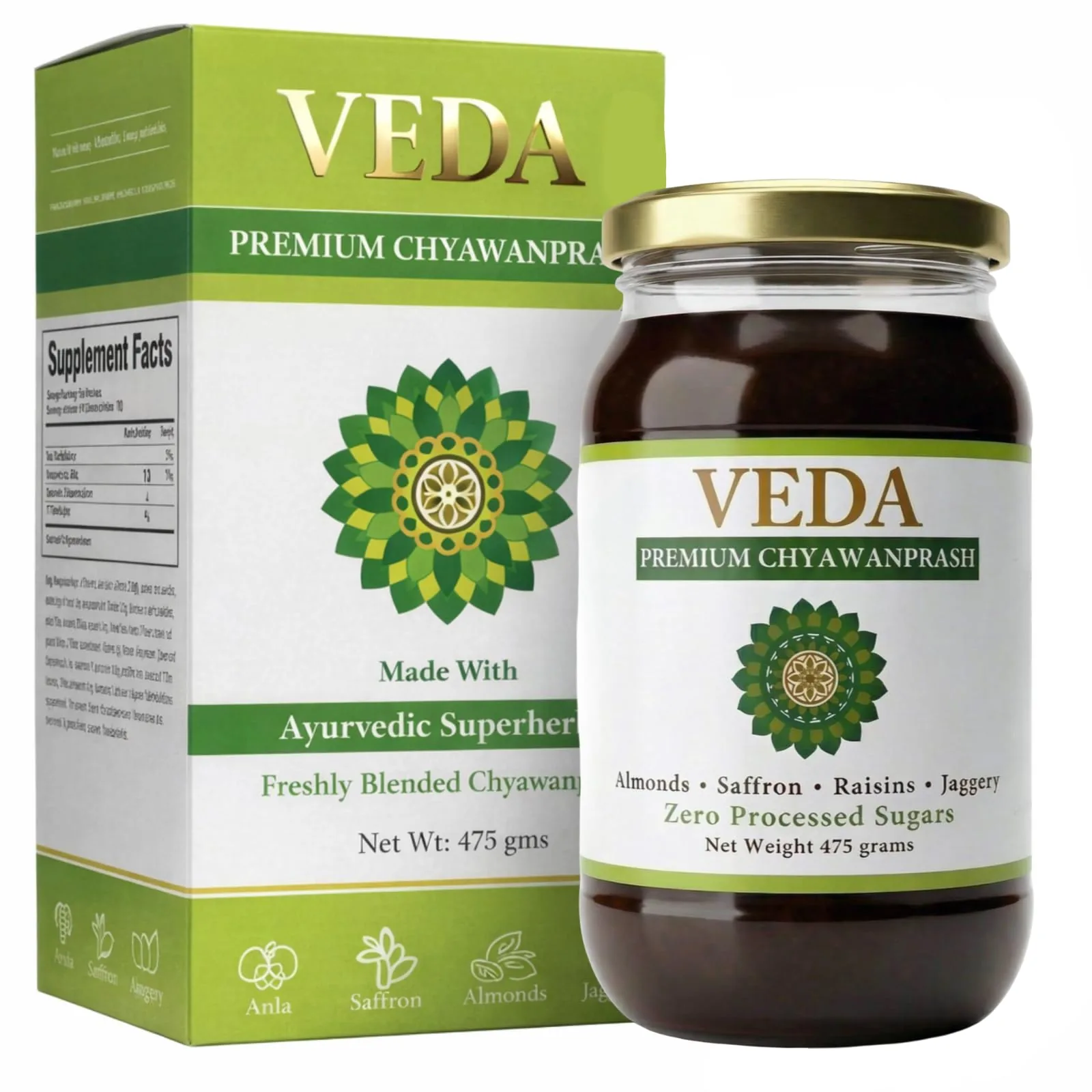
8. Veda Premium Chyawanprash
Pack sizes: 250 g, 475 g, 1000 g Herbs listed: Over 40 Sweetener: Not specified on the label
Veda's stated point of difference is the amla. The maker says it is made in small batches using fresh seasonal amla rather than cold storage pulp.
The jar also includes almonds, saffron, cardamom, and raisins alongside the herb blend, which puts it closer to the richer, dessert-like end of the range. The maker states it is produced in a USFDA and GMP certified facility.
Three pack sizes including a 250 gram jar, so there is a way to try it before buying the large one.
Best suited to: anyone who wants a richer tasting jar with saffron and nuts, and likes the idea of seasonal batches.
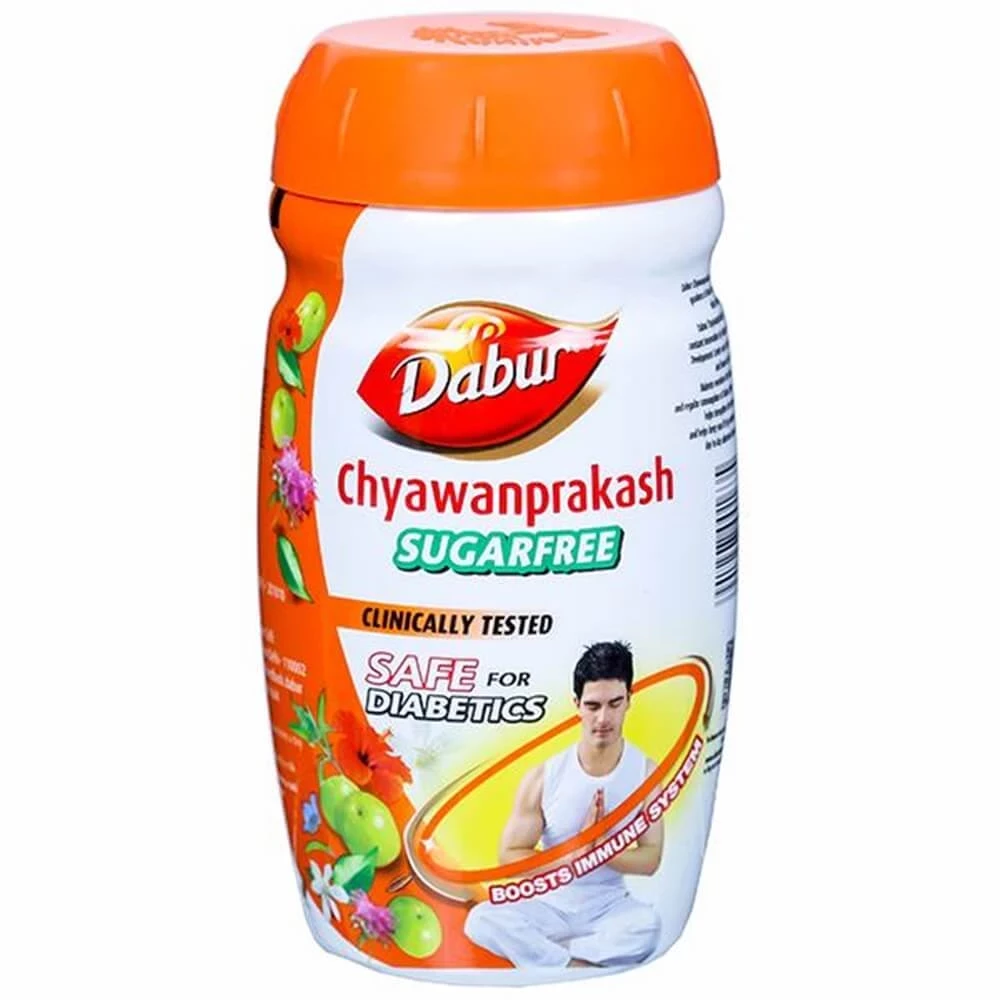
9. Dabur Chyawanprakash Sugar Free
Pack sizes: 500 g, 900 g Sweetener: No added sugar
Dabur's version without added sugar. The listed ingredients are amla, ashwagandha, hareetaki, dashmul, ghrit, and other herbs and herbal extracts.
The maker describes the taste as tangy sweet and sour, and the serving directions are half a teaspoon for children and one teaspoon for adults, twice daily, followed by warm milk or water.
Note the smaller adult serving compared with the classic Dabur jar. That is worth knowing when you compare the two on price, because a jar lasts longer.
Best suited to: people who want the familiar Dabur formula without added sugar.
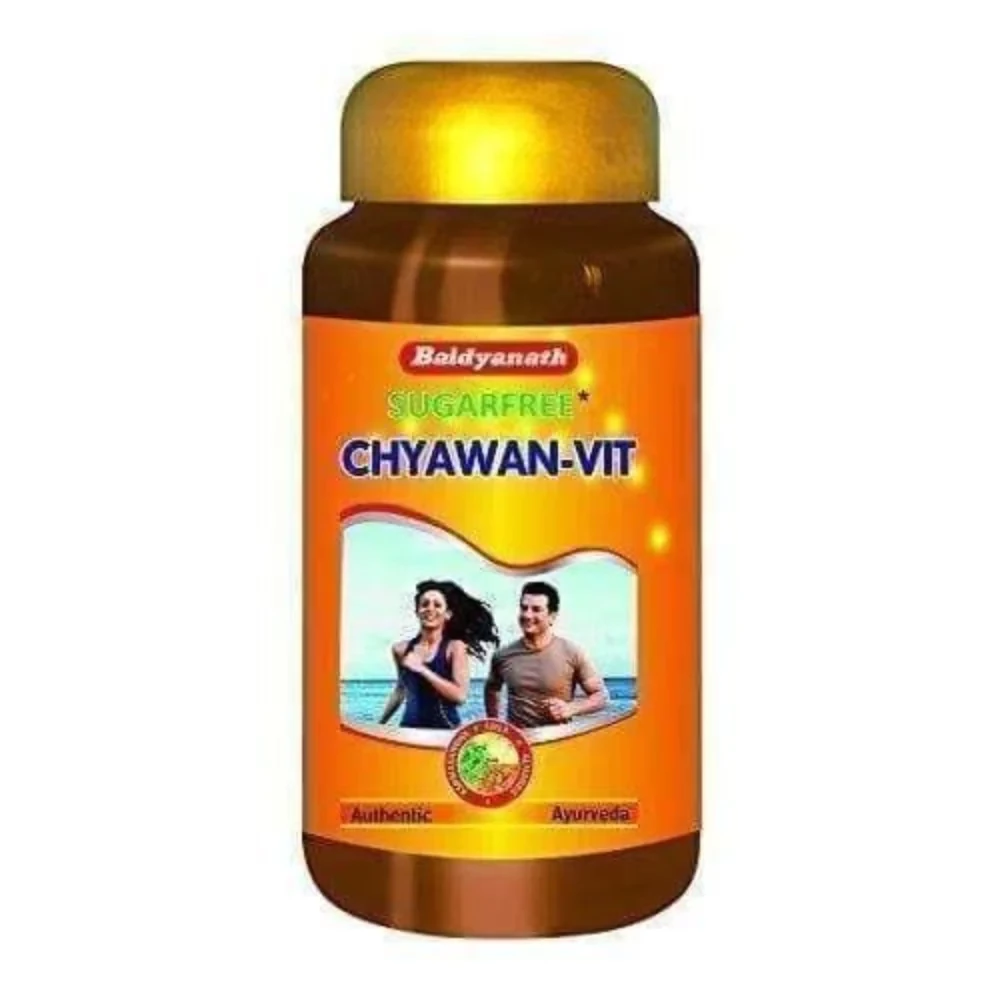
10. Baidyanath Sugarfree Chyawan Vit
Pack sizes: 500 g, 1 kg Sweetener: No added sugar
Baidyanath's sugar free version, with a published ingredient list covering amla, ashwagandha, almonds, guduchi, jivanti, agar, haritaki, giloy, shatavari, pippali, kesar, and mulethi.
This is the only jar in the guide where the maker publishes a calorie figure directly. They state one teaspoon contains thirty calories, and the serving direction is one teaspoon daily. That is genuinely useful if you are tracking what you eat, because most brands leave you to work it out from the nutrition panel.
Almonds and kesar in the blend put it slightly above a plain formula in taste.
Best suited to: anyone who wants a published calorie figure and a clear daily serving.
Comparison of Chyawanprash Brands
Brand | Pack sizes | Herbs listed | Sweetener | Adult serving (per maker) | Best suited to |
|---|---|---|---|---|---|
Dabur Chyawanprash | 250 g, 500 g, 950 g, 1.5 kg | 41 | Sugar | 2 tsp daily | First jar, families, milder taste |
Baidyanath Kolkata Special | 500 g, 1 kg | 52 | Sugar | 1 to 2 tbsp twice daily | Fullest herb list at mid pricing |
Patanjali Chyawanprash | 500 g, 1 kg | Dashamoola based | Sugar | 1 to 2 tsp twice daily | Less sweet, more herbal |
Organic India | 500 g | 38 | Jaggery | 2 to 3 tsp twice daily | Organic, full published list |
Khandige Organic | 250 g, 500 g | 40+ | Not stated | 1 to 2 tsp daily | Classical organic, small jar |
Maharishi Ayurveda | 500 g | 43 | Not stated | 1 to 2 tbsp daily | Charak Samhita formulation |
Two Brothers Amlaprash | 300 g, 500 g, 1000 g | 40+ | Misri | 1 to 2 tsp daily | Published exact percentages |
Veda Premium | 250 g, 475 g, 1000 g | 40+ | Not stated | Not stated | Saffron and almonds, richer taste |
Dabur Chyawanprakash Sugar Free | 500 g, 900 g | Not stated | None added | 1 tsp twice daily | Familiar formula, no added sugar |
Baidyanath Sugarfree Chyawan Vit | 500 g, 1 kg | 12 named | None added | 1 tsp daily | Published calorie figure |
All details as provided by each manufacturer. Pack sizes and prices change, so check the product page for current options.
Which One Should You Actually Buy
If you are buying your first jar and are not sure about the taste, start with Dabur in the 250 gram size. It is the mildest, the most familiar, and the cheapest way to find out whether you like chyawanprash at all.
If you already know you like it and want more herb character, Baidyanath Kolkata Special gives you the longest herb list without premium pricing, or Patanjali if you want it noticeably less sweet.
If you care about ingredient quality and want to see the actual percentages, Two Brothers Amlaprash is the only jar here that publishes them.
If you want organic, Khandige in 250 grams is the low risk way in, and Organic India if you want the complete botanical list published.
If you are avoiding added sugar, both sugar free options are solid. Baidyanath Sugarfree Chyawan Vit is the one to pick if you want a published calorie figure.
To find out answers to more question go through our ultimate faq guide about chyawanprash.
Where to Buy Chyawanprash Online
The Desi Food ships Indian groceries, food and Ayurvedic products from India with doorstep delivery worldwide. Orders are dispatched within one to four business days, and there are no customs duties to pay on arrival. Delivery estimates for your country are shown on each product page.
Browse the full range in our Ayurveda collection, which also stocks a wider range of Ayurvedic products beyond chyawanprash.
Every product in this guide is listed with the manufacturer's own ingredient list, pack sizes and serving directions. We ship products as they come from the manufacturer.
Disclaimer: This article is for general information only. These statements have not been evaluated by the U.S. Food and Drug Administration or by any other food safety authority. Chyawanprash is not intended to diagnose, treat, cure, or prevent any disease. Speak to your doctor before adding any supplement to your routine, especially if you are pregnant, nursing, managing a health condition, or taking medication.