
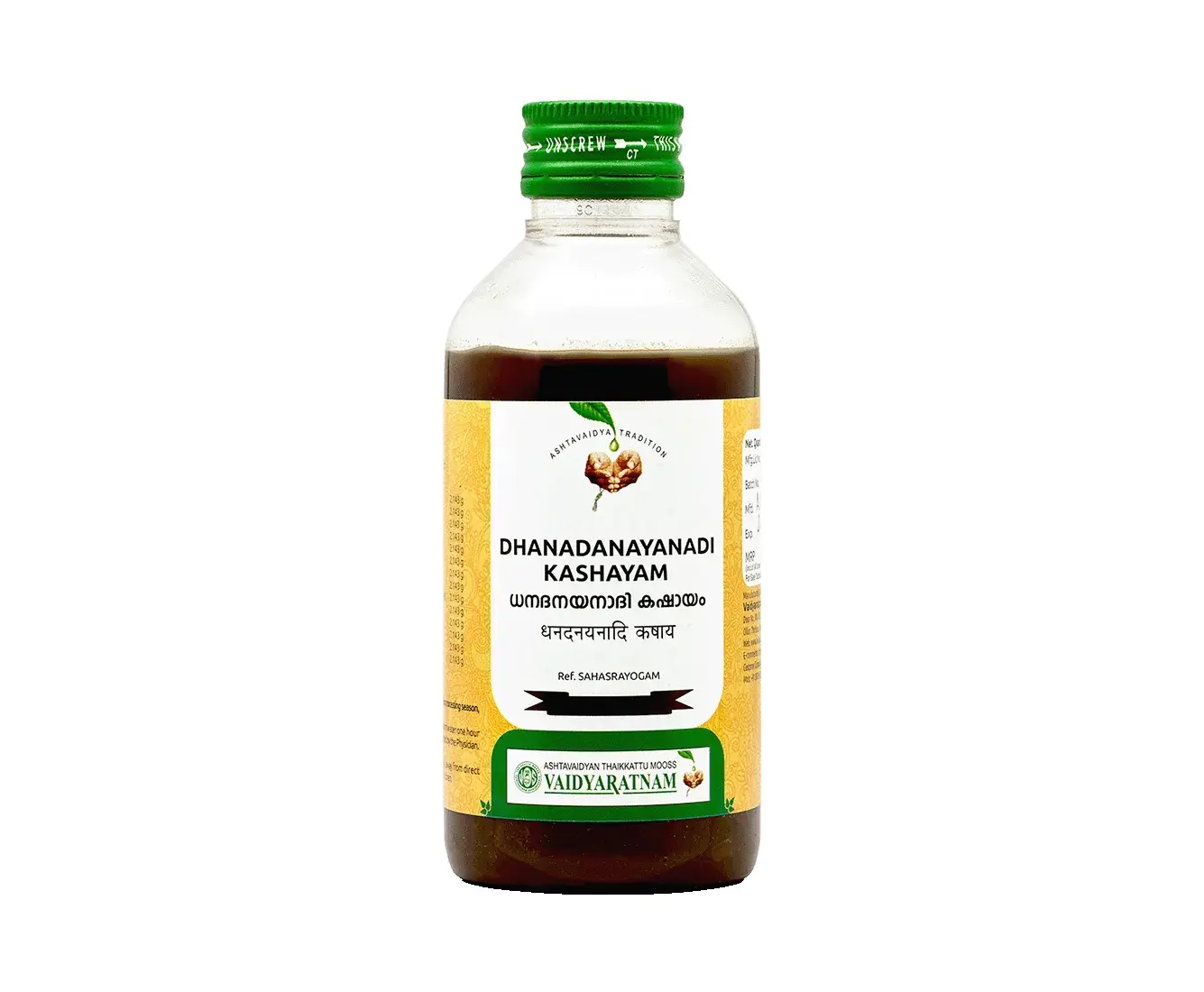
Vaidyaratnam Dhanadanayanadi Kashayam | Ayurvedic Herbal Decoction | Vata Balancing Nerve Support
Delivery in 2 - 5 business days to USA
Product Highlights
- Traditional Vata Balance: This classical Kerala Ayurvedic liquid helps balance Vata dosha, supporting natural recovery from nerve imbalances and facial muscle weakness.
- Pure Herbal Decoction: Made with natural herbs like ginger, garlic, and drumstick bark, processed under strict hygienic conditions without synthetic additives.
- Neuromuscular Wellness: Supports overall nerve health, helps reduce localized discomfort, and aids in restoring natural muscle coordination and strength.
Traditional Ayurvedic Support for Nerve and Muscle Health
Vaidyaratnam Dhanadanayanadi Kashayam is a time-tested Ayurvedic liquid formulation prepared according to classical Kerala traditions. This herbal decoction is specifically formulated to address Vata-related neurological concerns. It helps soothe irritated nerves and restore natural muscle function. For individuals living overseas who seek authentic Ayurvedic care, this traditional remedy offers a natural way to support neuromuscular health and maintain physical balance.
Ingredients
Dhanadanayana (Caesalpinia bonduc):
This primary herb plays a key role in supporting neurological function. It helps pacify aggravated Vata dosha to ease nerve discomfort.
Sunthi (Zingiber officinale):
Commonly known as ginger, this root provides natural anti-inflammatory benefits. It aids digestion and enhances the absorption of other herbs.
Sigru (Moringa oleifera):
Derived from the drumstick tree, this ingredient helps relieve physical discomfort and joint stiffness. It supports overall tissue strength and vitality.
Rasna (Alpinia galanga):
A renowned herb in Ayurveda for soothing nerve-related aches and structural imbalances. It promotes healthy circulation throughout the nervous system.
Lasuna (Allium sativum):
Garlic helps clear blockages in bodily channels and supports cardiovascular and nerve health. It assists in balancing Vata and Kapha doshas.
Traditional Ayurvedic Uses for Neuromuscular Wellness
In Ayurvedic practice, Dhanadanayanadi Kashayam is traditionally utilized to manage conditions arising from Vata imbalances. It is frequently recommended for individuals dealing with facial paralysis, tremors, hemiplegia, and localized nerve pain. By helping to reduce inflammation around the nerves, this decoction supports the body's natural healing process and aids in restoring muscle coordination.
To consume, it is generally advised to mix 5 to 15 ml of the concentrated kashayam with an equal or greater quantity of lukewarm water. Taking this mixture on an empty stomach or before meals, once or twice daily, helps maximize absorption. Always consult an Ayurvedic practitioner to determine the precise dosage suited to your body constitution.
About Vaidyaratnam
Vaidyaratnam Oushadhasala, based in Thrissur, Kerala, is a highly respected institution carrying forward the rich legacy of Ashtavaidya tradition. Known for its uncompromising standards, the institution prepares classical Ayurvedic formulations under hygienic conditions. Their products combine ancient wisdom with modern quality control to deliver authentic wellness solutions globally.
Why Buy from TheDesiFood.com
Finding authentic Ayurvedic formulations abroad can be challenging. At TheDesiFood.com, we source directly from trusted local vendors in India to ensure you receive genuine products. We offer hassle-free shipping to over 100 countries, including the USA, UK, Canada, Australia, and the UAE, with no custom duty worries. Enjoy the convenience of having traditional wellness remedies delivered straight to your doorstep, wherever you are in the world.
Disclaimer: Content on this website is provided for informational purposes only and is not intended for self diagnosis, or to substitute for advice given by a physician, pharmacist, or other licensed healthcare professional. Statements regarding dietary supplements, traditional ayurvedic items, or herbal ingredients have not been evaluated by the U.S. Food and Drug Administration (FDA) or any other regional food safety authority.