
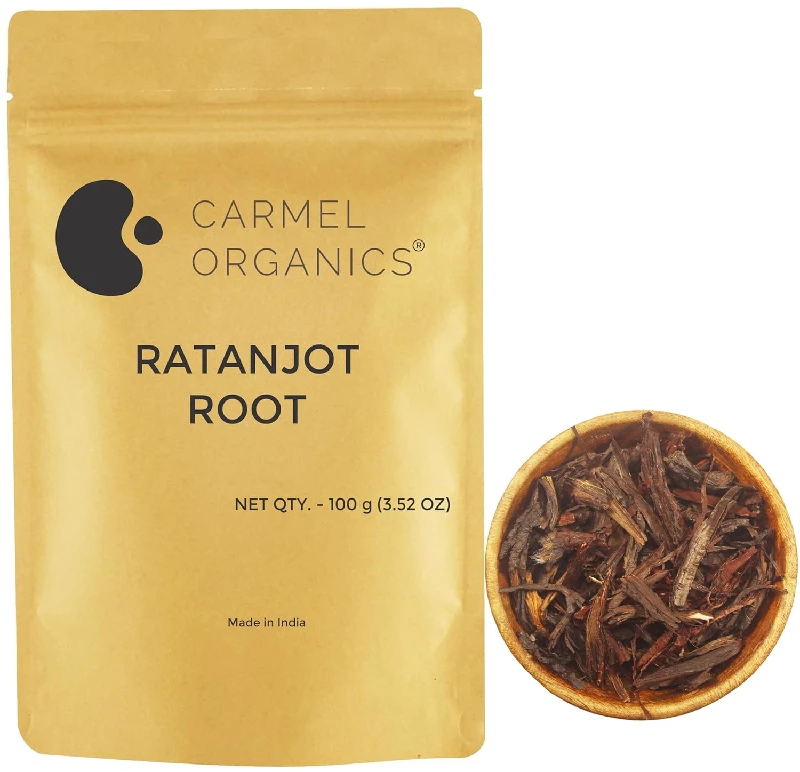
Carmel Organics Ratanjot Roots
Delivery in 2 - 5 business days to USA
Product Highlights
- Ratanjot roots (Alkanet) deliver a vibrant red hue and mild flavor for food, cosmetics, and hair care. This natural, chemical-free pigment enhances dishes like Rogan Josh, lip balms, and scalp treatments. Mix with oil for best results. Buy now from The Desi Food website for authentic quality!
Ratanjot Roots: The New Hue of Color
Nature has bountiful treasures for all of human needs. For centuries, humans have loved to enhance their beauty. People have used everything from flowers, tree barks, and natural pigments to color their hair, skin, and nails. The advancement of cosmetics provided us with myriad options for coloring pigments. However, these were never devoid of chemicals. That is when natural pigments like Henna, Turmeric, and Ratanjot came into focus. In the case of Turmeric and Ratanjot, not only do they render a strong flavor to foods, they also leave an indelible color on whatever they are added to.
What is Ratanjot
Alkanet tinctoria, Dyer’s Alkanet or simply Alkanet/Orchanet, is also known as Ratanjot. This spice is used in the form of roots from the tinctoria plant to make red dye and for flavoring. The plant has deep blue flowers and red roots. What is special is that the pigment that renders the root red in color is soluble in alcohol and oils but not in water. This property makes it waterproof and useful for various purposes, including as a colorant for wines and alcohols. The root is edible and is popularly used as Ratanjot—a food additive for coloring dishes, especially the Kashmiri Rogan Josh and other savory preparations to lend a deep red hue.
How is Ratanjot Used in Food Coloring
Being soluble in oils and alcohol but not in water, Ratanjot is added to hot oil. Once the oil turns deep red, it is then strained to remove the solids, and the colored oil is added to foods for its vibrant color. It also has a mild flavor which enhances the overall taste of the dish.
Why is Ratanjot a Preferred Choice for Food Coloring
Ratanjot is a natural food colorant and also a flavor enhancer. Rather than using chemical food colors that could prove harmful over long-term use, Ratanjot, being of completely natural origin, lends itself beautifully with its rich red color and mild flavor to curries, tandoori dishes, and other savory preparations.
What Else is Ratanjot Used For
This multi-purpose spice has several uses in the cosmetic and wellness fields. Ratanjot is commonly used in lip balms and lipsticks, as its natural red pigment blends very well as a cosmetic colorant. It is also used to treat scalp problems, including dandruff, premature greying, and to promote hair growth.
Thanks to its anti-inflammatory properties, Ratanjot can help treat various skin conditions such as acne, burn marks, and skin inflammation. These healing qualities also extend internally—it has been traditionally used to support digestion and treat stomach ailments like diarrhea, long-standing cough, and stomach ulcers. Additionally, Ratanjot may offer benefits for cardiovascular health and in managing high blood pressure.
How to Use Ratanjot
Remember, Ratanjot can be used in powder form or as whole root, but its true properties come to the fore only when mixed with oils, not water. The pigment is oil- and alcohol-soluble, making it perfect for culinary and cosmetic applications.
Ratanjot is available either as a fine powder or in the form of dried roots. To use it for hair care, mix the powder directly with coconut oil and let it sit until the oil absorbs the vibrant red color. Apply this oil to your scalp and hair, then wash it off after some time for natural nourishment and shine.
You can also add small crushed pieces of Ratanjot to hot oil and keep it aside for later use. For a natural hair color treatment, mix Ratanjot powder with equal parts of henna and your choice of oil—coconut, mustard, or olive. Apply this blend to your hair and wash it after a few hours.
In cooking, add a small quantity of Ratanjot roots to hot cooking oil, allow the oil to turn deep red, and then strain out the solids. This richly colored oil can be used as a natural coloring and flavoring agent in chicken dishes, gravies, Rogan Josh, and other savory preparations in place of artificial colorants.
Frequently Asked Questions
1. What is Ratan Jot?
- Ratan Jot is the root of the Alkanet plant which has natural pigments that can be used for coloring food, oils, wines, alcohol, fabric, skin and hair.
2. Can I use Ratan Jot directly as roots or as powder form?
- You can use Ratan Jot as roots by crushing the roots and mixing with oils. As powder, you can blend with Henna or food only after mixing with small amount of suitable oils.
3. What color does Ratan Jot give?
- Ratan Jot roots have a deep red pigment. When mixed with oils, this pigment dissolves in oil which can then be used in food or for hair and other uses. Keep for a longer time for the pigment to dissolve completely.
4. Where does Ratan Jot grow?
- Ratan Jot is a Mediterranean herb which also grows in North India. It is available in powdered or root form in packages online through The Desifood website.
5. Does Ratan Jot have any side effects?
- Using Ratan Jot for external use may not have any side effects. However, one must always consult a medical practitioner before consuming this orally or for external use as well.