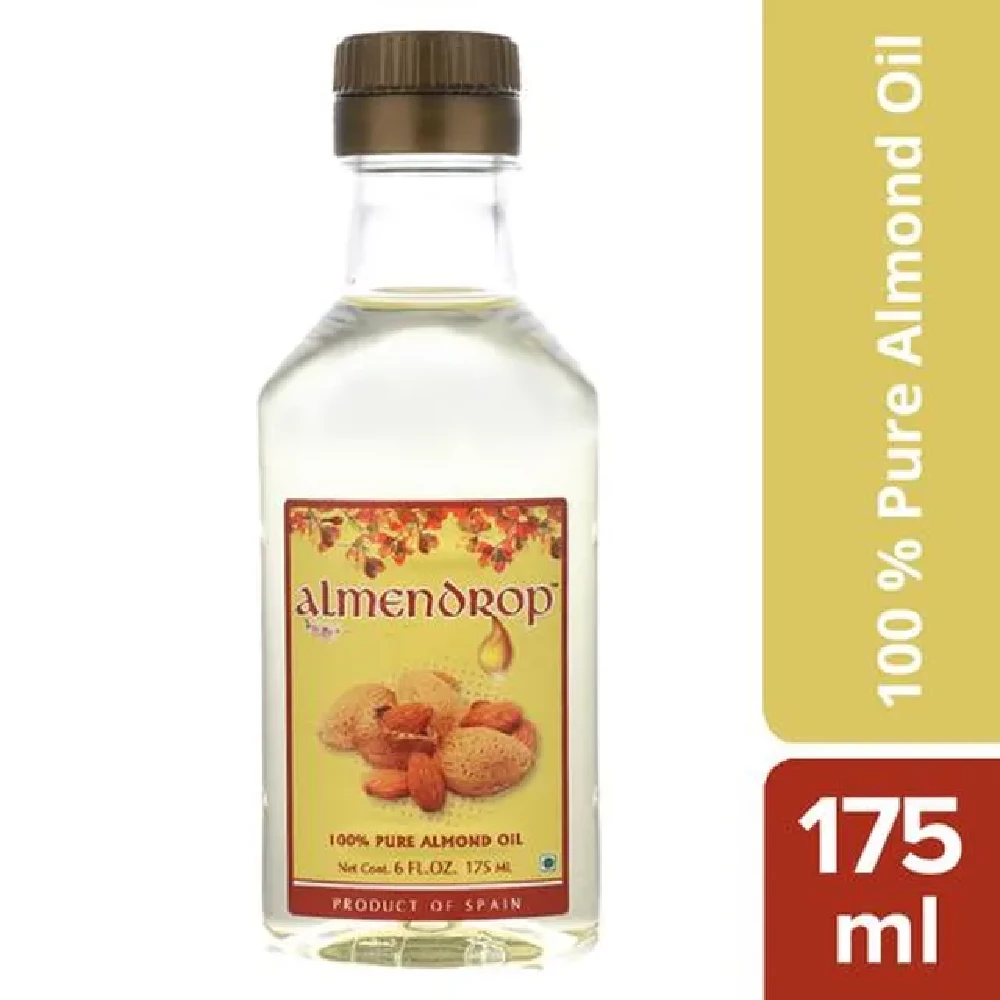
10 Uses of Almond Oil for Cooking, Skin and Hair
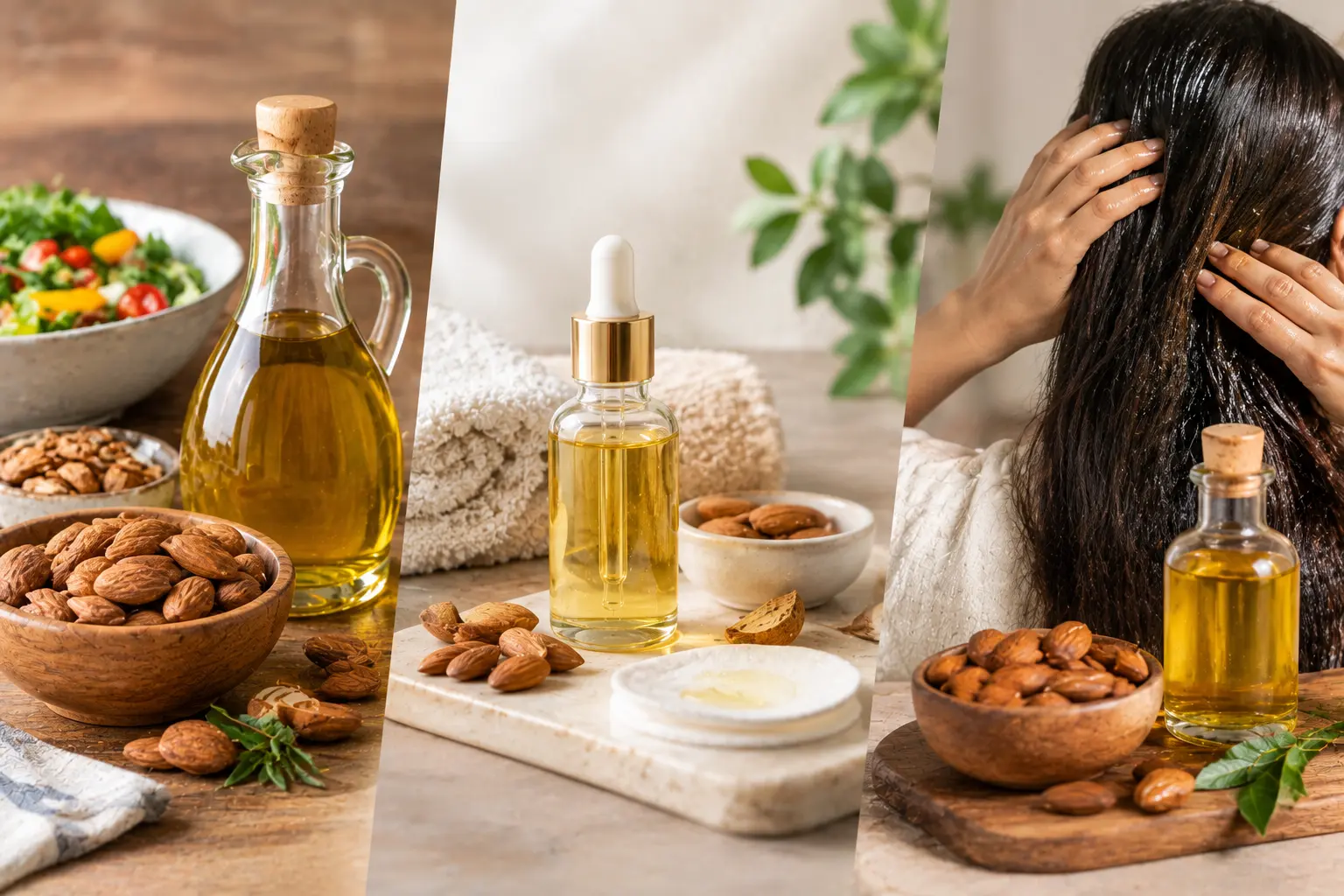
10 Uses of Almond Oil for Cooking, Skin and Hair
One bottle of almond oil can end up in the kitchen, the bathroom and the hair care shelf. But not every bottle is meant for every job.
This guide lists 10 common uses of almond oil. Each one comes with the source behind it and a note on what to check before you try it.
What is almond oil?
Almond oil is the oil pressed from almond kernels. Most almond oil sold for cooking, skin and hair is sweet almond oil, from the almonds people eat. On cosmetic labels it is often listed as "Prunus amygdalus dulcis oil".
A 2021 review in Comprehensive Reviews in Food Science and Food Safety describes almond oil as an ingredient used in both food and cosmetics. The review says it is high in monounsaturated and polyunsaturated fats, with oleic acid as the main one, and contains tocopherols (forms of vitamin E) and phytosterols.
Bitter almond oil is a different product. More on that under use 2.
What is almond oil used for?
Almond oil is used for cooking, as a processed flavouring (bitter almond oil only), as a skin moisturiser, as a massage oil and for diluting essential oils. It is also an ingredient in lip products, bath oils and shaving creams, and it is used as a hair oil, both alone and in herbal blends. Here is each use in detail.
10 uses of almond oil
Uses in the kitchen
1. Cooking and drizzling
Sweet almond oil is a food oil. The 2021 review describes it as a nutrient-dense ingredient used in food manufacturing.
Good to know: Many almond oils are sold for skin and hair, not for eating. Only cook with a bottle whose label says it is edible or for food use. Almonds are also a tree nut, and the FDA lists tree nuts as one of the nine major food allergens. If you have a tree nut allergy, ask your doctor before using almond oil in food or on your skin.
2. Almond flavouring (bitter almond oil, processed only)
Bitter almond oil has one use: as a flavouring in food, after processing.
US rules list bitter almond oil among flavouring oils that are generally recognised as safe, but only when it is "free from prussic acid". Prussic acid is another name for hydrogen cyanide.
Good to know: Raw bitter almonds are not safe to eat. In a 2012 study published in the Journal of Forensic Sciences, researchers found cyanide and amygdalin in bitter almonds. Sweet almonds tested negative for both. Only use bitter almond products made and labelled as food flavouring, and never use bitter almond oil in place of sweet almond oil.
Uses for skin
3. Moisturising dry skin
The Cosmetic Ingredient Review (CIR) is an independent panel that reviews the safety of cosmetic ingredients. Its safety report on sweet almond oil describes it as an emollient that is "mildly occlusive". This means it forms a light layer on the skin. The report says it produces hydration, softening and increased flexibility of the skin.
A 2010 review adds that almond oil was used for dry skin in ancient Chinese, Ayurvedic and Greco-Persian medicine.
Good to know: The CIR report is from 1983. It describes how the oil works as a cosmetic ingredient, not the effect of any product. The CIR panel found sweet almond oil safe for use on the skin "in the present practices of use and concentration".
4. Body massage oil
Almond oil is often sold as a body massage oil. For example, the directions for Forest Essentials Organic Cold Pressed Virgin Almond Oil say to warm the oil gently, massage it into the skin for 20 to 30 minutes, and then take a warm bath.
Good to know: Test any new oil on a small patch of skin first. The American Academy of Dermatology (AAD) suggests applying a new product to a quarter-sized spot, such as the bend of your elbow, twice a day for 7 to 10 days. If your skin turns red, itchy or swollen, wash it off and do not use it again.
5. Diluting essential oils
The National Association for Holistic Aromatherapy (NAHA) advises diluting essential oils that can irritate the skin in a vegetable oil or other carrier. Sweet almond oil is a plant oil, so it can be used for this. NAHA says most oil-based aromatherapy blends are between 1 and 5 percent essential oil.
Good to know: NAHA does not name any one carrier oil as the best. Follow the directions on your essential oil bottle.
6. An ingredient in lip products
If you check the labels on lip balms and lipsticks, you may find sweet almond oil in the list.
The CIR safety report found that lipsticks made up nearly two-thirds of all reported cosmetic uses of sweet almond oil at the time.
Good to know: These figures come from 1976 data in the report. On a label, look for "Prunus amygdalus dulcis oil" or "sweet almond oil".
7. An ingredient in bath oils and shaving creams
The same CIR report lists bath oils, shaving creams, makeup foundations, face powders and fragrance products among the products that used sweet almond oil. It describes the oil as working as both an emollient and an emulsifier, meaning it helps oil and water blend in a formula.
Good to know: An ingredient in a product is only one part of the formula. The label shows where it sits in the list.
Uses for hair
8. Pre-wash hair oil
You can use sweet almond oil as a pre-wash hair oil, left on for a while before you shampoo.
A 2015 review in the International Journal of Trichology says that applying oil regularly can improve lubrication of the hair shaft and help prevent hair breakage. The CIR report also notes that in shampoos, sweet almond oil gives the hair a desirable sheen.
Good to know: The 2015 review covers hair oils in general. It did not test almond oil on its own.
9. A base in blended hair oils
Almond oil, or badam in Hindi, often turns up in blended hair oils alongside herbs such as amla. Dabur Badam Amla Hair Oil is one example.
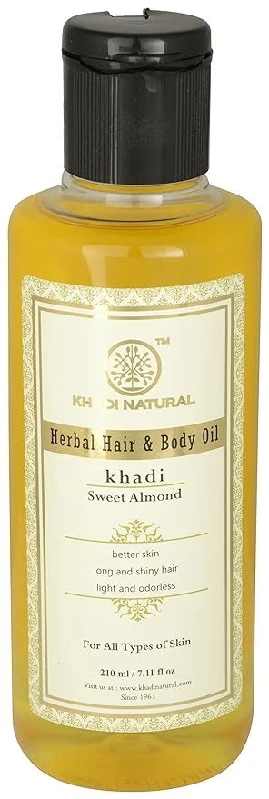
You can also use a plain almond oil as a hair oil. The directions for Khadi Natural Ayurvedic Sweet Almond Oil say to warm the oil, massage it into the scalp and hair, leave it on for at least 30 minutes, and wash it out with a mild shampoo, 2 to 3 times a week.
Good to know: Blended hair oils contain several ingredients. Read the full list to see where almond oil sits in it.
A traditional use
10. Part of traditional care routines
Almond oil has a long history. The 2010 review notes that it has been used since ancient times in Chinese, Ayurvedic and Greco-Persian medicine.
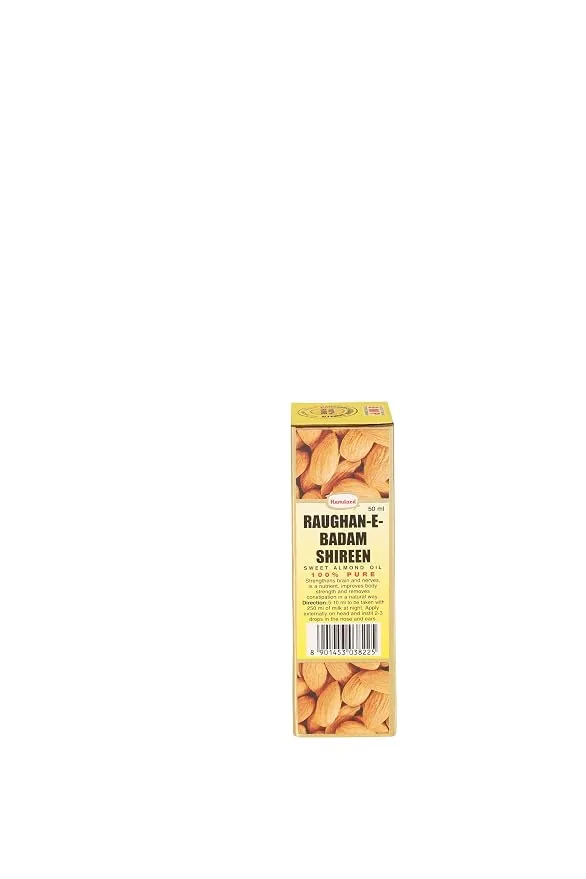
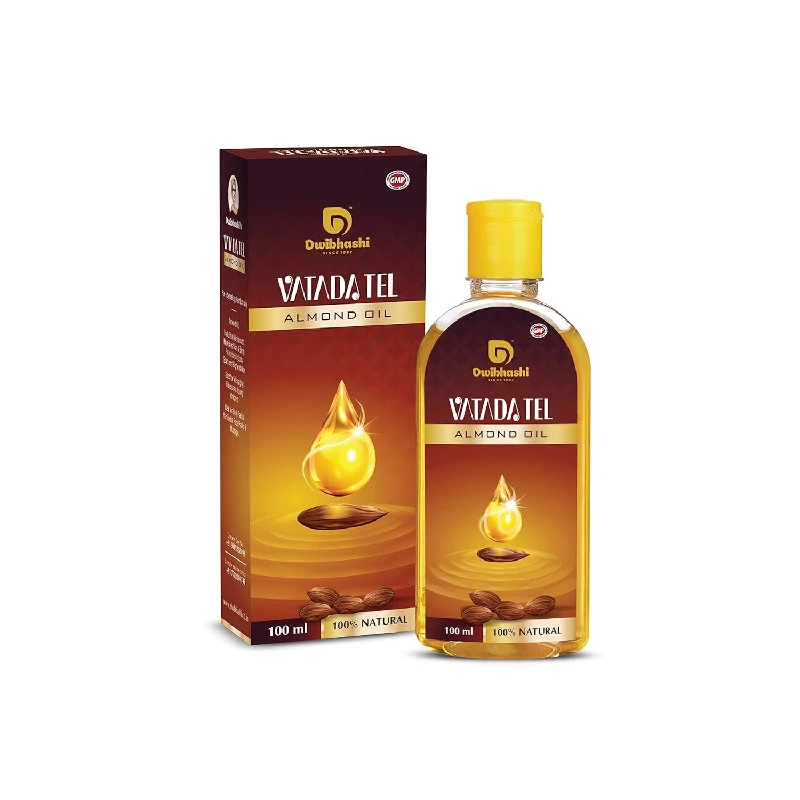
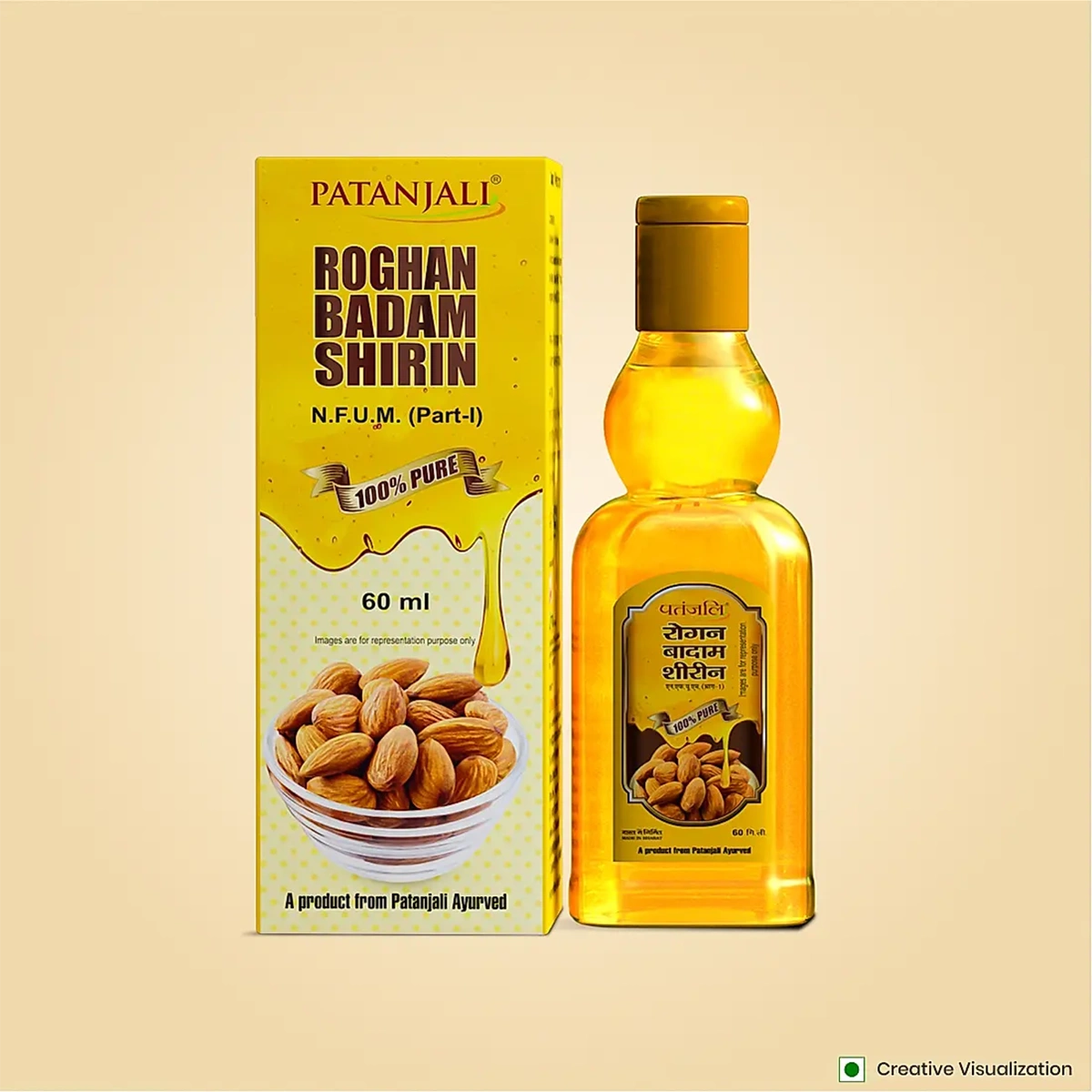
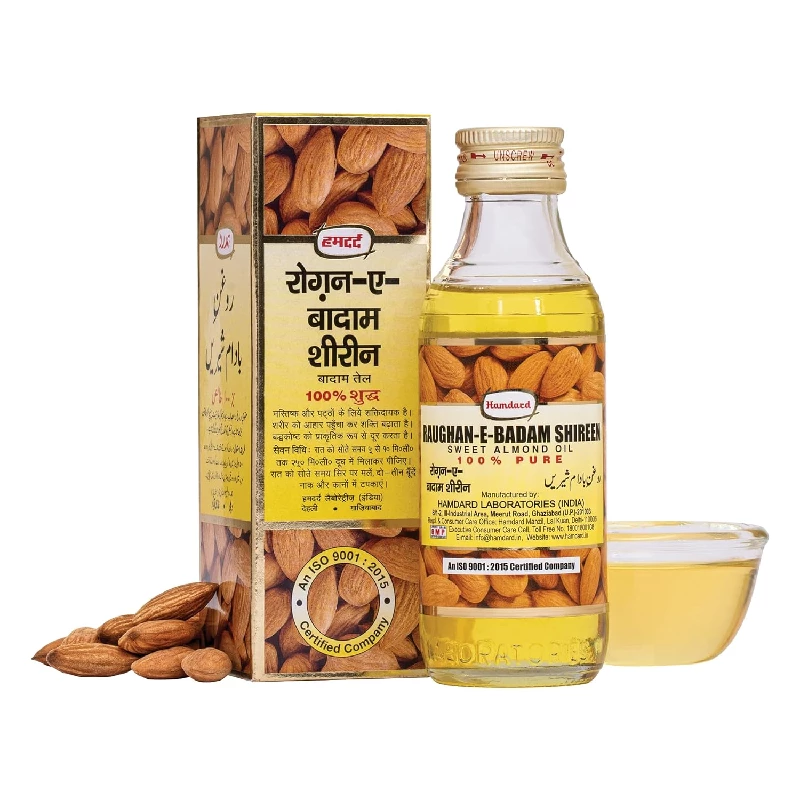
In India you may see it sold as badam rogan or roghan-e-badam. Dwibhashi Vatada Tel is another traditional almond oil.
Good to know: A long history tells you how people have used almond oil. It does not tell you what it does. The 2010 review also notes that conclusive scientific evidence is still limited.
Sweet almond oil vs bitter almond oil: which one for which use?
The table below matches each use to the right kind of almond oil.
Use | Which almond oil | What to check on the label |
|---|---|---|
Cooking and drizzling | Sweet almond oil | Says "edible" or "for food use" |
Almond flavouring | Bitter almond oil, processed | Sold as a food flavouring |
Skin and massage | Sweet almond oil | Sold for skin or body use |
Diluting essential oils | Sweet almond oil | Plain oil, no added fragrance |
Hair oil | Sweet almond oil, alone or in a blend | Where almond oil sits in the ingredient list |
Where to find almond oil
TheDesiFood stocks sweet almond oils and almond blends from brands including Dwibhashi, Khadi Natural, Forest Essentials and Dabur, with doorstep delivery worldwide, including the USA, UK, Middle East, Australia and Canada. Product details on each listing come from the manufacturer.