
The Ultimate Guide on Chyawanprash - All Questions Answered
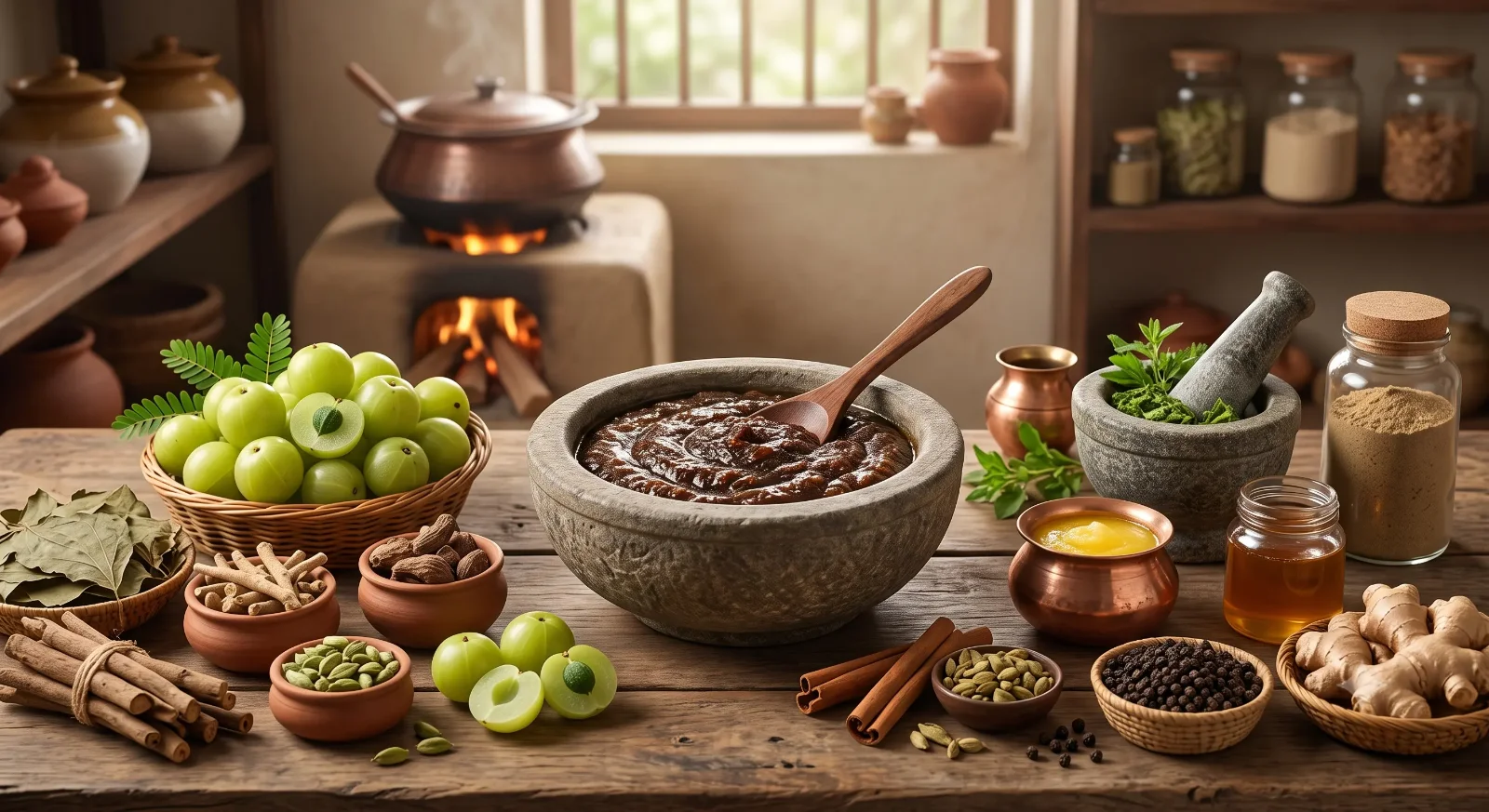
The Ultimate Guide on Chyawanprash - All Questions Answered
For many Indians living abroad, winter brings back a familiar memory: a spoonful of dark, sticky, sweet-and-sour herbal jam followed by a glass of warm milk.
Chyawanprash is a nostalgic connection to our roots and a classic Ayurvedic tradition. But as we make our own health choices abroad, questions often come up. Does it actually work? Is it safe during pregnancy? Which brand is the right choice?
Here are clear answers to the most common questions about Chyawanprash.
1. The Basics & Ingredients
What is Chyawanprash?
Think of Chyawanprash as a classic Ayurvedic health jam. The base mixes Amla (Indian Gooseberry) with ghee, honey, and sesame oil, which is then cooked with more than 40 different herbs and spices. Ayurvedic tradition calls this a Rasayana—essentially a daily tonic taken to support a long, energetic life.
When was Chyawanprash invented?
The recipe is thousands of years old. You can find the very first mention of it in the Charaka Samhita, a core Ayurvedic text dating back to the first millennium BCE. According to the old stories, the Ashwini Kumaras (the Vedic gods of medicine) originally whipped up this mixture to restore the youth of an aging sage named Rishi Chyawan.
Does Chyawanprash contain ashwagandha, shilajit, or iron?
Ashwagandha: Most classic formulas do include this herb because it helps your body manage daily stress.
Iron: You will often find Lauha Bhasma (a purified iron ash) in authentic recipes to support healthy iron levels and overall energy.
Shilajit: A standard batch won't have Shilajit in it. That said, a few modern brands now add it in if you are looking for an extra stamina boost.
Does Chyawanprash have sugar?
Yes. The original recipe relies on sugar, jaggery, or honey. These sweeteners act as a natural preservative while also helping your body absorb the herbs. But if you need to limit your daily sugar, don't worry—most major brands today sell sugar-free versions made specifically for diabetic or health-conscious users.
2. Health & Wellness Benefits
Is Chyawanprash good for you? Does it really work?
Ayurvedic doctors have recommended it for centuries, and it contains Amla, which is packed with Vitamin C. While everyone's body is different, taking it regularly is traditionally used to keep the body healthy and balanced.
Does Chyawanprash increase immunity?
People rely on it heavily to keep from getting sick. The Vitamin C from Amla, combined with herbs like Guduchi and Tulsi, helps protect your body against illness, especially during colder months.
Does it help in digestion?
Yes, it includes warming spices like cinnamon, cardamom, and pippali (long pepper). In Ayurveda, these spices ignite the Agni (digestive fire), helping you digest food and absorb nutrients better.
Does Chyawanprash help in hair growth?
Amla is well-known for being good for your hair and skin. While Chyawanprash isn't a direct cure for hair loss, its antioxidants and vitamins help keep your body young, which is good for your skin and hair over time.
Does it increase testosterone or help with weight gain/loss?
Testosterone: It contains herbs like Ashwagandha and Gokshura, often used for energy and men's health. However, it is not a direct "testosterone booster."
Weight: It is not a weight-loss supplement. Because it contains ghee and sugar, it has calories. It can help you maintain a healthy weight if you are underweight. Taking just 1-2 teaspoons a day won't cause noticeable weight gain.
Is Chyawanprash okay if I’m trying to lose weight or track calories?
Yes, it fits easily into a diet plan if you track your food. A typical teaspoon (10-15g) has roughly 35 to 50 calories, mostly from carbs (sugar/jaggery) and fat (ghee). Eating 1 or 2 teaspoons daily is easy to fit into a normal diet without going over your calorie limit.
Which Chyawanprash is best for cold and cough?
Most classic recipes are made to help clear your chest and throat. Herbs like Vasaka, Pippali, and Amla soothe the airways. There is no single best brand for this; the classic formula itself is made for winter health.
3. How & When to Consume
How and when should we eat Chyawanprash?
For adults, the standard routine is one to two teaspoons a day, eaten right off the spoon. You'll get the best results taking it first thing in the morning on an empty stomach, or just before heading to sleep.
Can I mix Chyawanprash with milk? Can I take it at night?
Absolutely. In fact, Ayurvedic practitioners strongly suggest washing it down with a cup of warm milk. Since the jam is packed with heat-generating spices, the milk acts as a cooling balance for your body. Having this combo at night is a great way to wind down and support digestion. If you prefer to skip dairy, swapping in warm water or almond milk works perfectly.
Can Chyawanprash cause side effects like nausea or stomach discomfort?
It is completely safe for most people, though a few might experience slight nausea or a rumbling stomach. This usually happens if you scoop out too much at once, eat it when you are totally stuffed (or completely starved), or if your system simply isn't used to such potent herbs yet. When starting out, just take a tiny bit—like a quarter or half a teaspoon—and let your body adjust over a few days. Naturally, if it keeps making you feel unwell, put the jar away and check in with your doctor.
4. Special Groups: Pregnancy, Kids, Dogs, & Seniors
Is Chyawanprash safe to eat during pregnancy?
While it's widely viewed as a nourishing daily tonic, expecting mothers need to be a bit careful. Since the mix relies heavily on warming spices, you definitely want to run it by your OB-GYN or Ayurvedic practitioner first. Depending on your health, they might advise taking a much smaller dose, or they could tell you to skip it entirely during your first trimester or if you are managing gestational diabetes.
At what age can kids start taking Chyawanprash?
Most experts suggest waiting until your child is at least three or four years old before introducing it. When you do start, keep the portion very small—around a quarter to a half teaspoon a day. It is an excellent way to give their immune system a little extra support, especially when back-to-school germs start going around.
Which type of Chyawanprash is best for seniors?
It is great for seniors as a daily health booster. Any real formula helps with joints, energy, and digestion in older adults. Pick a sugar-free version if blood sugar is an issue.
Can dogs eat Chyawanprash?
No. Do not give human Chyawanprash to dogs. Store-bought versions contain a lot of sugar and spices that can hurt dogs (like certain types of cinnamon or nutmeg). Sugar-free versions sometimes use xylitol, which is highly toxic to pets.
5. Storage & Expiration
Does Chyawanprash expire?
Yes. While ghee, sugar, and honey act as natural preservatives, a standard jar usually lasts 2 to 3 years from the date it was made. Always check the label.
Does Chyawanprash need to be refrigerated?
No. Store it in a cool, dry place away from direct sunlight. Use a clean, dry spoon to keep moisture from causing mold.
6. Brand Comparisons
Which Chyawanprash brand is best?
Choosing a brand depends on your taste and health needs, as the major brands all use standard Ayurvedic recipes.
Brand | Taste & Profile | Best For |
|---|---|---|
Dabur | Mild, sweet-and-sour, very popular globally. | Families and kids; great entry-level choice. |
Patanjali | Strong, spicy, more herbal kick. Cost-effective. | People who prefer a sharper, spicier flavor. |
Zandu | Premium options with special ingredients (saffron, pearl). | Seniors, diabetics (they have specific sugar-free lines). |
Which brand is actually herbal and not just sugar?
Many readers ask: "Where can I buy good Ayurvedic Chyawanprash? I’ve heard Dabur/Patanjali are mostly sugar; I want something rich in herbs."
If you want a real recipe where the focus is on herbs rather than sugar, look at traditional Ayurvedic makers. Brands like Arya Vaidya Sala (Kottakkal) or batches made by doctors follow ancient recipes exactly. They use high-quality jaggery, raw honey, and pure herbs instead of making it overly sweet for the general public. Homemade versions also offer a thicker, earthier flavor.
Finding pure, traditional formulas locally abroad can be hard, which is where The Desi Food comes in. We find and ship real Ayurvedic items like Kottakkal and other top brands internationally, so you don't have to settle for lower quality.
No matter where you live, Chyawanprash offers a simple way to stay connected to traditional Indian health habits.
Where can I buy authentic Chyawanprash from Indian brands in the USA, UK, Canada, Australia, Middle East and other countries?
Shop authentic Chyawanprash brands directly from The Desi Food and get your favorite brands—like Dabur, Patanjali, Kottakkal, Organic India, Kerala Ayurveda, and more—delivered straight to your door anywhere in the US, UK, Canada, Australia, and the Middle East!
Disclaimer: The information provided in this article is for educational purposes only. These statements have not been evaluated by the Food and Drug Administration (FDA). This product is not intended to diagnose, treat, cure, or prevent any disease. Always consult with your healthcare provider before adding new supplements to your routine, especially if you are pregnant, nursing, or taking medication.