
Brown Rice vs Basmati Rice: Differences, Nutrition, and Which One to Choose
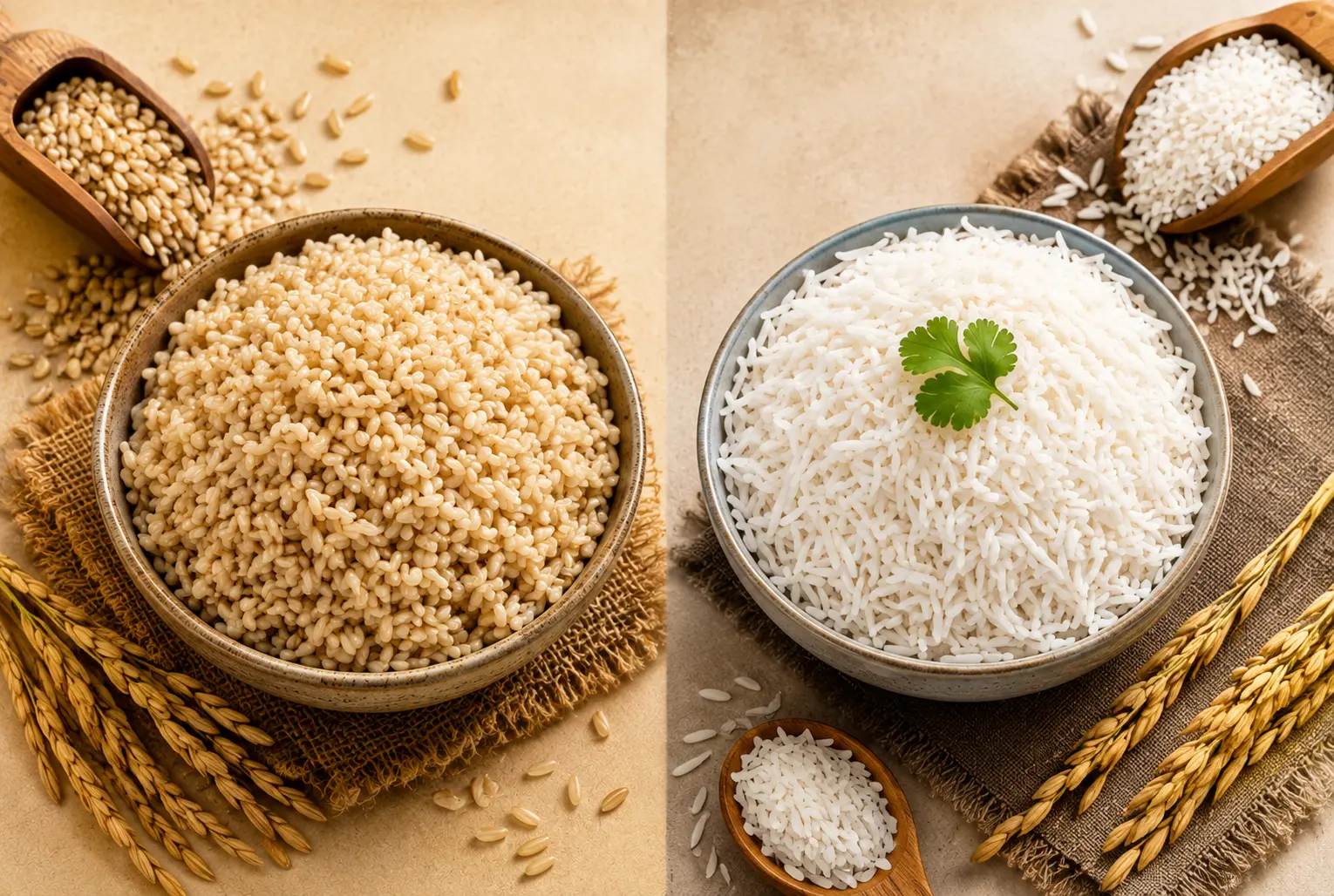
Brown Rice vs Basmati Rice: Differences, Nutrition, and Which One to Choose
You finally decide to eat healthier. The advice is always the same: switch to whole grains, eat brown rice. But your kitchen runs on basmati. The aroma when the lid comes off, the long fluffy grains in pulao, the biryani that tastes like home. Does eating better really mean giving all of that up?
Then you get to the rice aisle and it is worse. Rows of bags you do not recognise, a "brown rice" that cooks into something dense and unfamiliar, a basmati that never quite smells the way it should. The advice was simple. The shelf is not.
Here is the good news: brown rice and basmati rice are not actually opposites, and you do not have to pick a side. This guide explains the real difference between the two, compares their nutrition and glycemic index, and introduces the option most articles skip entirely: brown basmati rice, which gives you whole grain nutrition without losing the basmati character.
The quick answer
Brown rice and basmati rice are two different things measured on two different scales.
Basmati is a variety of rice, a long grain aromatic rice grown in the foothills of the Himalayas, known for its fragrance and fluffy, separate grains.
Brown describes a level of milling, not a variety. Brown rice is any rice with only the husk removed, keeping the fiber-rich bran and germ. Polish those away and you get white rice.
Because these are separate scales, they combine. Basmati comes in both white and brown versions, just like other rice types. So the honest comparison is not two options but four:
White | Brown (whole grain) | |
|---|---|---|
Basmati | White basmati: aromatic, fluffy, fast cooking | Brown basmati: aromatic, nutty, high fiber |
Regular long grain | Plain white rice | Standard brown rice: chewy, earthy, high fiber |
If you searched "brown rice vs basmati rice," you were most likely comparing standard brown rice with white basmati. We will compare those directly, and then look at brown basmati, the middle path that fits both goals.
What is basmati rice?
Basmati is a long grain rice from the Indian subcontinent, protected by geography much like champagne. India produces roughly 65 percent of the world's basmati. The name comes from Sanskrit and points to its defining feature: fragrance. That aroma comes from a natural compound called 2-acetyl-1-pyrroline, which basmati carries in unusually high amounts.
Cooked well, basmati grains elongate, stay separate, and turn light and fluffy rather than sticky. That is why it is the default for biryani, pulao, and jeera rice: dishes where every grain should stand on its own.
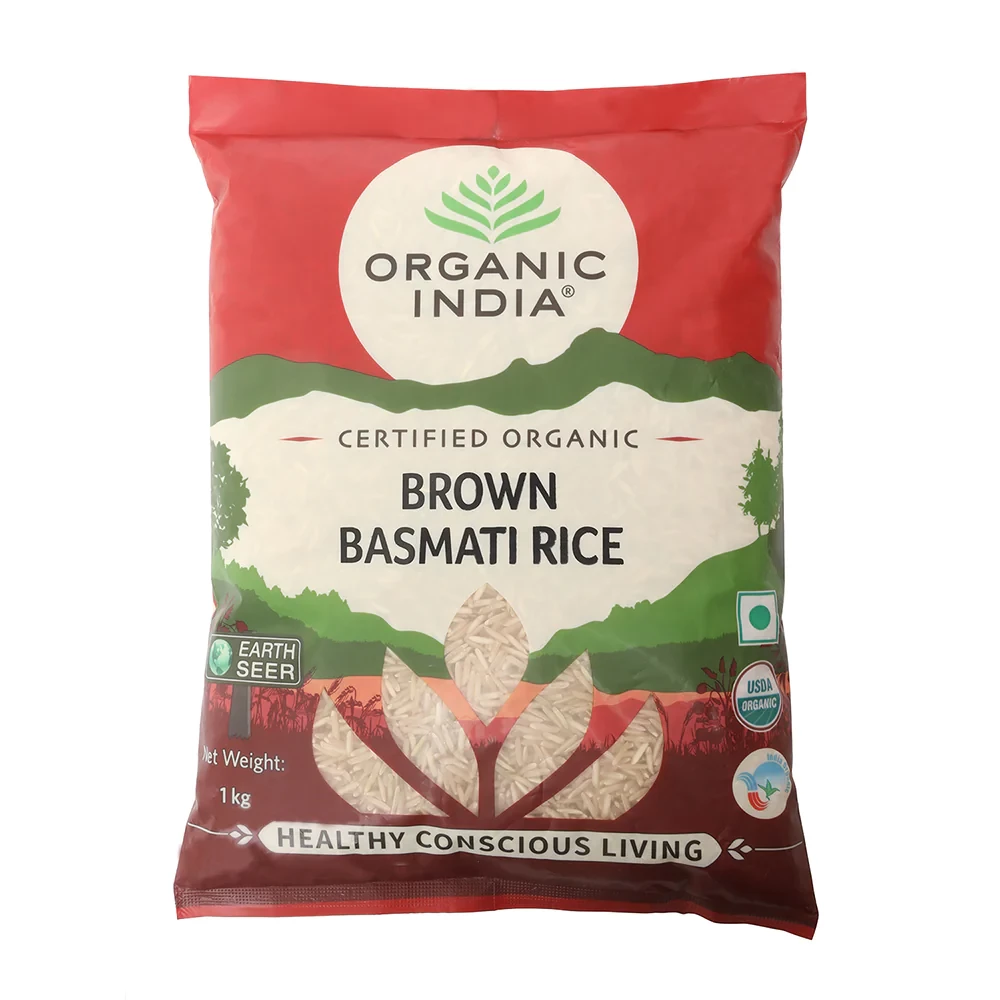
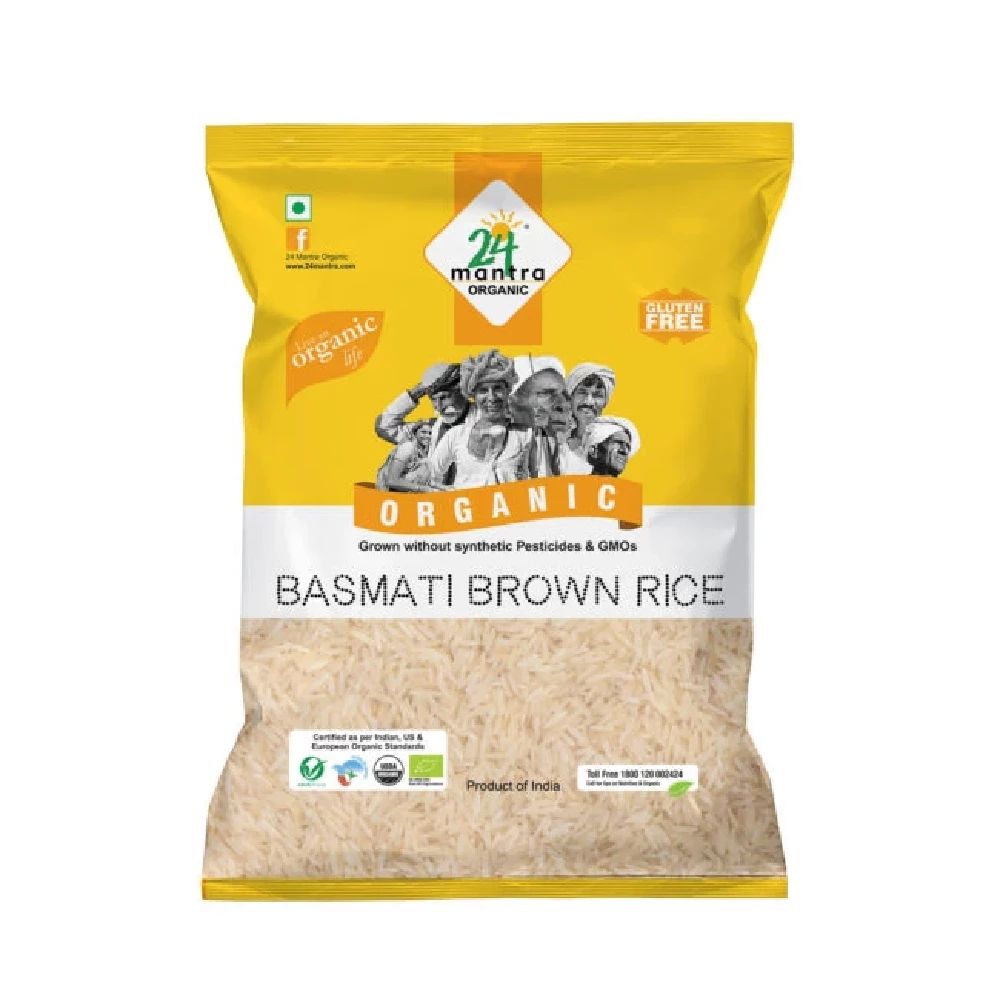
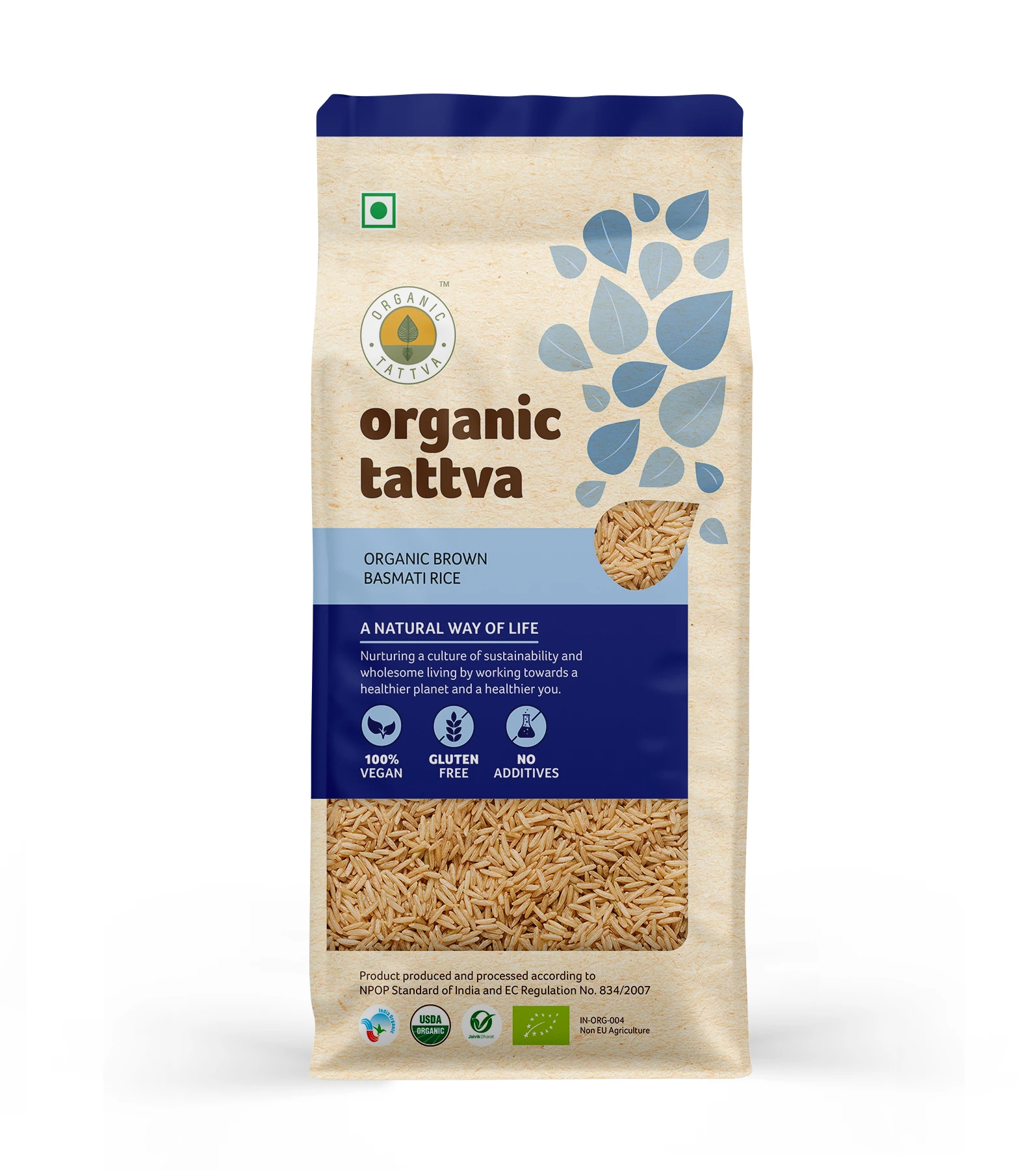
Basmati worth cooking with
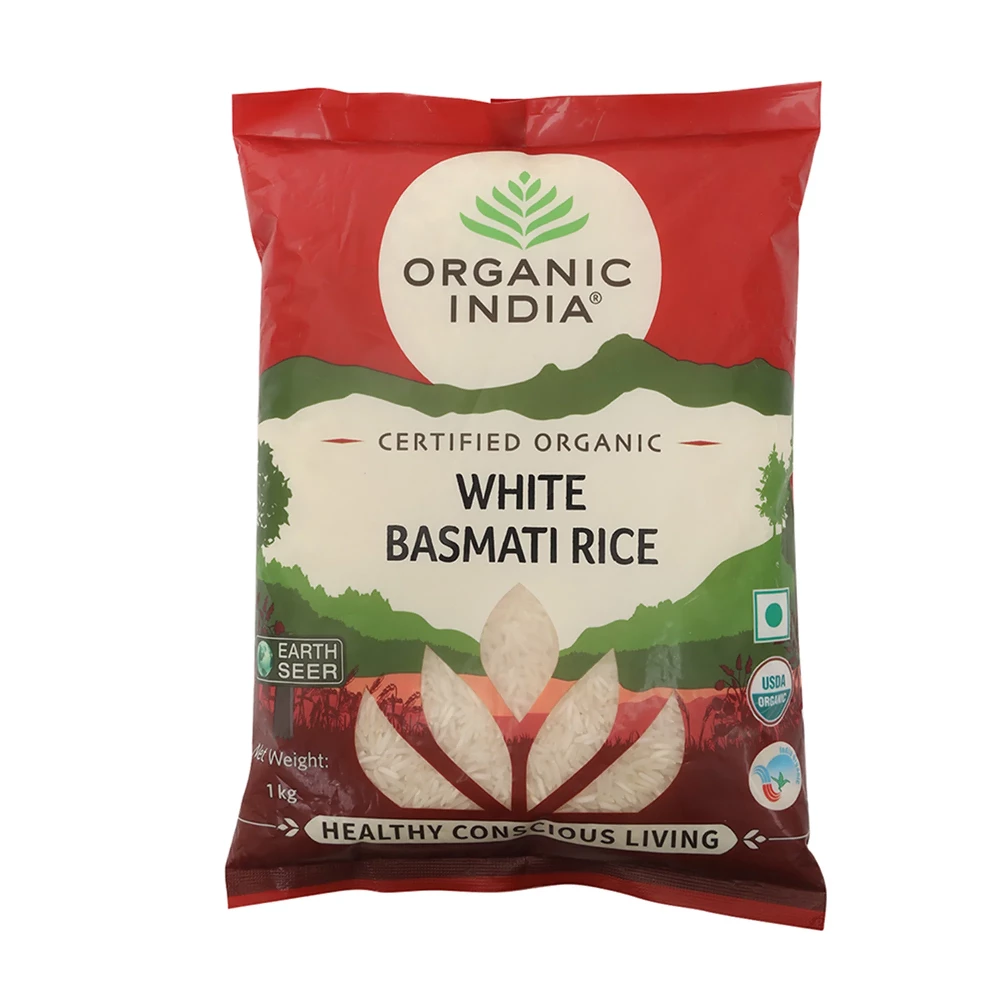
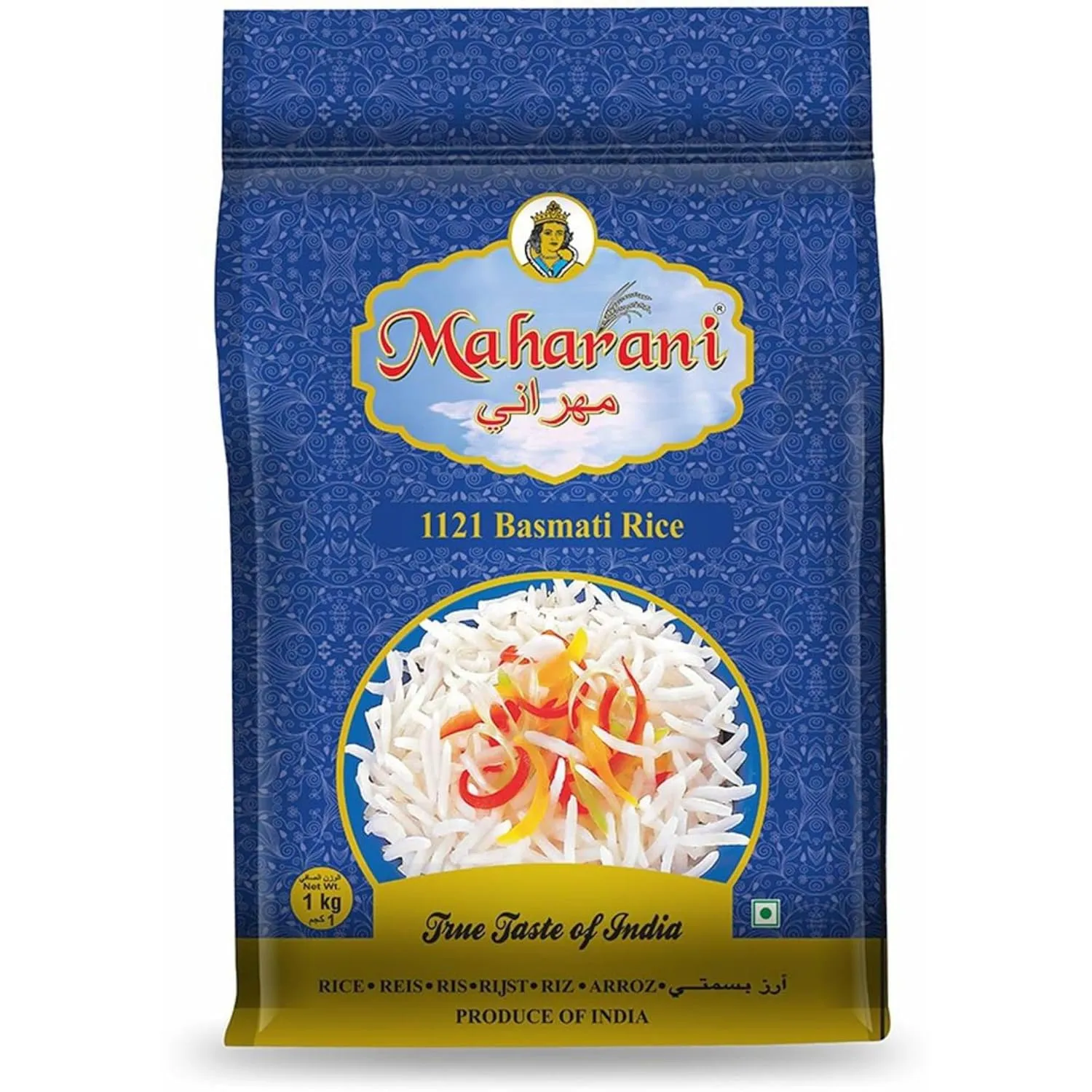
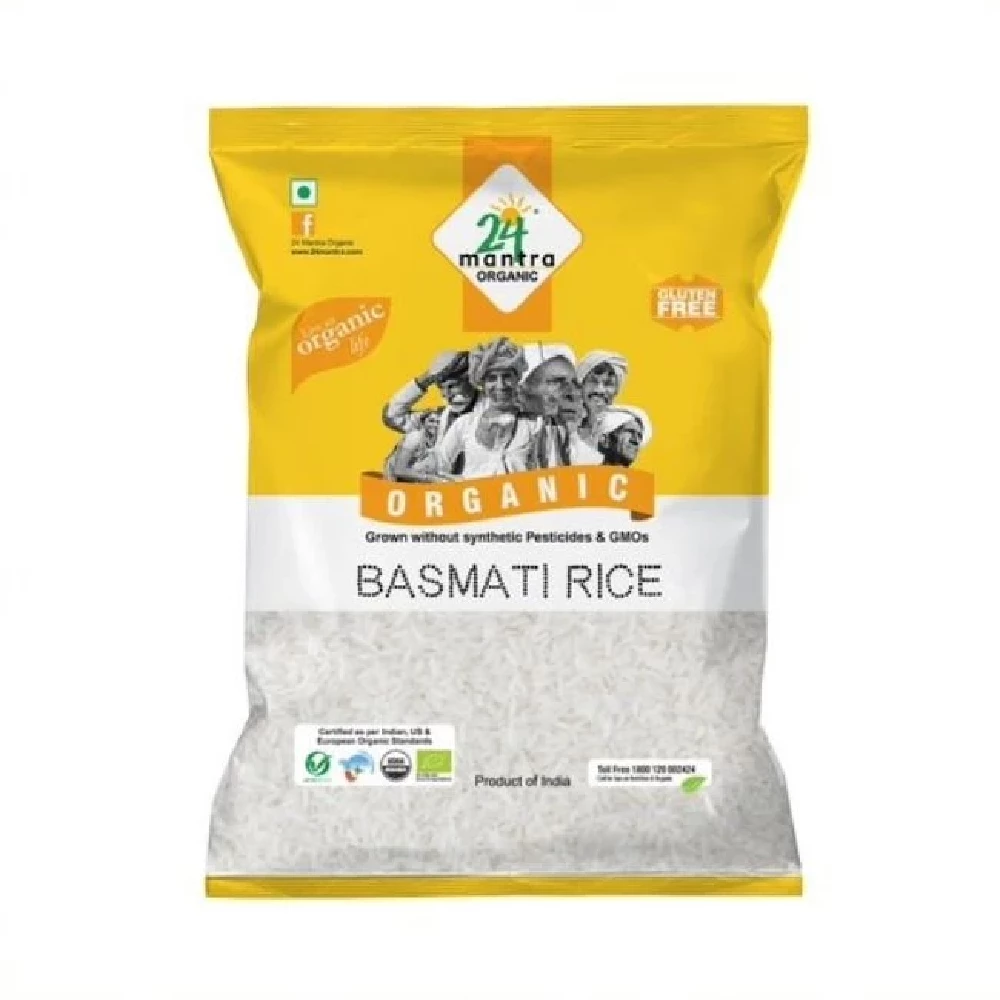
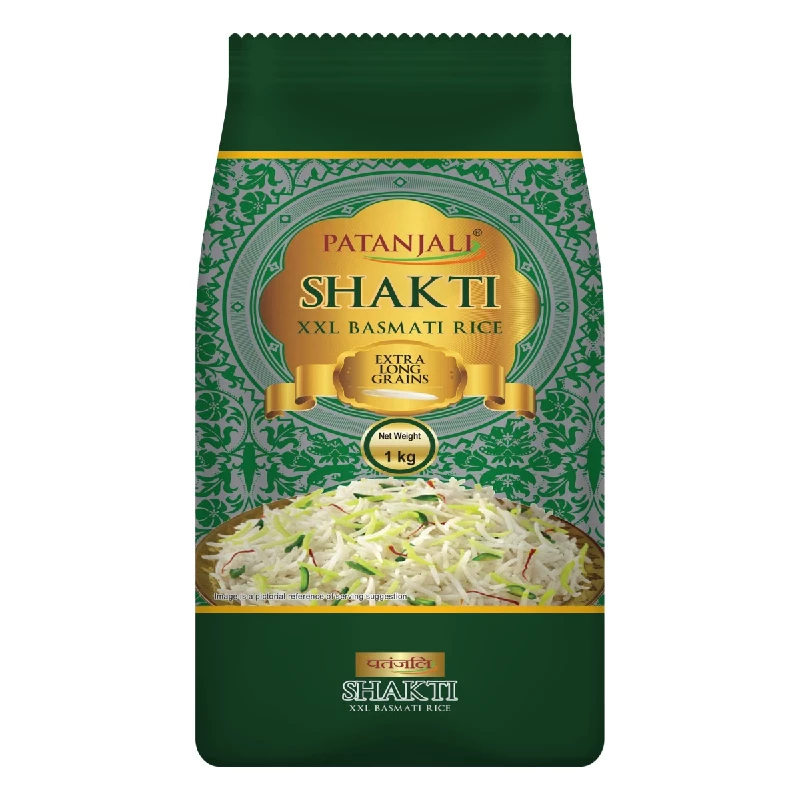
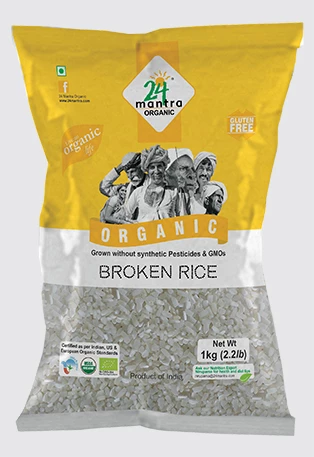
What is brown rice?
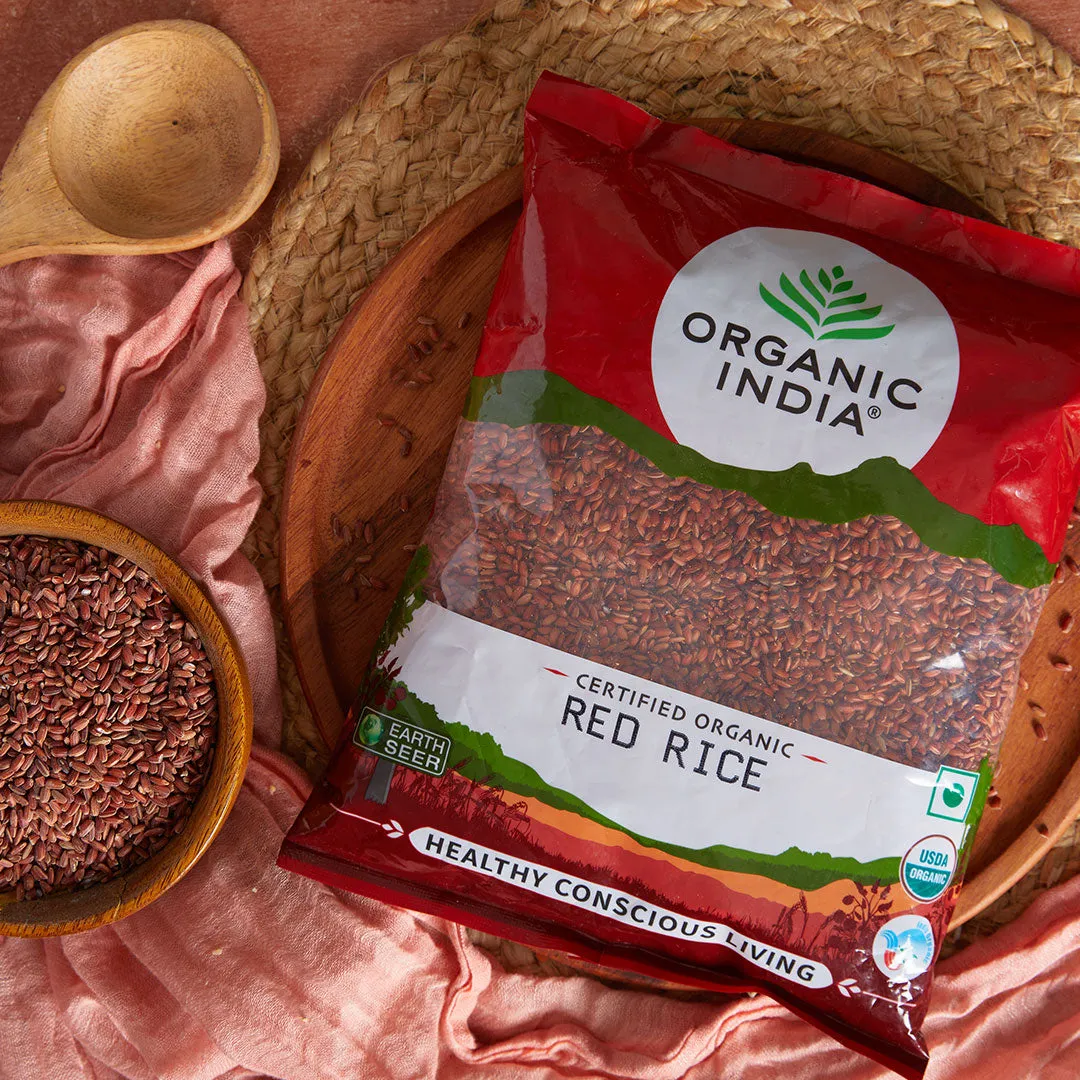
Brown rice is rice in its whole grain form. After harvesting, only the inedible outer husk is removed. The bran layer and germ stay on the grain, and they carry most of the fiber, B vitamins, magnesium, and healthy fats. Milling and polishing remove those layers to produce white rice, which is softer and quicker to cook but lighter on nutrients.
Standard American brown rice is usually a long or medium grain non-aromatic variety. It tastes earthy and nutty, with a chewy bite, and takes noticeably longer to cook than white rice.
Whole grain rice to start with
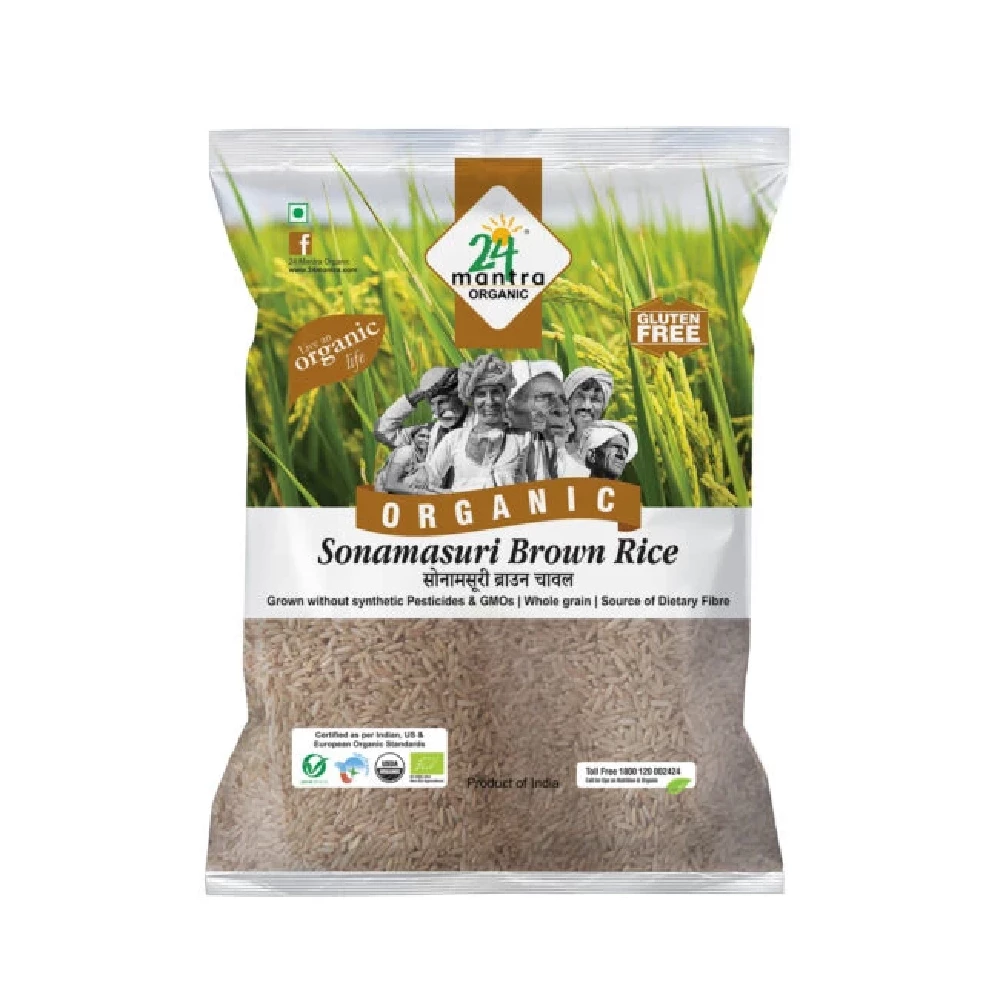
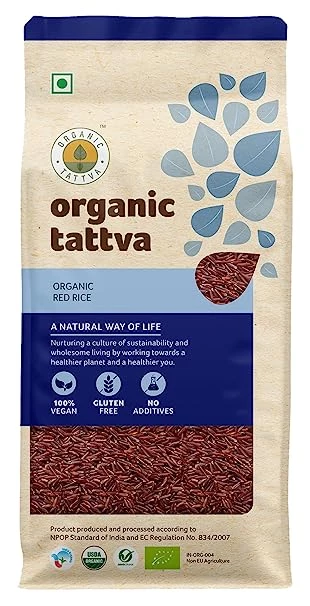
Brown rice vs white basmati: nutrition side by side
Approximate values for one cooked cup. Exact numbers vary by brand and variety, so treat these as a guide rather than a lab report.
White basmati | Brown rice | Brown basmati | |
Calories | ~210 | ~230 to 250 | ~230 |
Carbohydrates | ~45 g | ~46 to 52 g | ~46 g |
Fiber | ~0.7 g | ~3 to 3.5 g | ~3 g |
Protein | ~4.5 g | ~5 g | ~5 g |
Texture | Light, fluffy, separate | Chewy, dense | Fluffy with a nutty bite |
Aroma | Strong, distinctive | Mild, earthy | Basmati aroma, slightly muted |
Stovetop cook time | 15 to 20 min | 40 to 50 min | 35 to 45 min |
The pattern is simple. Whole grain versions win on fiber and minerals. Basmati versions win on aroma, texture, and cook time. Brown basmati sits in the overlap: whole grain fiber with basmati character.
The glycemic index question
This is where the comparison gets interesting, because the common assumption ("brown is always better for blood sugar") does not hold cleanly for basmati.
Glycemic index (GI) measures how quickly a food raises blood sugar. Published figures vary by specific product and testing, but the general picture from GI databases looks like this:
White basmati: roughly 50 to 58, low to moderate, unusually good for a white rice
Brown rice: roughly 50 to 68 depending on variety
Brown basmati: often at the lower end, roughly 50 to 55
For contrast, jasmine and short grain white rice commonly test at 70 to 90+
Why does white basmati score so well? Basmati is naturally high in amylose, a starch that digests more slowly than the sticky amylopectin that dominates jasmine and short grain rice. The variety matters as much as the color.
Two practical notes. First, portion size and the rest of the plate matter more than the grain alone: rice eaten with dal, vegetables, yogurt, or protein produces a gentler response than rice eaten plain. Second, GI is only one input. If you are managing diabetes or prediabetes, your doctor or dietitian should guide the specifics for your situation. Many people in that position land on brown basmati as a comfortable everyday choice, since it combines a whole grain profile with a low tested GI, but that is a decision to make with your care team, not with a blog post.
Brown basmati rice vs regular brown rice
A question people ask constantly and ranking articles rarely answer: if both are brown, what is the difference?
Grain and texture: Brown basmati grains are longer and slimmer, and they cook up fluffier and more separate. Regular brown rice is denser and chewier and can clump.
Aroma and taste: Brown basmati keeps a good portion of the signature basmati fragrance, layered with the nuttiness of the bran. Regular brown rice is plainer and more earthy.
In Indian cooking: Brown basmati behaves much more like the rice your recipes expect. It makes a respectable pulao and khichdi. Regular brown rice tends to fight those dishes.
Nutrition: Broadly similar, since both keep the bran and germ. One point in basmati's favor: basmati grown in the Himalayan belt has repeatedly tested lower in arsenic than many other rice sources, which matters for anyone eating rice daily, since arsenic concentrates in the bran of brown rice. Rinsing well and cooking in extra water that you drain off reduces it further.
Brown basmati vs white basmati
Same variety, different milling. White basmati is polished, so it cooks in 15 to 20 minutes, tastes cleaner and more fragrant, and feels lighter. Brown basmati keeps the bran, so it brings around four times the fiber, more magnesium and B vitamins, a nuttier flavor, and a longer cook time. Many households settle into a rhythm: white basmati for biryani and special meals, brown basmati for everyday dal chawal and lunch boxes.
How to cook each one
Cooking is where most people give up on whole grain rice, usually because they used white rice timing. The fix is water, soaking, and patience.
White basmati (stovetop): Rinse until the water runs mostly clear. Soak 20 to 30 minutes if you have time; it helps the grains elongate. Use 1.5 cups water per cup of rice. Simmer covered 12 to 15 minutes, then rest 5 minutes off the heat.
Brown basmati (stovetop): Rinse well and soak 30 minutes or longer; soaking meaningfully shortens the cook. Use 2 to 2.25 cups water per cup of rice. Simmer covered 35 to 45 minutes, rest 10 minutes. The reward for the wait is fluffy, separate whole grain rice.
Brown rice (stovetop): Rinse, use 2 cups water per cup of rice, simmer covered 40 to 50 minutes, rest 10 minutes.
Instant pot shortcut: Brown basmati and brown rice both do well at high pressure for 20 to 22 minutes with 1.25 cups water per cup of rice, followed by a 10 minute natural release. This roughly halves the effort and makes weekday brown rice realistic.
Which one should you choose?
Match the rice to the meal instead of declaring a single winner.
Biryani, pulao for guests, jeera rice, kheer: White basmati. Fragrance and fluff are the point of these dishes.
Everyday dal chawal, khichdi, lunch boxes, curd rice: Brown basmati. Familiar behavior on the plate, whole grain nutrition, and it soaks up dal and curry the way you expect.
Grain bowls, stir fries, salads, meal prep: Standard brown rice. Its chew and neutrality suit these formats.
Watching blood sugar: Both basmati options test low on the GI scale; brown basmati adds fiber on top. Confirm the approach with your doctor.
If your household is trying to move toward whole grains without a revolt at the dinner table, the practical play is a gradual one: start by mixing brown basmati into your white basmati, then shift the ratio over a few weeks.
Buying good basmati and brown rice
A few things to look for on the label, wherever you shop:
Aged basmati (12 to 24 months) cooks fluffier and more aromatic than new crop rice. Most supermarket basmati is new crop, which is the usual reason a bag smells faint and cooks softer than you remember.
Grain length: Premium grades like 1121 basmati are known for extra long grains that elongate dramatically.
Origin: Basmati from the traditional Himalayan growing belt is the benchmark for both aroma and lower arsenic levels. Bags labelled simply "basmati-style" or grown outside that belt are a different grain, whatever the front of the pack says.
Organic certification matters more for brown rice than white, since the bran you are eating is the outermost layer of the grain.
Brown rice, not brown basmati: Western supermarkets almost always stock plain long grain brown rice. It is perfectly good in a grain bowl and stubborn in a pulao. If your recipes are Indian, the label you want says brown basmati.
Why the same dish tastes different away from home
If your khichdi or pulao has never quite worked since you moved, the rice is often the reason before the spices are. Three things usually change at once: the basmati available locally is younger and less aromatic, the default "healthy" option on the shelf is a non-aromatic brown rice that behaves nothing like basmati, and packs sit longer in transit and storage. None of that is your cooking. Buying aged basmati from a known Indian brand, and brown basmati rather than generic brown rice, closes most of the gap.
If Indian grocery stores near you carry a limited range, The Desi Food ships authentic Indian staples to the USA and 80+ countries, including the organic brown basmati and premium 1121 basmati brands featured earlier in this guide. It is also an easy way to send a bag to family who cannot get the brands they grew up with. Browse the full range on our rice collection page.