
12 Best Ashwagandha Supplements from India | How to find genuine products
12 Best Ashwagandha Supplements from India | How to find genuine products
Search for ashwagandha and you get thousands of results. Capsules, tablets, gummies, powders, effervescent tablets. Root extract at 300mg, 600mg, 1300mg. Bottles labeled full spectrum, high potency, clinical strength, gold standard, triple strength. Amazon alone lists hundreds of them. The health shop down the road in Jersey City or Wembley or Mississauga stocks a dozen more, and every one of them says it is the best.
So which one do you actually buy? And how do you tell which ones are genuine?
This guide answers both questions, in that order. First, the five checks that separate a genuine, high quality root product from a vague one, so that you can apply them to any bottle anywhere, including the ones we do not sell.
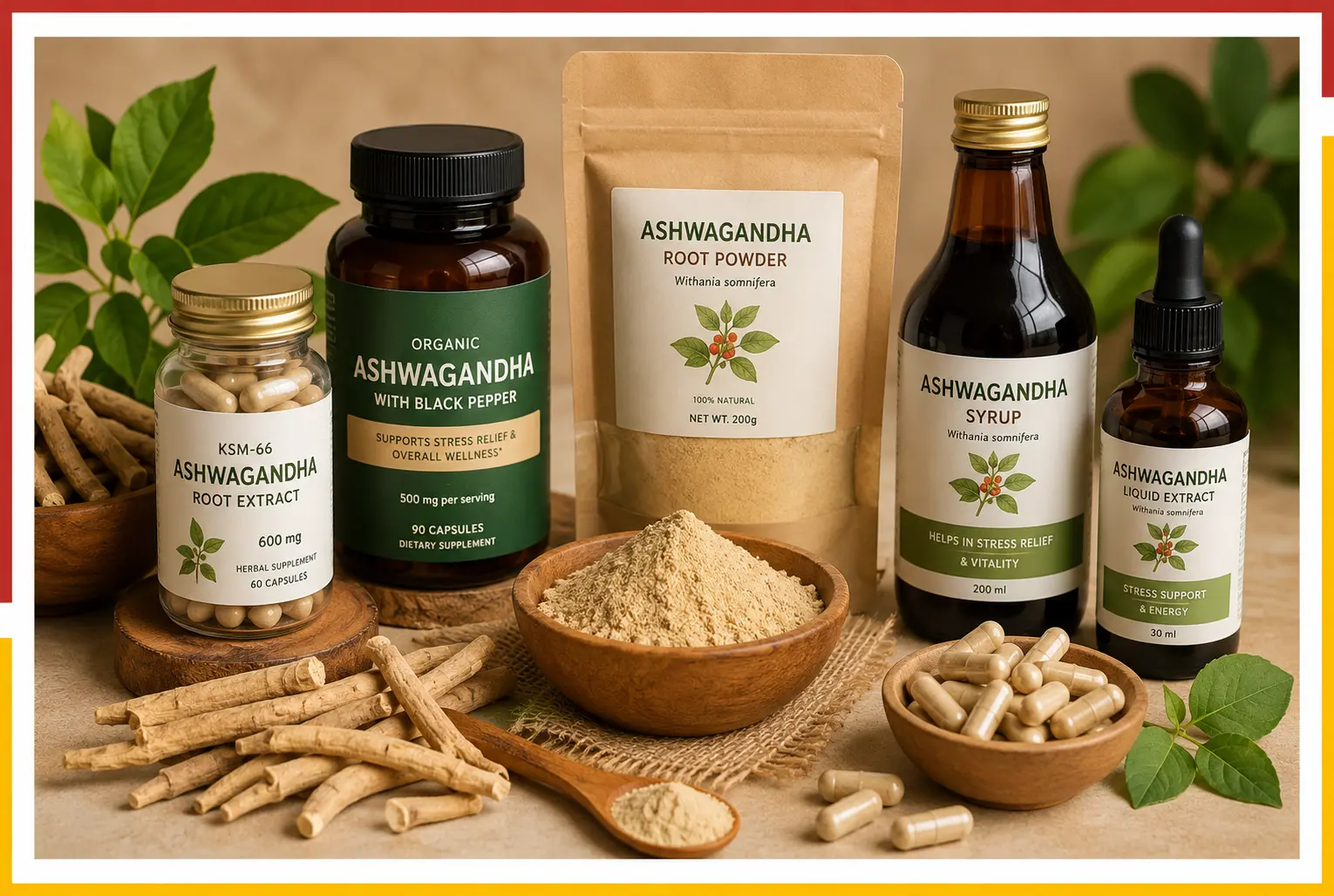
Then, 12 ashwagandha products from Indian manufacturers, covering every format the tradition actually uses: root powder, whole root, standardized extracts including KSM-66, fermented liquids, herbal pastes, medicated ghee, external oils, gummies and tea.
This is a guide to choosing a product, not to what the herb is used for. If you are at the earlier stage of reading about ashwagandha itself, our separate ashwagandha benefits guide covers that side of the subject, along with the other herbs it is traditionally paired with.
Nothing here is a recommendation for any health purpose.
How to choose a high quality ashwagandha supplement?
The five checks
Check | What to look for | Why it matters |
|---|---|---|
Plant part | "Root" or "root extract" stated explicitly | The single most useful line on the box. If a label does not state it, treat that as missing information rather than reassurance. |
Extract or whole herb | Either is fine, but know which you have | 500mg of a concentrated extract and 500mg of milled whole root are not the same quantity of anything. Comparing them by milligrams alone is meaningless. |
Withanolide percentage | Typically 2.5 to 5 percent for a root extract | An unusually high figure on an unusually cheap product is worth a second look rather than treating as a selling point. |
Named standardization | KSM-66, Sensoril, Shoden, or a stated percentage | Named extracts have published specifications behind them. Unnamed extracts are not necessarily worse, you simply have less to work from. |
Manufacturing marks | GMP certification, AYUSH license number, batch number, manufacture and expiry dates | Standard on licensed Indian manufacturing. Their absence on an Ayurvedic product is unusual. |
A sixth check costs nothing: buy formats you can inspect. Whole dried root and coarse churna are difficult to misrepresent, because you can see and smell exactly what you have. Capsules require you to trust the label.
KSM-66, Sensoril and Shoden: what the branded extracts actually mean
These names appear on a large share of premium ashwagandha supplements worldwide, and they are not marketing invention. They are specific, standardized extracts made by specific manufacturers.
KSM-66 is a root-only extract manufactured by Ixoreal Biomed in Hyderabad, India, using root grown on the company's own farms in Rajasthan and Madhya Pradesh. It appears in thousands of finished products sold under other brand names around the world.
Sensoril is a different standardized extract with a different specification and withanolide profile.
Shoden is a third, typically used at much smaller serving sizes because it is more concentrated.
If a label names one of these, you know precisely what is inside. If it says only "ashwagandha extract," you are relying on the manufacturer's own specification, which may be perfectly good but is not published.
Is "organic" worth paying for?
An organic certification tells you about the growing conditions, principally the absence of synthetic pesticides and fertilizers. It does not tell you which part of the plant is inside, and it does not tell you the withanolide content. Organic and root-only are two separate questions, and a product can be one without being the other. Check both.
The 12 Best Ashwagandha Supplements
Grouped by format, because format is the choice most buyers get wrong. A capsule and a fermented tonic are not interchangeable.
Everything below is on our ashwagandha collection, within the wider Ayurvedic supplements range.
Capsules and tablets, including KSM-66
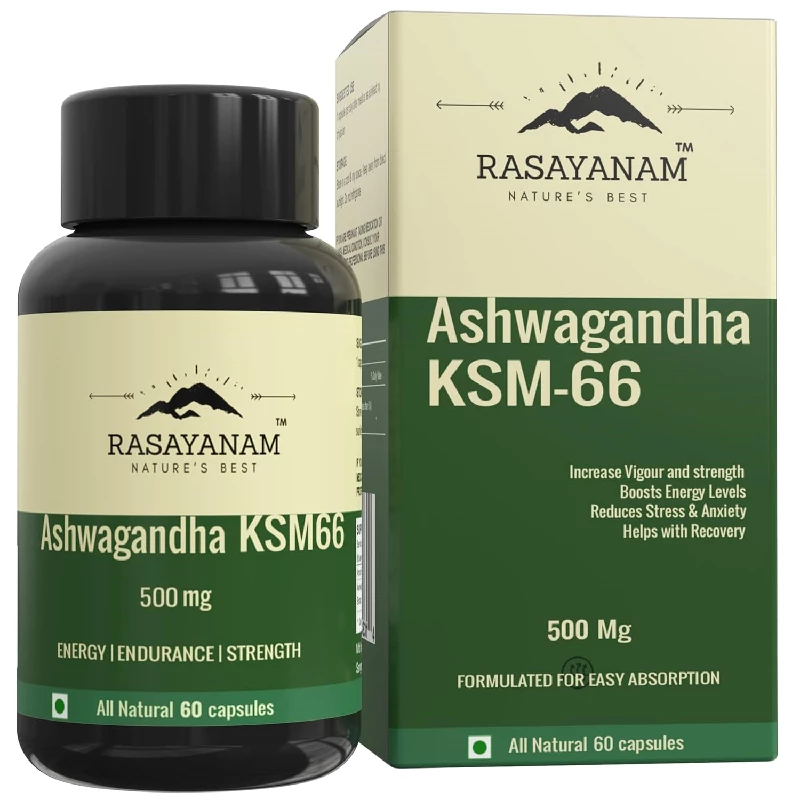
1. Rasayanam Ashwagandha KSM-66 500mg
Capsules containing KSM-66, the root-only standardized extract described above, at 500mg per capsule. If you have been buying a KSM-66 supplement abroad, this is the same specified ingredient closer to its point of manufacture.
Format: capsules, 500mg standardized root extract, named extract.
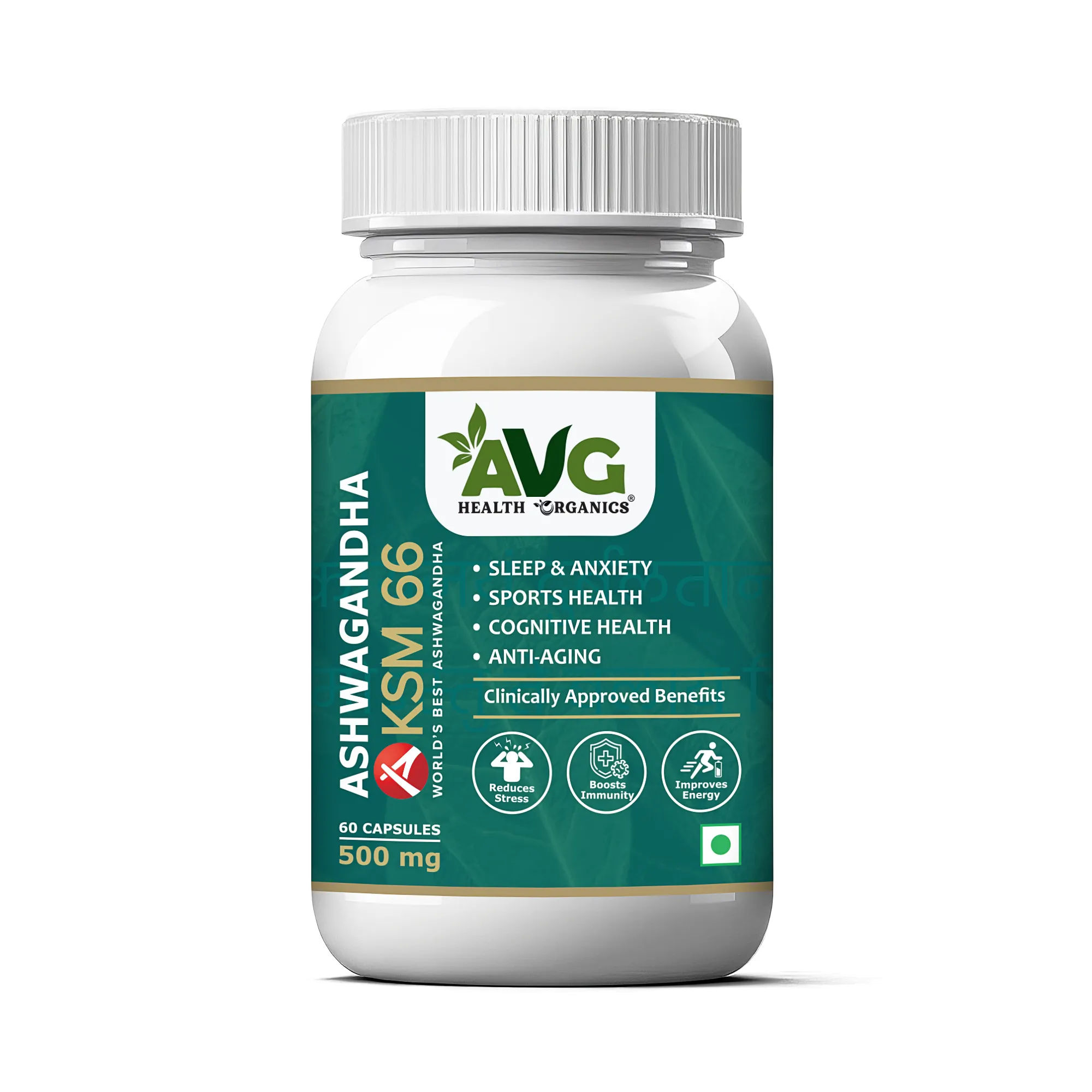
2. AVG Health Organics Ashwagandha KSM-66
A second KSM-66 option if you want to compare presentations and serving sizes before committing. Same underlying extract specification.
Format: capsules, standardized root extract.
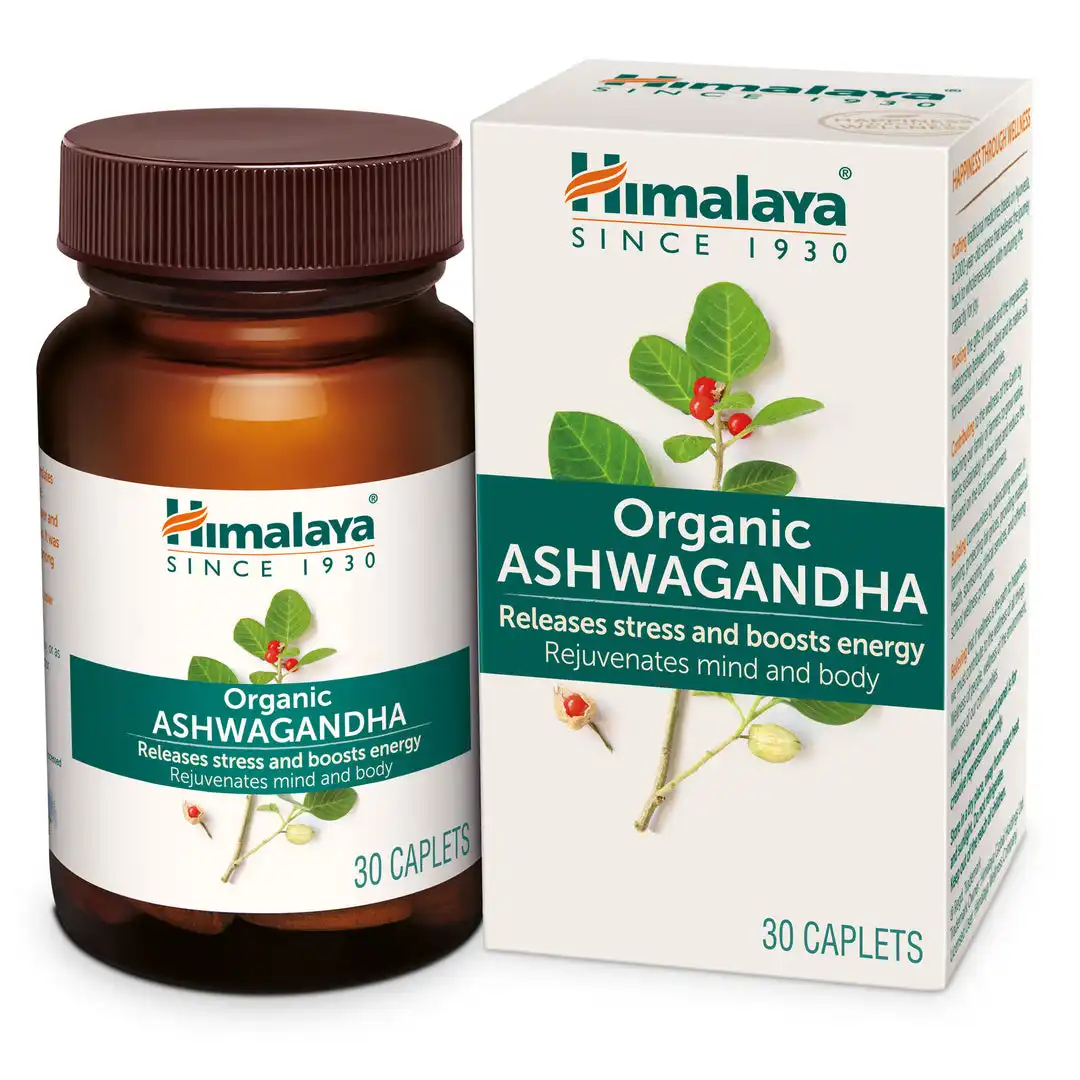
3. Himalaya Organic Ashwagandha
Certified organic root from the Indian manufacturer with the widest international brand recognition. A useful choice if you are buying for family members who prefer a name they have already seen on shelves in their own country.
Format: tablets, certified organic root.
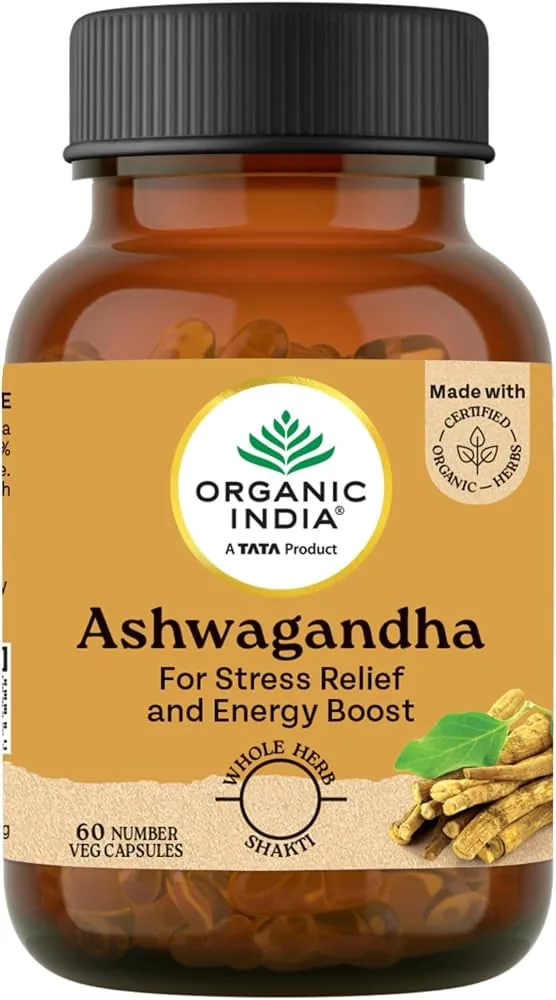
Organic India built its business around export markets, so the certification, labeling and packaging are already prepared for overseas buyers. Single-herb formulation without added fillers. Because it is also stocked internationally, it is the easiest product here to price-compare against your local shop.
Format: capsules, certified organic, single herb.
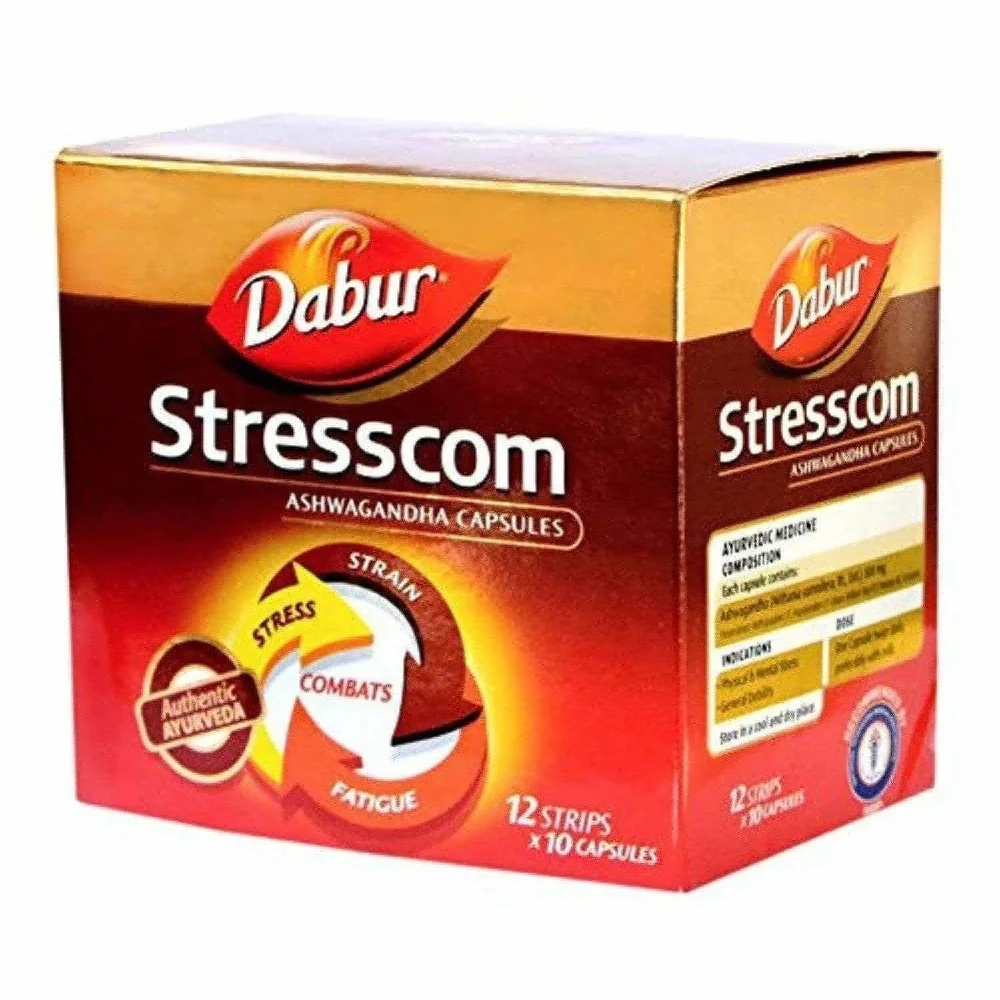
5. Dabur Stresscom Ashwagandha
A long-running Dabur line, sold in India for decades and familiar in most Indian households. Not a high-concentration extract product, it sits closer to traditional dosing than to a modern sports-nutrition format. Among the least expensive options here.
Format: capsules, strip packaging.
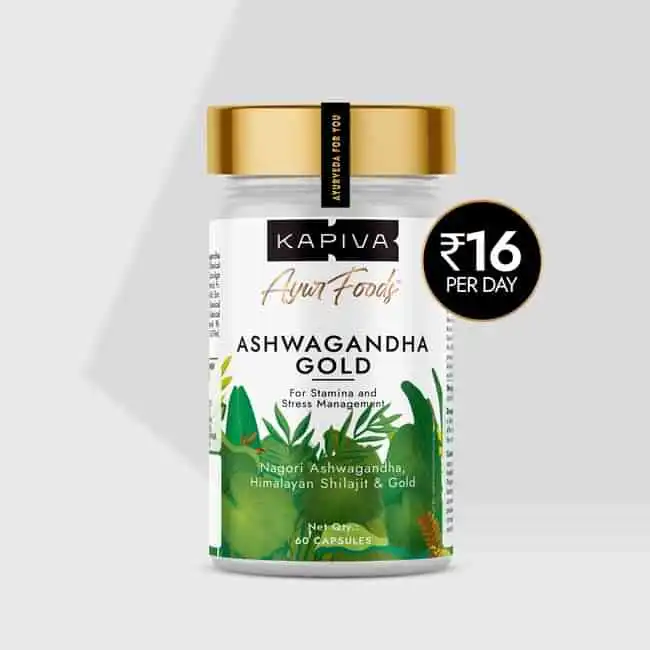
6. Kapiva Ashwagandha Gold Capsules
A multi-ingredient formulation rather than a single-herb capsule, combining ashwagandha with other classical Ayurvedic ingredients. Costs more than the plain versions. Worth considering only if you specifically want the combination, since a single-herb product gives you more control over exactly what you are taking.
Format: capsules, blended formulation.
Ashwagandha root powder supplement (churna) and whole root
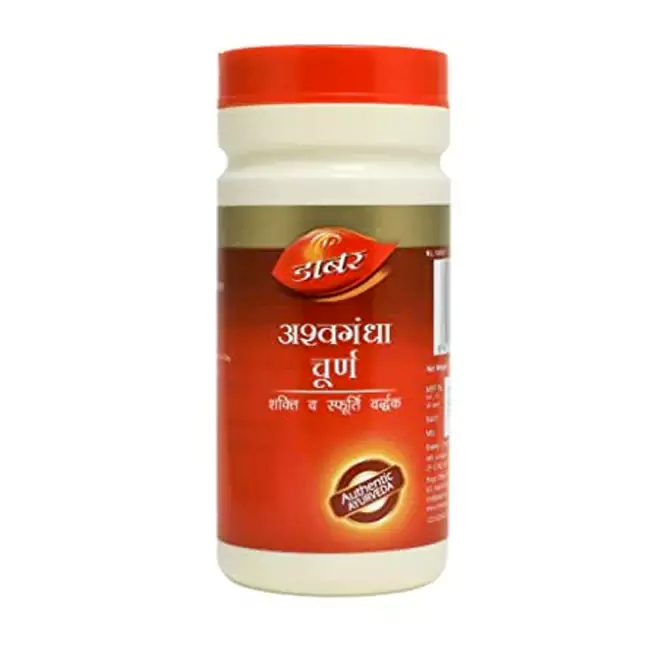

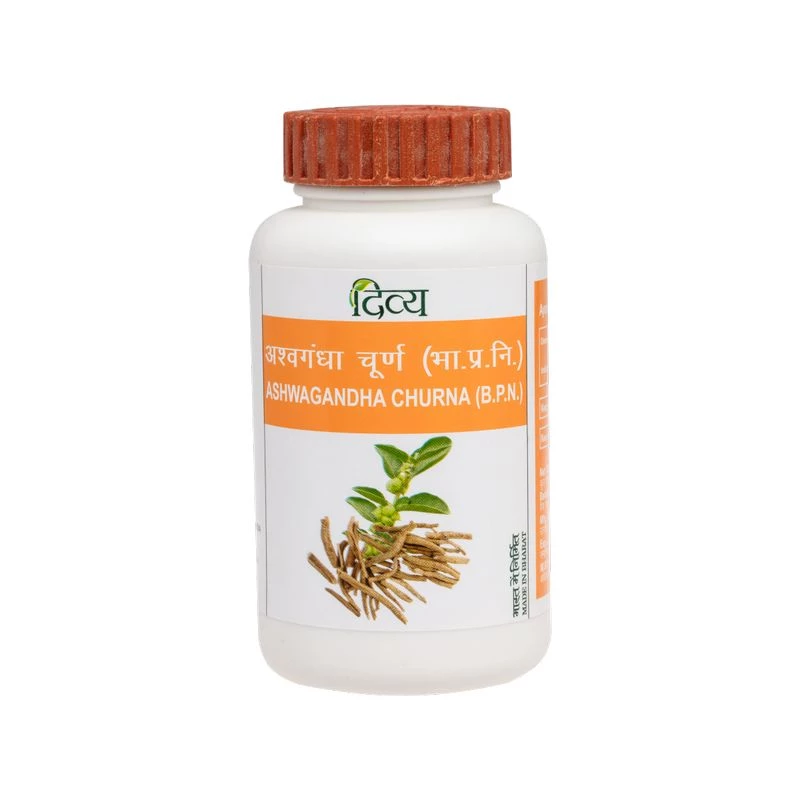
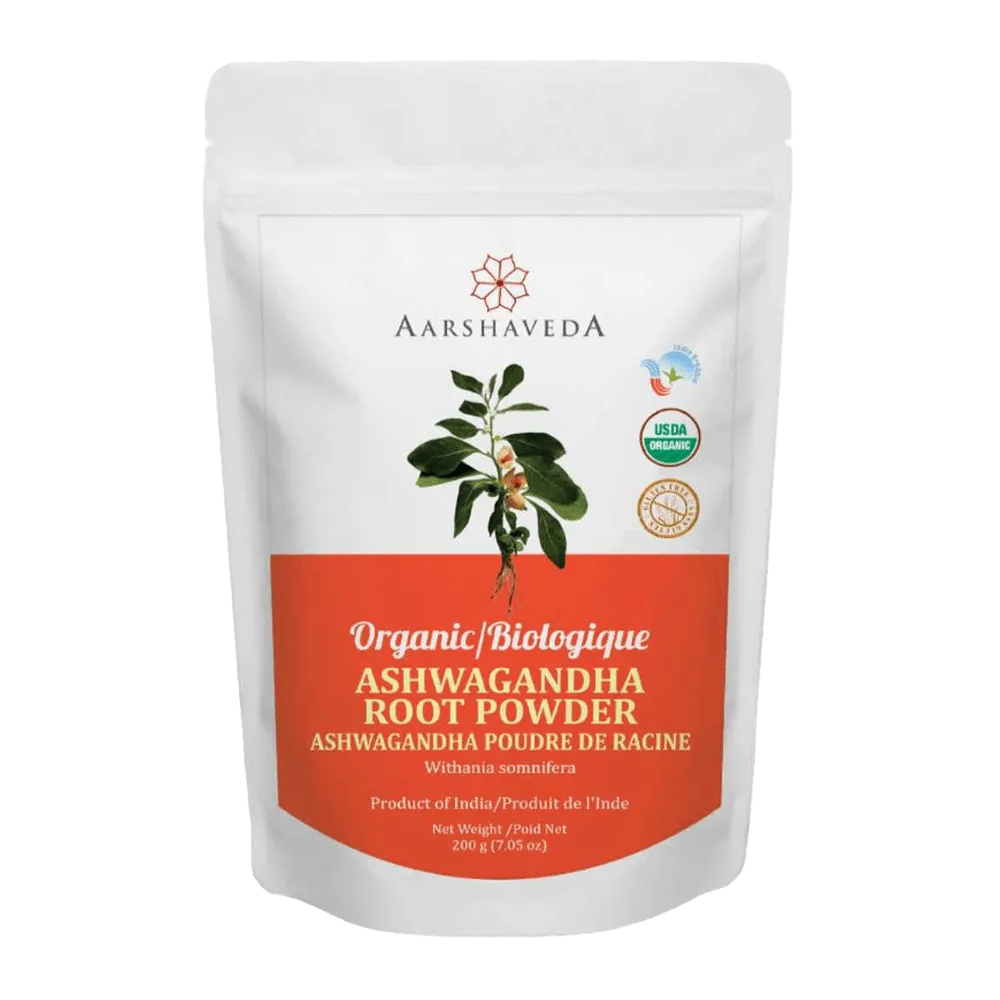
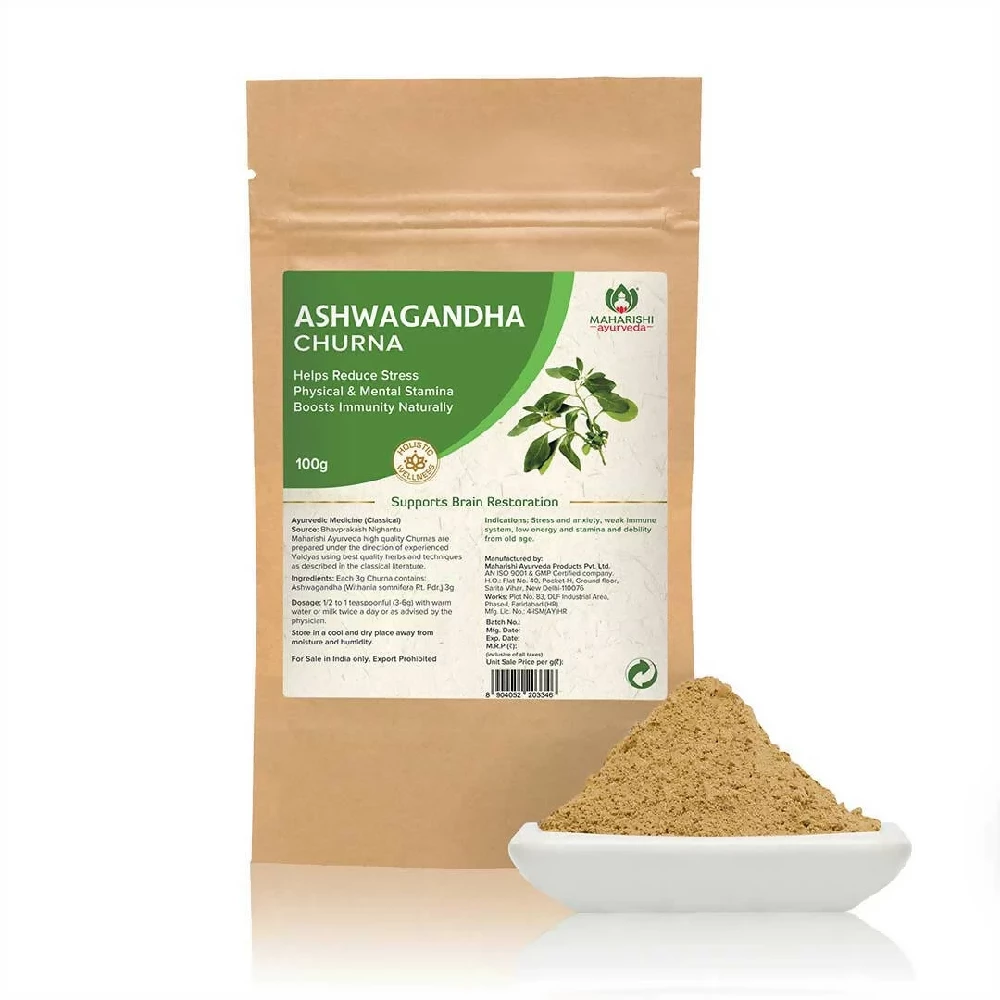
7. Dabur Ashwagandha Churna
Finely milled root powder, the form in which ashwagandha has been prepared for most of its history. Traditionally stirred into warm milk, often with a little honey. It tastes strongly of the root, earthy and slightly bitter, which is characteristic rather than a fault. Measured by weight, this is by a wide margin the least expensive format on this page.
Format: loose root powder.
8. Carmel Organics Ashwagandha Root Whole
Unmilled dried root. This is the only product here where the plant-part question answers itself, because you can see that it is root. You decide how to prepare it, either by simmering it into a decoction or grinding it yourself. If your priority is the purest, most verifiable form available, this is it.
Format: whole dried root, organic.
For the same sourcing already milled, Carmel Organics Ashwagandha Root Powder is the same root, ground. There is also an organic root extract tablet from the same producer.
Ashwagandharishta, the classical fermented liquid
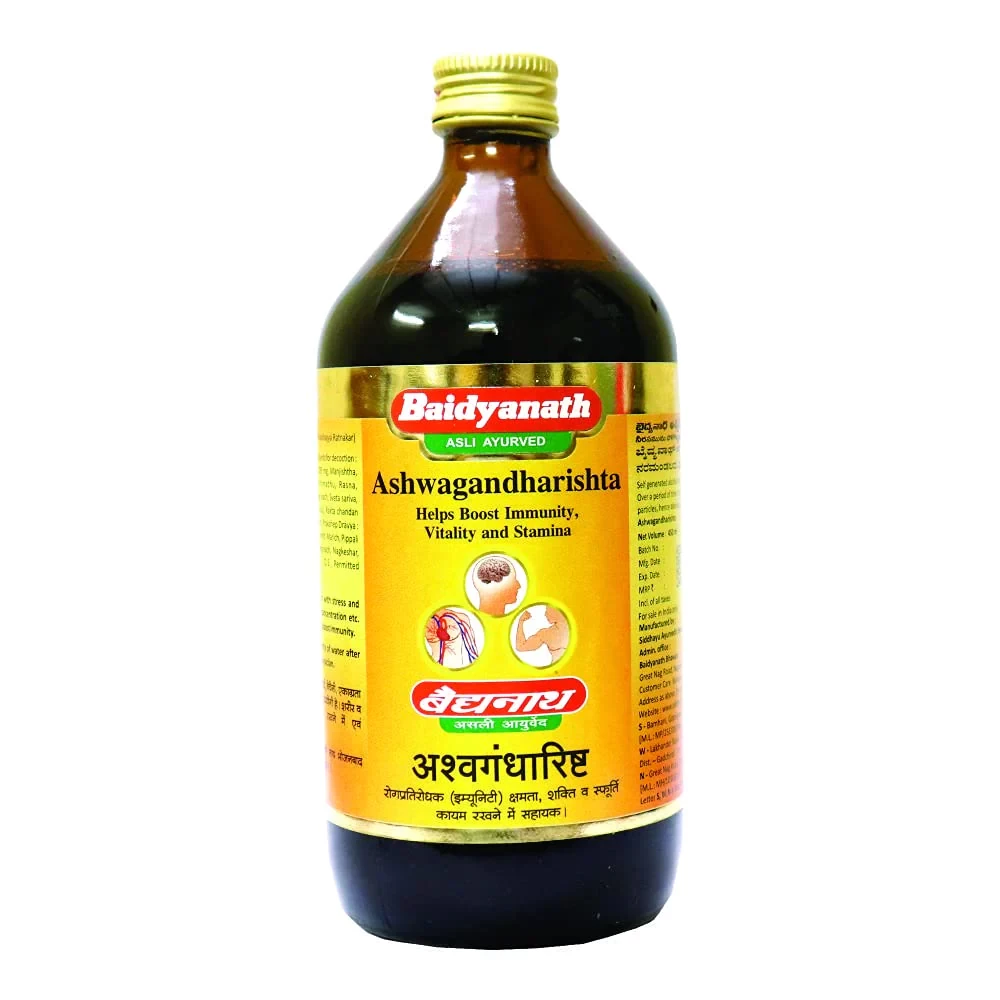
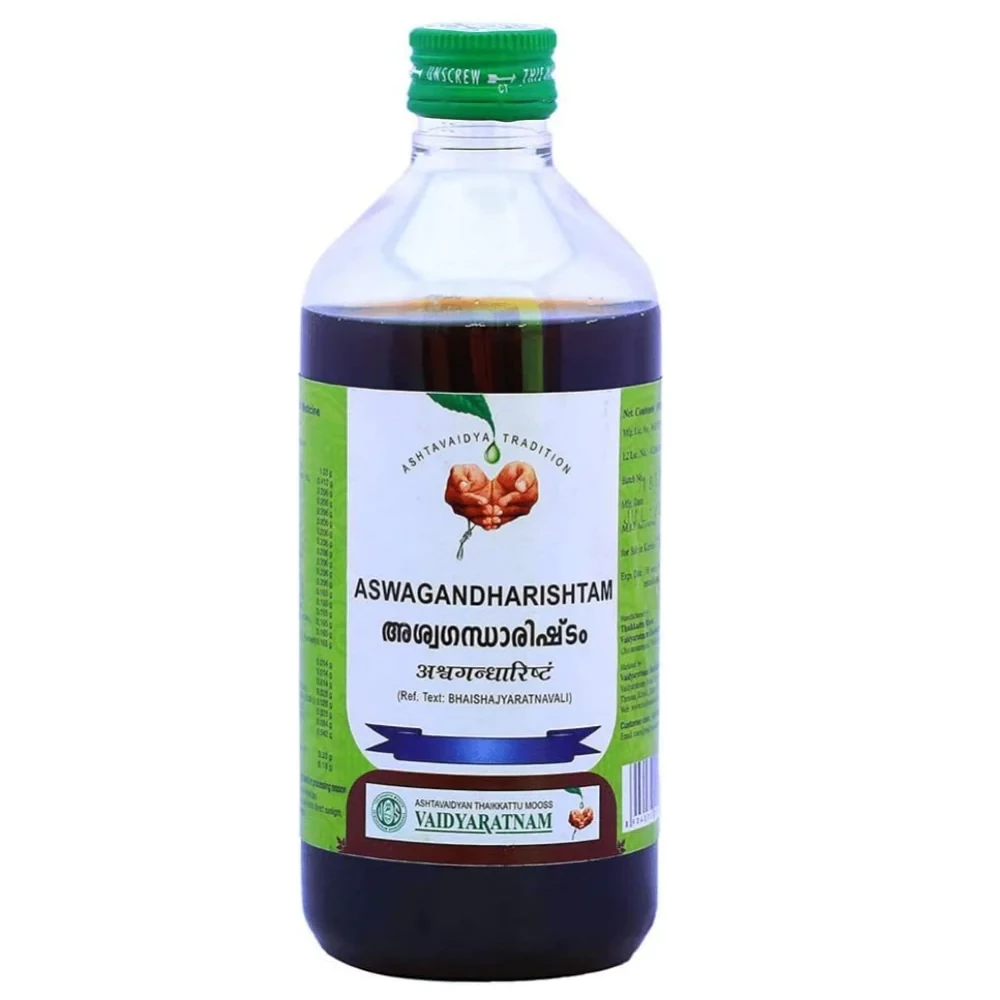
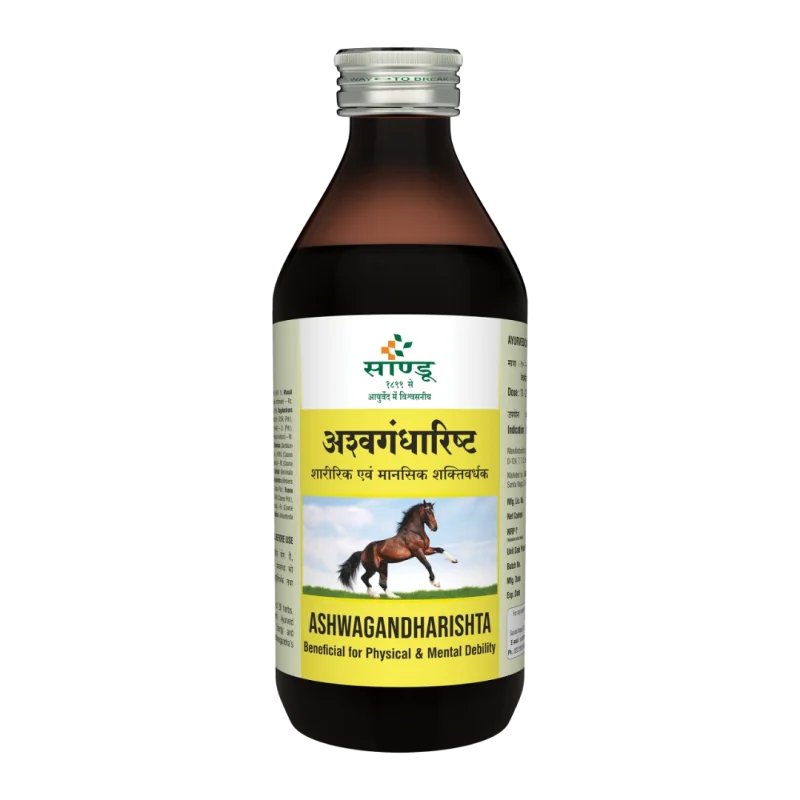
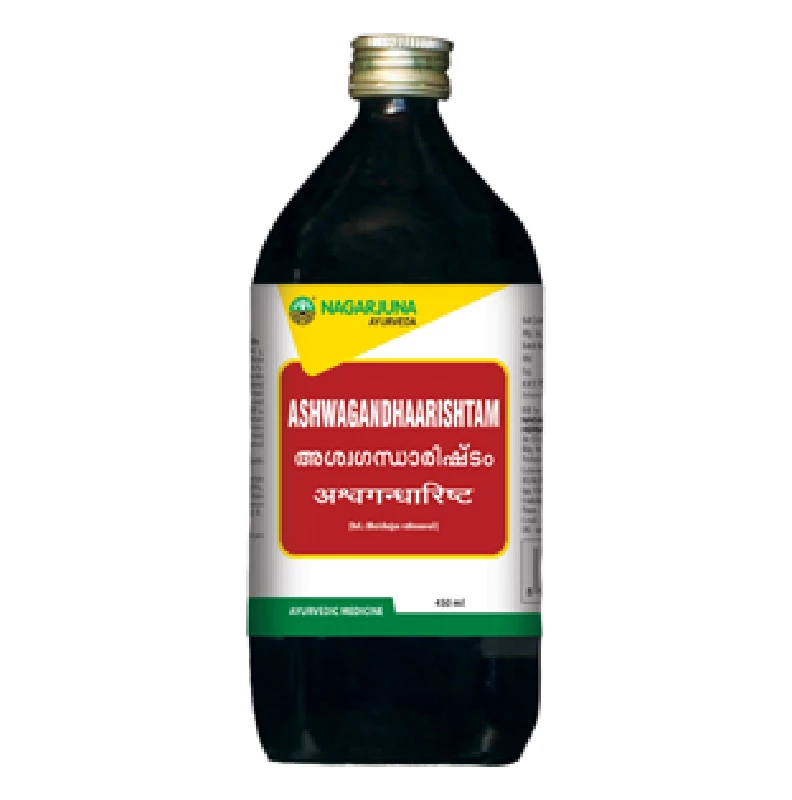
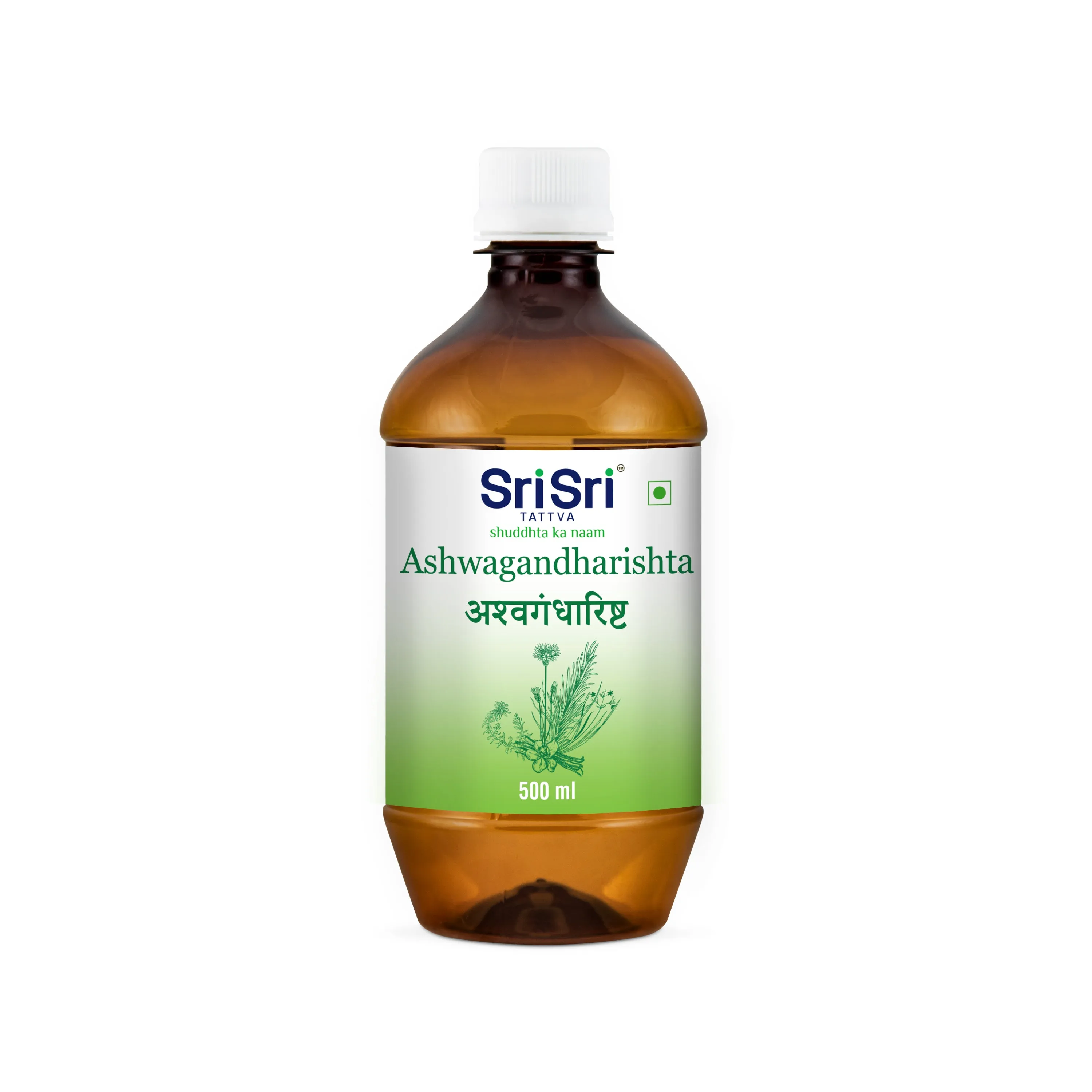
9. Baidyanath Jhansi Ashwagandharishta
An arishta is a classical liquid preparation made by fermentation rather than solvent extraction, a process that generates a small quantity of naturally occurring alcohol. Ashwagandharishta is one of the older and more widely made formulations in the Ayurvedic pharmacopoeia, and it is essentially unavailable outside Indian pharmacies. Taken as a small measured dose, usually diluted with an equal quantity of water.
Format: fermented liquid. Contains naturally occurring alcohol, worth noting if that matters to you for religious or personal reasons.
10. Vaidyaratnam Ashwagandharishtam
The Kerala version. Vaidyaratnam is one of the traditional Kerala Ayurvedic houses and its preparations follow the classical method described in the Malayalam texts rather than a modernized process. If you grew up in Kerala, this will taste correct in a way the North Indian versions will not.
Format: fermented liquid, Kerala preparation. Contains naturally occurring alcohol.
Lehyam and ghrita, herbal pastes and medicated ghee
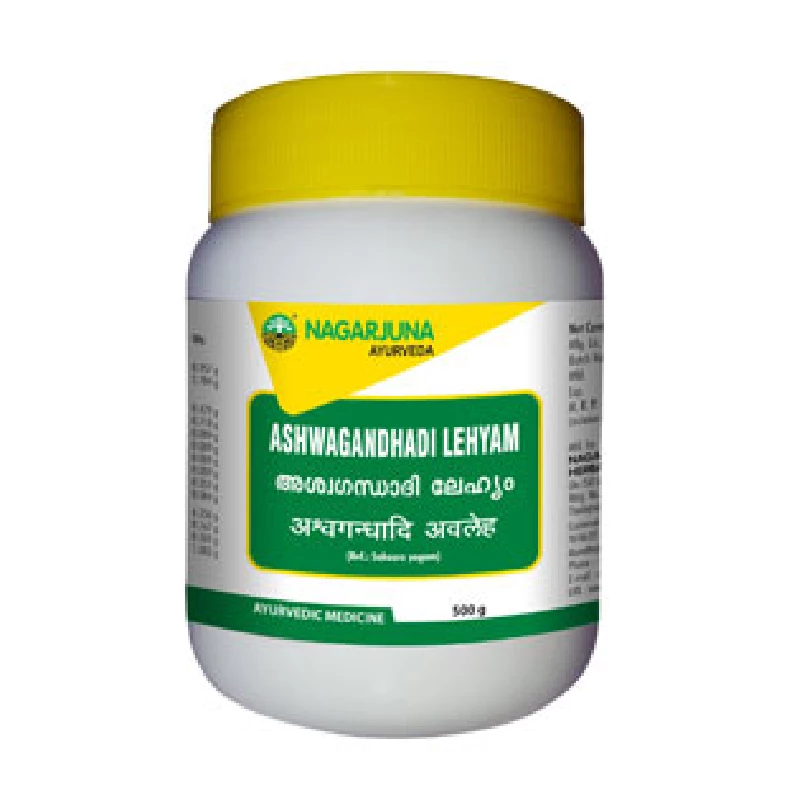
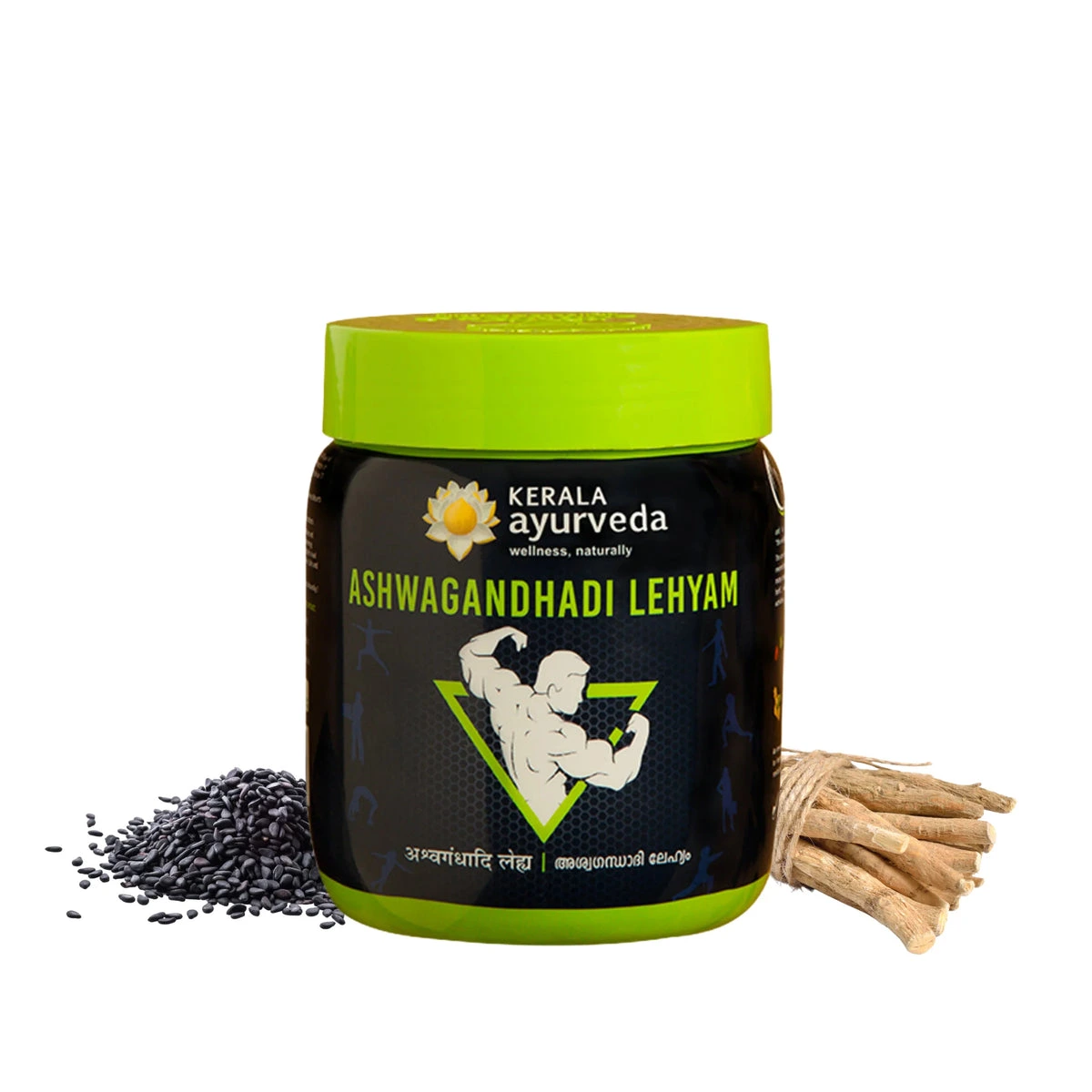
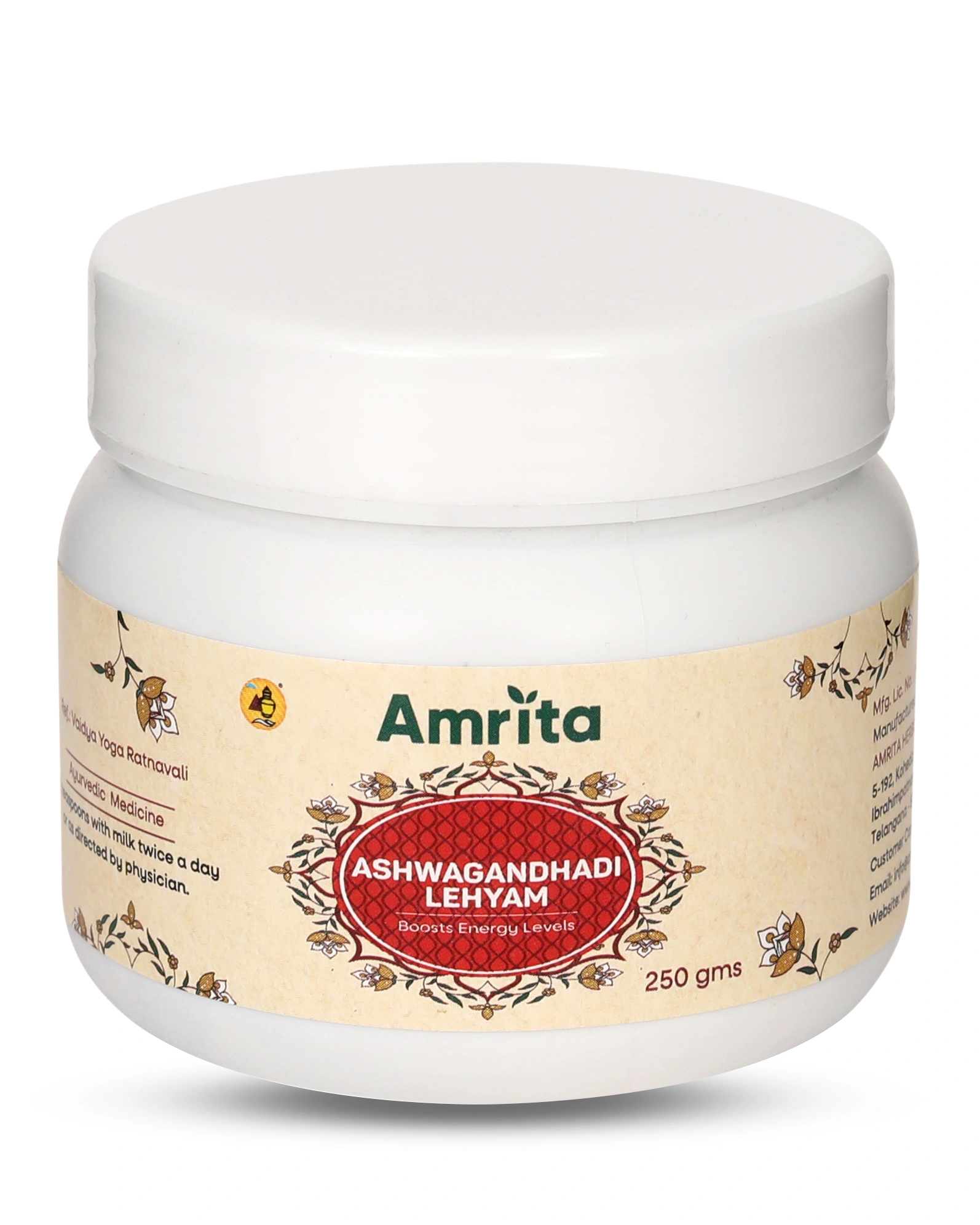
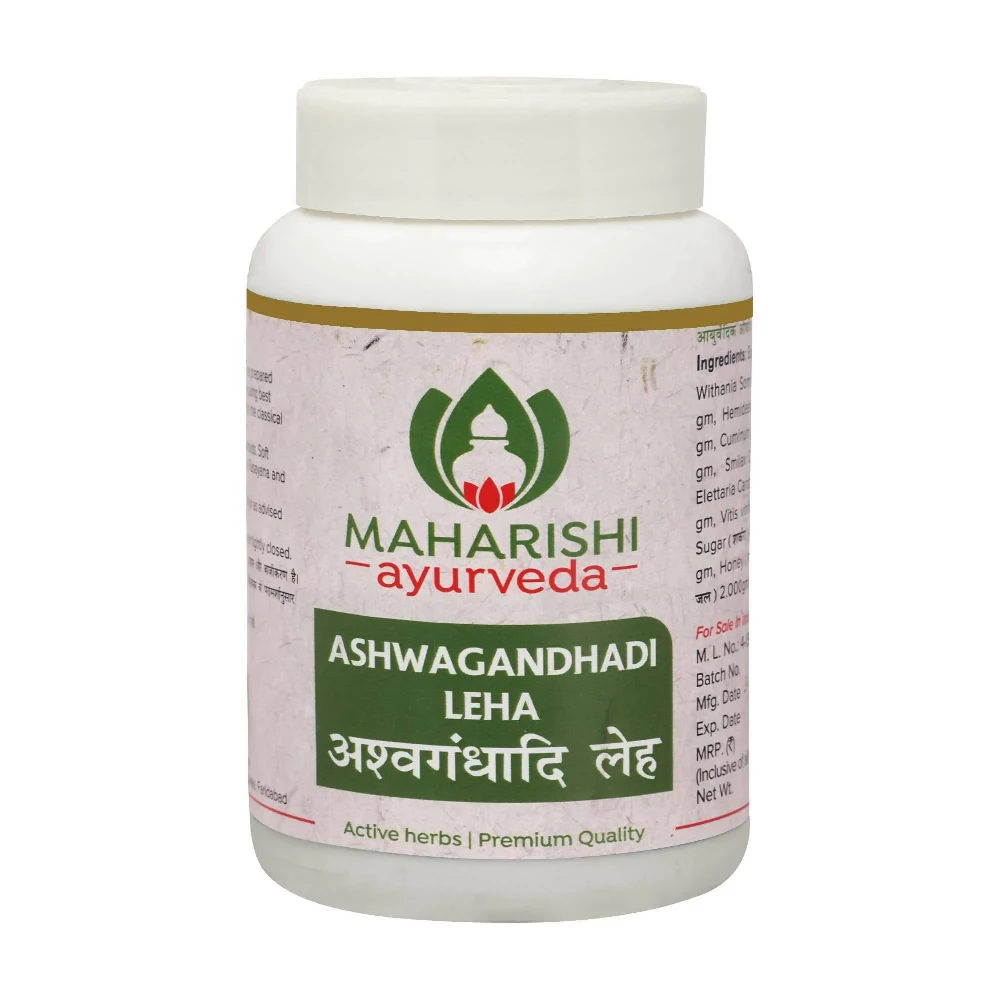
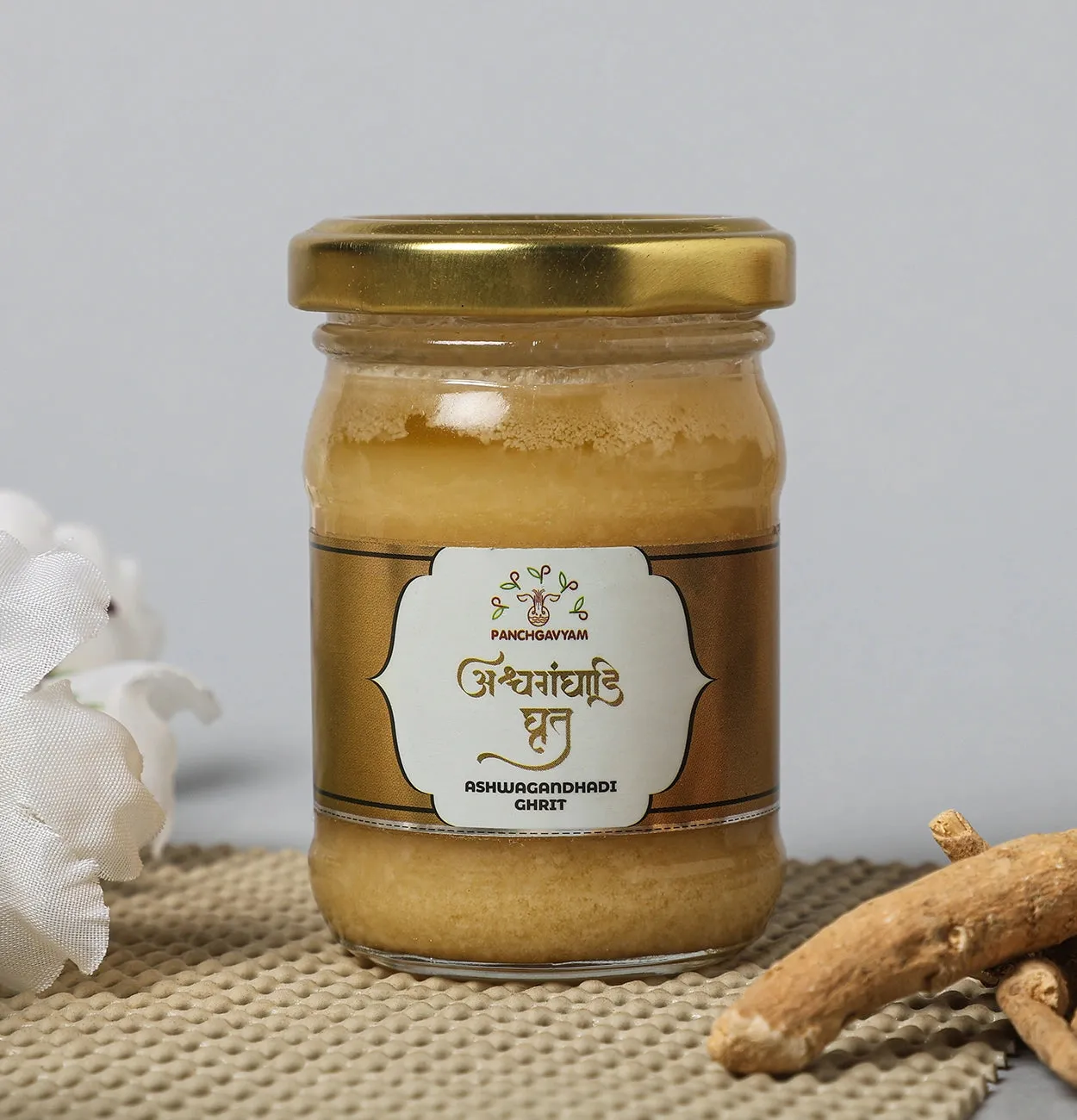
11. Nagarjuna Ayurveda Ashwagandhadi Lehyam
Lehyam is a semi-solid herbal preparation with a jam-like consistency, taken by the spoonful. It is the most palatable format on this page, which makes it the practical choice for anyone in the household who will not swallow tablets. Typically contains added sweeteners, so check the label if that is a consideration.
Format: semi-solid paste.
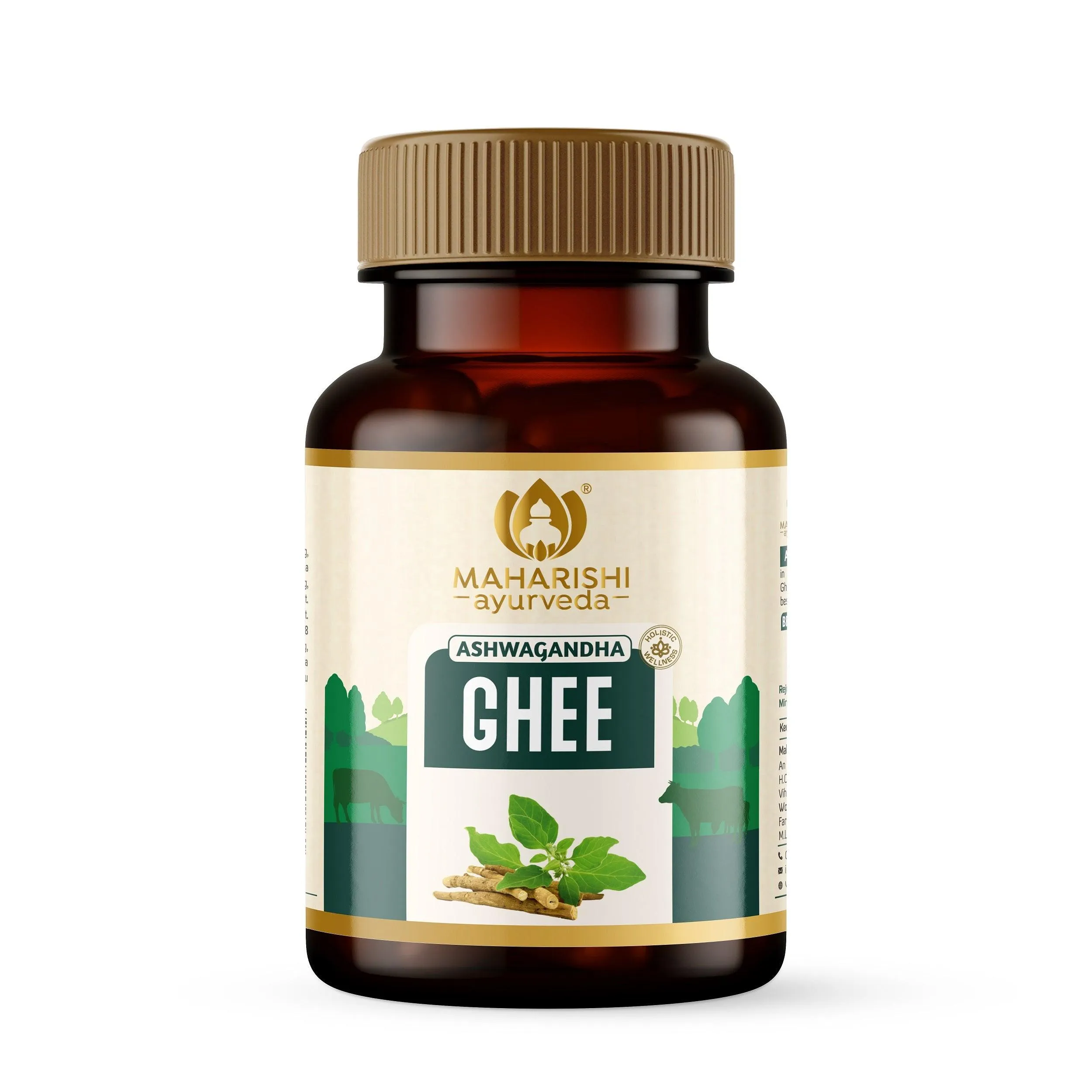
Maharishi Ayurveda Ashwagandha Ghee is the ghrita version, ashwagandha processed into ghee, one of the oldest preparation methods in the pharmacopoeia. Used in small quantities like ordinary ghee. Contains dairy.
Ashwagandha oil (taila), for external use
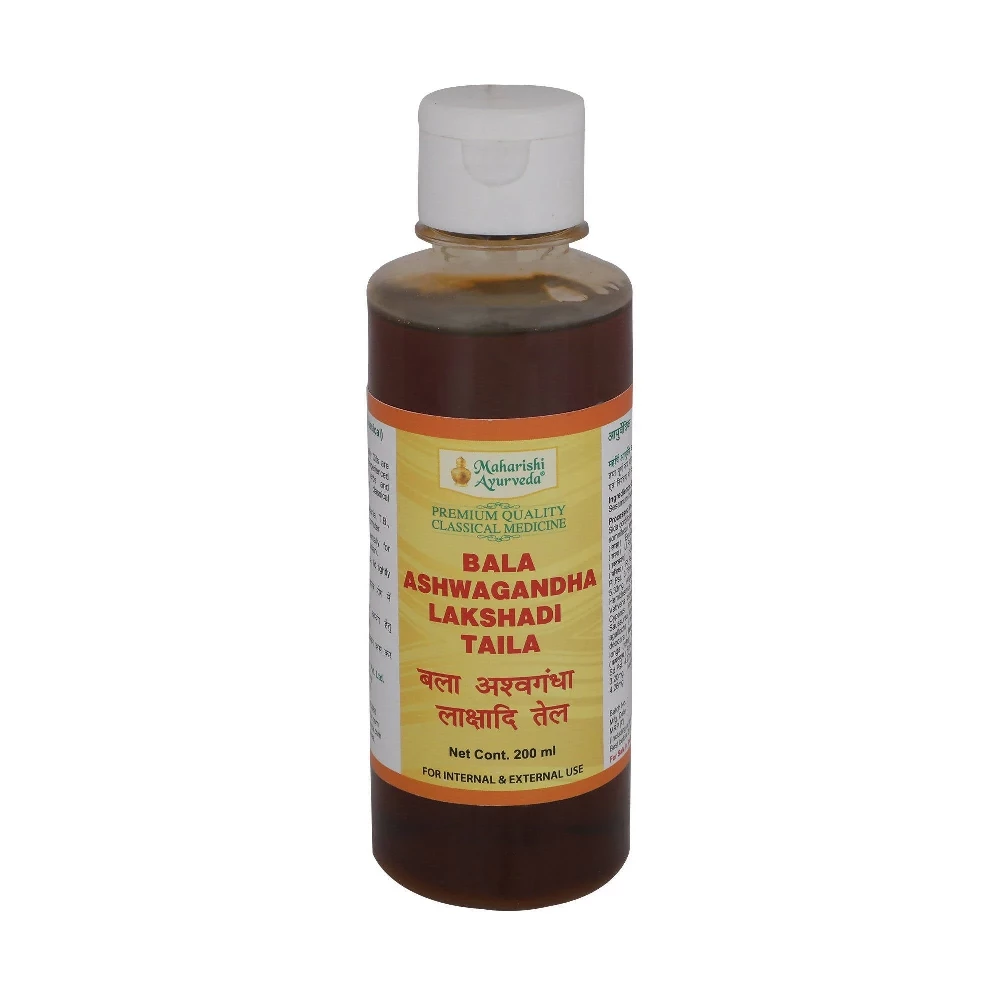
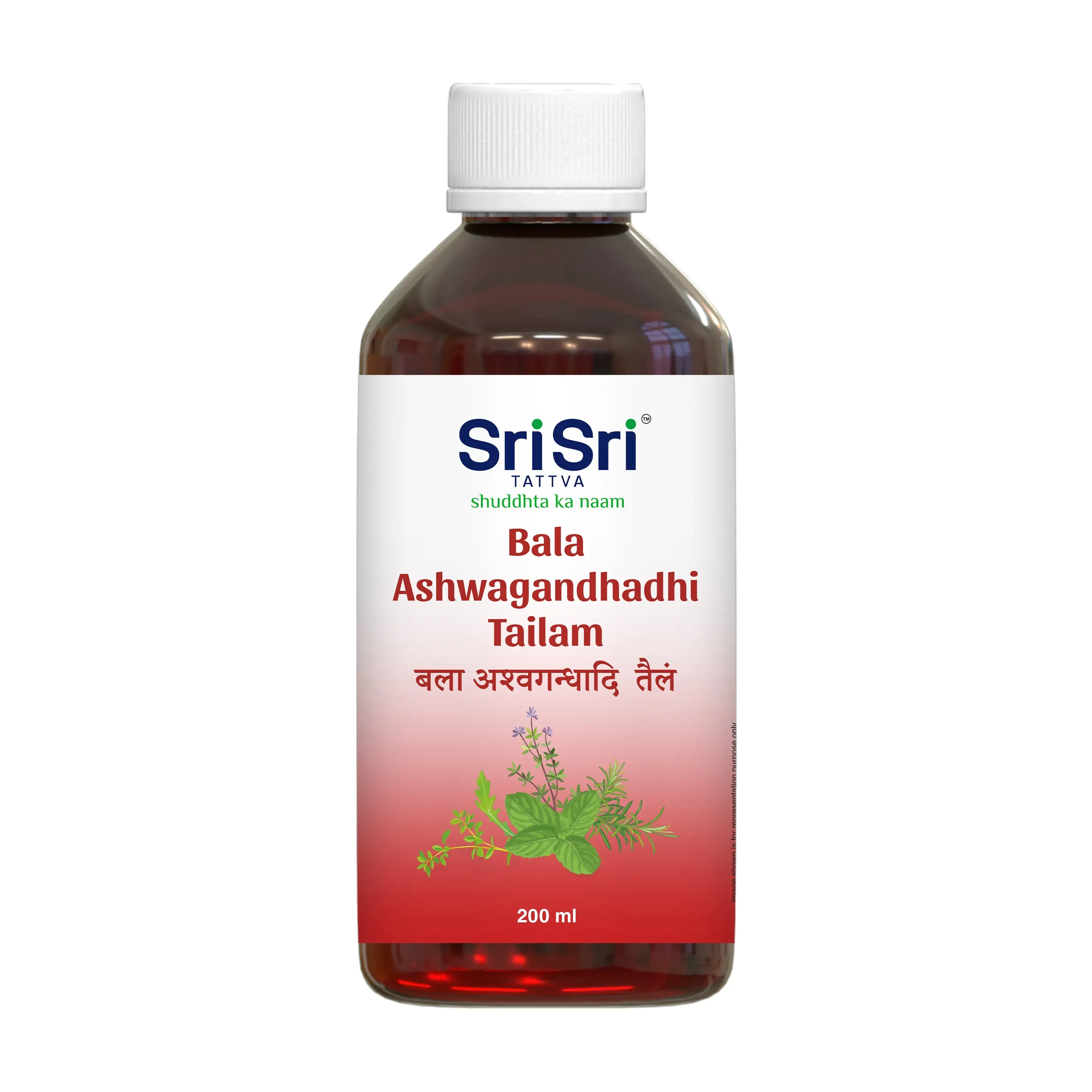
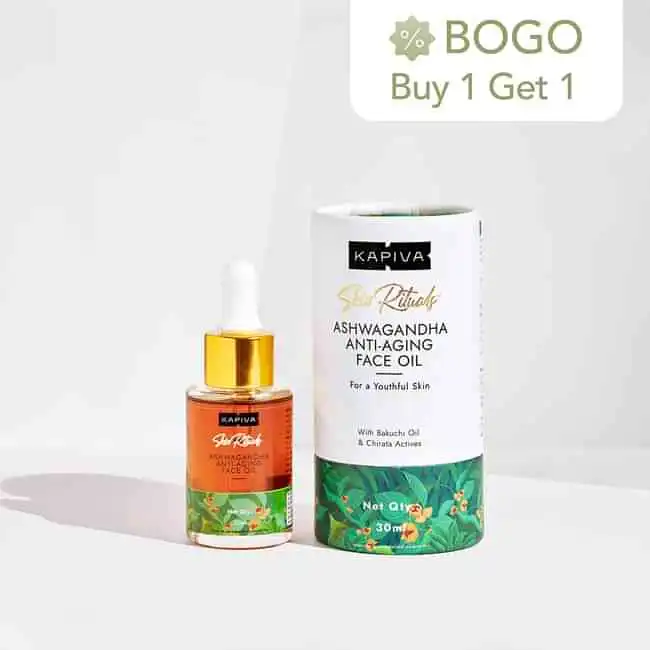
12. Maharishi Ayurveda Bala Ashwagandha Lakshadi Taila
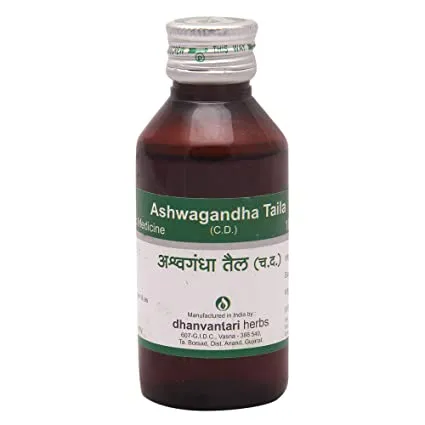
A classical massage oil combining ashwagandha with bala and lakshadi, long used in traditional Indian massage including postnatal and infant massage. This is an external preparation and is not taken internally.
Format: massage oil, external use only.
Gummies and tea, for the smallest commitment
-1.webp)

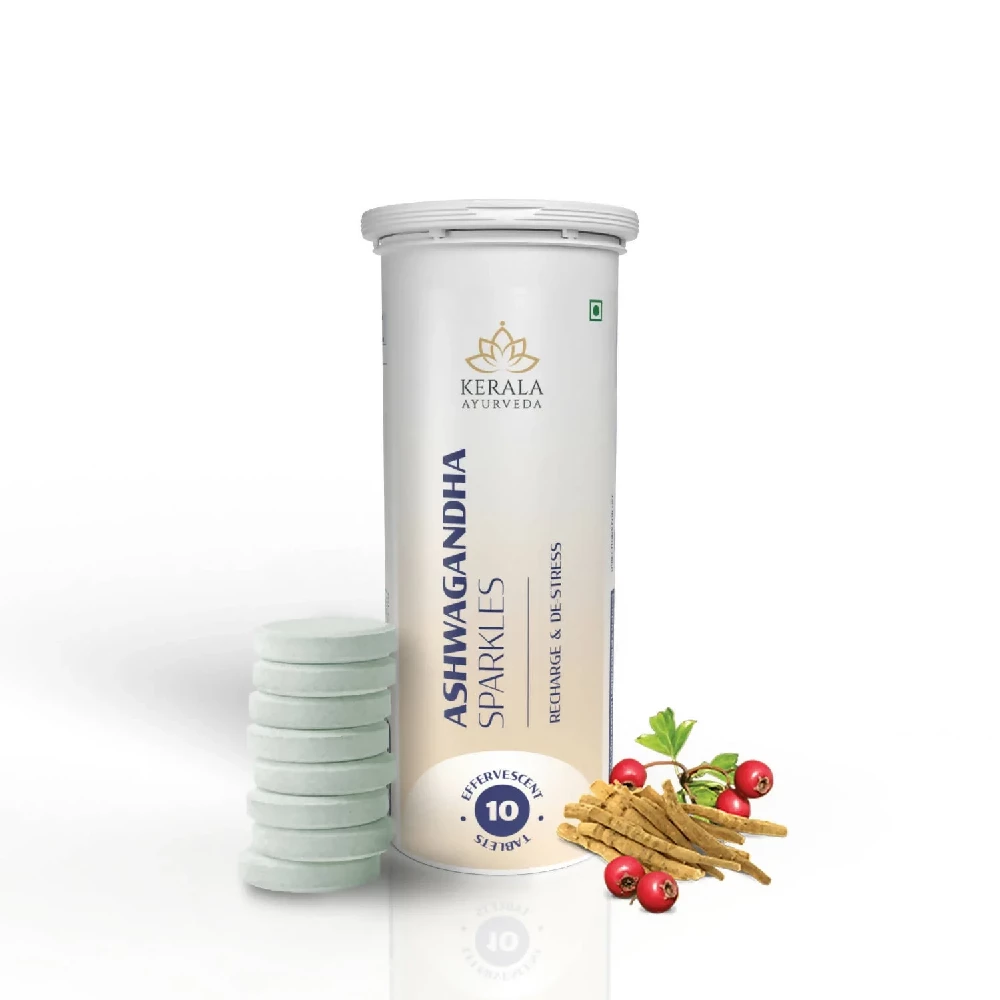

If you are not ready to commit to a supplement routine, Organic India Tulsi Green Tea with Ashwagandha is a tea rather than a supplement. The quantity of ashwagandha per cup is far lower than in a capsule, which is precisely the point of it.
Patanjali Nutrela Ashwagandha and Melatonin is the gummy format. Note that it contains added melatonin, which is sold over the counter in the United States but is a prescription-only medicine in the United Kingdom, Australia and much of the EU. Check your local position before ordering this one.
Which Format To Choose?
If you want | Consider | Why |
|---|---|---|
Precise, repeatable quantities | KSM-66 or standardized extract capsules | Fixed, specified content per capsule |
The purest, most verifiable form | Whole dried root | Visible and identifiable as root |
The lowest cost by weight | Churna (root powder) | No extraction or encapsulation step |
The traditional milk preparation | Churna | The form the preparation was designed around |
Something spoonable, no swallowing | Lehyam | Soft and sweet, no capsule to manage |
The classical fermented preparation | Ashwagandharishta | Made by fermentation, rarely sold outside India |
An external preparation | Taila (oil) | Applied, not ingested |
Tea rather than a supplement | Ashwagandha tulsi tea | Much smaller quantity per serving |
Certified growing conditions | Organic capsules, powder or whole root | Certification covers cultivation, not plant part |
Classical compound formulas such as guggul preparations work differently again, since the label lists many herbs rather than one.
If you are also looking at shilajit, the same label checks apply.
Ashwagandha supplement side effects and who should not take it
This is the most important section on this page.
Reported side effects are most commonly digestive, including loose stools, nausea and stomach upset, along with drowsiness. Long-term safety data remains limited and research is ongoing.
Do not take ashwagandha, or speak to a qualified healthcare professional first, if you:
are pregnant or trying to conceive
are breastfeeding
have a liver condition, or have had abnormal liver function results
have a thyroid condition, or take thyroid medication
have an autoimmune condition
take medication for diabetes, blood pressure, sedation, pain, or anything affecting the immune system
have surgery scheduled, because of possible interaction with anesthesia
are considering it for a child
Interactions with other supplements. Ashwagandha is frequently sold in combination with, or taken alongside, magnesium, L-theanine, rhodiola and similar ingredients. Stacking products is not automatically safe, particularly where sedative effects or thyroid-active ingredients are involved. If you already take other supplements, take the full list to a pharmacist rather than working it out yourself.
Availability and regulations for ashwagandha products differ from country to country and have changed in some markets recently. Please check the rules that apply where you live before ordering.
Please note: These statements have not been evaluated by the Food and Drug Administration or by any equivalent authority. These products are not intended to diagnose, treat, cure or prevent any disease. Nothing on this page is medical advice. If you take prescribed medication or have a diagnosed condition, speak to your doctor or pharmacist before adding any herbal product to your routine.