
9 Best Almond Oil for Hair To Try This Year
9 Best Almond Oil for Hair To Try This Year
There is a good chance you already know what almond oil smells like. A bottle of badam rogan in the bathroom cupboard, warmed between someone's palms on a Sunday, worked into your scalp while you sat on the floor and complained. Champi before hair wash was not a wellness routine. It was just what happened on Sundays.
Then you go looking for that bottle now and the shelf gives you something else. Sweet almond oil in a pump bottle marketed as a carrier oil. Almond hair oil that promises to be non-sticky. Cold pressed, refined, badam rogan, roghan badam shirin, almond drops. All labelled almond, all quite different once you read the back.
Here is the thing almost nobody tells you: several of the most popular almond hair oils are not mostly almond oil. That is not a scandal, and it is not a reason to avoid them. It just means you should know which kind you are buying, because the two kinds are different products.
This guide sorts nine almond oils into those two groups and tells you plainly what is in each one.
First, the distinction that decides everything
Almost every product in this category falls into one of two buckets.
Pure almond oil (badam rogan, roghan badam shirin). The bottle contains almond oil and usually nothing else. It is thicker and richer in texture. It is the traditional format, and in most Indian households the same bottle is used on skin as well as hair. It costs more per millilitre, because almond oil is expensive to produce.
Almond hair oil. A hair oil formulated with almond oil and vitamin E in a lighter base, most often light liquid paraffin (mineral oil). This is why it is non-sticky, inexpensive, and easy to use without washing immediately after. Bajaj Almond Drops, the biggest-selling oil in this category in India, is built this way, and its ingredient list is public.
Pure badam rogan | Almond hair oil | |
|---|---|---|
Main ingredient | Almond oil | Light mineral oil, plus almond oil and vitamin E |
Texture | Thicker, richer | Light, non-sticky |
Usual format | Small bottle, used on hair and skin | Larger bottle, used before styling or braiding |
Washing out | Needs shampoo, sometimes twice | Rinses more easily |
Price per ml | Higher | Lower |
Neither is better. They are different products for different routines. If you want the Sunday oiling ritual, buy pure. If you want something light enough to use on a workday, buy the formulated hair oil. Many households keep both.
A quick word on sweet versus bitter
You may see bitter almond oil sold alongside sweet. Sweet almond oil, from Prunus dulcis, is the type used in hair and skin products, and it is what "badam rogan" and "roghan badam shirin" refer to. Bitter almond oil is a different and far more concentrated product that is not intended for routine cosmetic use. If a bottle does not specify, assume you want sweet.
1. WishCare 100% Pure Cold Pressed Badam Rogan Sweet Almond Oil
A single-ingredient cold pressed oil
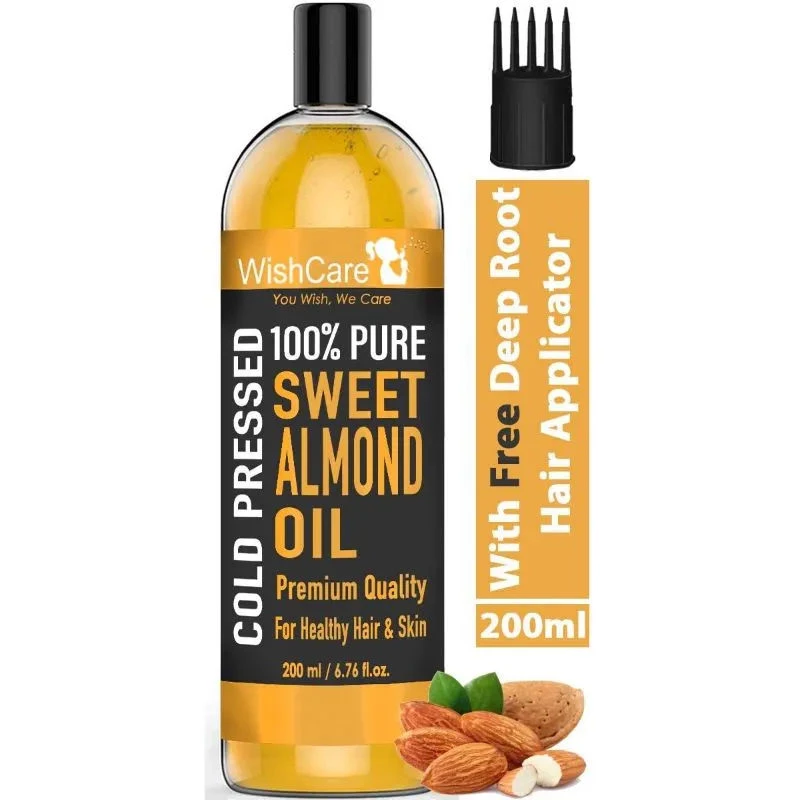
This is the most straightforward product on the list. Cold pressed, hexane free, undiluted, one ingredient. No fragrance, no base oil, no additives. Because it is unrefined and cold pressed rather than heat extracted, the smell is faint and nutty rather than perfumed.
It is a general-purpose carrier oil, which is where the value sits. The same bottle is used as a pre-wash scalp oil, on dry ends, on skin, and as a base for diluting essential oils. The flip-top cap with a comb applicator makes scalp application less messy than pouring from an open-neck bottle.
Worth knowing: pure cold pressed almond oil is a considered purchase. It is the most expensive way to buy almond oil per millilitre, it is heavier in texture than a formulated hair oil, and it needs a proper shampoo to come out.
2. Dabur Roghan Badam Shireen
The traditional bottle, most widely available
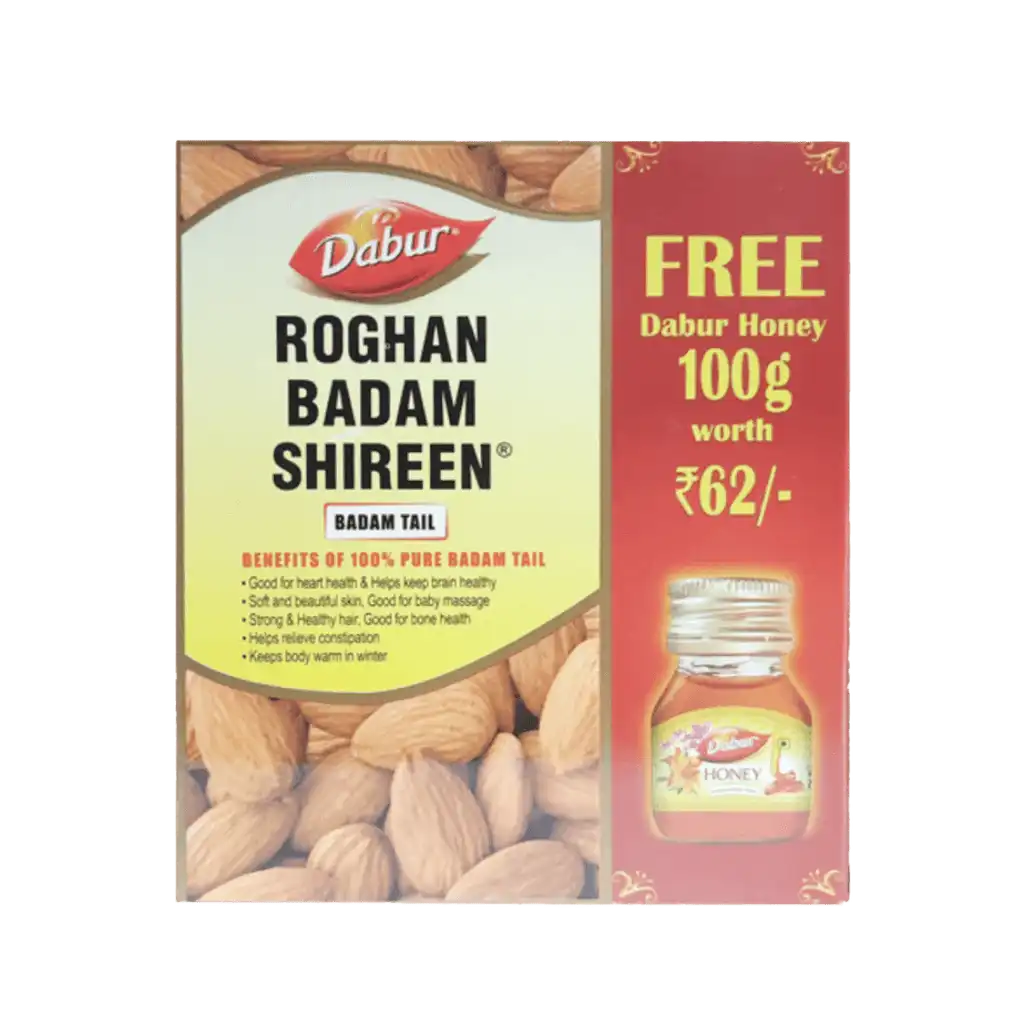
Roghan badam shirin is the name that has meant almond oil across North India and Pakistan for generations, and the Dabur version is among the most widely stocked outside India. The ingredient list is almond oil, and nothing else.
This is the format most people picture when they think of badam oil: a small bottle, used sparingly, kept in the bathroom rather than a beauty cabinet, and used on scalp, skin, and face interchangeably. It is commonly warmed slightly before a scalp massage, which thins the oil and makes it spread further.
Worth knowing: because these bottles are small and traditional, they are also among the most commonly counterfeited almond oils. Buy from a seller who sources directly. There is a section on spotting fakes further down.
3. Bajaj Almond Drops Hair Oil
The light, non-sticky daily format
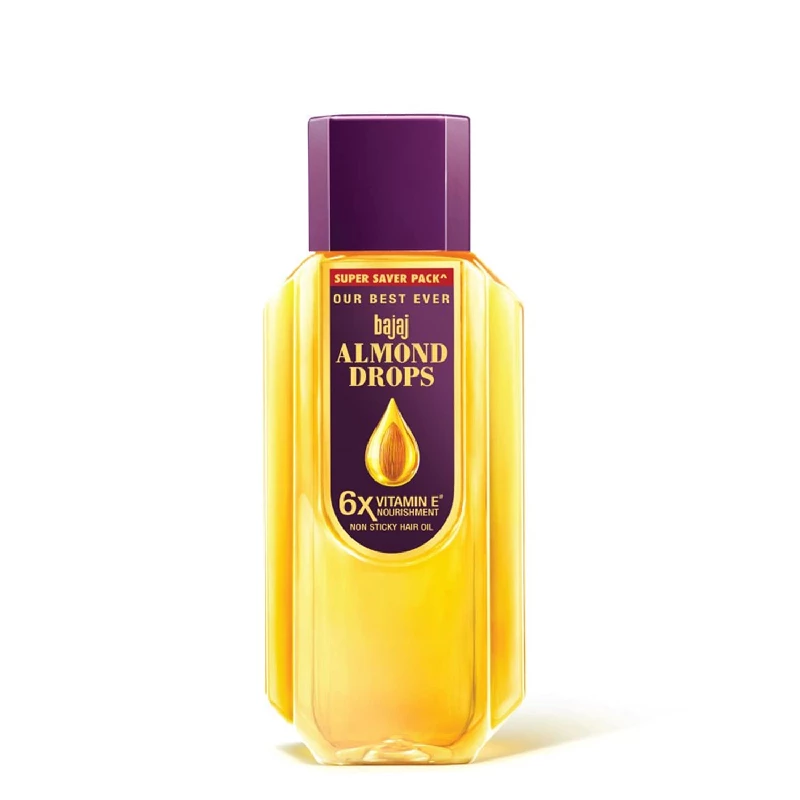
If you grew up in India in the last thirty years, this bottle needs no introduction. It defined the light hair oil category, and its whole appeal is that it does not sit heavy or leave hair looking oiled.
Be clear about what it is, because the name invites confusion. This is not pure almond oil. It is a formulated hair oil built on a light liquid paraffin base with sweet almond oil and added vitamin E. That base is why it is non-sticky, why it washes out easily, and why it costs a fraction of what pure badam rogan costs.
If you want something you can put in your hair before work, before braiding, or on damp ends without planning your day around it, this is the format that fits. If you specifically want almond oil on your scalp, one of the pure oils above is the closer match.
4. Patanjali Rogan Badam Shirin
Pure almond oil at a gentler price
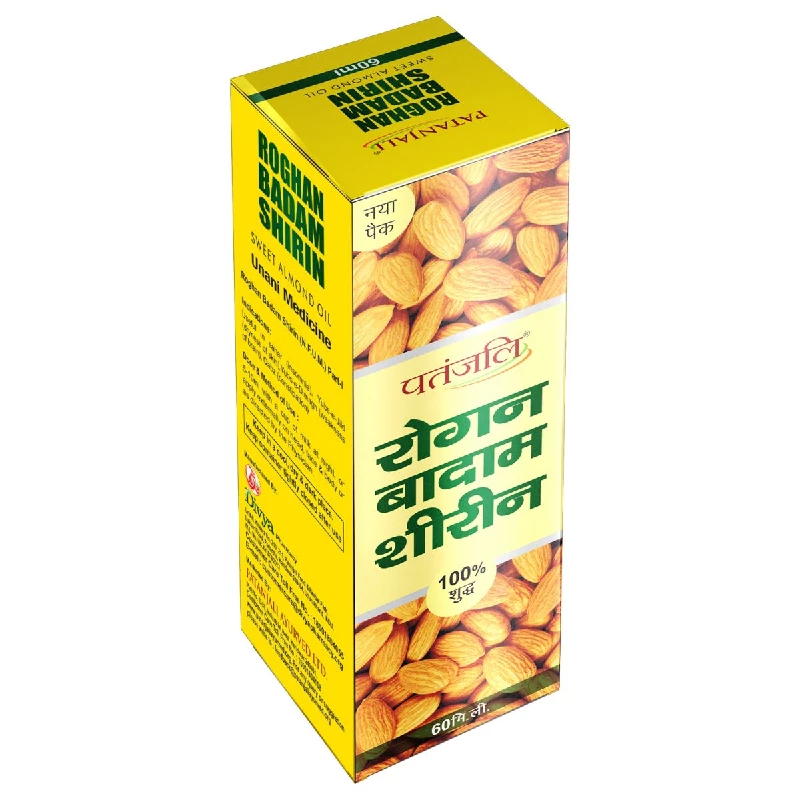
Another 100% almond oil in the traditional roghan badam shirin format, positioned below the heritage brands on price. If you use pure almond oil regularly rather than occasionally and go through a bottle fairly quickly, the economics of this one make more sense than a small premium bottle every month.
The oil is used the same way as the others in this group: warmed, massaged in, left for a while, then shampooed out. Like the other pure oils, it is also used on skin, so a bottle rarely goes to waste.
5. Baidyanath Rogan Badam Shirin
The classical Ayurvedic pharmacy version
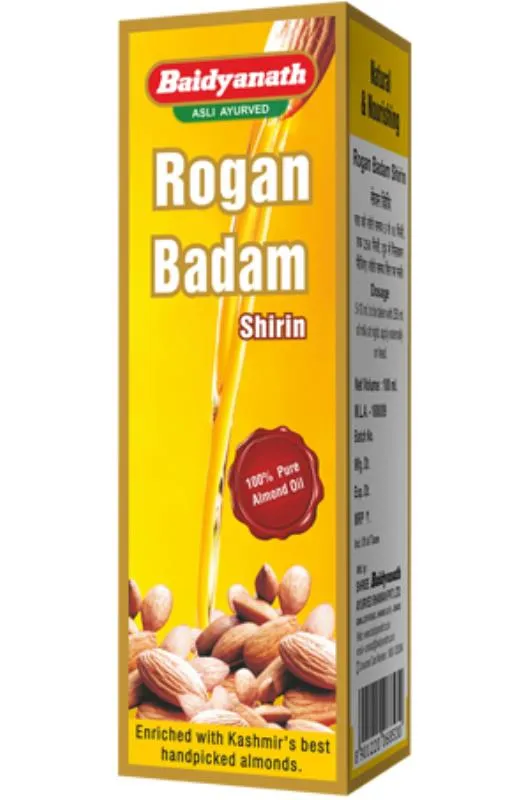
Baidyanath has been making Ayurvedic preparations since 1917, and this is their rogan badam shirin: sweet almond oil from Prunus amygdalus, in a 100 ml bottle. The ingredient list is the almond oil and nothing else.
What separates this from the beauty-aisle bottles is the category it sits in. It is sold as an Ayurvedic preparation rather than a cosmetic, and the label carries directions for internal use as well as external, in the old style where a spoonful is taken with warm milk at night. If you are only oiling your hair, ignore that part and use it exactly like any other pure almond oil.
Worth knowing: anything with internal-use directions on the label deserves a read of that label, and a word with your doctor before you swallow any of it, particularly for children or during pregnancy. For scalp and skin use, none of that applies.
6. Rex Remedies Raughan Badam Shirin
The cheapest way to try pure almond oil
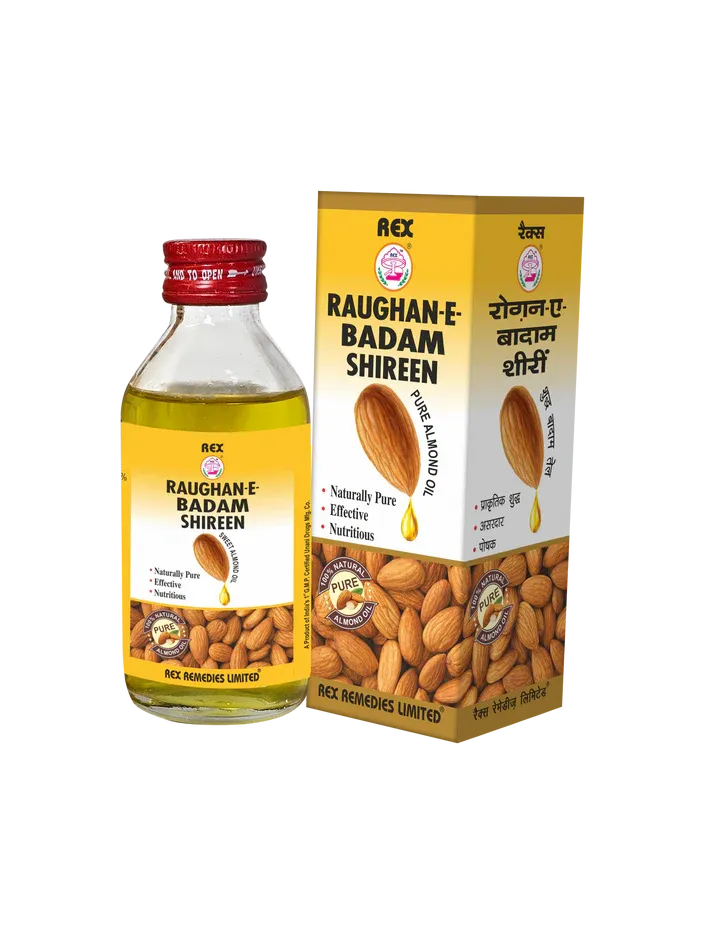
Cold pressed sweet almond oil from a Unani pharmacy, and the one product here that comes in genuinely small bottles. Sizes run 10 ml, 25 ml, 50 ml, and 100 ml, with the 10 ml starting around three dollars.
That size range is the reason to pick it. Pure almond oil is expensive and it goes rancid faster than most people expect, so buying a large bottle you will not finish is a common and annoying mistake. A 10 ml or 25 ml bottle lets you find out whether you like pure almond oil on your hair before spending properly, and it is small enough to travel with.
7. Cipzer Roghan Badam Shireen
The family massage bottle
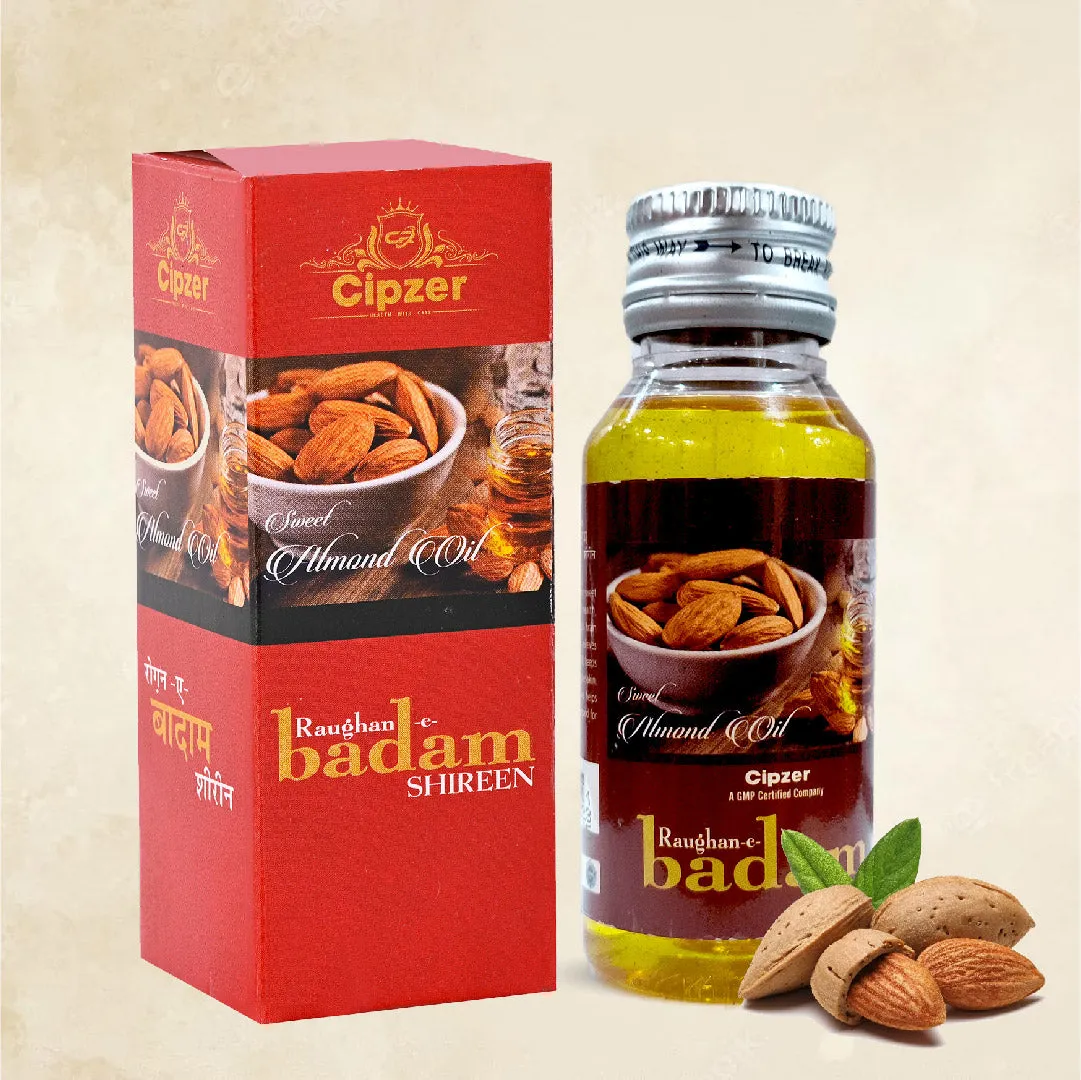
Another Unani-range roghan badam shireen, in a single 50 ml size. Unlike the strictly single-ingredient oils above, this one is almond oil with added herbal extracts, so check the label if you specifically want almond and nothing else.
Its positioning is different from the rest: it is sold as a household massage oil for the whole family rather than as a haircare product, which is how almond oil is actually used in a lot of homes. If you want one bottle for scalp massage, dry skin in winter, and general use, this is that bottle.
Worth knowing: any oil intended for use on babies is worth clearing with your paediatrician first, and patch testing regardless. Almond oil is a tree nut product.
8. Dabur Badam Amla Hair Oil
Almond blended with amla, rather than almond alone
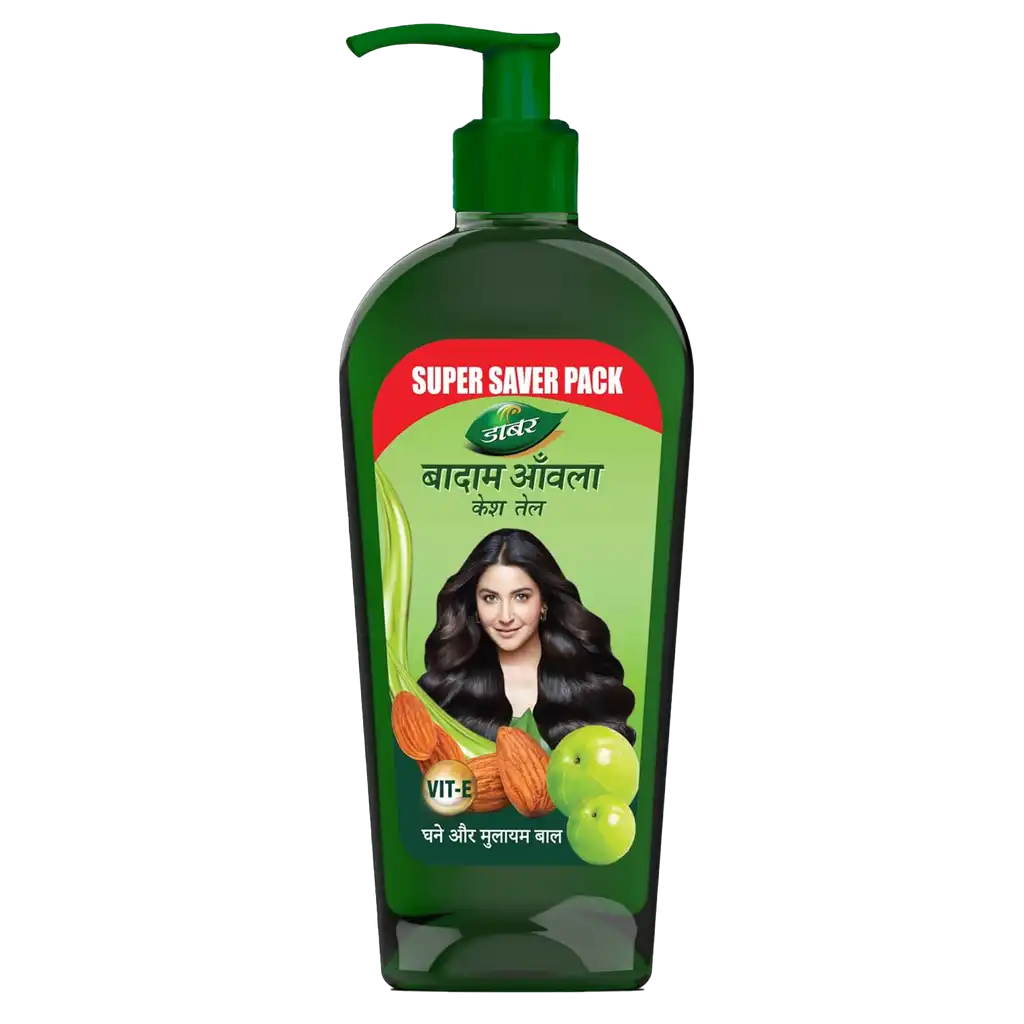
Almond and amla is one of the oldest pairings in Indian hair oiling, and this is the blend in a single bottle rather than two. Amla, Indian gooseberry, brings a sharper, more distinctive smell that some people love and some do not.
Pick this if you already know you like amla, or if you would otherwise be mixing two oils in your palm anyway. Skip it if you want a neutral base you can add your own oils to, since the blend is already decided for you.
9. WishCare Cold Pressed Olive Oil and Badam Rogan Sweet Almond Oil combo
Two carrier oils, for mixing your own blends
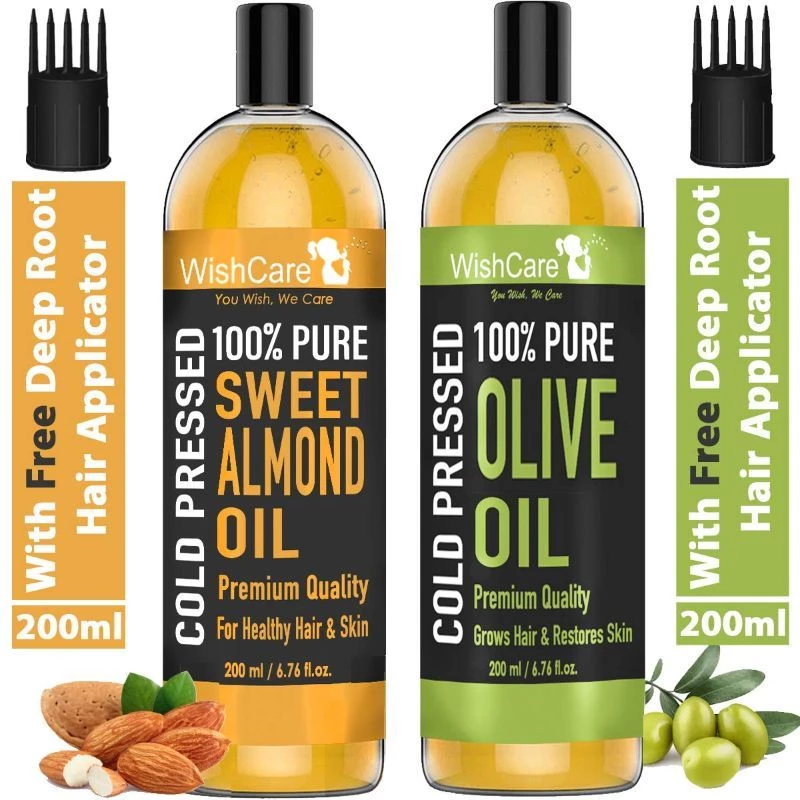
Two cold pressed carrier oils in one purchase, both pure and undiluted. Almond is the thinner of the two; olive is heavier and more viscous. Blended, they sit somewhere in between, which is the point of buying them together.
This suits anyone who likes to make their own oil mix, or who wants a lighter oil for hair and a richer one for skin without buying twice. Both come with the comb applicator cap.
Four bottles all called roghan badam shirin. Which one?
Numbers 2, 4, 5, and 7 are all the same traditional preparation from different houses, which is genuinely confusing on a shelf. The short version:
Size | Sits in | Pick it if | |
|---|---|---|---|
Dabur | Small bottle | Beauty and personal care | You want the familiar, widely stocked one |
Patanjali | Standard | Beauty and personal care | Price per ml matters and you use it often |
Baidyanath | 100 ml | Ayurvedic range | You want the classical pharmacy version |
Rex Remedies | 10 to 100 ml | Unani range | You want to try a small bottle first |
Cipzer | 50 ml | Unani range | You want one bottle for the whole family |
Before you buy: a few honest notes
Hair oil marketing tends to run well ahead of the evidence. You will see specific percentages, claims about regrowth, and promises about greying attached to almond oil across the internet. Treat all of it with scepticism, whoever is making the claim and whichever brand is attached to it. This article deliberately describes what is in each bottle and how it is used, and leaves outcomes out of it.
Two practical points:
Almond oil is a tree nut product. If you have a nut allergy, avoid it. Patch test on your inner arm before first use regardless.
Ongoing hair or scalp problems are a medical question. Persistent hair fall, sudden shedding, itching, or an irritated scalp are worth taking to a doctor or dermatologist rather than to a bottle of oil.
How to use it
The pre-wash oiling. Warm two to three tablespoons in a bowl of hot water, not on direct heat. Part your hair in sections and apply to the scalp with your fingertips, then work what is left down the lengths. Massage for five minutes. Leave for thirty minutes to overnight. Shampoo out, and expect to need two rounds with the pure oils.
The light daily use. A few drops rubbed between your palms and smoothed over dry mid-lengths and ends. This suits the formulated light oils; pure almond oil at this dose will look oily on most hair.
How often. Once or twice a week is the usual rhythm. Daily scalp oiling suits some people and not others.
By hair type. Fine hair generally does better with the light oils and with lengths-only application. Thick, coarse, or curly hair takes the pure oils comfortably. If your hair is low porosity, meaning water tends to bead on it and products sit on top, warm the oil first and apply to slightly damp hair.
Wash it out properly. Oil left sitting on the scalp for days is a common cause of buildup, which people then blame on the oil itself.
How to tell if your badam oil is fake or has gone off
The traditional small-bottle almond oils are among the most counterfeited products in Indian retail, and buyers abroad are the most exposed, since it is harder to judge a seller from a distance.
Smell. Real sweet almond oil smells faintly nutty and slightly sweet. Sharp, chemical, or crayon-like is wrong.
Feel. A heavy film that never sinks in at all suggests a cheaper base oil rather than almond.
Price. Almond oil is expensive to produce. A pure 100 ml bottle priced like a supermarket coconut oil is telling you something.
Rancidity. All nut oils go off. If it smells like old paint or stale nuts, throw it out. Once opened, keep the cap tight and store away from light and heat.
Seller. Buy from someone who sources directly from the brand rather than from a marketplace listing with no chain of custody.
Where to buy
Outside India, the pure badam rogan formats are hard to find in ordinary supermarkets, which mostly stock Western-branded sweet almond carrier oils. Indian grocery stores carry a narrow selection and often only one brand.
The Desi Food ships authentic Indian beauty and haircare, including all the oils above, to the USA and 80+ countries, with no extra duties. It is also an easy way to send a bottle to someone who cannot get it where they are. Browse the full range in our hairoil collection.