10 Benefits of Amla Hair Oil and What the Research Says
10 Benefits of Amla Hair Oil and What the Research Says
Amla hair oil has been part of hair care routines for generations. If you are thinking of trying it, you probably want to know what it can do for your hair.
This guide lists 10 benefits, one by one. Each one comes with the research behind it and a note on what that research does not show.
What is amla hair oil?
Amla hair oil is a hair oil made by mixing amla with a base oil such as coconut, sesame, sunflower or mineral oil. Amla is the fruit of the Indian gooseberry tree, Phyllanthus emblica, also called Emblica officinalis.
Some benefits below come from the oil. Others relate to the amla fruit.
What are the benefits of amla hair oil?
The main benefits of amla hair oil are softer, better lubricated strands, less breakage when combing, less swelling from water, and a protective layer before shampoo. Coconut-based versions have been tested for reducing protein loss. Amla fruit is rich in vitamin C and polyphenols. Here is each one in detail.
10 benefits of amla hair oil
1. It softens and lubricates the hair strand
Oil coats the outside of each hair strand.
A 2015 review in the International Journal of Trichology says that applying oil regularly can improve lubrication of the hair shaft. A lubricated strand slides more easily against the next one and against your comb.
Good to know: The review covers hair oils in general. It did not test amla hair oil.
2. It may help reduce breakage when you comb
Every time you comb or brush, your hair rubs and snags. Over time, this wears strands down and they can snap.
The same 2015 review says regular oiling can help prevent hair breakage. The authors of a 2003 study also note earlier results where coconut oil treatments prevented combing damage on different hair types.
Good to know: This is about breakage of the hair strand. It is not the same as hair falling out from the root.
3. It can cut down how much water your hair soaks up
Hair swells when it gets wet and shrinks as it dries. The 2015 review describes this repeated swelling and drying as "hygral fatigue", and names it as a factor that can damage hair.
The review says some oils can pass into the hair and reduce the amount of water it absorbs. Less water means less swelling.
Good to know: The review says "some oils". Not every base oil works this way, which is why benefit 5 below depends on the base oil in your bottle.
4. It adds a protective layer before you shampoo
Many people oil their hair before washing it.
The 2015 review says oil can fill the gaps between the tiny cells on the surface of the hair. This can help keep out harsh substances, such as the cleaning agents in shampoo.
Good to know: The review describes hair oils in general, not amla hair oil.
5. A coconut oil base can reduce protein loss
Hair is mostly made of protein. Washing and combing can wear some of it away.
In a 2003 study, researchers compared coconut oil, sunflower oil and mineral oil on hair. Coconut oil was the only one of the three that clearly reduced protein loss, in both undamaged and damaged hair. It worked when used before washing and after washing.
An earlier study found that coconut oil passes into the hair shaft, while mineral oil does not.
Good to know: These studies tested plain oils, not amla hair oil. The benefit applies only if your amla hair oil uses coconut oil as its base. Check the label: the first ingredient is the one there is most of. The authors of the 2003 study, and two of the four authors of the earlier study, worked for Marico, a company that makes hair oils.
6. Amla fruit is rich in vitamin C and polyphenols
Amla is best known for what it contains.
A 2026 study of the fruit describes amla as rich in vitamin C, polyphenols, flavonoids and polysaccharides. A 2025 study says the fruit's polyphenols give it strong antioxidant properties.
Good to know: These studies looked at the fruit and its extracts, not at hair oil. They do not tell you how much of these compounds end up in a finished bottle, or what they do on your scalp.
7. Early lab research on hair follicle cells
Dermal papilla cells sit at the base of each hair follicle. Researchers describe them as playing an important part in the hair growth cycle.
In a 2011 lab study, amla fruit extract made these cells multiply in a dish. It had little effect on keratinocytes, another type of skin cell.
Good to know: This was done on cells in a lab. It did not test an oil, and it did not involve people. Lab results often do not carry over to real life.
8. It goes hand in hand with a scalp massage
Oiling your hair usually means massaging your scalp.
In a small 2016 study, nine healthy men used a scalp massage device for 4 minutes a day for 24 weeks. By the end, their hair strands measured thicker than at the start.
Good to know: The study used a device and no oil, so it tells you nothing about amla oil itself. It was also very small and had no comparison group. One of the authors worked for a hair care company.
9. It has a long history in traditional hair care
Amla is not a new ingredient.
A 2011 research paper notes that amla fruit has long been used for hair in Ayurvedic and Tibetan traditional medicine. A 2026 study adds that the fruit has long been used in traditional Chinese medicine too.
Good to know: A long history tells you how people have used amla. It does not tell you what amla does.
10. You can pick a light or rich feel
Amla hair oils come in different styles, and the base oil decides how the oil feels.
The authors of the 2003 study describe mineral oil as non-greasy and lower in cost than coconut or sunflower oil. They describe sunflower oil as having little smell and not freezing easily. Coconut oil can turn solid in the cold.
So if you want a lighter feel, or an oil that stays liquid in winter, the base oil on the label is where to look.
Good to know: In the same study, mineral oil and sunflower oil did not reduce protein loss (see benefit 5). A lighter feel and protein protection may not come in the same bottle.
What the research does not show yet
You will see many other benefits of amla hair oil mentioned online, such as hair growth, less hair fall, fewer grey hairs and less dandruff.
We did not find a published human trial that tested amla hair oil for any of these. The research we found on amla and hair was on cells in a lab and on animals.
Claims like these are also treated differently under US rules. The FDA treats a product as a drug when it claims to restore hair growth, and treats dandruff treatment as a drug use.
If you are losing hair, the American Academy of Dermatology says that effective treatment starts with finding the cause, and that a board-certified dermatologist can help.
Finding an amla hair oil
Since several of these benefits depend on the base oil, read the ingredient list before you choose.
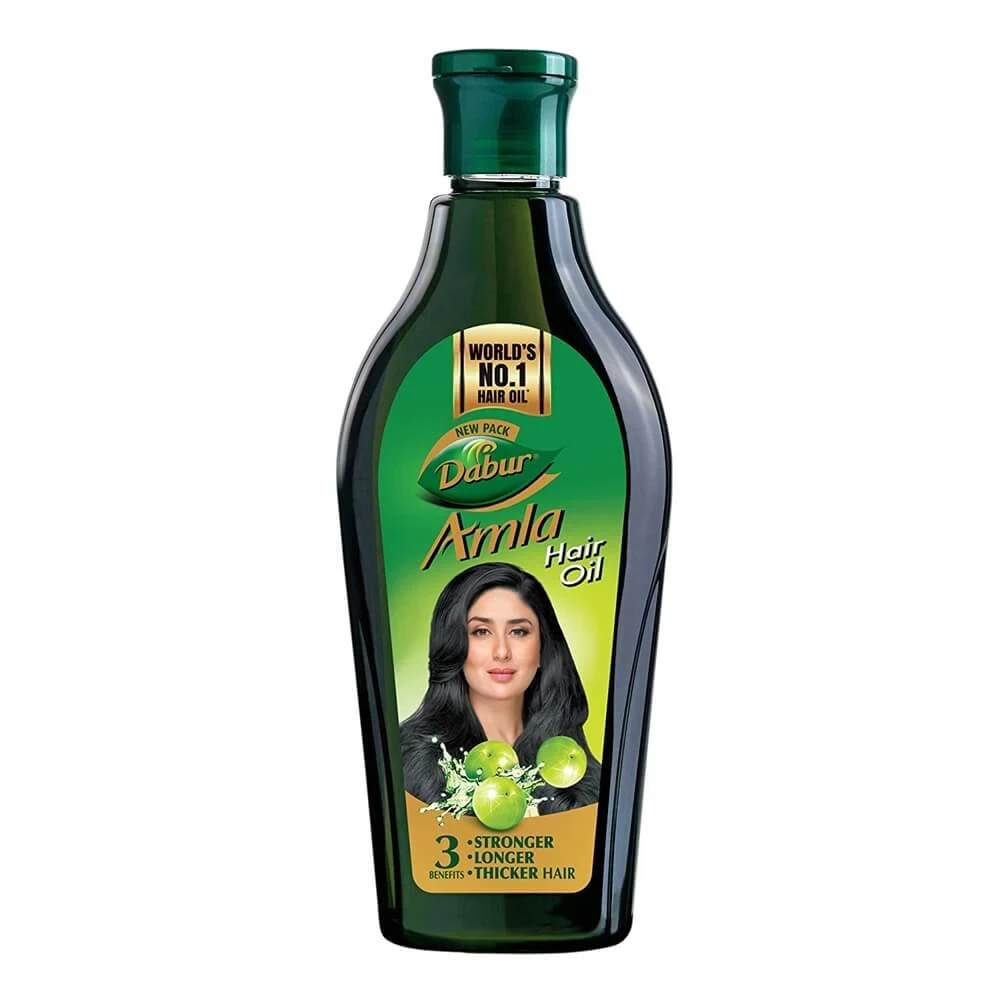
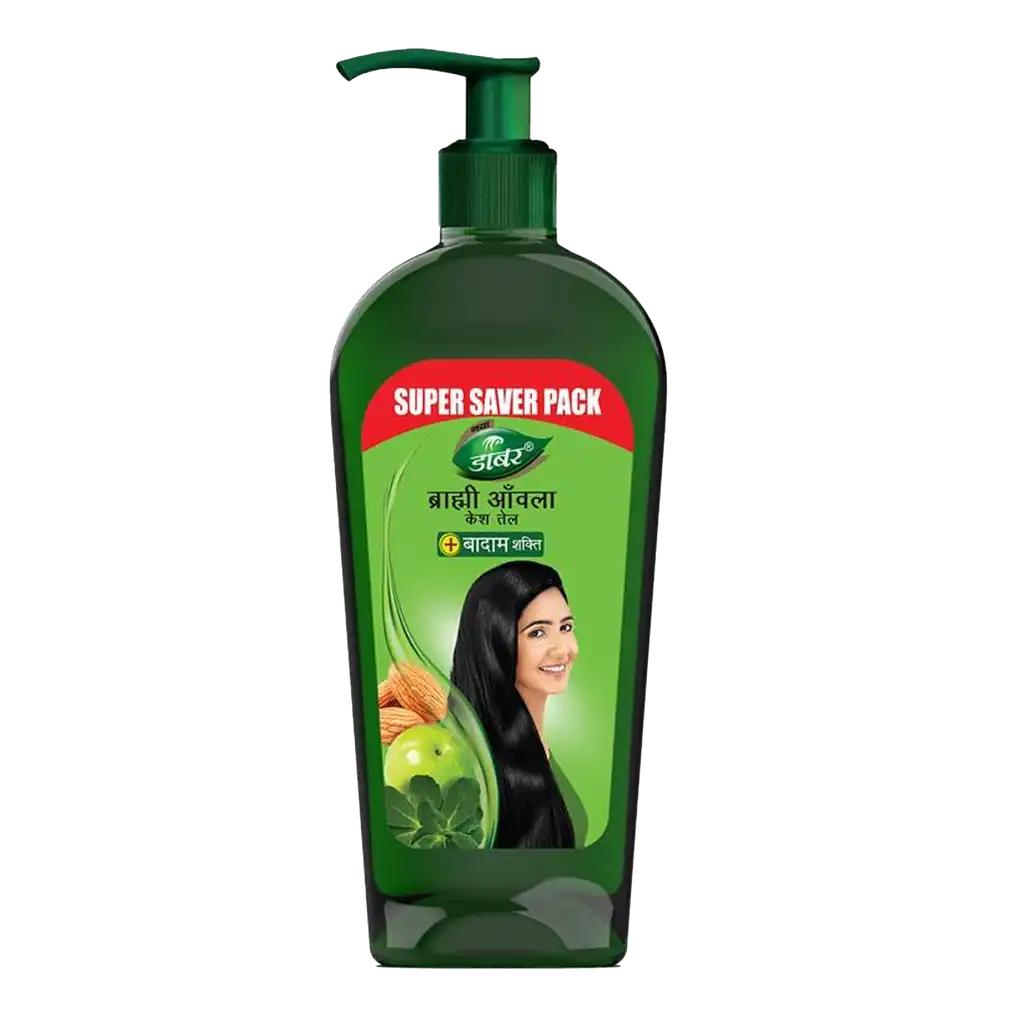
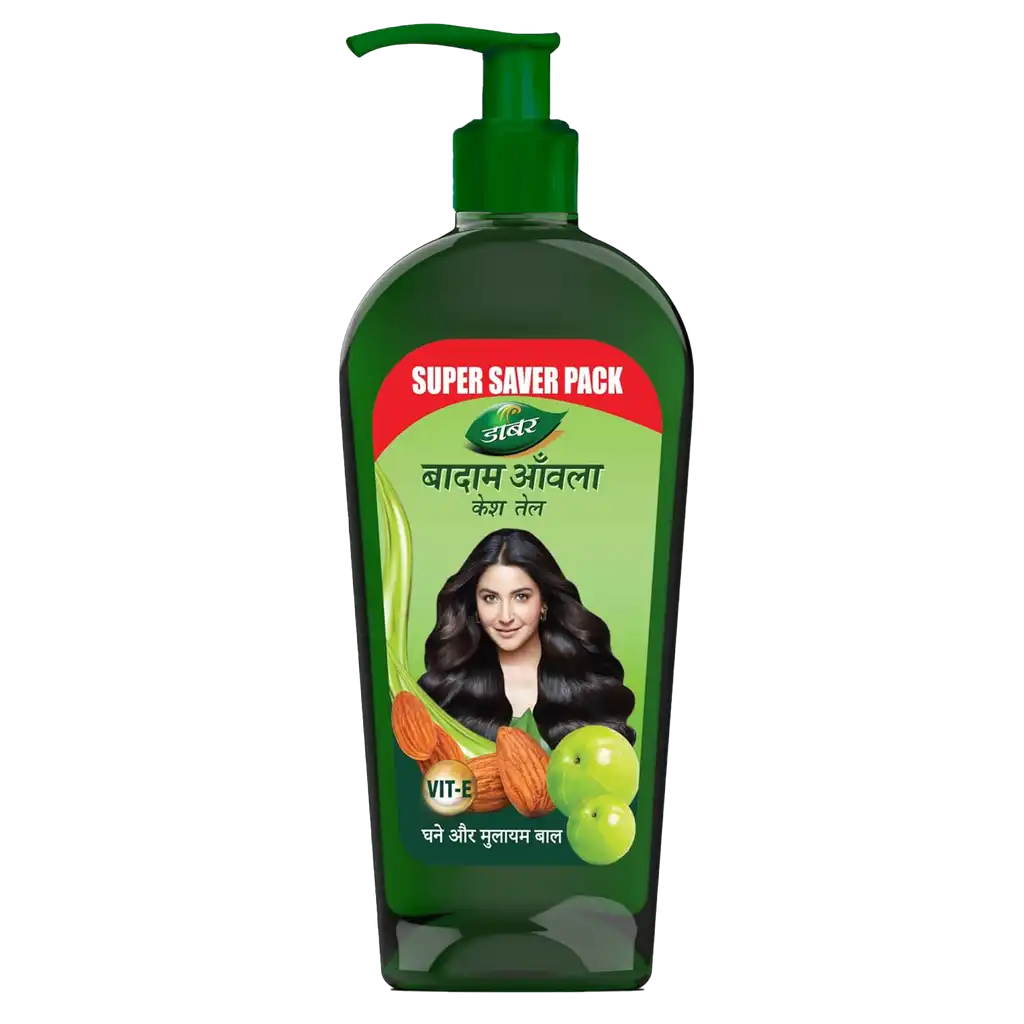
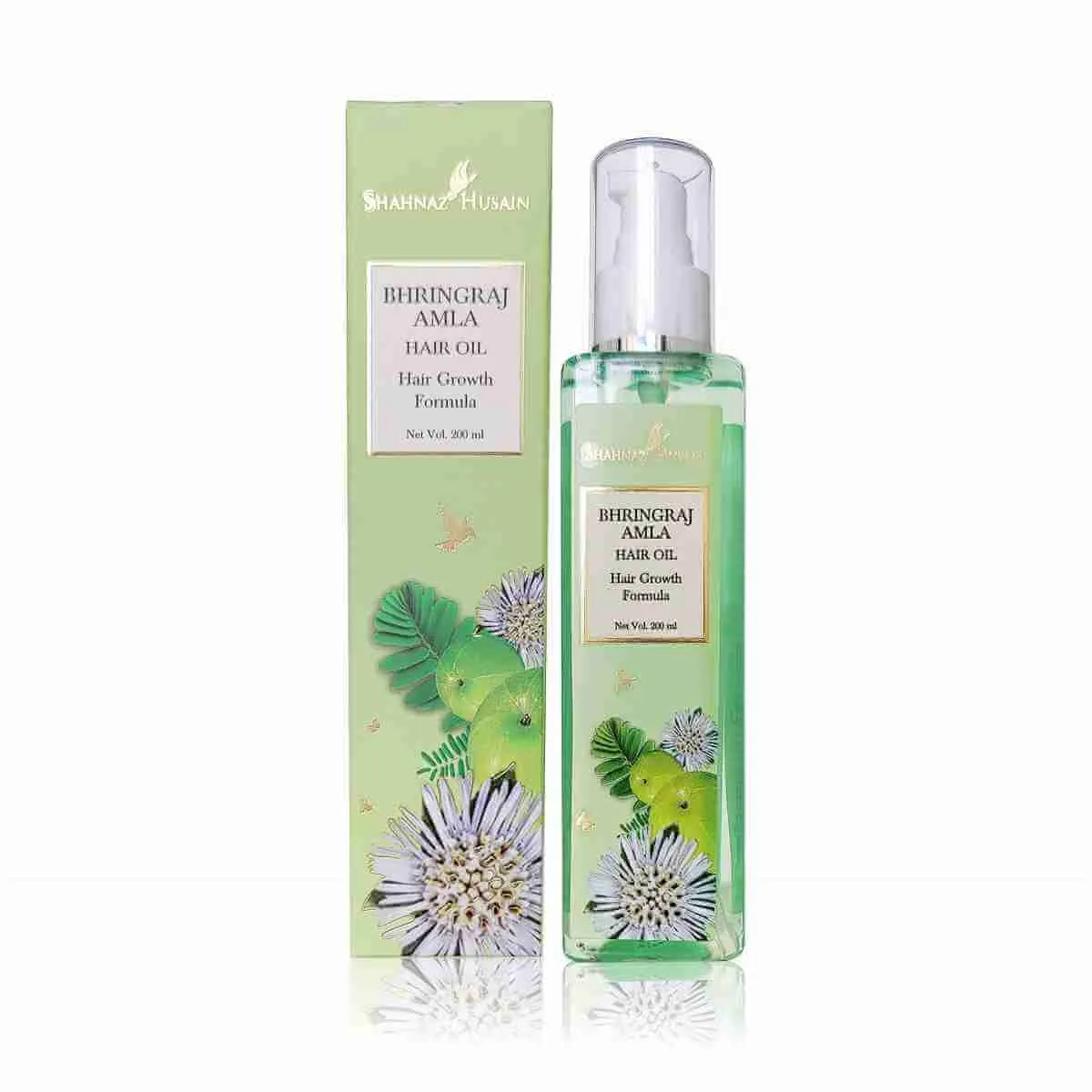
TheDesiFood stocks hair oils from brands including Dabur and Shahnaz Husain, with amla blends among them, and offers doorstep delivery worldwide, including the USA, UK, Middle East, Australia and Canada. Product details on each listing come from the manufacturer.